How Medical Agencies Support Solicitors in Legal Cases


When medical reports are delayed, solicitors may have to wait for the evidence they need to progress a claim. Finding a suitable medical expert, obtaining medical records, and arranging assessments can take time, especially when injuries are complex or multiple specialists are involved.
A medical reporting agency helps manage these practical arrangements by coordinating between solicitors, medical experts and claimants. Depending on the provider, this support can include sourcing appropriate expertise, tracking outstanding information, arranging assessments and coordinating report delivery.
Understanding how a medical agency works can help solicitors decide whether its services suit their cases, what medical evidence can establish and how to manage the reporting process more efficiently.
What Does a Medical Agency Do for Solicitors?
A medical agency helps solicitors access suitable medical professionals and manage the process of obtaining medico-legal evidence. This may include arranging expert appointments, coordinating medical assessments and sourcing reports for legal cases. Understanding the range of medical services available to solicitors can help firms choose a provider that meets their case requirements.
Connecting Solicitors with Suitable Medical Experts
The expert must have the qualifications and specialist knowledge needed to address the medical issues in the claim. A medical agency can help identify suitable professionals based on the injuries involved and the questions requiring an expert opinion.
For example, a traumatic brain injury may require a neurologist, while a fracture claim may call for an orthopaedic specialist.
The aim is to match the case with relevant expertise rather than simply secure the earliest available appointment. Solicitors should still assess the expert’s qualifications, experience and suitability for the specific issues in dispute.
Coordinating the Medico-Legal Reporting Process
Once an expert is identified, the agency may coordinate instructions, appointments and communication between the relevant parties. It can also clarify practical requirements, such as which medical records are needed before an assessment can take place.
This support helps keep arrangements organised without transferring responsibility for the legal case to the agency. The solicitor remains responsible for the legal strategy and deciding how the resulting evidence should be used.
How Medical Agencies Help Solicitors Obtain Medical Evidence
Arranging an expert is only one part of the process. The expert also needs relevant medical information and clear instructions to prepare a report that addresses the issues in the claim.
Collecting and Organising Relevant Medical Records
Medical records help establish the claimant’s medical history, treatment and recovery. Depending on the case, these may include GP records, hospital notes, diagnostic results and details of previous treatment.
An agency may help request relevant documents, follow up on outstanding records and organise the material for review. If important information is missing, further enquiries may be needed before the expert can give a well-informed opinion.
Providing complete and relevant records early can help reduce avoidable delays and give the expert a clearer picture of the claimant’s medical history.
Preparing Expert Instructions and Arranging Medical Assessments
The solicitor’s instructions should explain the purpose of the report, the medical questions requiring an opinion and the relevant circumstances of the claim.
Clear instructions help the expert understand the issues they need to address without directing the conclusions they should reach. The expert must remain independent and base their opinion on the available evidence.
A medical agency can help coordinate these arrangements and schedule the assessment. It may also communicate appointment details to the claimant and notify the parties of any changes. This practical support helps ensure that the necessary information and arrangements are in place before the assessment.
Coordinating Medico-Legal Report Preparation and Delivery
Following the assessment, the medical expert considers the available records, clinical findings and instructions when preparing the report.
Depending on the case, the report may discuss the nature of the injuries, their possible cause, the expected recovery period and any continuing effects.
The medical agency may monitor progress against the agreed reporting date and follow up on outstanding requirements. Once the report is complete, it can coordinate delivery to the solicitor, who can then review the findings and determine the appropriate next steps.
How Medical Evidence Supports Legal Claims
The value of a medical report lies in what it can establish about an injury and its effects. It provides an expert medical opinion for the solicitor to consider alongside the other evidence. However, a medical report does not, by itself, determine liability or the outcome of a claim.
What Medical Evidence Can Establish
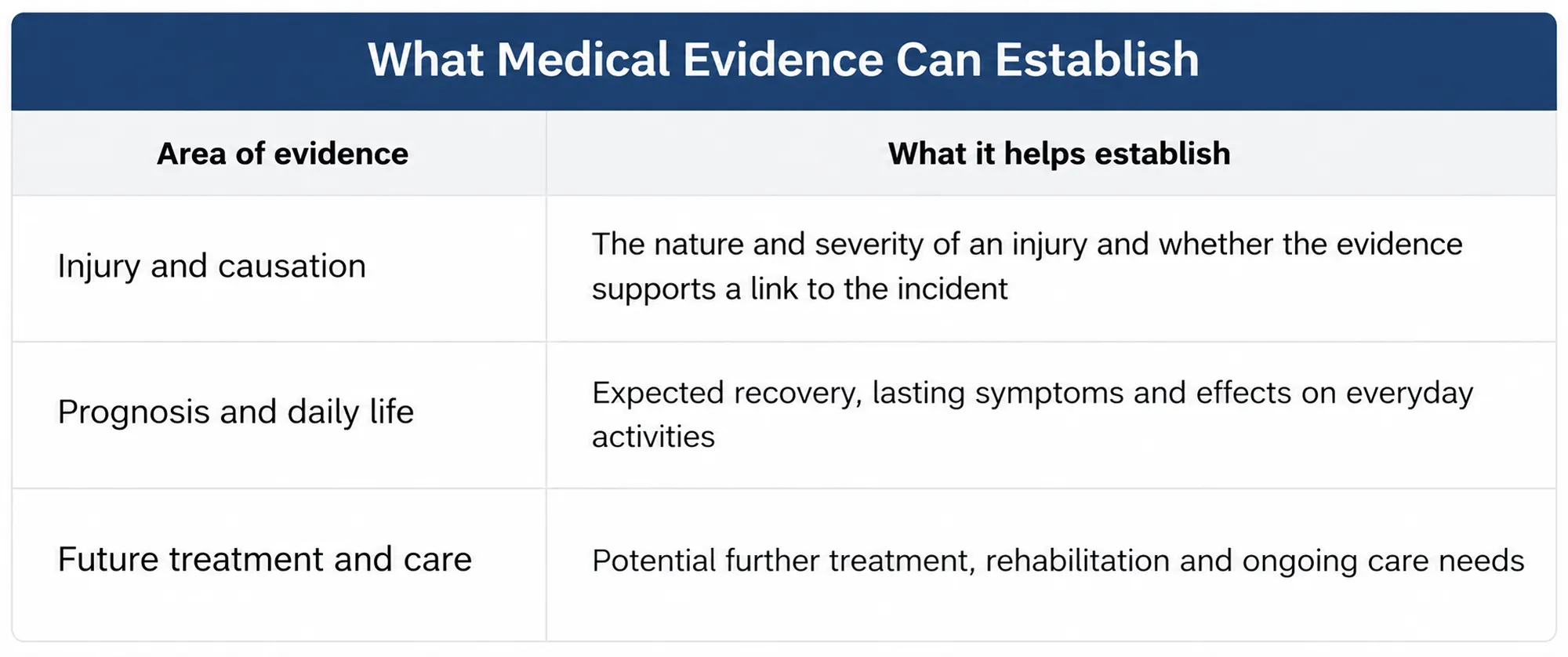
A medico-legal report may help clarify several aspects of a claim, depending on the medical issues involved.
Assessing Injuries, Their Severity and Likely Causes
An expert assesses the nature and extent of an injury using relevant medical records, examination findings and the information provided in the instructions.
Their opinion can help explain the injury’s severity and whether the available medical evidence supports a connection to the reported incident.
Where symptoms may relate to a pre-existing condition or another cause, the expert may need to distinguish between these factors. The solicitor can then consider the opinion alongside the wider evidence when assessing the claim.
Establishing Prognosis and the Impact on Daily Life
A medical report can help explain how an injury is likely to affect the claimant over time. The expert’s prognosis may cover expected recovery, continuing symptoms and lasting functional limitations.
These findings may help clarify the injury’s effect on work, mobility, personal independence and other everyday activities.
Recovery is not always predictable. Where uncertainty remains, the report should reflect the available evidence and clearly explain any relevant limitations in the expert’s opinion.
Assessing Future Treatment and Care Requirements
Some injuries require further treatment or support beyond the initial recovery period. Medical evidence may identify a potential need for rehabilitation, additional treatment, assistance with daily activities or ongoing care. Where future needs cannot yet be assessed reliably, further evidence or a specialist opinion may be necessary.
This information can help solicitors identify potential future losses and expenses that require consideration, subject to the evidence supporting them.
How Medical Agencies Help Keep Legal Cases on Track
Even when the appropriate expert and medical records have been identified, outstanding information or appointment changes can disrupt the reporting timetable.
Medical agencies may help solicitors monitor progress and identify practical issues before they cause further delays.
Coordinating Appointments, Deadlines and Report Updates
Monitoring progress is useful only when the solicitor receives timely information about changes that could affect the case.
An agency can communicate appointment changes, flag missing documents and explain when a report may not be ready by the expected date.
Early notice allows the legal team to adjust its plans or resolve outstanding requirements. This is particularly valuable when the report is needed before another stage of the claim can proceed.
Accessing Specialist Expertise for Complex Cases
Some claims involve multiple injuries, disputed medical issues or complications that require opinions from different specialists.
For example, a claimant with a brain injury and significant orthopaedic injuries may need assessments from experts in both fields.
An agency can help identify the relevant professionals and coordinate their involvement. Solicitors should ensure that each expert’s role is clearly defined, particularly when different opinions need to address separate aspects of the same claim.
Managing Administrative Tasks Across the Reporting Process
Medical reporting involves administrative work at several stages, from recording instructions to maintaining case updates and communicating with the parties involved. When responsibilities are unclear, information can be missed or duplicated.
A medical agency can help organise instructions, case updates and communication throughout the reporting process, allowing the legal team to keep track of outstanding requirements.
How Medical Agencies Support Claimants During Medical Assessments
The reporting process also affects claimants, who may be managing pain, anxiety or disruption to their everyday lives. Clear appointment information and practical arrangements can make it easier to attend an assessment and understand what to expect.
Arranging Accessible and Convenient Medical Assessments
Appointment arrangements should take account of the claimant’s circumstances, including:
- Appointment location: A suitable venue that considers travel and mobility needs.
- Accessibility requirements: Reasonable arrangements to help the claimant attend.
- Scheduling: Appointment times that reflect availability and minimise avoidable rescheduling.
An agency may coordinate these details and communicate relevant requirements to the parties involved. Discussing practical needs in advance can help reduce barriers to attendance.
Keeping Claimants Informed About Appointments and Next Steps
Claimants should know when and where the assessment will take place, what information they may need to bring and whom to contact if their circumstances change.
The agency may communicate these details and provide updates if arrangements are altered.
After the assessment, claimants may also want to understand what happens next. Clear information about the reporting process can help manage expectations and reduce uncertainty.
Questions about legal advice, case strategy or the likely outcome should be directed to the solicitor.
Maintaining Quality, Independence and Confidentiality in Medical Reporting
Good coordination is not enough on its own. Medical evidence must be prepared by appropriately qualified professionals, and sensitive information must be handled carefully throughout the process.
Verifying Expert Qualifications and Relevant Experience
The expert’s qualifications and experience should match the medical issues involved in the claim. Solicitors should consider relevant professional registration, specialist experience and familiarity with medico-legal reporting.
An agency may help identify suitable professionals, but the solicitor should assess whether the proposed expert is appropriate for the individual case.
Relevant expertise helps ensure that the report addresses the questions raised and explains the clinical reasoning behind its conclusions.
Supporting Independent, Evidence-Based Medical Opinions
In civil proceedings in England and Wales, Part 35 of the Civil Procedure Rules sets out the expert’s duty to help the court on matters within their expertise. This duty takes precedence over obligations to the person instructing or paying the expert.
Instructions should define the questions requiring an opinion, not dictate the conclusions. The expert must consider the relevant evidence objectively and explain any limitations in their opinion.
Their findings may not support every aspect of the claimant’s account. This is why independence is essential to the value of medico-legal evidence.
Protecting Confidential Medical Records and Personal Data
Medical records contain sensitive personal information. Health data is classified as special-category personal data under the UK GDPR, meaning that its use requires appropriate safeguards and a lawful basis for processing.
When assessing a medical agency’s procedures, solicitors should consider how it manages:
- Access controls: Limiting access to authorised personnel.
- Secure transfers: Protecting information when records are shared.
- Data retention: Applying appropriate retention and disposal procedures.
- Confidentiality: Sharing information only for authorised and legitimate purposes.
The agency’s procedures should reflect the nature of the information it handles and the responsibilities agreed between the parties.
What Should Solicitors Look for in a Medical Agency?
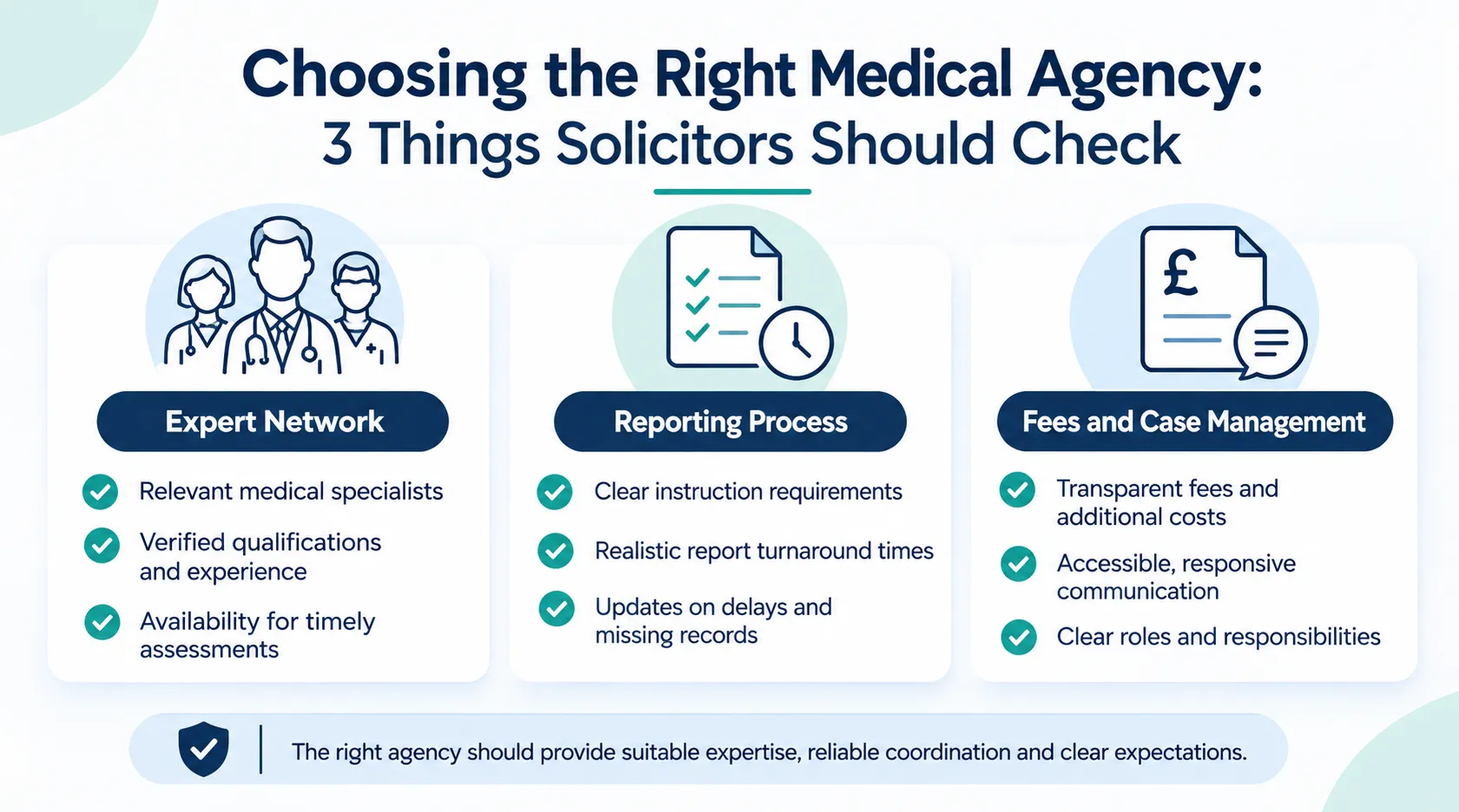
Once the reporting requirements are clear, solicitors can compare providers against practical criteria. The aim is to establish whether an agency can source suitable experts, manage instructions reliably and provide clear information about costs and progress.
A Suitable Network of Medical Experts and Specialisms
The medical agency should have access to professionals whose qualifications and experience match the cases the firm handles.
Solicitors working on personal injury claims, for example, may need experts in orthopaedics, neurology, pain medicine or psychiatry. When assessing an agency’s network, consider:
- Relevant specialisms: Whether it can source experts suited to the medical issues involved.
- Professional credentials: Whether experts have appropriate qualifications, registration and relevant experience.
- Availability: Whether suitable professionals can accept instructions within the required timescales.
A broad network can be useful, but access to the right expert for a particular case matters more than the size of the list.
Clear Reporting Processes and Realistic Turnaround Expectations
A provider should explain how it handles instructions, medical records, assessments and report delivery. Solicitors need to understand what information is required at each stage, how progress is monitored and how delays are communicated.
Ask how the agency manages outstanding records, appointment changes and reports that require further information. Turnaround expectations should reflect the type of assessment, the expert’s availability and the completeness of the records rather than rely on blanket promises.
Transparent Fees, Communication and Case Management Support
The service should also be clear about costs and responsibilities. Solicitors should understand what the quoted fee covers, whether additional charges may apply and how changes to an instruction are handled. It is worth assessing the support available throughout the process, including:
- Clear pricing: An explanation of fees and potential additional costs.
- Accessible communication: A clear point of contact for questions and progress updates.
- Responsive case management: Timely handling of queries, changes and outstanding requirements.
Before engaging an agency, confirm the scope of its service and the responsibilities retained by the solicitor. Clear expectations can help avoid misunderstandings later.
Case Study: How Expert Medical Evidence Influenced a Clinical Negligence Claim
In Hodgson v Hammond & Dieleman, a patient brought a clinical negligence claim against two GPs concerning their failure to carry out appropriate examinations for suspected pelvic inflammatory disease. The court examined the medical opinions presented by both sides and found that the doctors had breached their duty of care.
The case illustrates why solicitors need relevant medical expertise to assess clinical decisions and evaluate opinions against the available evidence.
Medical agencies can support this process by helping solicitors access suitable experts and coordinate the evidence needed to assess a claim.
Choosing a Medical Agency That Fits Your Case Requirements
Medical agencies can help solicitors coordinate expert appointments, obtain relevant records and manage the practical stages of medico-legal reporting. The value of that support depends on whether the provider has access to appropriate expertise, communicates reliably and handles information responsibly.
Before engaging a provider, assess its services against the requirements of your cases, including the medical specialisms needed, reporting arrangements, turnaround expectations and costs.
For firms seeking support with medico-legal reports and assessments, Concise Medico can help coordinate the reporting process and identify appropriate medical expertise for individual case requirements.
FAQs

Questions about treatment?
Get in touch with our team for a free consultation and quote today.
Let’s TalkServices

Medical Reports
- Nationwide Medical Services.
- We provide fully compliant CPR reports.
- Psychologists, General Practitioners and Orthopaedics.

Rehabilitation
- Tailored Treatments for the Individuals.
- Assisting you on your road to Recovery.
- Access to over 1500 Certified Therapists.

Diagnostics
- Convenient locations.
- A wide range of Non-invasive Scans.
- Guaranteed Results within 28 days, no waiting list.
Personal Injury
- Nationwide Personal Injury Medical Assessments.
- Fully Compliant CPR Part 35 Expert Reports.
- Vetted Medical Experts Across All Injury Types.




We are medical expert witness reports providers with over a decade of experience in the medico-legal field. Our collective expertise counts for up to 45 years.
We give access to a nationwide network of medical expert witnesses and rehabilitation providers.
Services
Company
Resources
Open Hours
Monday to Friday
9am — 5pm