TABLE OF CONTENT
How to Find the Right EMDR Therapist for Trauma Recovery
Trauma can affect how you think, feel and respond to everyday situations. You may struggle with unwanted memories, anxiety, sleep problems or a constant feeling of being on edge. When these experiences begin to affect your daily life, finding the right support can make a difference. However, knowing whom to trust or where to start can feel overwhelming.
Eye Movement Desensitisation and Reprocessing (EMDR) is a psychological therapy that helps people process distressing memories so they become less upsetting. It is used to treat post-traumatic stress disorder (PTSD) and may be suitable for some people experiencing difficulties linked to traumatic experiences.
Finding an EMDR therapist involves more than choosing someone who offers this treatment. You also need to consider their professional qualifications, relevant clinical experience and approach to trauma recovery.
If you are researching how to find the right EMDR therapist, this guide explains what to look for, where to search, how to check qualifications and what to discuss before starting treatment. Whether you are exploring your options for the first time or comparing practitioners, these steps can help you make a more informed decision.
How Does an EMDR Therapist Help You Process Trauma?
An EMDR therapist helps you work through distressing memories that continue to affect your thoughts, feelings or daily life. During therapy, they guide you through a process designed to help you revisit and process these memories in a safe, controlled setting.
First, your therapist assesses your needs and discusses your experiences, symptoms and treatment goals. They then explain how EMDR works and help you prepare for sessions. When you are ready to process a particular memory, your therapist may ask you to focus on it while following their finger movements from side to side or using other forms of bilateral stimulation, such as alternating taps, where you gently tap your left and right hands in turn to create a left-right pattern.
Throughout the session, your therapist checks how you are feeling and guides you through the process. The aim is to help you process the memory so that it becomes less distressing over time. Your therapist will monitor your progress and adjust the treatment according to your needs.
A suitable EMDR therapist should explain each stage clearly, answer your questions and allow you to discuss any concerns before treatment begins.
How to Find the Right EMDR Therapist for Trauma Recovery
Finding the right EMDR therapist starts with knowing what to look for. Qualifications matter, but so do clinical experience, communication and the way a therapist approaches trauma recovery.
If you are unsure how to find the right EMDR therapist, start by comparing practitioners against the following criteria rather than choosing the first person you find.
1. Check Their Credentials and Training
Start by checking whether the therapist has completed recognised EMDR training. In the UK, the EMDR Association UK works with EMDR Europe to maintain training and accreditation standards.
It is important to understand the difference between completing EMDR training and becoming an accredited practitioner. A therapist may have completed basic training without having achieved accreditation. Accreditation involves meeting additional requirements and demonstrating competence.
Before booking an appointment, check the following:
- EMDR training: Ask where the therapist completed their training and whether it meets recognised standards.
- Accreditation: Confirm whether they are accredited by the EMDR Association UK or hold another relevant recognised credential.
- Professional registration: Check their underlying professional qualifications and registration with the appropriate professional body or regulator, where applicable.
- Clinical experience: Ask about their experience working with trauma, PTSD or concerns similar to yours.
- Ongoing supervision: Find out whether they receive appropriate professional supervision and continue their professional development.
These checks help you understand a therapist’s professional background and make a more informed decision about your care.
When comparing practitioners, remember that completing EMDR training does not automatically mean someone is an accredited practitioner. Asking about both can help you understand their qualifications and experience.
2. Search Official Directories
Once you understand the qualifications to look for, the next step is to find suitable practitioners. The EMDR Association UK’s Find a Therapist directory allows you to search for accredited practitioners by location and other preferences.
If you want to find an EMDR therapist in the UK, this directory is a useful starting point because it helps you identify practitioners who meet the association’s accreditation requirements.
Start by looking for therapists in your area. If you prefer remote appointments, check whether they offer online sessions and ask whether this format would be appropriate for your circumstances.
After creating a shortlist, visit each therapist’s website. Read their professional biography, review their qualifications and look for information about their experience and approach to trauma recovery.
You can use these steps to find an EMDR therapist whose location, professional background and availability suit your needs. If you are searching for an EMDR therapist in the UK, compare several practitioners and verify their current credentials rather than relying on a directory listing alone.
You do not need to make a decision immediately. Comparing several suitable practitioners gives you a better opportunity to find someone whose experience, availability and approach match your needs.
3. Understand Their Approach to EMDR
Once you have identified potential therapists, consider how they approach treatment. A therapist may have the right qualifications, but you should also understand how they plan to support you throughout the process.
An EMDR therapist does not simply use a technique involving eye movements. EMDR therapy includes assessment, preparation, processing distressing memories and reviewing progress.
Your therapist should ask about your history, current difficulties and treatment goals. They should also consider your emotional wellbeing, available support and readiness before beginning memory processing.
A suitable practitioner will explain the process in clear language, answer your questions and involve you in decisions about your treatment. They should not pressure you to discuss traumatic experiences before you feel ready.
If you are looking for a qualified EMDR therapist, consider whether they can explain how their training informs their approach and how they adapt treatment to individual needs.
4. Make the Most of Your First Appointment
After checking credentials and understanding the therapist’s approach, arrange an initial consultation if one is available. This is your opportunity to discuss your concerns and decide whether the practitioner feels suitable.
You do not need to share every detail of a traumatic experience during your first meeting. You can explain your main concerns at a pace that feels manageable and ask how the therapist approaches sensitive topics.
Use the appointment to discuss practical arrangements, including:
- How sessions are structured and how long they usually last.
- The therapist’s fees and cancellation policy.
- Whether online appointments are available.
- How your progress will be reviewed.
- What happens if you feel overwhelmed during or after a session.
- How you can contact the therapist if you have concerns between appointments.
Pay attention to how the therapist responds. Do they listen carefully? Do they answer your questions clearly? Do you feel able to express concerns without being judged?
You do not have to feel completely comfortable straight away, but you should feel that your concerns are taken seriously and that your boundaries will be respected.
Finding an EMDR therapist is not just about checking credentials. It is also about deciding whether you can communicate openly with the person supporting your treatment.
What Should I Know Before Starting EMDR Therapy?
Before starting EMDR therapy, discuss your treatment goals, session fees and any concerns you have about processing traumatic memories.
Your therapist will usually begin by assessing your needs, explaining how EMDR works and helping you prepare for treatment. You may also discuss how to manage difficult emotions between sessions.
Ask about session frequency, cancellation policies and whether your health insurance covers the treatment and the specific practitioner. Understanding these details beforehand can help you plan your treatment and avoid unexpected costs.
EMDR does not always begin with processing the most distressing memory. Your therapist may first assess your needs, explain the treatment process and help you develop ways to manage difficult emotions.
This preparation can help you feel more equipped to work through painful memories during treatment. Your therapist should also explain what to do if you experience distress between sessions.
If you have concerns about starting memory processing, raise them before treatment begins. You should have the opportunity to understand the proposed approach and discuss whether you feel ready to proceed.
Signs of a Well-Trained EMDR Therapist
Checking qualifications helps establish a therapist’s professional background. However, you should also consider how they work with clients and whether their approach supports your needs.
Look for the following qualities when comparing potential practitioners.
- Recognised training and appropriate professional registration: They can explain their qualifications, EMDR training and relevant professional registration.
- Experience with your concerns: They have relevant experience working with PTSD, childhood trauma, abuse, accidents or other difficulties connected to traumatic experiences. You can ask about their experience without disclosing more personal information than you feel comfortable sharing.
- Ongoing supervision and professional development: They undertake appropriate supervision and continuing professional development to maintain and improve their skills.
- A clear treatment plan: They explain the stages of EMDR, assess your readiness and review your progress rather than rushing into memory processing.
- Clear communication and professional boundaries: They explain fees, appointment arrangements, confidentiality and what to do if you need support between sessions.
- Respect for your pace: They understand that trauma recovery can be difficult and do not pressure you to process memories before you feel prepared.
- Willingness to review treatment: They encourage you to discuss concerns and are prepared to review the treatment plan if you are struggling or the approach does not seem to be meeting your needs.
No single quality can guarantee that a therapist will be right for you. However, considering these factors alongside their qualifications can help you make a more confident and informed choice.
When comparing a qualified EMDR therapist with other practitioners, look beyond general claims about experience. Ask about their specific training, the concerns they commonly work with and how they review treatment progress.
How Many EMDR Therapy Sessions Will I Need?
Understanding how EMDR is structured can help you set realistic expectations about treatment. Although your experience will depend on your individual circumstances, guidance from the UK’s National Institute for Health and Care Excellence (NICE) provides a useful starting point.
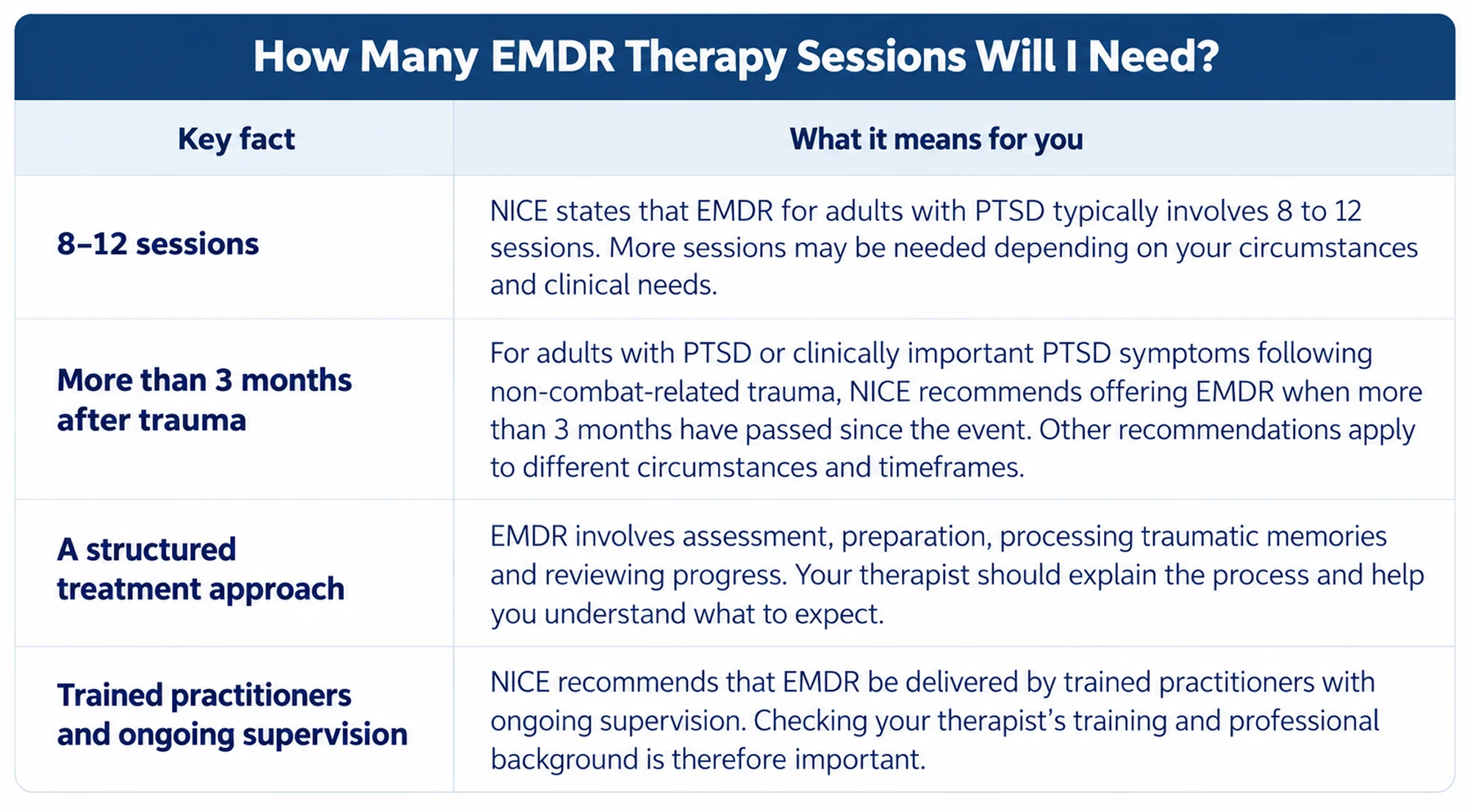
What should you take away from these facts?
These recommendations offer a general guide, not a fixed treatment plan for everyone. The number of sessions you need and the pace of treatment will depend on your circumstances, clinical needs and progress.
A suitably qualified professional can help you understand whether EMDR is appropriate for you and explain the next steps.
Questions to Ask Before and After Your First EMDR Session
The clinical guidance above provides a general picture of what EMDR treatment may involve. However, your own needs and expectations deserve individual attention.
Asking questions before and after your first session can help you understand the process, communicate your concerns and make informed decisions about your treatment.
Use the table below as a practical checklist.
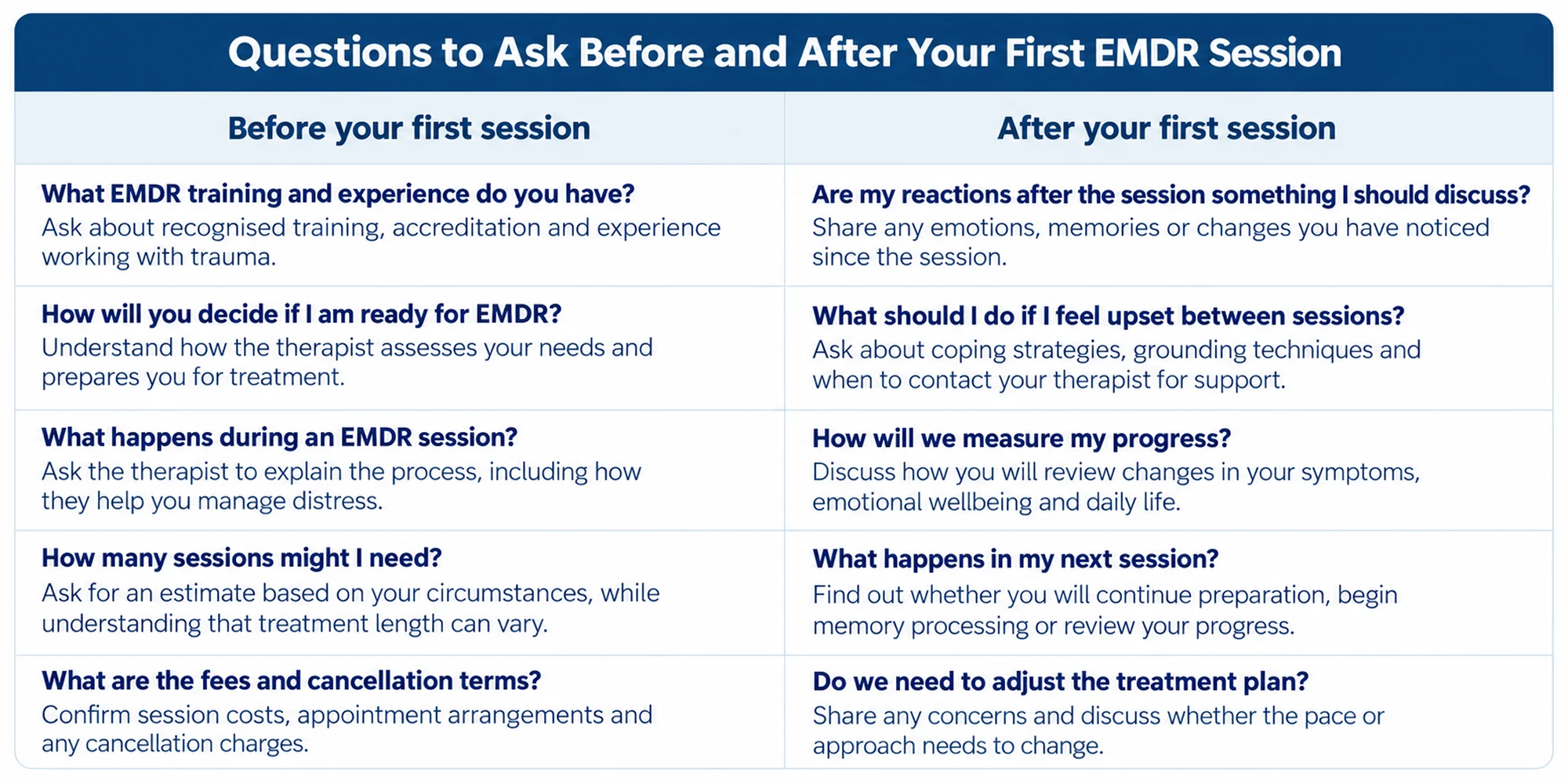
You do not need to ask every question at once. Choose the ones that matter most to you and return to the others as treatment progresses.
It is also important to remember that people can respond differently to therapy. If you experience distress after a session, tell your therapist, particularly if it feels difficult to manage or affects your daily life. They can help you assess what is happening and decide whether your treatment plan needs to be adjusted.
How Concise Medico Can Help You Find Suitable EMDR Support
By this point, you have a clearer idea of what to look for in an EMDR therapist, how to check their credentials and what to discuss before beginning treatment. However, putting all these steps into practice can still feel difficult, particularly when you are already dealing with the effects of trauma.
Concise Medico aims to make your search for suitable professional support clearer and less overwhelming. We understand that every person’s circumstances are different, and finding the right support starts with understanding your individual needs.
Whether you are exploring EMDR for trauma recovery or comparing practitioners before making a decision, take the time to understand your options and ask questions about the support available to you.
Finding the right support does not mean you need to have everything figured out today. Start by asking questions, exploring your options and finding out what type of professional help may suit your needs. You deserve to have your concerns taken seriously and to understand the options available to you.
Our experienced orthopaedic specialists provide independent, CPR-compliant medical reports that help solicitors and courts to make informed decisions.
Contact us today to arrange an expert orthopaedic assessment and receive a detailed medical report tailored to your case.
FAQs