A medical expert witness explains medical facts in court. They provide unbiased opinions to help judges and juries understand the case.
Medical Expert Witness in Courts

Medical Expert Witness in Courts
In 2024, the role of a medical expert witness is more important than ever in the legal system. In 2022/23, NHS resolved 17,116 clinical and non-clinical claims, up from 16,484 in 2021/22. This rise shows a bigger need for medical expert witnesses in legal cases. These experts offer clear views on medical issues. They help courts make fair, informed decisions. Their knowledge is key in criminal and civil cases. A medical witness expert connects the fields of law and medicine. They explain medical facts in simple terms for judges and juries. Their evidence can greatly affect the verdict. As legal matters become more complex, their role has become vital.
The Need for Medical Expert Witnesses in Modern Courts
Legal cases now face complex medical issues. A medical expert witness is vital in these cases. They provide clear, unbiased views. Their work explains complex medical issues. They simplify complex terms for the court. They help courts make fair and accurate decisions through their insights.
Why Are Medical Expert Witnesses Essential
Growing Legal Challenges
The legal system is more complex now. This has brought the need for a medico-legal expert witness. These experts help courts understand medical evidence. Their insights are vital for malpractice and injury cases. Without their help, courts may find it hard to make fair decisions.
Specialised Expertise
Modern cases often involve advanced medical issues. These need experts with specific skills. For instance, toxicologists handle chemical pollution cases. Neurologists study brain injuries and their effects. These experts make sure evidence is clear and accurate. Their role is important in presenting facts in court.
Staying fair and unbiased
A medical witness expert offers unbiased opinions. They use facts, research, and skill sets. This ensures evidence is not affected by bias. Their fairness helps juries focus on the truth. Fair and clear expert review can shape the results of many trials.
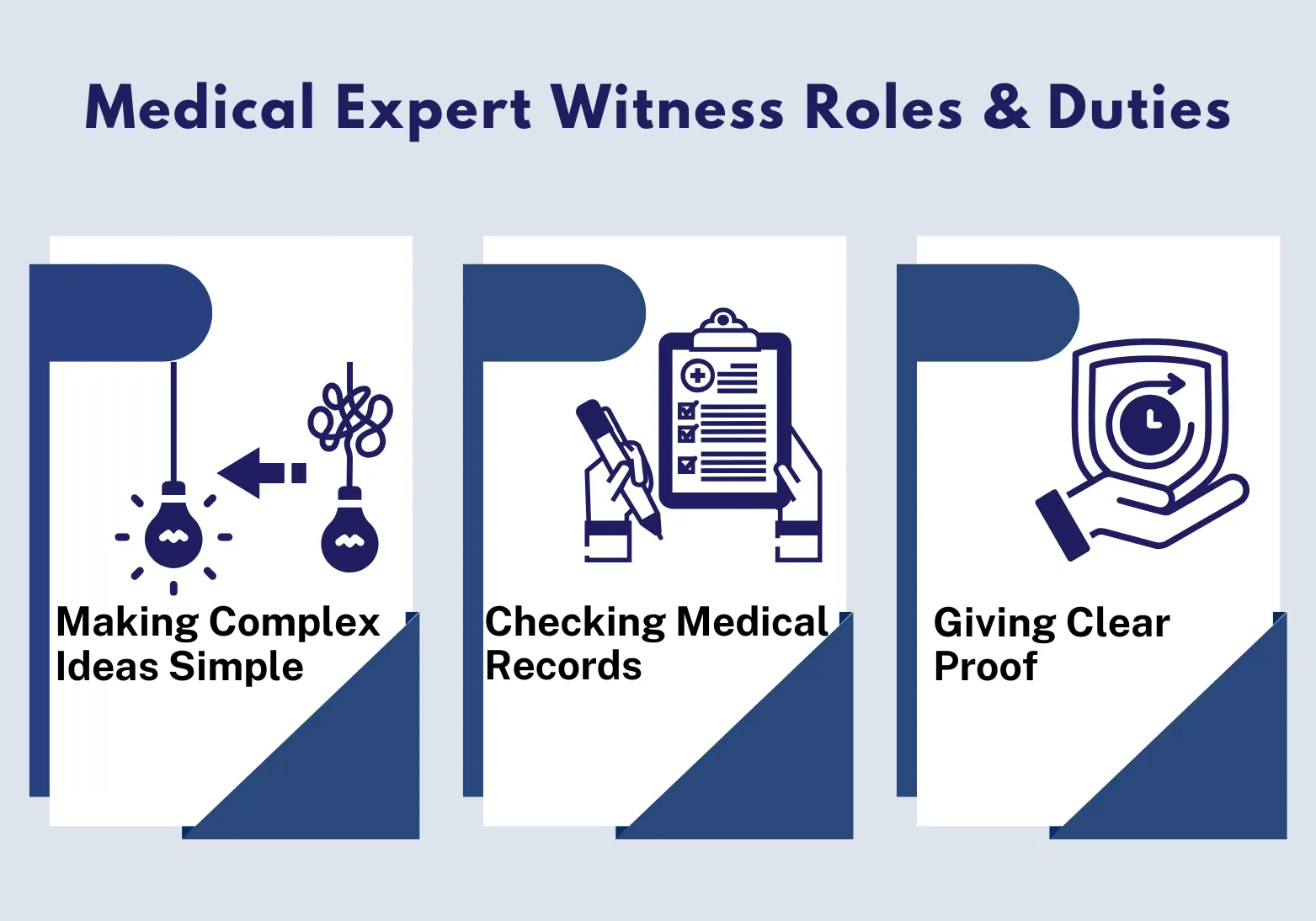
Key Roles and Duties
Making Complex Ideas Simple
Medical cases can be hard to understand. A medical expert witness breaks down these ideas into simple terms. This helps judges and juries grasp the evidence. Simplifying details ensures fair and informed decisions.
Checking Medical Records
Medico-legal expert witness study records with care. They check details on injuries, treatments, and diagnoses. This helps explain timelines and clarify events. Their insights make the evidence easier to follow and understand.
Giving Clear Proof
A medical expert’s claim gives the court clear, valid facts. This matters most in criminal cases or claims of negligence. Their proof often decides how a trial ends.
Challenges in Using Medical Expert Testimony
Using medical experts is important, but it also presents challenges. Lawyers may question their opinions or expertise. This can affect how jurors perceive their proof.
As summarized in the Forensic Science Regulator’s legal obligations document:
“An expert witness should provide independent assistance to the court by way of objective, unbiased opinion in relation to matters within his expertise.”
Ikarian Reefer case
Ways to Overcome
To address these challenges, experts must:
- Have relevant skills and degrees.
- Follow legal and ethical guidelines.
- Remain neutral and factual in your review.
Creating Trust and Validity
The honesty of a medico-legal expert witness is crucial in legal cases. Opposing lawyers may dispute the facts during probing.
Ways to Overcome
To maintain validity, experts should:
- Stick to their area of expertise.
- Provide clear and factual reviews.
- Follow all legal and formal rules.
Courts depend on experts to provide clear and fair evidence. This ensures that the evidence supports fair choices.
Qualifications and Compliance
In the UK, medico-legal expert witnesses must follow rules. These rules are set by groups like the General Medical Council (GMC). This includes an MD or DO degree, board certification in their field, and a state license for where they testify. Many also hold fellowship training. They may have teaching or research roles and often publish in journals. Courts trust experts who meet strict standards and give fair views.
How Courts Use Medical Expert Witnesses
Criminal Cases
In criminal trials, medical experts assess injuries or causes of death. They help set up an agenda and prove key facts. Their findings help the court grasp medical details.
Civil Cases
In civil disputes, experts handle claims of negligence. They may also check for health issues from faulty products. They will get affected people a fair reward.
Family Law
Medical experts also play a role in family law cases. For example, they assess health in custody disputes. Their findings help courts make decisions that protect children’s welfare.
Read more about: Mental Health Child Custody UK

Future of Medical Expert Witnesses
The role of medical experts is evolving. As healthcare and tech grow, experts need to adapt. Some key trends include:
-
Digital Evidence
Courts are using more e-medical records. They’re also using health data from devices. Experts must conduct a precise analysis of this data.
-
AI Integration
Experts may work with AI to enhance their judgments. It can provide better insights into complex medical proof. Despite these advances, we must keep our ethics. Experts should keep their work fair and based on facts.
The Growing Value of Medical Expert Witnesses
Medico-legal expert witnesses are key in legal cases in 2024. They simplify complex medical issues helping courts make informed decisions. These experts know medicine and law, so they are useful in court cases.
At Concise Medico, we provide advice from the best experts in the field. Ensure your case uses valid insights and proof. If you need help with medico-legal cases, contact us today.
FAQs

Questions about treatment?
Get in touch with our team for a free consultation and quote today.
Let’s TalkServices

Medical Reports
- Nationwide Medical Services.
- We provide fully compliant CPR reports.
- Psychologists, General Practitioners and Orthopaedics.

Rehabilitation
- Tailored Treatments for the Individuals.
- Assisting you on your road to Recovery.
- Access to over 1500 Certified Therapists.

Diagnostics
- Convenient locations.
- A wide range of Non-invasive Scans.
- Guaranteed Results within 28 days, no waiting list.
Personal Injury
- Nationwide Personal Injury Medical Assessments.
- Fully Compliant CPR Part 35 Expert Reports.
- Vetted Medical Experts Across All Injury Types.


We are medical expert witness reports providers with over a decade of experience in the medico-legal field. Our collective expertise counts for up to 45 years.
We give access to a nationwide network of medical expert witnesses and rehabilitation providers.
Services
Company
Resources
Open Hours
Monday to Friday
9am — 5pm


