TABLE OF CONTENT
Do you have regular headaches, stress or unexplained muscle tension? Cranial osteopathy is a gentle, hands on method that aims to restore balance and help your body heal naturally.
Cranial osteopathy is a gentle and refined approach within osteopathic care. It focuses on relieving tension in your body. It helps the body to naturally heal and regulate itself.
In the UK alone, up to 30,000 individuals seek services from osteopaths every working day.
Many people think osteopathy is only for back or joint pain. Cranial massage also works on the head, spine and whole body. It uses soft and hands on methods. Even though it is very gentle, people of all age groups use this for many types of problems.
Key Takeaways
- Understand that cranial osteopathy is a gentle, whole body approach that supports the body’s natural healing rather than forcing change
- Focus on root causes such as stress, poor posture or past injuries instead of only treating surface symptoms
- Choose cranial osteopathy if you prefer a soft, non invasive treatment that is suitable for all ages, including infants and older adults
- Expect gradual improvements like reduced tension, better sleep, improved comfort and a greater sense of wellbeing over time
- Always consult a qualified and registered osteopath to ensure the treatment is safe, appropriate and effective for your needs
What Is Cranial Osteopathy
Cranial osteopathy is not a separate treatment. It is a gentle and more particular way of using the same principles of osteopathy.
It was developed by an American osteopath, William Garner Sutherland. This was based on the work of Andrew Taylor Still, who was the founder of osteopathic medicine. Both believed in the philosophy of healing and balancing the body itself.
It requires the practitioner to apply very subtle methods to examine and treat the body. Although the name focuses on the head, it actually focuses on the entire body. The word “cranial” reflects the head as part of the system, not the only focus.
The treatment uses a light touch instead of strong force. This makes it suitable for people who prefer gentle care. They may include babies, children and older adults who have anxiety about physical treatment.
The Philosophy Behind Osteopathy
At its core, osteopathy is based on the idea that the body is in a constant state of work to stay healthy. It can heal, self repair and adapt.
However, when this natural balance is disrupted, symptoms can begin to appear. The disruption may be caused by injury, stress, illness or environmental factors.
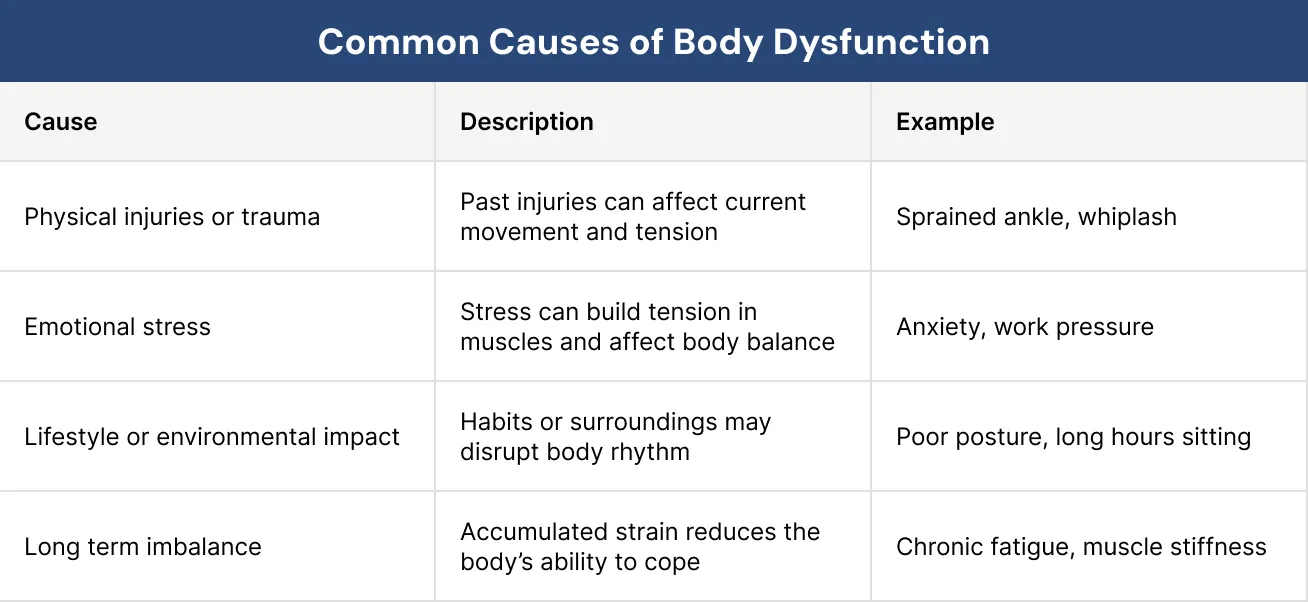
Osteopathy looks at the root cause of the problem instead of just focusing on the symptom or disease. These causes can be complex and may include:
- Physical injuries in the past or trauma
- Emotional stress
- Lifestyle or environmental impacts
- Long term stress or imbalance
Cranial osteopathy uses the same holistic approach. It aims to treat the underlying problem instead of just easing surface symptoms.
Understanding Dysfunction
A dysfunction in osteopathy arises when the body is unable to adapt well to stress or change. This can disrupt various tissues and systems, which include:
- Fascia (connective tissue)
- Joints and muscles
- Bones and structural adjustment
- Internal organs
- Nerves and fluid systems
The accumulation of stress and strain can restrict movement with the passage of time. It can also reduce the body’s ability to cope. This may then lead to the development of symptoms.
This helps the body to come into balance again by releasing tension.
How Cranial Osteopathy Works
The idea of osteopathic cranial therapy is that the body has gentle and steady rhythms. This is also called cranial rhythm or cranial rhythmic impulse. It feels like a soft pulse running throughout the body, not just the head.
The precise nature of this rhythm is still under investigation by science. Some theories indicate it may be connected with:
- The cerebrospinal fluid flow
- The sharpness of the nervous system
- The motion of membranes in the skull and spine
- The natural movement of the base of the spine
Practitioners are trained to identify these small movements using a very gentle touch. By doing this, they can identify areas where movement is tight, tense or out of balance.
These tight areas can be a result of a previous injury, stress or coping on the part of the body. Although a person may not feel an old injury as such, it remains in the body and influences current symptoms.
Once imbalances are found, the osteopath moves on to diagnosis and treatment.
Diagnosis and Treatment
Diagnosis and treatment work together in cranial osteopathy. The osteopath uses their hands to listen to the body and locate areas of tension or imbalance. This is done very softly and carefully.
When tight areas are found, soft techniques are used to help the body release tension. These may consist of:
- Light pressure or holding techniques
- Gentle shaping of tissues
- Rhythmic or pumping movements
The aim is not to impose change, but to help the body find its own balance. The body can relax, and tension can be relieved through improved movement. It helps the body to function more naturally and healthily.
This process can help with the functioning of various body parts. These parts include:
- The musculoskeletal system
- The nervous system
- The lymphatic system
- Blood circulation
- Connecting tissues such as fascia
What Does Treatment Feel Like
A gentle feel is one of the main characteristics of cranial osteopathy. The general feeling of how soft the treatment is amazes many people.
The individual lies down during a session. The practitioner applies lighter pressure to the body using their hands. The experience is often:
- Deeply relaxing
- Calm and reassuring
- Still and quiet
Some people feel warmth, mild twisting or deep relaxation. Others may feel very little during the process but notice improvements later.
It is common for patients to fall asleep during treatment.
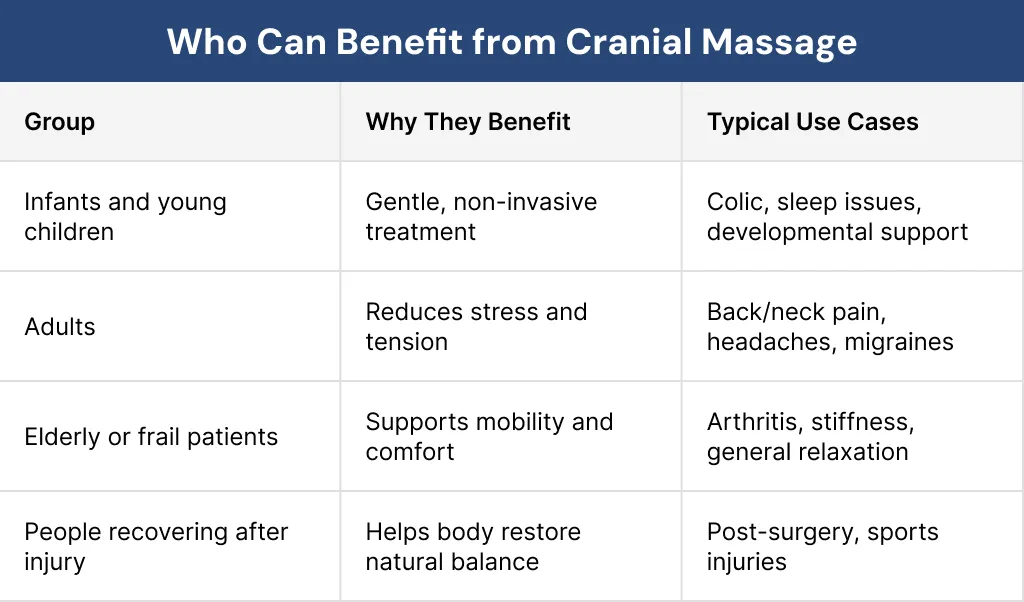
Who Can Benefit From Cranial Osteopathy
Cranial osteopathy benefits everyone of all ages. It is safe for both the babies and the elderly. It is not harsh and suitable for:
- Babies and young children
- Elderly or the weaker ones
- People recovering after injury
- People who prefer gentle treatment
It is related to care of babies, but it is not only limited to them. It applies to full families and patients of all ages.
The approach works on the whole individual rather than specific problems. As a result, people notice changes in other areas of the body, not just where they feel pain.
Is Cranial Osteopathy Safe
Cranial osteopathy is generally safe when performed by a professional and certified osteopath. A soft touch is used in treatment, thereby making it gentle and non-invasive. This is a safe practice for people of all ages, whether infants or old people.
However, it is not suitable for everyone. Cranial osteopathy is not usually recommended in cases such as:
- Serious head injuries
- Certain neurological conditions
You need to speak to your GP first in case of any medical condition.
A trained and regulated osteopath is crucial to ensure the safety and effectiveness of the procedure.
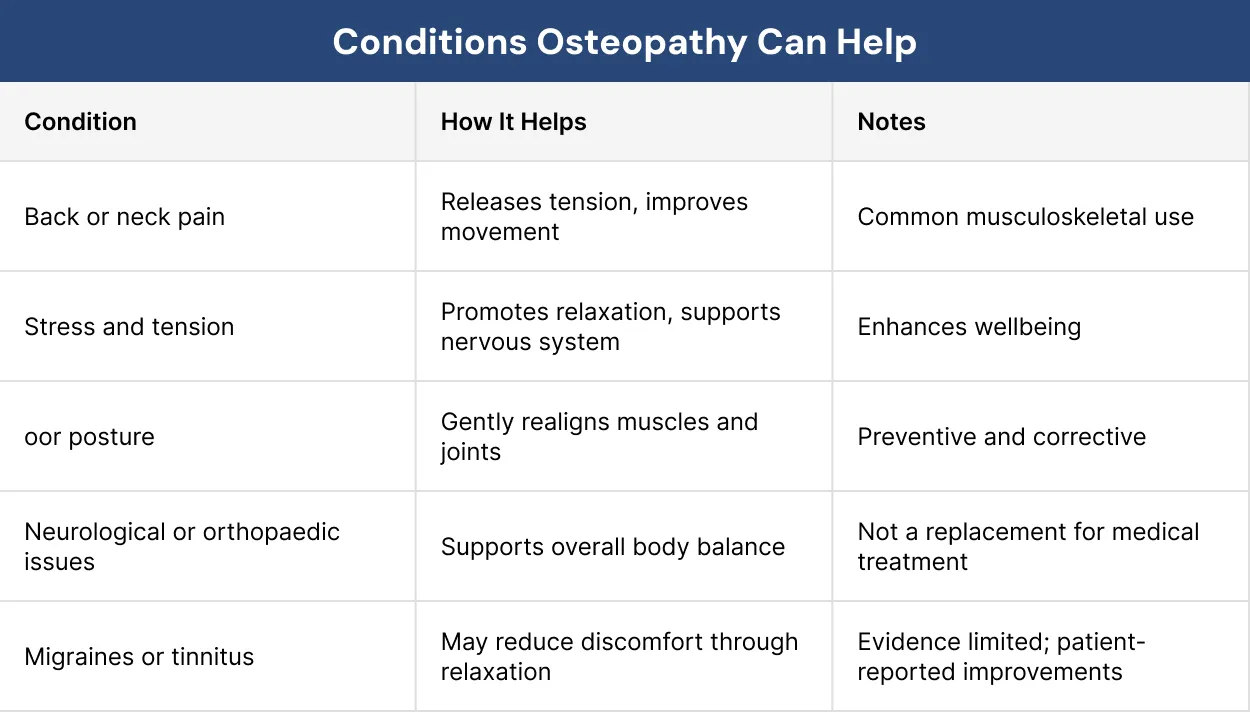
What Conditions Can It Help With
Cranial osteopathy can treat a wide range of conditions, which include:
- Back or neck pain
- Poor posture
- Stress and tension
- Neurological and orthopaedic problems
It could also be effective when symptoms are related to long term stress or poor body balance.
Some people claim it can help with conditions like migraines or ringing in the ears. However, it is not scientifically proven that cranial osteopathy treats these problems. Still, people feel better due to the calming and stress relieving effects of the treatment.
Benefits of Cranial Osteopathy
The vast majority of patients feel better after therapy. This includes:
- Less tension and stress
- Better sleep quality
- A stronger sense of wellbeing
- Less pain or discomfort
- More relaxation
Some studies show that parents report less crying and fewer signs of discomfort in babies after treatment. This improvement may be due to increased comfort and calmness.
Osteopathy helps both the mind and body by restoring balance.
Read this blog on the benefits of OMT for more details on the importance of osteopathic treatments for good health.
Effectiveness and Research
Research on cranial osteopathy is still in progress. Some of the positive scientific evidence includes:
- High patient satisfaction
- The reported improvements in symptoms
- Good results for different ages and problems
For example, a study conducted by the Sutherland Cranial College of Osteopathy showed that patients had reduced symptoms by 64% after treatment. Another study on infants showed that parents reported less crying and clear improvements.
Science is also learning more about developing areas such as:
- Fascia and connective tissue
- How fluids move within the body
- How cells move and communicate
These new findings help to explain the minor changes practitioners notice during the treatment.
Cranial Osteopathy and Other Therapies
It is similar to other manual therapies like chiropractic care. Both started in the late 19th century and were shaped by early bone setting practices.
The key differences are:
- Osteopathy aims to focus on the whole body, including muscles, joints and soft tissues
- Chiropractic treatment often focuses more on the spine and joint movements
Even with these differences, some similarities in treatment methods exist. Most practitioners adjust their treatment method to suit the patient’s condition.
Osteopathic cranial therapy is not the same as craniosacral therapy. Although both have similar names, cranial massage is a part of osteopathy. Fully trained and regulated osteopaths perform this.
Professional Training and Regulation
Osteopaths have to go through a long training to learn how to check and treat the body. They use medical knowledge and their sense of touch to assess problems.
The title osteopath is protected by law in many countries including the UK. This means practitioners must be well trained and registered with the official regulatory body.
Over 5,000 osteopaths are currently practising in the United Kingdom. These practitioners must register with the General Osteopathic Council.
Cranial osteopaths often complete additional postgraduate training to learn the specific skills required for this soft approach.
A Holistic Approach to Health
The holistic nature is one aspect that stands out in osteopathic cranial therapy.
It does not simply look at symptoms but views the body as a system and the functioning of its parts.
To find health should be the object of the doctor. Anyone can find a disease.
— Andrew Taylor Still, Founder of Osteopathic Medicine
The treatment is in line with natural healing of the body. The aim is not only to reduce current symptoms but also to help stop them coming back. This is done by addressing the root causes of imbalance and tension.
This approach also sees that the body can store emotions and past experiences, whether physical or mental. These can still affect health over time.
Real Life Example
A woman from Wiltshire had suffered from severe migraines for years. Everyday actions often triggered her headaches. She tried many forms of treatment but with no success.
She found that her sleep, pain and posture were considerably better after several osteopathy sessions. She now experiences ongoing relief in her daily life.
Conclusion
Cranial osteopathy is a gentle and hands on form of treatment. It uses osteopathy for the whole body including the head and spine. Practitioners identify and ease areas of tension using gentle techniques. It helps the body restore balance and normal function.
It is safe for all ages and is particularly known for its calm and non surgical nature. Many patients say they feel better after treatment, even though the research is still developing. It helps them have less stress and discomfort along with better sleep.
Cranial therapy is said to be holistic because it looks for the root cause rather than just the symptom.
Concise Medico provides expert, patient focused cranial osteopathy, offering clear guidance and gentle treatment to support your body’s natural balance and wellbeing.
Contact us today for professional care.
If you are considering cranial osteopathy, it is important to consult a qualified professional to ensure the treatment is safe and suitable for your needs. Contact us today to start feeling better.
If you are considering cranial osteopathy, it is important to consult a qualified professional to ensure the treatment is safe and suitable for your needs. Contact us today to start feeling better.
FAQs
Do you have regular headaches, stress or unexplained muscle tension? Cranial osteopathy is a gentle, hands on method that aims to restore balance and help your body heal naturally.
Cranial osteopathy is a gentle and refined approach within osteopathic care. It focuses on relieving tension in your body. It helps the body to naturally heal and regulate itself.
In the UK alone, up to 30,000 individuals seek services from osteopaths every working day.
Many people think osteopathy is only for back or joint pain. Cranial massage also works on the head, spine and whole body. It uses soft and hands on methods. Even though it is very gentle, people of all age groups use this for many types of problems.
Key Takeaways
- Understand that cranial osteopathy is a gentle, whole body approach that supports the body’s natural healing rather than forcing change
- Focus on root causes such as stress, poor posture or past injuries instead of only treating surface symptoms
- Choose cranial osteopathy if you prefer a soft, non invasive treatment that is suitable for all ages, including infants and older adults
- Expect gradual improvements like reduced tension, better sleep, improved comfort and a greater sense of wellbeing over time
- Always consult a qualified and registered osteopath to ensure the treatment is safe, appropriate and effective for your needs
What Is Cranial Osteopathy
Cranial osteopathy is not a separate treatment. It is a gentle and more particular way of using the same principles of osteopathy.
It was developed by an American osteopath, William Garner Sutherland. This was based on the work of Andrew Taylor Still, who was the founder of osteopathic medicine. Both believed in the philosophy of healing and balancing the body itself.
It requires the practitioner to apply very subtle methods to examine and treat the body. Although the name focuses on the head, it actually focuses on the entire body. The word “cranial” reflects the head as part of the system, not the only focus.
The treatment uses a light touch instead of strong force. This makes it suitable for people who prefer gentle care. They may include babies, children and older adults who have anxiety about physical treatment.
The Philosophy Behind Osteopathy
At its core, osteopathy is based on the idea that the body is in a constant state of work to stay healthy. It can heal, self repair and adapt.
However, when this natural balance is disrupted, symptoms can begin to appear. The disruption may be caused by injury, stress, illness or environmental factors.
Osteopathy looks at the root cause of the problem instead of just focusing on the symptom or disease. These causes can be complex and may include:
- Physical injuries in the past or trauma
- Emotional stress
- Lifestyle or environmental impacts
- Long term stress or imbalance
Cranial osteopathy uses the same holistic approach. It aims to treat the underlying problem instead of just easing surface symptoms.
Understanding Dysfunction
A dysfunction in osteopathy arises when the body is unable to adapt well to stress or change. This can disrupt various tissues and systems, which include:
- Fascia (connective tissue)
- Joints and muscles
- Bones and structural adjustment
- Internal organs
- Nerves and fluid systems
The accumulation of stress and strain can restrict movement with the passage of time. It can also reduce the body’s ability to cope. This may then lead to the development of symptoms.
This helps the body to come into balance again by releasing tension.
How Cranial Osteopathy Works
The idea of osteopathic cranial therapy is that the body has gentle and steady rhythms. This is also called cranial rhythm or cranial rhythmic impulse. It feels like a soft pulse running throughout the body, not just the head.
The precise nature of this rhythm is still under investigation by science. Some theories indicate it may be connected with:
- The cerebrospinal fluid flow
- The sharpness of the nervous system
- The motion of membranes in the skull and spine
- The natural movement of the base of the spine
Practitioners are trained to identify these small movements using a very gentle touch. By doing this, they can identify areas where movement is tight, tense or out of balance.
These tight areas can be a result of a previous injury, stress or coping on the part of the body. Although a person may not feel an old injury as such, it remains in the body and influences current symptoms.
Once imbalances are found, the osteopath moves on to diagnosis and treatment.
Diagnosis and Treatment
Diagnosis and treatment work together in cranial osteopathy. The osteopath uses their hands to listen to the body and locate areas of tension or imbalance. This is done very softly and carefully.
When tight areas are found, soft techniques are used to help the body release tension. These may consist of:
- Light pressure or holding techniques
- Gentle shaping of tissues
- Rhythmic or pumping movements
The aim is not to impose change, but to help the body find its own balance. The body can relax, and tension can be relieved through improved movement. It helps the body to function more naturally and healthily.
This process can help with the functioning of various body parts. These parts include:
- The musculoskeletal system
- The nervous system
- The lymphatic system
- Blood circulation
- Connecting tissues such as fascia
What Does Treatment Feel Like
A gentle feel is one of the main characteristics of cranial osteopathy. The general feeling of how soft the treatment is amazes many people.
The individual lies down during a session. The practitioner applies lighter pressure to the body using their hands. The experience is often:
- Deeply relaxing
- Calm and reassuring
- Still and quiet
Some people feel warmth, mild twisting or deep relaxation. Others may feel very little during the process but notice improvements later.
It is common for patients to fall asleep during treatment.
Who Can Benefit From Cranial Osteopathy
Cranial osteopathy benefits everyone of all ages. It is safe for both the babies and the elderly. It is not harsh and suitable for:
- Babies and young children
- Elderly or the weaker ones
- People recovering after injury
- People who prefer gentle treatment
It is related to care of babies, but it is not only limited to them. It applies to full families and patients of all ages.
The approach works on the whole individual rather than specific problems. As a result, people notice changes in other areas of the body, not just where they feel pain.
Is Cranial Osteopathy Safe
Cranial osteopathy is generally safe when performed by a professional and certified osteopath. A soft touch is used in treatment, thereby making it gentle and non-invasive. This is a safe practice for people of all ages, whether infants or old people.
However, it is not suitable for everyone. Cranial osteopathy is not usually recommended in cases such as:
- Serious head injuries
- Certain neurological conditions
You need to speak to your GP first in case of any medical condition.
A trained and regulated osteopath is crucial to ensure the safety and effectiveness of the procedure.
What Conditions Can It Help With
Cranial osteopathy can treat a wide range of conditions, which include:
- Back or neck pain
- Poor posture
- Stress and tension
- Neurological and orthopaedic problems
It could also be effective when symptoms are related to long term stress or poor body balance.
Some people claim it can help with conditions like migraines or ringing in the ears. However, it is not scientifically proven that cranial osteopathy treats these problems. Still, people feel better due to the calming and stress relieving effects of the treatment.
Benefits of Cranial Osteopathy
The vast majority of patients feel better after therapy. This includes:
- Less tension and stress
- Better sleep quality
- A stronger sense of wellbeing
- Less pain or discomfort
- More relaxation
Some studies show that parents report less crying and fewer signs of discomfort in babies after treatment. This improvement may be due to increased comfort and calmness.
Osteopathy helps both the mind and body by restoring balance.
Read this blog on the benefits of OMT for more details on the importance of osteopathic treatments for good health.
Effectiveness and Research
Research on cranial osteopathy is still in progress. Some of the positive scientific evidence includes:
- High patient satisfaction
- The reported improvements in symptoms
- Good results for different ages and problems
For example, a study conducted by the Sutherland Cranial College of Osteopathy showed that patients had reduced symptoms by 64% after treatment. Another study on infants showed that parents reported less crying and clear improvements.
Science is also learning more about developing areas such as:
- Fascia and connective tissue
- How fluids move within the body
- How cells move and communicate
These new findings help to explain the minor changes practitioners notice during the treatment.
Cranial Osteopathy and Other Therapies
It is similar to other manual therapies like chiropractic care. Both started in the late 19th century and were shaped by early bone setting practices.
The key differences are:
- Osteopathy aims to focus on the whole body, including muscles, joints and soft tissues
- Chiropractic treatment often focuses more on the spine and joint movements
Even with these differences, some similarities in treatment methods exist. Most practitioners adjust their treatment method to suit the patient’s condition.
Osteopathic cranial therapy is not the same as craniosacral therapy. Although both have similar names, cranial massage is a part of osteopathy. Fully trained and regulated osteopaths perform this.
Professional Training and Regulation
Osteopaths have to go through a long training to learn how to check and treat the body. They use medical knowledge and their sense of touch to assess problems.
The title osteopath is protected by law in many countries including the UK. This means practitioners must be well trained and registered with the official regulatory body.
Over 5,000 osteopaths are currently practising in the United Kingdom. These practitioners must register with the General Osteopathic Council.
Cranial osteopaths often complete additional postgraduate training to learn the specific skills required for this soft approach.
A Holistic Approach to Health
The holistic nature is one aspect that stands out in osteopathic cranial therapy.
It does not simply look at symptoms but views the body as a system and the functioning of its parts.
To find health should be the object of the doctor. Anyone can find a disease.
— Andrew Taylor Still, Founder of Osteopathic Medicine
The treatment is in line with natural healing of the body. The aim is not only to reduce current symptoms but also to help stop them coming back. This is done by addressing the root causes of imbalance and tension.
This approach also sees that the body can store emotions and past experiences, whether physical or mental. These can still affect health over time.
Real Life Example
A woman from Wiltshire had suffered from severe migraines for years. Everyday actions often triggered her headaches. She tried many forms of treatment but with no success.
She found that her sleep, pain and posture were considerably better after several osteopathy sessions. She now experiences ongoing relief in her daily life.
Conclusion
Cranial osteopathy is a gentle and hands on form of treatment. It uses osteopathy for the whole body including the head and spine. Practitioners identify and ease areas of tension using gentle techniques. It helps the body restore balance and normal function.
It is safe for all ages and is particularly known for its calm and non surgical nature. Many patients say they feel better after treatment, even though the research is still developing. It helps them have less stress and discomfort along with better sleep.
Cranial therapy is said to be holistic because it looks for the root cause rather than just the symptom.
Concise Medico provides expert, patient focused cranial osteopathy, offering clear guidance and gentle treatment to support your body’s natural balance and wellbeing.
Contact us today for professional care.
If you are considering cranial osteopathy, it is important to consult a qualified professional to ensure the treatment is safe and suitable for your needs. Contact us today to start feeling better.
If you are considering cranial osteopathy, it is important to consult a qualified professional to ensure the treatment is safe and suitable for your needs. Contact us today to start feeling better.