TABLE OF CONTENT
Drug Rehabilitation: Your First Step Toward a New Life
If you struggle with drug addiction, admitting that you need help with drugs is one of the hardest things ever. You may feel stuck, fear withdrawal or wonder if things will improve. But choosing drug rehabilitation can mark the beginning of a different future.
A record 329,646 English adults received alcohol and drug rehab in 2024-2025. Drug rehabilitation helps people recover from dependence through treatment and useful skills. This blog covers how to choose a programme, what treatment involves, the drug rehabilitation cost and what to expect.
What Is Drug Rehabilitation?
Drug rehabilitation is a structured treatment programme that helps people overcome drug dependence and work towards long-term recovery. It addresses more than drug use itself, helping you understand the causes of dependence, manage triggers and develop healthier coping strategies.
Treatment varies depending on the drug involved, your circumstances and the level of support you need. You may attend outpatient treatment while living at home or receive residential care at a clinic.
Drug rehab programmes have several parts:
- Assessment to understand your needs
- Detoxification to clear drugs from your body
- Therapy to work through emotional issues
- Medicine to manage cravings
- Ongoing support after treatment
It is not always easy to tell when drug use has become a problem that needs professional support. You may have tried to stop but found it difficult to stay drug-free or noticed that drug use is affecting your health, relationships, work or daily life. These can be signs that you need more support than you can manage alone.
You may benefit from drug rehabilitation if you:
- feel unable to control how often or how much you use drugs
- have withdrawal symptoms when you stop using drugs
- need drugs to feel able to manage your day
- keep using drugs despite problems with your health or relationships
- have stopped using drugs before but started again
- find that drug use is affecting your work, studies or responsibilities
You do not have to wait for a crisis before asking for help. A GP, drug treatment service or rehab provider can assess your needs and help you find support.
Where Do I Get Help for Drug Rehabilitation?
If you are looking for drug rehabilitation, a general practitioner can be the right person to start with. They can discuss your drug use, assess your needs and refer you to a local drug treatment service. You can also contact a local drug treatment service directly without going through your GP.
If you are thinking about residential drug rehab, ask providers about their programmes, admission and level of care. Make sure the service meets your needs and provides the support you may require during or after treatment.
How to Choose the Right Drug Rehab?
Choosing the right drug rehab can affect how well you engage with treatment. You need to look at the type of care each service provides and whether it matches your needs. The right drug rehabilitation programme should offer a clear treatment plan and appropriate support throughout recovery.
Consider these key factors when comparing a drug rehab:
1. Check the Treatment and Detox Options
Make sure the programme provides the treatment and detox you need. If you are at risk of withdrawal symptoms, ask whether it includes medical assessment and supervised detox.
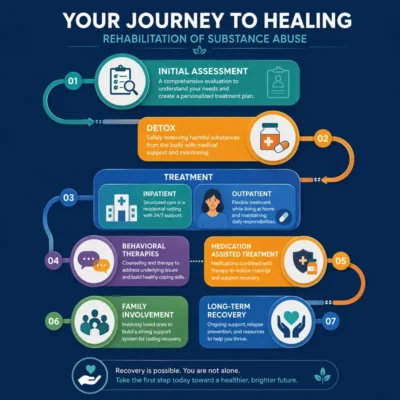
2. Compare Inpatient and Outpatient Rehab
Some people need residential care, while others receive treatment while living at home. The right option will depend on your drug use, health and home life.
Inpatient drug rehab requires you to live at a clinic during treatment. It provides a structured environment away from drugs, daily pressures and familiar triggers. It may be suitable if you have a serious drug problem or need intensive medical supervision during detox.
Outpatient drug rehabilitation lets you attend planned treatment while living at home. It may suit you if you have a stable home setting and do not need continuous care. You may also be able to continue working, studying or caring for your family.
3. Check Staff Qualifications and Regulation
Check whether trained health and addiction professionals deliver the treatment. In England, you should also confirm whether the service is registered with the Care Quality Commission (CQC).
4. Look for Individualised Treatment
A suitable programme should consider your drug use, health, home life and recovery goals. A qualified provider can review your circumstances and recommend an appropriate drug rehabilitation plan.
5. Ask About Aftercare Support
Find out what aftercare you can get after the main drug rehabilitation programme ends. This may include ongoing therapy, follow-up appointments or other support to help you maintain your recovery.
The best drug rehabilitation option depends on your drug use, living situation and level of support. A good rehabilitation clinic can assess your needs and recommend an appropriate plan.
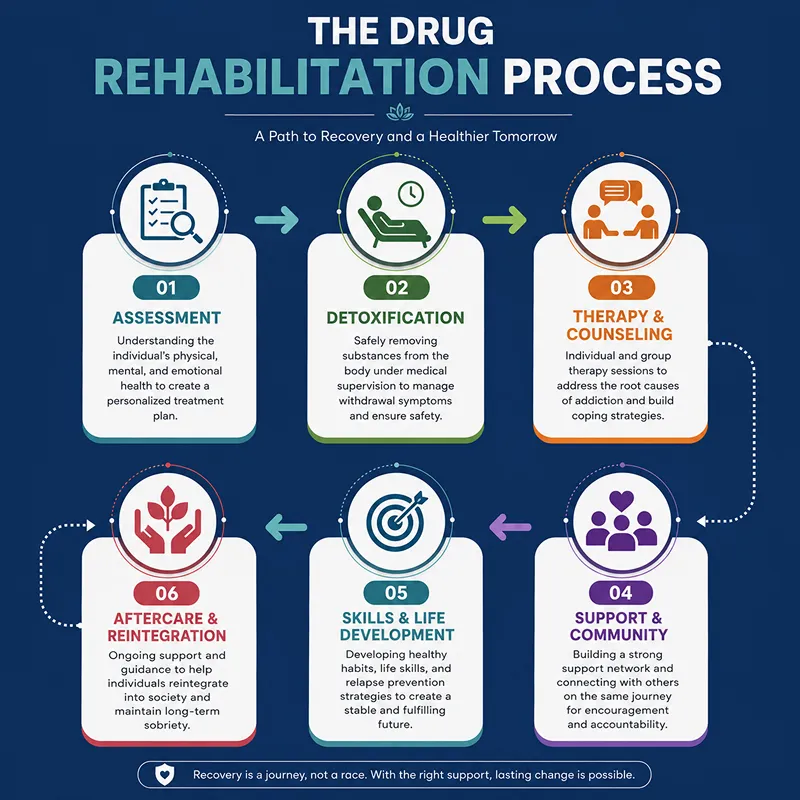
What Does the Drug Rehabilitation Process Involve?
The drug rehabilitation process involves assessment, detox, talking therapies, medication and support groups. Your treatment plan will depend on your circumstances and recovery needs.
1. Assessment
Assessment is usually the first stage of drug rehabilitation. A member of the recovery team will ask about your drug use, physical and mental health, home life and any treatment you have had before. They will also discuss what you want to achieve and the type of support you may need.
The information gathered during the assessment is used to develop your treatment plan. This plan can change as your needs and progress change.
2. Detoxification
Detoxification may be included in treatment, depending on the substance used, your level of dependence and the risk of withdrawal. Not everyone entering drug rehabilitation needs detox.
Where detox is required, trained staff monitor you while the drug leaves your system. Withdrawal symptoms can be mild or severe. Their severity depends on factors such as the substance used and how long you have been taking it. Medication may also help control some symptoms and make withdrawal safer.
3. Talking Therapies
Talking therapies are used in many drug rehabilitation programmes. Sessions may explore why you use drugs and how factors such as stress, habits or relationships affect your behaviour. You may also work on managing cravings and finding healthier ways to cope with difficult situations.
4. Medication
Medication is another possible part of treatment. Whether it is needed depends on the substance involved and your individual circumstances.
Some medicines can ease withdrawal symptoms, while others may reduce cravings. Medication may be provided alongside therapy, counselling or other forms of treatment.
5. Self-Help and Support Groups
Support can continue after the main rehabilitation programme has ended. Self-help and support groups give you the opportunity to meet people who have faced similar difficulties and share experiences in a supportive setting.
Some people attend these groups during treatment, while others continue with them afterwards. They can provide a source of support when dealing with triggers, cravings or other challenges in everyday life.
How Long Does Drug Rehabilitation Take?
There is no set length for drug rehabilitation. Treatment may last several weeks or continue for several months, depending on your drug use, health and treatment needs. Your goals and the type of programme you enter will also affect how long you receive support.
A programme may include detox, therapy and aftercare, although the combination will vary from person to person.
What Happens After Drug Rehabilitation?
Leaving rehab does not necessarily mean that treatment and support stop. Returning to everyday life can bring new challenges, including cravings, triggers and situations associated with previous drug use.
“Recovery is a process that often takes time to achieve and effort to maintain.”
Professor Dame Carol Black, UK Government Drug Recovery Champion
1. Aftercare and Ongoing Support
Aftercare helps you adjust to life outside rehab. Depending on your treatment plan, this could include further therapy, appointments with a treatment team or support group meetings. The level of support you receive will depend on your circumstances.
2. Building a Drug-Free Routine
A regular routine can make the transition back to everyday life easier. Spending time with supportive people, returning to work or education and taking part in healthy activities can give your days more structure.
It may also help to avoid people, places or situations associated with previous drug use, particularly during the early stages of recovery.
3. Relapse Prevention
Relapse prevention focuses on recognising triggers, managing cravings and dealing with situations where you may be at greater risk of using drugs. Your treatment plan may include coping strategies and identify people or services you can contact if you are struggling.
4. What Happens If I Relapse?
A relapse does not mean that treatment has failed. It may indicate that you need additional support or that your treatment plan needs to be reviewed.
If you relapse, speak to your treatment team or another appropriate support service as soon as possible. They can help you assess what happened and decide what support you need next.
Case Study: Barry’s Recovery Through Drug Rehabilitation
Barry had used cannabis, amphetamines and heroin from a young age and had spent 17 years in and out of prison. A UK Government case study reports that he later entered a 20-week rehabilitation programme involving detoxification, therapy, residential rehabilitation and family support.
After completing the programme, Barry became a Recovery Champion and helped increase referrals to the service by 900%. He also returned to education and employment and began living independently.
Barry’s case illustrates the range of support that can form part of a structured rehabilitation programme, both during treatment and after it.
Final Thoughts
Drug rehabilitation involves more than stopping drug use. Treatment can address the factors behind drug use, help you manage cravings and prepare you for life after rehab.
If you are considering treatment, speaking to a GP or drug rehabilitation service can help you understand the options available. The right type of support will depend on your circumstances and treatment needs. Concise Medico can also help you take the next step towards a drug-free future.
Living with drug dependence can affect your health, relationships, work and everyday life. You do not have to keep dealing with it alone. Our professional team at Concise Medico can help you understand your treatment options and find the support you need.
Take control of your recovery. Contact us today and start your journey towards a healthier, drug-free life.
Living with drug dependence can affect your health, relationships, work and everyday life. You do not have to keep dealing with it alone. Our professional team at Concise Medico can help you understand your treatment options and find the support you need.
Take control of your recovery. Contact us today and start your journey towards a healthier, drug-free life.