TABLE OF CONTENT
We all have mental health in the same way that we all have physical health. It’s okay to have depression, it’s okay to have anxiety, it’s okay to have an anxiety disorder. – Prince Harry, Duke of Sussex
The discussion on the topic of mental health has increased in this modern world, but still many people do not understand it. In the past, mental health problems carried a lot of shame, especially those in this psychiatric condition list. People with these disorders were often called flawed, weak or lazy. This article serves as a list of all mental disorders to improve awareness.
Luckily, times are changing and people are learning more about mental health and disorders through this psychiatric condition list. Learning is important for everyone exploring this mental disorders list and it’s not just for those affected. It helps people be kind, lowers shame and encourages getting help early. On average, 300 million children and adolescents currently live with mental disorders around the world.
In this blog, you will learn:
- Understanding of psychiatric conditions and mental disorders
- Anxiety and depressive disorders
- Bipolar and OCD disorders
- Neurodevelopment and neurocognitive disorder
- Eating and sleep wake disorders
- Treatments and support
What Are Psychiatric Conditions or Mental Disorders
Mental disorders or psychiatric conditions are health issues that affect a person’s thinking, emotions, and behavior. The daily life, the work place and personal relationships can also be affected. They can be managed with the right care and support.
Mental health is an individual’s psychological, emotional and social well being, as explained in mental disorders list. It affects:
- Thinking processes
- Feelings
- Daily behaviour
- Relationships
- Work performance
- Life satisfaction
Mental health also needs care and attention like physical health. This is clearly reflected throughout this mental disorders list. We look after it with self care, talking to a therapist and support from others, just as we eat well, sleep enough and exercise for our body.
Mental health conditions also refer to psychiatric disorders or mental illnesses which change the way a person thinks, feels or acts as mentioned in mental disorders list. They can make daily life hard, affecting work, school and relationships as shown in mental disorders list. These problems can be short term, in episodes or last a long time, depending on the type and severity of the disorder. They are real, serious and can affect anyone included in this mental disorders list. Age, gender and background do not matter.
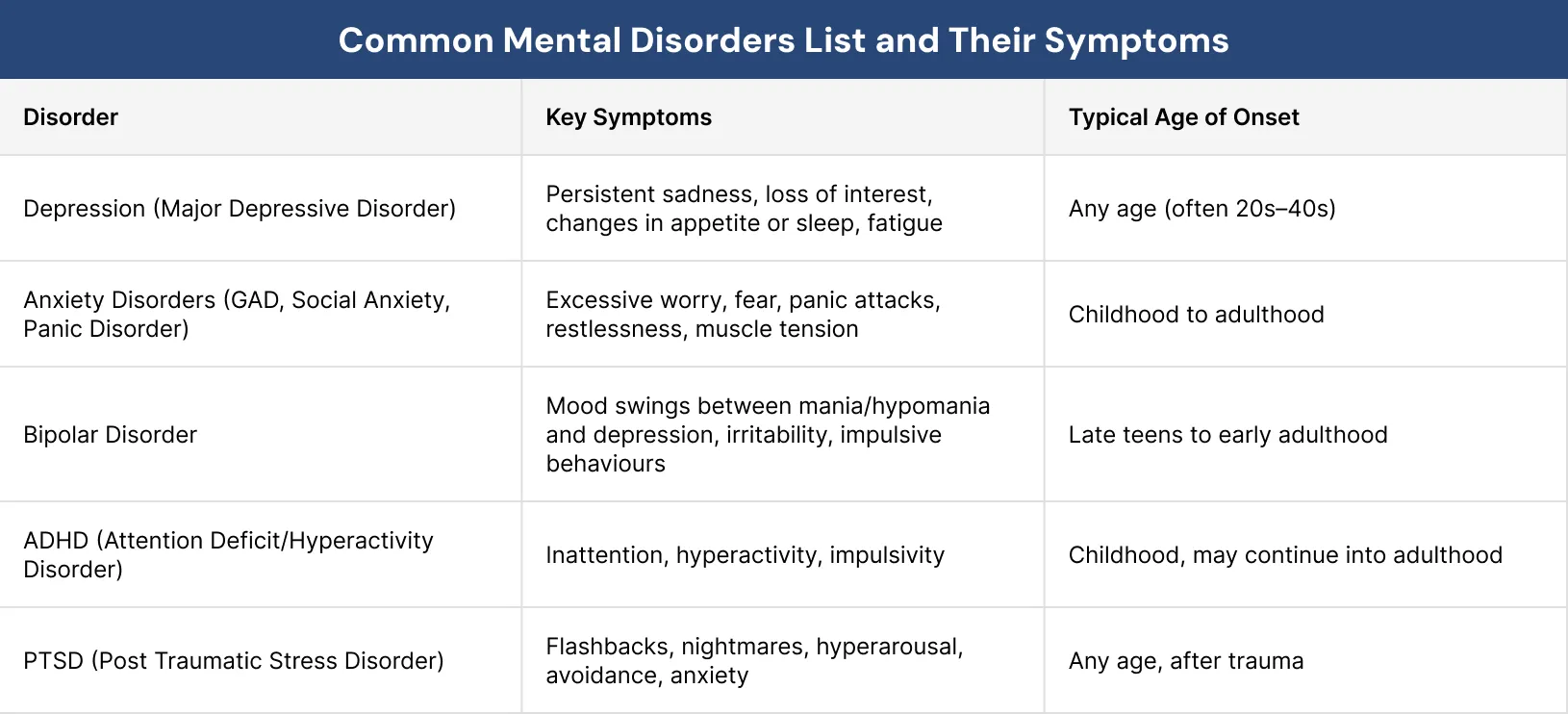
The Diagnostic and Statistical Manual of Mental Disorders (DSM 5) comprises all mental disorders list. The American Psychiatric Association published this book. It helps doctors name and group mental health issues. This psychiatric condition list is used worldwide for diagnosis. They look at what signs a person has, how long they last and how much they affect day to day life. It helps define the list of all mental disorders used in diagnosis.
Another guide is called the International Classification of Diseases (ICD), published by the World Health Organisation. It is also used to name and track health problems. It supports global understanding of the mental disorders list.
Mental health problems can start for many reasons in this mental disorders list. These may include genes, body changes, psychological traits and stress in life. For example, your risk of having bipolar disorder or schizophrenia may be higher if someone in your family is suffering from this. But genes on their own do not mean you will get these problems described in this mental disorders list.
Neurotransmitter imbalances, shifts in hormones, head injury and poor health can all play a part in mental illness. These biological factors are included in the mental disorders list. Some people may also be more at risk because of how they think and cope.
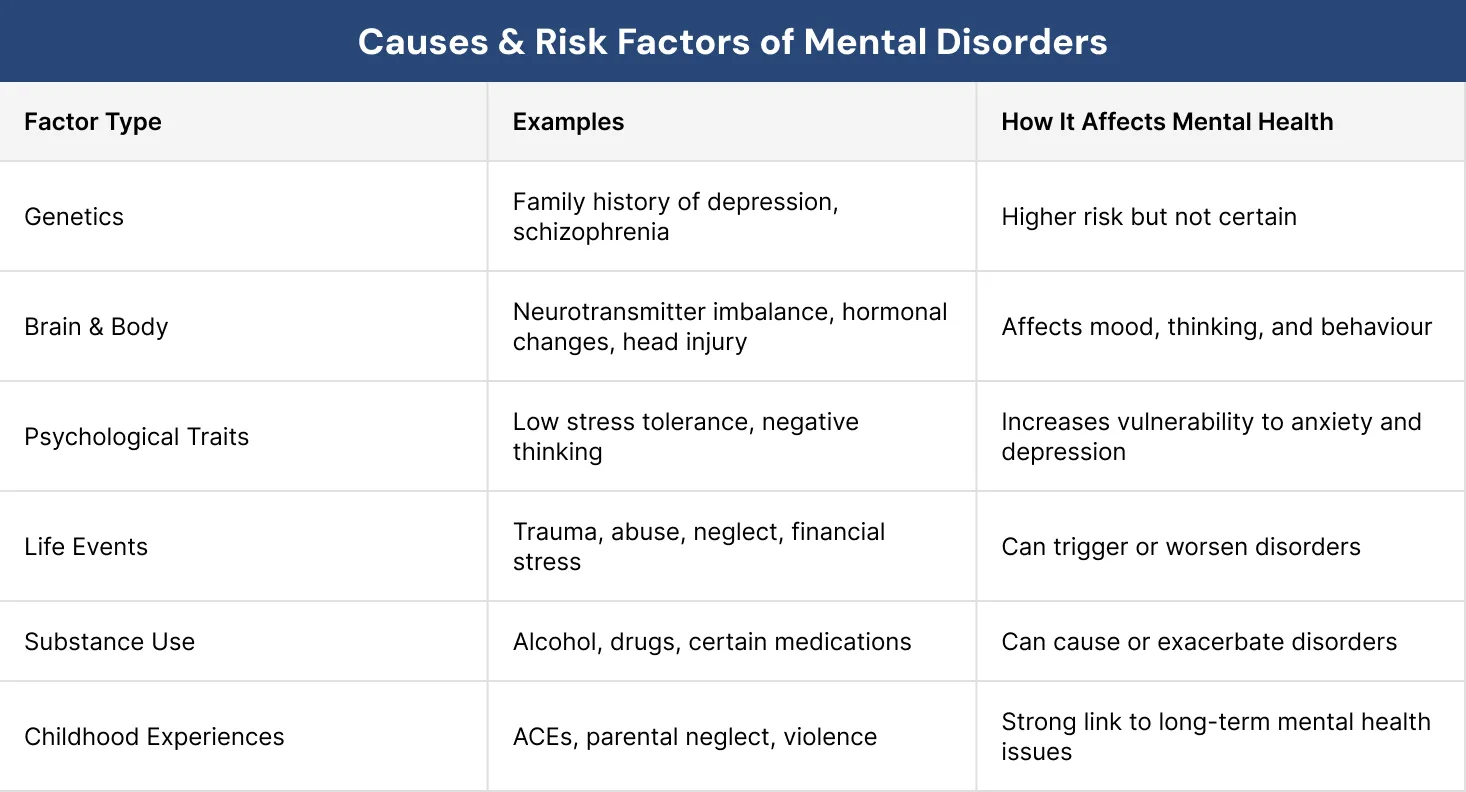
Below are some examples which can lead to depression or anxiety in this mental disorders list:
- Low ability to deal with stress
- Often feeling worried
- Having a lot of negative thoughts
Life events also play a role in this mental disorders list. These include:
- Trauma
- Abuse
- Neglect
- Hard relationships
- Money worries
- Being alone
Adverse Childhood Experiences (ACEs) and early life play a very important role in this mental disorders list. The risk of mental illness is linked with the adverse events in childhood. Violence at home or misuse of drugs and alcohol by a parent are some examples. Disorders can also start with the use of drugs or alcohol. This can lead to a cycle where each one makes the other worse.
Stigma is another big issue in understanding this mental disorders list. Many people have wrong ideas. Some think it means a person is weak. Others think they are violent, that they are contagious. Some think it is only due to bad parenting. These are harmful ideas and stop people from asking for help related to this mental disorders list. This stigma can cause shame, fear and feelings of isolation.
The mind and body are also strongly impacted in many conditions within this mental disorders list. They can live well and have full, happy lives with the right care and support
The knowledge of common disorders helps people to identify their effects and get help early using this mental disorders list.
Here is a detailed list of all mental disorders or psychiatric conditions explained in detail.
1. Anxiety Disorders
Anxiety disorders are the most common mental health conditions. These are characterized by excessive nervousness, fear or worry.
They involve nervousness, excessive fear or worry that is hard to control. In this mental disorders list, daily life, relationships and overall quality of life are strongly affected.
The types are mentioned below:
Generalised Anxiety Disorder (GAD)
This disorder causes people to worry about everyday things like health, family or work safety. It is long lasting and hard to control. It can also cause signs like feeling on edge, being tired, tense muscles, getting annoyed easily and poor sleep.
Panic Disorder
Panic attacks are sudden and strong bursts of fear. A person may feel:
- Fast heartbeat
- Shaking
- Trouble breathing
- A sense that something bad will happen
Agonaphobia is the term used to describe panic disorder in situations and places where it has already occurred
Social Anxiety Disorder
There may be a fear of social situations where a person assumes they are being judged by others. They may avoid meeting people. This leads to feelings of isolation and harm to their relationships.
Specific Phobias
This is a phobia related to a strong and lasting fear of a certain thing or place like fear of heights (acrophobia), spiders (arachnophobia) or flying. A person may feel very anxious when facing it. It can then turn into a panic attack.
Anxiety problems are different from normal stress or nerves and are very strong. They may last a long time and can disrupt daily life. The symptoms can be managed through therapy, support or medicine. This can also help people live full lives. These are key conditions in the mental disorders list.
2. Depressive Disorders
Depression is more than just feeling sad now and then. In this mental disorders list, there may be a long term problem that causes distress and lowers quality of life. It affects mood, energy and interest in life. Daily life may become hard due to this disorder.
The major types of depressive disorders are mentioned below:
Major Depressive Disorder (MDD)
This involves:
- Low mood most of the time
- Loss of interest in things
- Low self worth
- Strong emotional distress
A person with MDD can have symptoms of changes in appetite, poor sleep and feels very tired. It lasts two weeks or more without proper treatment.
Persistent Depressive Disorder (Dysthymia)
This disorder is a long term and milder form of depression. It lasts at least two years. The signs are less stronger than MDD but last longer and impact everyday life, work and social life.
Disruptive Mood Dysregulation Disorder (DMDD)
Children are mostly impacted with this disorder. It causes irritability and anger outbursts all the time.
Premenstrual Dysphoric Disorder (PMDD)
Some women are affected by this before their period. It can cause:
- Mood swings
- Irritability
- Anxiety
- Other emotional or body symptoms
Substance/Medication Induced Depressive Disorder
Some medicines, drugs and alcohol cause this disorder. It may improve when the substance is stopped.
Depressive Disorder Due to Another Medical Condition
This occurs when another medical condition or health problem leads to depression such as thyroid issues, Parkinson’s disease or cancer.
These disorders form a major part of the mental disorders list. They can be cured with therapy, changes in lifestyle, medicine and support. Early diagnosis and treatment is also beneficial for fast recovery.
3. Bipolar and Related Disorders
This disorder may have a big change in mood and previously it was also known as manic depressive illness. Mood can change from very high to very low and can impact everyday life, work and relationships.
Mania
This is a high mood and a person may:
- Feel very energetic
- Get distracted
- Need less sleep
- Act impulsively
Depressive Episodes
This is the low side and a person may:
- Feel sad
- Feel tired
- Lose interest in things
- Find it hard to cope
Subtypes
Bipolar I, Bipolar II and Cyclothymia are different types of this disorder. It can also be due to medical or substance use.
Children
There are similar signs in children, often called Disruptive Mood Dysregulation Disorder (DMDD).
The Bipolar conditions are important in this mental disorders list. They can be treated with medicine, therapy and healthy lifestyle habits.
4. Obsessive Compulsive and Related Disorders
These disorders are now a separate group but they used to be part of anxiety in mental disorders list. Repeated thoughts and actions may cause distress and affect everyday life.
Obsessive Compulsive Disorder (OCD)
Unwanted thoughts may cause anxiety in this disorder. Certain actions may be repeated by an affected person to overcome things like washing hands, checking or cleaning.
Body Dysmorphic Disorder (BDD)
This disorder causes a person to be very concerned about how they look. They are usually able to notice flaws that others may not notice. They keep checking mirrors or comparing themselves to others.
Hoarding Disorder
It is very difficult to get rid of the things even if they have little value. This leads to clutter which makes life difficult.
Excoriation (Skin Picking) Disorder
A person keeps picking their skin which can cause damage and marks.
Trichotillomania (Hair Pulling Disorder)
A strong desire to pull out hair from the body or head which leads to clear hair loss.
Substance/Medication Induced OCD
These signs can be caused by drugs, alcohol or some medicines.
OCD Due to Another Medical Condition
OCD like signs can also be caused by other health issues.
They are all treatable and included in the mental disorders list. Therapy (like cognitive behavioural therapy), medicine and support are used to treat them.
5. Trauma and Stress or Related Disorders
These problems can start after a very stressful or traumatic event. They were once considered part of anxiety problems in DSM classifications of the psychiatric condition list.
Post Traumatic Stress Disorder (PTSD)
PTSD may happen after a serious event like an attack, accident or war. A person may have:
- Flashbacks
- Bad dreams
- Upsetting thoughts
- Feel on edge
- Try to avoid reminders
Acute Stress Disorder
This disorder may start soon after the event and is similar to PTSD. It lasts for a short time period and may resolve on its own.
Adjustment Disorders
These disorders happen after major life changes. It may be a loss of a loved one or losing a job. This disorder can make a person feel low, irritable, worried and find it hard to cope.
Reactive Attachment Disorder (RAD)
This disorder can affect children who did not receive enough care or support. They have a hard time socially and are unable to make friends.
6. Dissociative Disorders
It affects memory, identity or how a person feels about themselves or the world. Trauma or stress trigger this disorder.
Dissociative Identity Disorder (DID)
This was once called multiple personality disorder. A person may have two or more different identities that take control at times.
Depersonalisation/Derealisation Disorder
A person may think they are cut off from their environment or themselves and feel that things are not real. But they still know what is real.
Dissociative Amnesia
A person cannot remember key personal facts often after trauma.
Dissociative Fugue
A person may suddenly travel or wander away. They may not remember who they are.
These disorders are part of the mental disorders list and can be treated with therapy. The aim is to build up coping skills and help the person to deal with their trauma. Therapy can also help restore their self esteem.
7. Neurodevelopmental Disorders
These disorders usually start in early childhood mostly before school. They affect how a child learns, interacts and manages daily life. Following are commonly seen in the mental disorders list:
Intellectual Development Disorder (IDD)
IDD was previously known as mental retardation. This involves limits in thinking skills and daily living skills. A child may have trouble with speech, problem solving and basic tasks. Tests are used to assess learning ability and daily skills.
Global Developmental Delay
Used for young children (under five) who are slow in two or more areas, such as movement, speech, social skills or daily tasks. Some children may later experience learning problems or develop IDD.
Communication Disorders
Speech and language are affected in this disorder. Types include:
- Childhood Onset Fluency Disorder (Stuttering)
- Language Disorder (trouble understanding or using words)
- Social (Pragmatic) Communication Disorder
- Speech Sound Disorder (trouble making sounds clearly)
Autism Spectrum Disorder (ASD)
This disorder affects social skills, communication and behaviour. There may be repeated actions and Mild Neurocognitive Disorders
This causes a decline in cognitive function because of health problems such as Alzheimer’s disease, Parkinson’s disease or blood flow issues. Symptoms include:
- Memory loss
- Trouble understanding things
- Difficulty with speech and daily tasks
It is important to get early diagnosis and good care. This may be cured with therapy, medicine and support for both the person and their carers.
Attention Deficit/Hyperactivity Disorder (ADHD)
There may be trouble focusing, being very active or acting without thinking which affects school, work and relationships.
Specific Learning Disorders
School skills are affected in this disorder like reading (dyslexia), writing (dysgraphia) or mathematics (dyscalculia).
Motor Disorders
These disorders cause problems with movement like tics, shakes or sudden jerks.
Early diagnosis is very important. Children can do better with therapy, support at school and sometimes medication. These are key entries in the list of all mental disorders.
In March 2025, about 2.06 million people were in touch with NHS mental health services. Around 503,422 were children and young people and 296,098 were in learning disability and autism services.
8. Schizophrenia Spectrum and Other Psychotic Disorders
These disorders affect a person’s thoughts, feelings and how they see reality. It may be difficult for them to tell what is real and what is not.
Schizophrenia
Main signs include:
Positive symptoms
These symptoms include experiences that are not normal. They can involve false beliefs and seeing or hearing things that are not there. A person may have confused speech and odd behaviour.
Negative symptoms
These reduce normal traits, such as low emotion, reduced speech, loss of pleasure (anhedonia) and low drive.
Schizoaffective Disorder
This has signs of schizophrenia along with mood problems. It can cause depression or a high mood.
Schizophreniform Disorder
This disorder is like schizophrenia and lasts for a shorter time from 1 to 6 months.
Schizotypal Personality Disorder
A person may feel very uneasy in social settings and act in odd ways. They have unusual beliefs or views.
Medicine, therapy, social support and rehab are the treatment options to help people live better lives.
9. Eating Disorders
It involves problems with eating. They involve a strong focus on body weight or shape. They can harm both the body and the mind. Following types are included in mental disorders list:
Anorexia Nervosa
Due to a strong fear of gaining weight, a person eats very little and perceives their body inaccurately. This can lead to serious health problems, such as heart or kidney issues.
Bulimia Nervosa
A person may eat a lot in a short time and then try to get rid of the food by vomiting. Laxatives, fasting or too much exercise are used to get rid of food. They may experience guilt and shame.
Binge Eating Disorder (BED)
Sometimes a person eats large amounts of food without trying to get rid of it. This is often linked to stress or strong emotions.
Rumination Disorder
A person brings food back into the mouth, chews it again and then swallows or spits it out.
Pica
A person eats things other than food which can be very harmful. Examples are dirt, chalk or paint.
Cognitive Behavioral Therapy, changes in eating habits and medical care can be helpful to deal with this disorder.
10. Personality Disorders
Personality disorders are long term patterns in how a person thinks, feels and acts. These patterns are quite different from what is usual and can make daily life hard.
Borderline Personality Disorder (BPD)
People may have unstable relationships and poor self image. They have strong mood swings and take impulsive actions.
Narcissistic Personality Disorder (NPD)
They strongly need praise from others and think of themselves as very important. They may have little empathy for others.
Avoidant Personality Disorder
A person may avoid social contact and feel not good enough. They may be very sensitive to criticism.
Dependent Personality Disorder
A person strongly needs care from others, has clingy behaviour and fear of being alone.
Histrionic Personality Disorder
People with this disorder need attention and have strong emotions. They can be easily influenced by others.
Obsessive Compulsive Personality Disorder
A person may have a strong focus on order, rules and perfection often with little or no flexibility.
Paranoid Personality Disorder
People may have ongoing trust issues and suspicion of others.
Schizoid Personality Disorder
A person avoids social life and shows little emotion.
Schizotypal Personality Disorder
They may have odd behaviour, unusual beliefs and are not comfortable in close relationships.
Treatment often includes therapy to build skills and some cases may need medication.
11. Disruptive, Impulse Control and Conduct Disorders
People with these disorders may have difficulty in controlling emotions and actions. It can cause harm to others or themselves.
Intermittent Explosive Disorder
The affected person may have sudden bursts of strong anger that are out of control. This can result in physical aggression or shouting.
Conduct Disorder
A continuous behaviour that breaks rules and harms others. It can be fighting, stealing or damaging things.
Oppositional Defiant Disorder (ODD)
There may be an ongoing aggressive attitude, usually towards parents, teachers or other authorities.
Pyromania
A person may have a strong urge to start fires for a sense of relief or interest.
Kleptomania
A person may have a strong urge to steal things even if they are not required. This may be followed by relief or guilt.
These problems can be treated and can be cured with behaviour therapy, family support and sometimes medicine. An early diagnosis can prevent problems from getting worse.
12. Sleep Wake Disorders
Good sleep is needed by both mind and body and poor sleep can have a negative impact on daily life.
Insomnia Disorder
This disorder may have problems falling or staying asleep and can cause distress. This may make everyday tasks difficult to do.
Parasomnias
Unusual actions during sleep, such as:
- Sleepwalking
- Eating in sleep
- Night terrors
- Talking in sleep
Narcolepsy
A long term sleep problem where a person feels sleepy all day long and may fall asleep at any time.
Hypersomnolence Disorder
There may be a feeling of being very sleepy during the day even after getting enough sleep.
Breathing Related Sleep Disorders
Sleep apnoea is one of the problems in the list of all mental disorders. The breathing of a person stops and restarts while sleeping. It can make them feel tired and unrested.
Restless Legs Syndrome (RLS)
A neurological disorder makes you want to move your legs at night. It may cause sleep disturbance.
The treatment can include better sleep habits, lifestyle changes and sometimes medication.
13. Substance Related and Addictive Disorders
Substance use problems happen when the drugs or alcohol begins to impact your daily life and health negatively.
Alcohol Related Disorders
This makes you keep drinking even if it is harmful.
Cannabis Related Disorders
The use of cannabis that impacts your everyday life.
Stimulant Use Disorder
The use of drugs like cocaine or similar substances in a wrong way.
Inhalant Use Disorders
Neurological and organ damage happens when you breathe in harmful fumes.
Tobacco Use Disorder
The addiction of nicotine with strong urges and withdrawal signs.
Gambling Disorder
A strong wish to gamble which is hard to control.
Caffeine Related Disorder
The consumption of too much caffeine. This leads to dependence and problems in your daily life.
Treatment may include therapy, support groups, relapse prevention techniques and detoxification.
14. Neurocognitive Disorders
These disorders affect thinking, memory and problem solving of a person.
Delirium
It often occurs for a short period in which a person faces a sudden confusion and trouble paying attention. It can be due to illness, medication or substance withdrawal.
Major and Mild Neurocognitive Disorders
This causes a decline in cognitive function because of health problems such as Alzheimer’s disease, Parkinson’s disease or blood flow issues. Symptoms include:
- Memory loss
- Trouble understanding things
- Difficulty with speech and daily tasks
Finding it early and giving good care is very important. Therapy, medicine, and support for the person and their carers can help treat it.
15. Other Disorders
There are also some mental health problems that do not fit into the main groups of mental disorders list. These include:
Sexual Dysfunctions
This disorder causes difficulty with desire, arousal, orgasm or pain during intercourse.
Gender Dysphoria
Distress when a person’s gender identity does not align with the sex assigned at birth.
Paraphilic Disorders
Unusual sexual interests that may cause harm or distress. It includes:
- Pedophilia
- Voyeurism
- Exhibitionism
- Fetishism
- Transvestic disorder
Medication Induced Movement Disorders
These include issues like restlessness, stiff muscles or strange body movements caused by some medicines.
Conditions Requiring Clinical Attention
These are not always disorders but still need support. Examples include abuse, neglect or family problems.
All conditions discussed in this mental disorders list and psychiatric condition list can be managed with proper care.
Treatment and Support
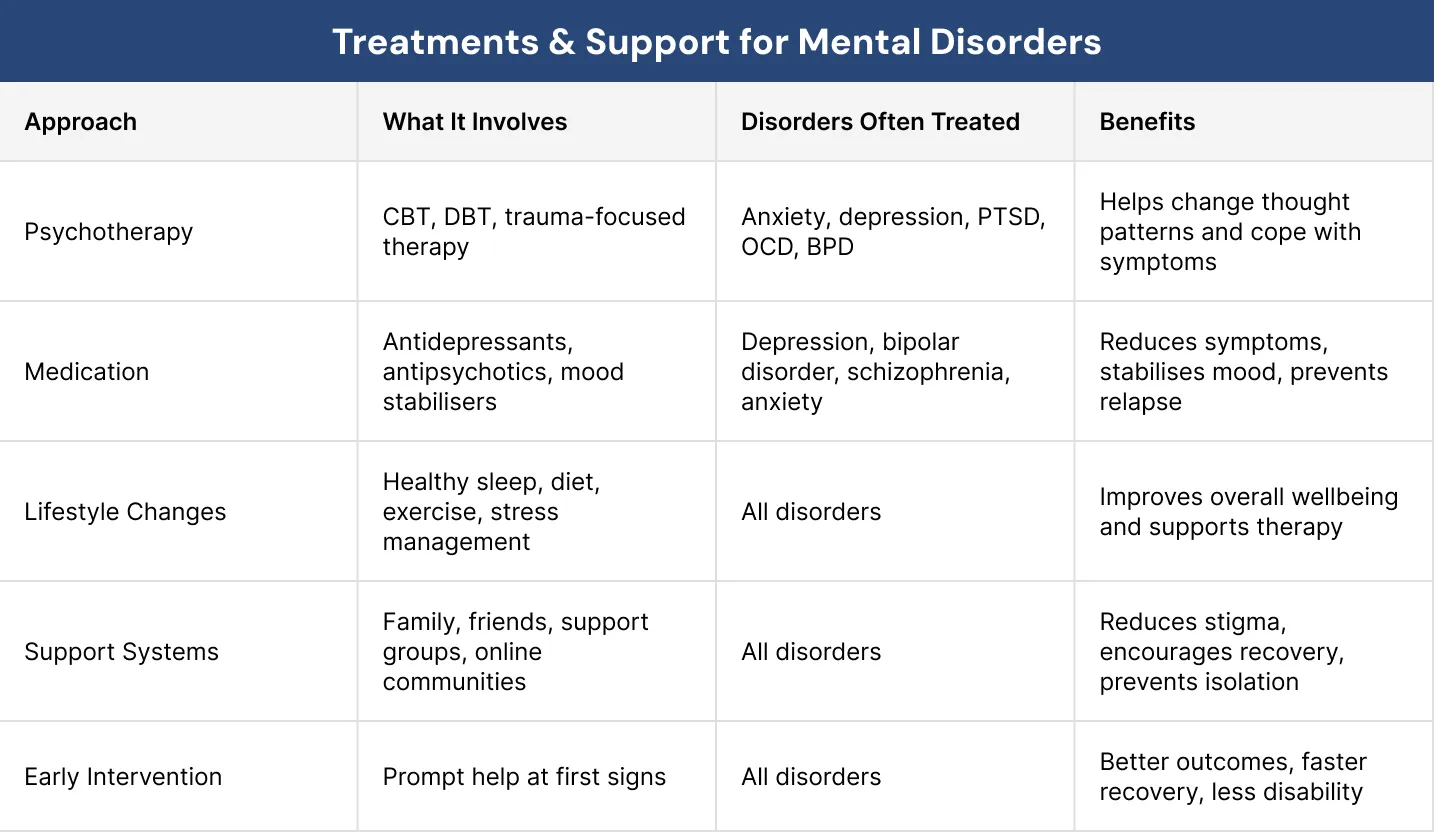
Mental health problems identified in mental disorders list can be managed or treated with a mix of support:
Psychotherapy
Talking treatments like CBT, DBT and trauma focused therapy can help you cope and change thought patterns.
Medication
Drugs such as antidepressants, antipsychotics, mood stabilisers or anti anxiety medicine may be used.
Lifestyle Interventions
Mental health problems can be managed through good sleep, healthy food and regular exercise.
Support Systems
Receiving support from your family, friends, support groups and online communities can help a lot.
It is very important to get help at an early stage. People can live full and productive lives with the right support and help.
Treatments & Support for Mental Disorders
Real Life Example
A former UK heavyweight champion, Frank Bruno has openly lived with bipolar disorder. He was experiencing severe mood changes and was hospitalised under the Mental Health Act. He had times of high energy and times of deep low moods which affected his personal life and wellbeing.
He has learned to manage his condition with the proper treatment and support. Now he helps raise awareness about mental health.
Conclusion
Mental health problems are complex, real and treatable. They affect millions of people around the world. They range from both common issues to less common issues. Common conditions are anxiety, depression and ADHD. Less common are schizoaffective disorder or DID. The knowledge of symptoms, causes and ways to treat them helps build a more kind and supportive society.
People can get the care and support they need by reducing stigma and raising awareness. Mental health is as important as physical health. People can recover with awareness and support from this mental disorders list.
The important point is that mental health problems are not a sign of weakness. No one has to face them alone and asking for help shows strength. The support from others can make a big difference. This list of all mental disorders helps people understand them and get help.
Concise Medico provides expert insights into mental disorders, offering clear information on symptoms, causes and treatment options to support better mental wellbeing. Contact us for professional and compassionate support.
Mental health disorders can affect every aspect of your life, but treatment works. Concise Medico provides professional therapy, personalised care and ongoing support to help people manage symptoms and thrive. Schedule your appointment and start your journey to wellness.
Mental health disorders can affect every aspect of your life, but treatment works. Concise Medico provides professional therapy, personalised care and ongoing support to help people manage symptoms and thrive. Schedule your appointment and start your journey to wellness.
FAQs
We all have mental health in the same way that we all have physical health. It’s okay to have depression, it’s okay to have anxiety, it’s okay to have an anxiety disorder. – Prince Harry, Duke of Sussex
The discussion on the topic of mental health has increased in this modern world, but still many people do not understand it. In the past, mental health problems carried a lot of shame, especially those in this psychiatric condition list. People with these disorders were often called flawed, weak or lazy. This article serves as a list of all mental disorders to improve awareness.
Luckily, times are changing and people are learning more about mental health and disorders through this psychiatric condition list. Learning is important for everyone exploring this mental disorders list and it’s not just for those affected. It helps people be kind, lowers shame and encourages getting help early. On average, 300 million children and adolescents currently live with mental disorders around the world.
In this blog, you will learn:
- Understanding of psychiatric conditions and mental disorders
- Anxiety and depressive disorders
- Bipolar and OCD disorders
- Neurodevelopment and neurocognitive disorder
- Eating and sleep wake disorders
- Treatments and support
What Are Psychiatric Conditions or Mental Disorders
Mental disorders or psychiatric conditions are health issues that affect a person’s thinking, emotions, and behavior. The daily life, the work place and personal relationships can also be affected. They can be managed with the right care and support.
Mental health is an individual’s psychological, emotional and social well being, as explained in mental disorders list. It affects:
- Thinking processes
- Feelings
- Daily behaviour
- Relationships
- Work performance
- Life satisfaction
Mental health also needs care and attention like physical health. This is clearly reflected throughout this mental disorders list. We look after it with self care, talking to a therapist and support from others, just as we eat well, sleep enough and exercise for our body.
Mental health conditions also refer to psychiatric disorders or mental illnesses which change the way a person thinks, feels or acts as mentioned in mental disorders list. They can make daily life hard, affecting work, school and relationships as shown in mental disorders list. These problems can be short term, in episodes or last a long time, depending on the type and severity of the disorder. They are real, serious and can affect anyone included in this mental disorders list. Age, gender and background do not matter.
The Diagnostic and Statistical Manual of Mental Disorders (DSM 5) comprises all mental disorders list. The American Psychiatric Association published this book. It helps doctors name and group mental health issues. This psychiatric condition list is used worldwide for diagnosis. They look at what signs a person has, how long they last and how much they affect day to day life. It helps define the list of all mental disorders used in diagnosis.
Another guide is called the International Classification of Diseases (ICD), published by the World Health Organisation. It is also used to name and track health problems. It supports global understanding of the mental disorders list.
Mental health problems can start for many reasons in this mental disorders list. These may include genes, body changes, psychological traits and stress in life. For example, your risk of having bipolar disorder or schizophrenia may be higher if someone in your family is suffering from this. But genes on their own do not mean you will get these problems described in this mental disorders list.
Neurotransmitter imbalances, shifts in hormones, head injury and poor health can all play a part in mental illness. These biological factors are included in the mental disorders list. Some people may also be more at risk because of how they think and cope.
Below are some examples which can lead to depression or anxiety in this mental disorders list:
- Low ability to deal with stress
- Often feeling worried
- Having a lot of negative thoughts
Life events also play a role in this mental disorders list. These include:
- Trauma
- Abuse
- Neglect
- Hard relationships
- Money worries
- Being alone
Adverse Childhood Experiences (ACEs) and early life play a very important role in this mental disorders list. The risk of mental illness is linked with the adverse events in childhood. Violence at home or misuse of drugs and alcohol by a parent are some examples. Disorders can also start with the use of drugs or alcohol. This can lead to a cycle where each one makes the other worse.
Stigma is another big issue in understanding this mental disorders list. Many people have wrong ideas. Some think it means a person is weak. Others think they are violent, that they are contagious. Some think it is only due to bad parenting. These are harmful ideas and stop people from asking for help related to this mental disorders list. This stigma can cause shame, fear and feelings of isolation.
The mind and body are also strongly impacted in many conditions within this mental disorders list. They can live well and have full, happy lives with the right care and support
The knowledge of common disorders helps people to identify their effects and get help early using this mental disorders list.
Here is a detailed list of all mental disorders or psychiatric conditions explained in detail.
1. Anxiety Disorders
Anxiety disorders are the most common mental health conditions. These are characterized by excessive nervousness, fear or worry.
They involve nervousness, excessive fear or worry that is hard to control. In this mental disorders list, daily life, relationships and overall quality of life are strongly affected.
The types are mentioned below:
Generalised Anxiety Disorder (GAD)
This disorder causes people to worry about everyday things like health, family or work safety. It is long lasting and hard to control. It can also cause signs like feeling on edge, being tired, tense muscles, getting annoyed easily and poor sleep.
Panic Disorder
Panic attacks are sudden and strong bursts of fear. A person may feel:
- Fast heartbeat
- Shaking
- Trouble breathing
- A sense that something bad will happen
Agonaphobia is the term used to describe panic disorder in situations and places where it has already occurred
Social Anxiety Disorder
There may be a fear of social situations where a person assumes they are being judged by others. They may avoid meeting people. This leads to feelings of isolation and harm to their relationships.
Specific Phobias
This is a phobia related to a strong and lasting fear of a certain thing or place like fear of heights (acrophobia), spiders (arachnophobia) or flying. A person may feel very anxious when facing it. It can then turn into a panic attack.
Anxiety problems are different from normal stress or nerves and are very strong. They may last a long time and can disrupt daily life. The symptoms can be managed through therapy, support or medicine. This can also help people live full lives. These are key conditions in the mental disorders list.
2. Depressive Disorders
Depression is more than just feeling sad now and then. In this mental disorders list, there may be a long term problem that causes distress and lowers quality of life. It affects mood, energy and interest in life. Daily life may become hard due to this disorder.
The major types of depressive disorders are mentioned below:
Major Depressive Disorder (MDD)
This involves:
- Low mood most of the time
- Loss of interest in things
- Low self worth
- Strong emotional distress
A person with MDD can have symptoms of changes in appetite, poor sleep and feels very tired. It lasts two weeks or more without proper treatment.
Persistent Depressive Disorder (Dysthymia)
This disorder is a long term and milder form of depression. It lasts at least two years. The signs are less stronger than MDD but last longer and impact everyday life, work and social life.
Disruptive Mood Dysregulation Disorder (DMDD)
Children are mostly impacted with this disorder. It causes irritability and anger outbursts all the time.
Premenstrual Dysphoric Disorder (PMDD)
Some women are affected by this before their period. It can cause:
- Mood swings
- Irritability
- Anxiety
- Other emotional or body symptoms
Substance/Medication Induced Depressive Disorder
Some medicines, drugs and alcohol cause this disorder. It may improve when the substance is stopped.
Depressive Disorder Due to Another Medical Condition
This occurs when another medical condition or health problem leads to depression such as thyroid issues, Parkinson’s disease or cancer.
These disorders form a major part of the mental disorders list. They can be cured with therapy, changes in lifestyle, medicine and support. Early diagnosis and treatment is also beneficial for fast recovery.
3. Bipolar and Related Disorders
This disorder may have a big change in mood and previously it was also known as manic depressive illness. Mood can change from very high to very low and can impact everyday life, work and relationships.
Mania
This is a high mood and a person may:
- Feel very energetic
- Get distracted
- Need less sleep
- Act impulsively
Depressive Episodes
This is the low side and a person may:
- Feel sad
- Feel tired
- Lose interest in things
- Find it hard to cope
Subtypes
Bipolar I, Bipolar II and Cyclothymia are different types of this disorder. It can also be due to medical or substance use.
Children
There are similar signs in children, often called Disruptive Mood Dysregulation Disorder (DMDD).
The Bipolar conditions are important in this mental disorders list. They can be treated with medicine, therapy and healthy lifestyle habits.
4. Obsessive Compulsive and Related Disorders
These disorders are now a separate group but they used to be part of anxiety in mental disorders list. Repeated thoughts and actions may cause distress and affect everyday life.
Obsessive Compulsive Disorder (OCD)
Unwanted thoughts may cause anxiety in this disorder. Certain actions may be repeated by an affected person to overcome things like washing hands, checking or cleaning.
Body Dysmorphic Disorder (BDD)
This disorder causes a person to be very concerned about how they look. They are usually able to notice flaws that others may not notice. They keep checking mirrors or comparing themselves to others.
Hoarding Disorder
It is very difficult to get rid of the things even if they have little value. This leads to clutter which makes life difficult.
Excoriation (Skin Picking) Disorder
A person keeps picking their skin which can cause damage and marks.
Trichotillomania (Hair Pulling Disorder)
A strong desire to pull out hair from the body or head which leads to clear hair loss.
Substance/Medication Induced OCD
These signs can be caused by drugs, alcohol or some medicines.
OCD Due to Another Medical Condition
OCD like signs can also be caused by other health issues.
They are all treatable and included in the mental disorders list. Therapy (like cognitive behavioural therapy), medicine and support are used to treat them.
5. Trauma and Stress or Related Disorders
These problems can start after a very stressful or traumatic event. They were once considered part of anxiety problems in DSM classifications of the psychiatric condition list.
Post Traumatic Stress Disorder (PTSD)
PTSD may happen after a serious event like an attack, accident or war. A person may have:
- Flashbacks
- Bad dreams
- Upsetting thoughts
- Feel on edge
- Try to avoid reminders
Acute Stress Disorder
This disorder may start soon after the event and is similar to PTSD. It lasts for a short time period and may resolve on its own.
Adjustment Disorders
These disorders happen after major life changes. It may be a loss of a loved one or losing a job. This disorder can make a person feel low, irritable, worried and find it hard to cope.
Reactive Attachment Disorder (RAD)
This disorder can affect children who did not receive enough care or support. They have a hard time socially and are unable to make friends.
6. Dissociative Disorders
It affects memory, identity or how a person feels about themselves or the world. Trauma or stress trigger this disorder.
Dissociative Identity Disorder (DID)
This was once called multiple personality disorder. A person may have two or more different identities that take control at times.
Depersonalisation/Derealisation Disorder
A person may think they are cut off from their environment or themselves and feel that things are not real. But they still know what is real.
Dissociative Amnesia
A person cannot remember key personal facts often after trauma.
Dissociative Fugue
A person may suddenly travel or wander away. They may not remember who they are.
These disorders are part of the mental disorders list and can be treated with therapy. The aim is to build up coping skills and help the person to deal with their trauma. Therapy can also help restore their self esteem.
7. Neurodevelopmental Disorders
These disorders usually start in early childhood mostly before school. They affect how a child learns, interacts and manages daily life. Following are commonly seen in the mental disorders list:
Intellectual Development Disorder (IDD)
IDD was previously known as mental retardation. This involves limits in thinking skills and daily living skills. A child may have trouble with speech, problem solving and basic tasks. Tests are used to assess learning ability and daily skills.
Global Developmental Delay
Used for young children (under five) who are slow in two or more areas, such as movement, speech, social skills or daily tasks. Some children may later experience learning problems or develop IDD.
Communication Disorders
Speech and language are affected in this disorder. Types include:
- Childhood Onset Fluency Disorder (Stuttering)
- Language Disorder (trouble understanding or using words)
- Social (Pragmatic) Communication Disorder
- Speech Sound Disorder (trouble making sounds clearly)
Autism Spectrum Disorder (ASD)
This disorder affects social skills, communication and behaviour. There may be repeated actions and Mild Neurocognitive Disorders
This causes a decline in cognitive function because of health problems such as Alzheimer’s disease, Parkinson’s disease or blood flow issues. Symptoms include:
- Memory loss
- Trouble understanding things
- Difficulty with speech and daily tasks
It is important to get early diagnosis and good care. This may be cured with therapy, medicine and support for both the person and their carers.
Attention Deficit/Hyperactivity Disorder (ADHD)
There may be trouble focusing, being very active or acting without thinking which affects school, work and relationships.
Specific Learning Disorders
School skills are affected in this disorder like reading (dyslexia), writing (dysgraphia) or mathematics (dyscalculia).
Motor Disorders
These disorders cause problems with movement like tics, shakes or sudden jerks.
Early diagnosis is very important. Children can do better with therapy, support at school and sometimes medication. These are key entries in the list of all mental disorders.
In March 2025, about 2.06 million people were in touch with NHS mental health services. Around 503,422 were children and young people and 296,098 were in learning disability and autism services.
8. Schizophrenia Spectrum and Other Psychotic Disorders
These disorders affect a person’s thoughts, feelings and how they see reality. It may be difficult for them to tell what is real and what is not.
Schizophrenia
Main signs include:
Positive symptoms
These symptoms include experiences that are not normal. They can involve false beliefs and seeing or hearing things that are not there. A person may have confused speech and odd behaviour.
Negative symptoms
These reduce normal traits, such as low emotion, reduced speech, loss of pleasure (anhedonia) and low drive.
Schizoaffective Disorder
This has signs of schizophrenia along with mood problems. It can cause depression or a high mood.
Schizophreniform Disorder
This disorder is like schizophrenia and lasts for a shorter time from 1 to 6 months.
Schizotypal Personality Disorder
A person may feel very uneasy in social settings and act in odd ways. They have unusual beliefs or views.
Medicine, therapy, social support and rehab are the treatment options to help people live better lives.
9. Eating Disorders
It involves problems with eating. They involve a strong focus on body weight or shape. They can harm both the body and the mind. Following types are included in mental disorders list:
Anorexia Nervosa
Due to a strong fear of gaining weight, a person eats very little and perceives their body inaccurately. This can lead to serious health problems, such as heart or kidney issues.
Bulimia Nervosa
A person may eat a lot in a short time and then try to get rid of the food by vomiting. Laxatives, fasting or too much exercise are used to get rid of food. They may experience guilt and shame.
Binge Eating Disorder (BED)
Sometimes a person eats large amounts of food without trying to get rid of it. This is often linked to stress or strong emotions.
Rumination Disorder
A person brings food back into the mouth, chews it again and then swallows or spits it out.
Pica
A person eats things other than food which can be very harmful. Examples are dirt, chalk or paint.
Cognitive Behavioral Therapy, changes in eating habits and medical care can be helpful to deal with this disorder.
10. Personality Disorders
Personality disorders are long term patterns in how a person thinks, feels and acts. These patterns are quite different from what is usual and can make daily life hard.
Borderline Personality Disorder (BPD)
People may have unstable relationships and poor self image. They have strong mood swings and take impulsive actions.
Narcissistic Personality Disorder (NPD)
They strongly need praise from others and think of themselves as very important. They may have little empathy for others.
Avoidant Personality Disorder
A person may avoid social contact and feel not good enough. They may be very sensitive to criticism.
Dependent Personality Disorder
A person strongly needs care from others, has clingy behaviour and fear of being alone.
Histrionic Personality Disorder
People with this disorder need attention and have strong emotions. They can be easily influenced by others.
Obsessive Compulsive Personality Disorder
A person may have a strong focus on order, rules and perfection often with little or no flexibility.
Paranoid Personality Disorder
People may have ongoing trust issues and suspicion of others.
Schizoid Personality Disorder
A person avoids social life and shows little emotion.
Schizotypal Personality Disorder
They may have odd behaviour, unusual beliefs and are not comfortable in close relationships.
Treatment often includes therapy to build skills and some cases may need medication.
11. Disruptive, Impulse Control and Conduct Disorders
People with these disorders may have difficulty in controlling emotions and actions. It can cause harm to others or themselves.
Intermittent Explosive Disorder
The affected person may have sudden bursts of strong anger that are out of control. This can result in physical aggression or shouting.
Conduct Disorder
A continuous behaviour that breaks rules and harms others. It can be fighting, stealing or damaging things.
Oppositional Defiant Disorder (ODD)
There may be an ongoing aggressive attitude, usually towards parents, teachers or other authorities.
Pyromania
A person may have a strong urge to start fires for a sense of relief or interest.
Kleptomania
A person may have a strong urge to steal things even if they are not required. This may be followed by relief or guilt.
These problems can be treated and can be cured with behaviour therapy, family support and sometimes medicine. An early diagnosis can prevent problems from getting worse.
12. Sleep Wake Disorders
Good sleep is needed by both mind and body and poor sleep can have a negative impact on daily life.
Insomnia Disorder
This disorder may have problems falling or staying asleep and can cause distress. This may make everyday tasks difficult to do.
Parasomnias
Unusual actions during sleep, such as:
- Sleepwalking
- Eating in sleep
- Night terrors
- Talking in sleep
Narcolepsy
A long term sleep problem where a person feels sleepy all day long and may fall asleep at any time.
Hypersomnolence Disorder
There may be a feeling of being very sleepy during the day even after getting enough sleep.
Breathing Related Sleep Disorders
Sleep apnoea is one of the problems in the list of all mental disorders. The breathing of a person stops and restarts while sleeping. It can make them feel tired and unrested.
Restless Legs Syndrome (RLS)
A neurological disorder makes you want to move your legs at night. It may cause sleep disturbance.
The treatment can include better sleep habits, lifestyle changes and sometimes medication.
13. Substance Related and Addictive Disorders
Substance use problems happen when the drugs or alcohol begins to impact your daily life and health negatively.
Alcohol Related Disorders
This makes you keep drinking even if it is harmful.
Cannabis Related Disorders
The use of cannabis that impacts your everyday life.
Stimulant Use Disorder
The use of drugs like cocaine or similar substances in a wrong way.
Inhalant Use Disorders
Neurological and organ damage happens when you breathe in harmful fumes.
Tobacco Use Disorder
The addiction of nicotine with strong urges and withdrawal signs.
Gambling Disorder
A strong wish to gamble which is hard to control.
Caffeine Related Disorder
The consumption of too much caffeine. This leads to dependence and problems in your daily life.
Treatment may include therapy, support groups, relapse prevention techniques and detoxification.
14. Neurocognitive Disorders
These disorders affect thinking, memory and problem solving of a person.
Delirium
It often occurs for a short period in which a person faces a sudden confusion and trouble paying attention. It can be due to illness, medication or substance withdrawal.
Major and Mild Neurocognitive Disorders
This causes a decline in cognitive function because of health problems such as Alzheimer’s disease, Parkinson’s disease or blood flow issues. Symptoms include:
- Memory loss
- Trouble understanding things
- Difficulty with speech and daily tasks
Finding it early and giving good care is very important. Therapy, medicine, and support for the person and their carers can help treat it.
15. Other Disorders
There are also some mental health problems that do not fit into the main groups of mental disorders list. These include:
Sexual Dysfunctions
This disorder causes difficulty with desire, arousal, orgasm or pain during intercourse.
Gender Dysphoria
Distress when a person’s gender identity does not align with the sex assigned at birth.
Paraphilic Disorders
Unusual sexual interests that may cause harm or distress. It includes:
- Pedophilia
- Voyeurism
- Exhibitionism
- Fetishism
- Transvestic disorder
Medication Induced Movement Disorders
These include issues like restlessness, stiff muscles or strange body movements caused by some medicines.
Conditions Requiring Clinical Attention
These are not always disorders but still need support. Examples include abuse, neglect or family problems.
All conditions discussed in this mental disorders list and psychiatric condition list can be managed with proper care.
Treatment and Support
Mental health problems identified in mental disorders list can be managed or treated with a mix of support:
Psychotherapy
Talking treatments like CBT, DBT and trauma focused therapy can help you cope and change thought patterns.
Medication
Drugs such as antidepressants, antipsychotics, mood stabilisers or anti anxiety medicine may be used.
Lifestyle Interventions
Mental health problems can be managed through good sleep, healthy food and regular exercise.
Support Systems
Receiving support from your family, friends, support groups and online communities can help a lot.
It is very important to get help at an early stage. People can live full and productive lives with the right support and help.
Treatments & Support for Mental Disorders
Real Life Example
A former UK heavyweight champion, Frank Bruno has openly lived with bipolar disorder. He was experiencing severe mood changes and was hospitalised under the Mental Health Act. He had times of high energy and times of deep low moods which affected his personal life and wellbeing.
He has learned to manage his condition with the proper treatment and support. Now he helps raise awareness about mental health.
Conclusion
Mental health problems are complex, real and treatable. They affect millions of people around the world. They range from both common issues to less common issues. Common conditions are anxiety, depression and ADHD. Less common are schizoaffective disorder or DID. The knowledge of symptoms, causes and ways to treat them helps build a more kind and supportive society.
People can get the care and support they need by reducing stigma and raising awareness. Mental health is as important as physical health. People can recover with awareness and support from this mental disorders list.
The important point is that mental health problems are not a sign of weakness. No one has to face them alone and asking for help shows strength. The support from others can make a big difference. This list of all mental disorders helps people understand them and get help.
Concise Medico provides expert insights into mental disorders, offering clear information on symptoms, causes and treatment options to support better mental wellbeing. Contact us for professional and compassionate support.
Mental health disorders can affect every aspect of your life, but treatment works. Concise Medico provides professional therapy, personalised care and ongoing support to help people manage symptoms and thrive. Schedule your appointment and start your journey to wellness.
Mental health disorders can affect every aspect of your life, but treatment works. Concise Medico provides professional therapy, personalised care and ongoing support to help people manage symptoms and thrive. Schedule your appointment and start your journey to wellness.