TABLE OF CONTENT
Fatal Accident Claims: Expert Legal Advice & Compensation Guide
Losing a loved one in a fatal accident creates profound hardship. With grief, you face financial pressure and legal uncertainty. You may be entitled to compensation through a fatal accident claim if someone else’s carelessness caused you to lose a loved one.
A fatal accident claim can provide financial assistance for your family. It also holds the responsible party accountable.
This guide covers everything you need to know about fatal accident claims, including who can file a claim, which fatal accidents may qualify, and how compensation is calculated. It also explains the claims process and the UK legal framework that applies to these cases. Understanding your rights can help you make informed decisions and know what steps to take during this difficult time.
What Are Fatal Accident Claims?
A fatal accident claim is a legal action. It is taken when someone dies because of another person’s or organisation’s negligence. The claim allows the family of the deceased person or estate to seek damages. These damages cover financial losses and emotional suffering caused by the death. Compensation gives financial support for your family. It also holds the responsible party accountable. Money cannot replace your loved one. But it can ease the financial burden you now face. Fatal accident claims arise from many situations. These could be road traffic accidents, workplace incidents and even medical neglect.
They also cover any situation where someone breached their duty of care. Understanding your rights matters when facing this difficult time.
Who Can Make a Fatal Accident Claim?
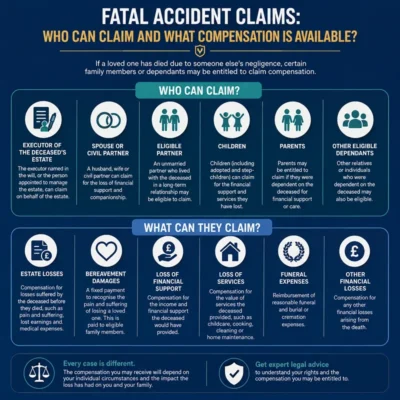
Not everyone can make a fatal accident claim. In most cases, the right to claim depends on your relationship with the person who died and the type of losses being claimed. In England or Wales, claims may be brought on behalf of the deceased’s estate and by certain family members or dependants.
Understanding who can make fatal accident claims and what compensation may be available can help you assess your options. The infographic below summarises the key points.
Claims Made on Behalf of the Deceased’s Estate
A claim for the deceased’s estate is usually made by the executor named in the will or by the administrator of the estate. This claim covers losses the deceased suffered before death. These include pain, suffering and lost earnings. The executor seeks compensation for these losses. This protects the estate’s financial interests.
Claims Made by Eligible Family Members and Dependants
Family members and dependants may also claim compensation for their losses. Depending on the circumstances, this may include a spouse, civil partner, qualifying cohabiting partner, children, parents, and other dependants. Their claims cover financial support. They cover the value of services the deceased provided. They also cover other losses caused by the death.
What Types of Fatal Accidents Can Be Claimed For?
Fatal accident claims can arise from several types of incidents. Common examples include road traffic collisions, workplace incidents, medical negligence, public-place accidents, and industrial diseases. Let’s discuss some of the most common types in more detail.
1. Road Traffic Accidents
Road accidents can lead to fatal accident claims when another road user is responsible for the death. This may include car, motorcycle, bicycle or pedestrian accidents. You may be able to claim if your loved one died in a car accident, provided another party was at fault.
Speeding, reckless driving, and breaking traffic laws are common causes of fatal road accidents. A defective vehicle or poor road maintenance may also cause a fatal accident. In such cases, the driver, vehicle owner, manufacturer or party responsible for the road may be liable. Evidence from the accident can help show who was at fault and whether their actions caused the death.
2. Accidents at Work
Your loved one may have died at work due to the employer’s failure to provide a safe workplace. You can make a claim in these circumstances.
Fatal workplace accidents can occur when employers fail to provide a safe working environment. Common causes include falls from height, unsafe machinery, poor training and a lack of safety measures. Employers have a legal duty to protect their workers by providing proper training, maintaining safe equipment and following health and safety standards. Failure to meet these duties may put workers at serious risk and can lead to a fatal accident claim.
You may be entitled to compensation if your employer ignored known hazards or failed to follow safety rules. Employers who disregard worker safety face legal consequences. Claims establish both liability and financial responsibility for the deceased’s family.
3. Medical Negligence
You may be able to make a fatal accident claim if your loved one’s death resulted from medical negligence. Medical negligence can take many forms, including a wrong or delayed diagnosis, delayed treatment, surgical errors, medication mistakes, or a failure to monitor a patient’s condition. These errors may cause serious harm or, in some cases, lead to death.
Healthcare providers have a duty to provide safe and appropriate care. They must follow accepted medical standards and use reasonable skill and care when treating patients. If they fail to meet this duty and their negligence causes the death, you may be entitled to compensation.
4. Public Liability Accidents
Property owners and organisations have a legal duty. They must keep public areas safe. You may be able to claim if the death happened by slipping or tripping in a public place. You can also claim if a falling object caused the death. Any avoidable hazard may create a claim. Claims may also arise if known hazards were not repaired. Claims arise if warning signs were missing. Those responsible must maintain safe premises. They can be held liable for fatal accidents.
What Compensation Can be Claimed Following a Fatal Accident?
The type of compensation depends on the accident and the losses caused. A claim may include compensation for the deceased’s estate, bereavement damages, and losses faced by dependants. The main types of compensation are explained below, along with the losses each one is designed to cover.
1. Compensation for the Deceased’s Estate
Compensation can be claimed for losses linked to the death. This may include funeral costs, medical bills before death, and other costs caused by the accident. The money is paid to the deceased’s estate and shared under legal rules.
2. Bereavement Damages
Bereavement damages provide money support to certain close family members after a fatal accident. This payment helps recognise the pain caused by losing a loved one. Only eligible relatives can make this type of claim.
3. Dependency Claims
Dependency claims cover the financial support lost after a person’s death. This may include lost income, household help, and other benefits the deceased provided. These claims help dependants deal with the financial impact of their loss.
How Can I Claim for a Fatal Accident?
Making a fatal accident claim involves a series of steps. The process usually begins with legal advice, followed by gathering evidence and submitting your claim. The other party will then investigate the case before any settlement is discussed. If not mutually agreed upon, the claim is presented in court.
The infographic below gives you a clear view of what to expect at each step of the claims process.
1. Seek Legal Advice
Start by speaking with a claims solicitor who specialises in fatal accident cases. They will review your case and explain whether you have a solid claim. Their advice helps you prevent delays and costly blunders. They will protect your family’s interests throughout the process. A good solicitor makes this tough time much easier to bear.
2. Collect the Required Evidence
After consulting a solicitor, provide any documents and information you have that support your claim. These may include accident reports, medical records, the death certificate, witness details, photographs, and proof of financial loss. Include receipts for funeral costs and records of lost income. Your solicitor will review this information and identify any other evidence needed to support your claim. They will obtain further records or statements from the relevant parties where needed. This evidence helps establish who was responsible and shows the financial impact of the death on your family.
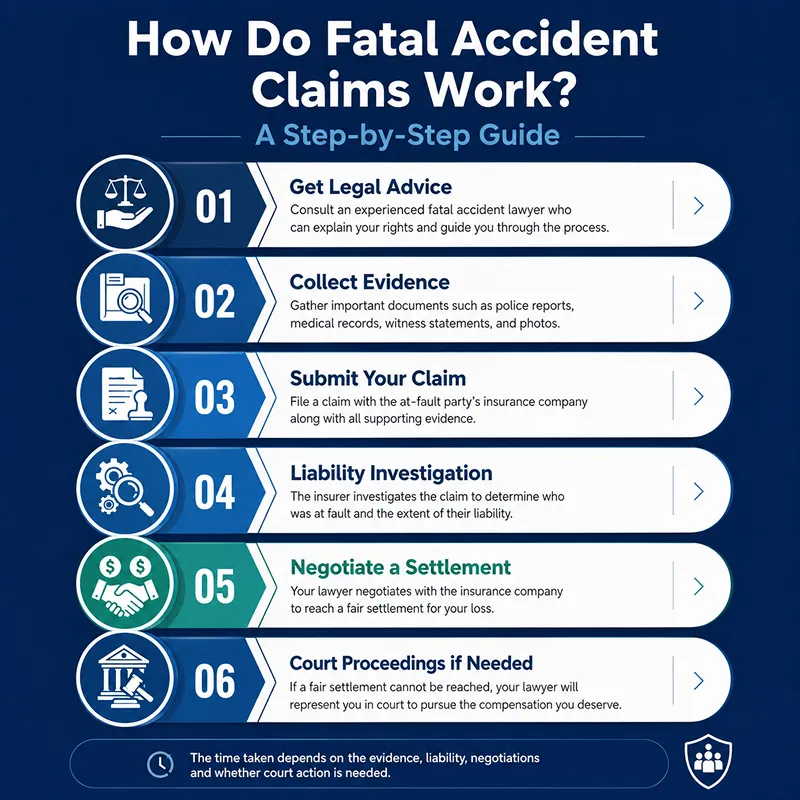
3. Submit Your Fatal Accident Claim
Once you have gathered the information, you give it to the solicitor. They will help you submit your claim. The claim should explain what happened. It should show why another party is responsible. It should detail the losses caused by the death.
4. Liability Investigation and Claim Assessment
The responsible party will then investigate your claim and examine the accident. They’ll determine who was at fault based on the facts. They’ll also check what your claim is worth. Your solicitor manages all communication during this stage. They protect your interests completely.
5. Negotiation and Settlement
You can resolve most fatal accident claims without going to court. Your solicitor will negotiate with the other party on your behalf. Your solicitor will negotiate with the other party on your behalf. They will make every effort to ensure that your family receives proper compensation. This saves time and reduces stress for your family during a difficult period.
6. Court Proceedings (If Necessary)
If negotiation doesn’t result in a fair settlement, your claim may go to court. Your solicitor will prepare your case and represent you throughout the process. The court will review all the evidence. The court will decide the outcome of your claim.
How Long Does a Fatal Accident Claim Process Take?
The time required to complete a fatal accident claim varies. Some disputes get resolved within a few months. Others tend to take longer if the case is complex or the liability is contested.
Several factors can affect the duration of the process. These include the amount of evidence needed, the response from the other party and whether a settlement can be reached. Claims that go to court usually take longer to resolve.
After analysing your case, your solicitor will be able to offer you a more accurate estimate of the likely period. They will also keep you updated as your claim progresses through the stages.
Case Study: How a Fatal Accident Claim Can Help You Recover Compensation
In Wallett & Ors v Vickers [2018] EWHC 3088 (QB), a driver died after a collision involving another motorist on a dual carriageway. His partner brought a claim under the Fatal Accidents Act 1976 on behalf of the deceased’s dependants. The case considered whether the other driver’s actions caused the death and whether the deceased’s own driving contributed to the accident. The court allowed the claim but reduced the compensation by 60% because of the deceased’s contributory negligence, resulting in an award of £86,000. The judgement shows why evidence of fault and causation is important when pursuing fatal accident claims.
Conclusion
Losing a loved one in a fatal accident can cause both emotional distress and financial concerns. Fatal accident claims can assist families in recovering compensation for losses caused by someone else’s negligence. They can also help with funeral fees, missed income, and other financial issues.
This fatal accident claims guide has explained who can make a claim, which fatal accidents may qualify, and how the claims process works. It has also covered fatal accident claim damages, including compensation for the deceased’s estate and dependants.
Every case is different, and the value of fatal accident compensation claims depends on the circumstances involved. If you believe another person or organisation is responsible for your loved one’s death, getting legal advice can help you understand your rights and the steps you can take next. A personal injury solicitor can review your case, explain your options and guide you through the claims process. Contact ConciseMedico for legal guidance on your fatal accident claim.