TABLE OF CONTENT
You never know what is coming next in your life. Accidents on the road can happen at any time. A short drive to work, a quick trip to the shop or even a calm ride home can suddenly turn into a bad moment.
When an accident happens, the biggest worry is not always the crash itself. It is what comes after. Medical bills, time away from work and the time it takes to heal can affect daily life in many ways.
It’s a wretched time for people who are injured through no fault of their own. – Brett Dixon, Solicitor
Data shows a 12% decline in personal injury claims in 2025 versus 2024. This drop shows fewer claims. It also shows why fast help like PIP still matters after an accident.
Personal injury protection, often called PIP, helps support people after a road accident. It helps pay costs and gives quick access to care. This is where a personal injury protection claim becomes useful.
Many people also ask:
- What is personal injury protection insurance
- How does personal injury protection help after a road accident
They have heard the term but not all know how it works in real life.
In this blog, you will learn:
- What does personal injury protection mean
- What happens after an accident
- What does PIP cover
- Do you need PIP
- How much does PIP cost
- How does PIP work with health insurance
- Can you increase your coverage
- Why do people choose PIP
What Is PIP
PIP is a type of insurance cover. It is used to pay for medical care and related costs after a road accident. Personal injury protection insurance is often part of a car insurance policy. Some people also choose to add extra cover for higher payouts.
Each policy has a set limit. This means the insurer will pay a fixed amount if an accident happens. This is an amount agreed when the policy is taken out. It works as the maximum cover for medical bills and treatment. It also covers other related expenses including vehicle damage.
The main goal of PIP is simple. It helps injured people get care without wasting time. It also ensures that doctors, hospitals and other medical providers are paid quickly for their services.
Types of Injuries Covered by Personal Injury Protection
PIP usually covers a wide range of injuries that can happen in road accidents. These include:
- Broken bones and fractures
- Sprains, strains and whiplash
- Cuts and bruises
- Loss of limbs
- Loss of sight
- Loss of speech
- Head injuries
- Back injuries
- Spinal injuries
It may also include more complex cases such as:
- Dental reconstruction
- Surgery-related recovery
- Long-term rehabilitation
It is important to note that each policy is different. Some may offer wider cover, while others may have limits. The best approach is to check the details of your own policy.
What Does Personal Injury Protection Cover?
| Category | What It Includes |
|---|---|
| Medical costs | Hospital care, doctor visits, tests |
| Treatment | Surgery, medicines, emergency care |
| Rehabilitation | Physiotherapy, recovery programmes |
| Long-term care | Ongoing treatment and support |
| Lost income | Partial wage replacement |
PIP mainly focuses on medical and recovery-related costs. However, the cover can be wider than many people expect.
1. Medical Expenses
This includes:
- Emergency treatment
- Hospital stays
- Operations
- Doctor visits
- Diagnostic tests
- Medicines
2. Rehabilitation Care
Recovery does not end after the initial treatment. Many people need help to return to normal life. PIP may cover:
- Physical therapy
- Occupational therapy
- Rehabilitation programmes
3. Long-Term Care
In more serious cases, injuries may need ongoing treatment. Some policies help with:
- Long-term medical care
- Recovery support services
4. Lost Income
If injuries prevent you from working, PIP may help replace lost wages. This can reduce financial stress during recovery.
The Key Idea Behind PIP
The most important thing to understand about PIP is that it works on a no-fault basis.
This means:
- You do not need to prove the accident was not your fault
- You do not need to wait for the other driver to be found at fault
- You do not need to depend on the other person’s insurance
Instead, your personal injury protection insurance policy works for you. It pays for your medical care.
This is very different from a normal personal injury protection claim. In many cases, a claim can take time. It often involves proving fault, sharing evidence and waiting for decisions. With the help of PIP, the process works faster and without unnecessary steps.
What Happens After an Accident?
When you look at what happens step by step after an accident, it helps you to understand how PIP works.
Step 1
You may be injured or begin to feel pain later after a road accident.
Step 2
This step is to inform your insurance company to start a personal injury protection claim as soon as possible after the accident.
Step 3
Once the claim is started, your PIP cover becomes active. It does not matter:
- Who caused the accident
- Whether the other driver has personal injury protection insurance
- Whether fault has been decided
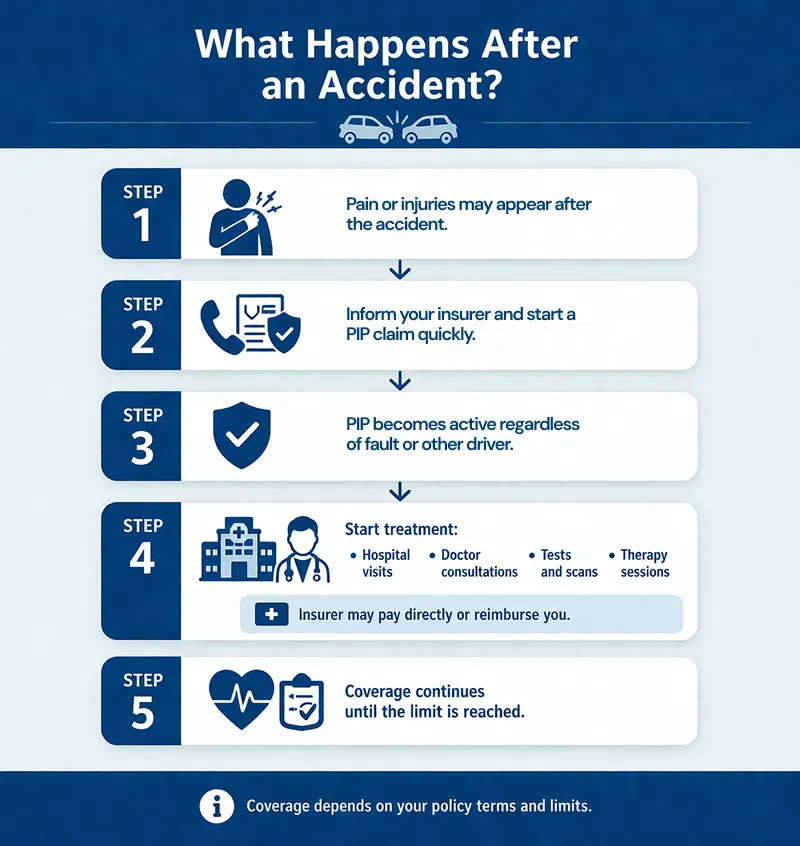
Step 4
You can begin treatment right after an accident happens. This may include:
- Hospital visits
- Doctor consultations
- Tests and scans
- Therapy sessions
In many cases, the insurer may pay the medical provider directly. If you have already paid for treatment, the insurer may pay you back.
Step 5
The policy may continue to support your recovery until the coverage limit is reached. It depends on whether your injuries require long-term care.
A Simple Way to Think About Personal Injury Protection
It is a financial safety net that starts working the moment an accident happens. It allows you to focus on recovery instead of worrying about money, blame or delays.
What Makes PIP Different?
| Feature | What It Means |
|---|---|
| No-fault cover | Paid regardless of who caused the accident |
| Fast treatment | No need to wait for legal decisions |
| Financial support | Helps with bills and lost income |
| Uninsured cover | May apply if the other driver has no insurance |
| Simple process | Faster than traditional claims |
There are a few key points that make PIP stand out from other types of insurance.
1. Fast Access to Care
Fast access to care is one of the most important personal injury protection benefits. You do not have to wait for legal decisions before you receive treatment.
2. No-Fault Coverage
You are covered no matter who caused the accident. This reduces stress and delay in receiving care.
3. Supports Real Needs
It does not focus only on medical bills. It also helps with:
- Lost income
- Recovery support
4. Cover for Uninsured Driver Cases
If an uninsured or unknown driver hits you, your PIP may still apply.
Does PIP Cover Passengers?
This is a common question and the answer may surprise you.
In most cases:
- The driver’s PIP only covers the driver
- Passengers in the same car are not covered under that policy
However:
- If a passenger has their own PIP policy, they may still be covered under their own insurance
- The policyholder may also be covered when travelling as a passenger in another vehicle
This detail is important because many people think all passengers are covered automatically.
Do You Need PIP?
PIP is not always required by law. It is usually optional, especially in places like the UK. It totally depends on you. However, it can still be very useful in some situations.
1. It May Be Helpful If
It may be helpful if you drive often, such as going to work every day. You may want quick access to treatment after an accident. You may be concerned about medical costs or you do not want to depend fully on legal claims.
2. It Is Especially Useful If
It is useful if you are partly or fully at fault in an accident. Getting money from a claim can be hard in such cases. Even if the claim is accepted, the amount may be reduced. PIP can help pay costs without waiting for that process.
How Much Does PIP Cost?
Cost is one of the first things people think about before adding any insurance cover. PIP is usually not very costly compared to the benefits it offers. The price can vary.
In many cases, a basic level of PIP may cost around £50 to £100 per year. If someone chooses a higher level of cover with more benefits and a higher payout limit, the cost can increase to around £100 to £300 per year.
The exact price depends on several factors:
- The insurance provider
- The level of coverage chosen
- The policy limit
- The driver’s history
- Where the person lives
- The type of vehicle
If the coverage limit is increased, the premium will also go up. There is always a balance between how much protection is needed and how much one is willing to pay.
What Are the Limits of PIP?
Even though PIP is very useful, it does not cover everything. PIP insurance comes with limits and conditions like all types of insurance.
1. Coverage Limits
Each policy has a maximum payout limit. Once this limit is reached, the insurer will stop paying, and any further costs must be covered either out of pocket or through other insurance.
Some policies may also have sub-limits. This means certain types of costs may have their own smaller caps within the overall policy.
2. What PIP Does Not Cover
PIP mainly focuses on costs related to injury. It does not usually cover:
- Damage to your vehicle
- Property damage
- Pain and suffering
- Injuries to other people
- Costs beyond the policy limit
It may also not cover injuries caused while committing a crime and self-inflicted injuries.
These limits are important to understand, as they show that PIP is only one part of a wider insurance setup.
3. Duration of Benefits
Some policies only provide support for a certain period of time. For example:
- Treatment and benefits may stop after a few years
- Long-term care may not be fully covered forever
This means ongoing recovery may need support from other sources if the time limit is reached.
How Does PIP Work With Health Insurance?
Another key part of understanding PIP is to know how it works with health insurance.
In many cases:
- PIP pays first
- It acts as the basic cover
Once the policy limit is used up, then health insurance may step in. It can cover the remaining medical costs
In some cases, PIP may act as secondary cover as it pays after other insurance has been used. This depends on the policy terms. It is always a good idea to see how the two types of cover work together.
Does PIP Affect No-Claims Discount?
Many people worry that using PIP will affect their no-claims discount.
In most cases:
- PIP claims are often treated separately
- They may not affect your no-claims discount
However:
- This can vary depending on your insurer
- It is important to check your policy terms
This detail can make a big difference when you decide to use the cover.
Can You Increase Your PIP Cover?
Yes, you can increase your PIP cover in most cases.
This means:
- Higher payout limits
- More financial protection after an accident
However, higher cover leads to higher costs. This decision depends on your needs. If you want more security, you may choose higher limits and a person with other support systems may keep it basic.
How Do You Make a PIP Claim?
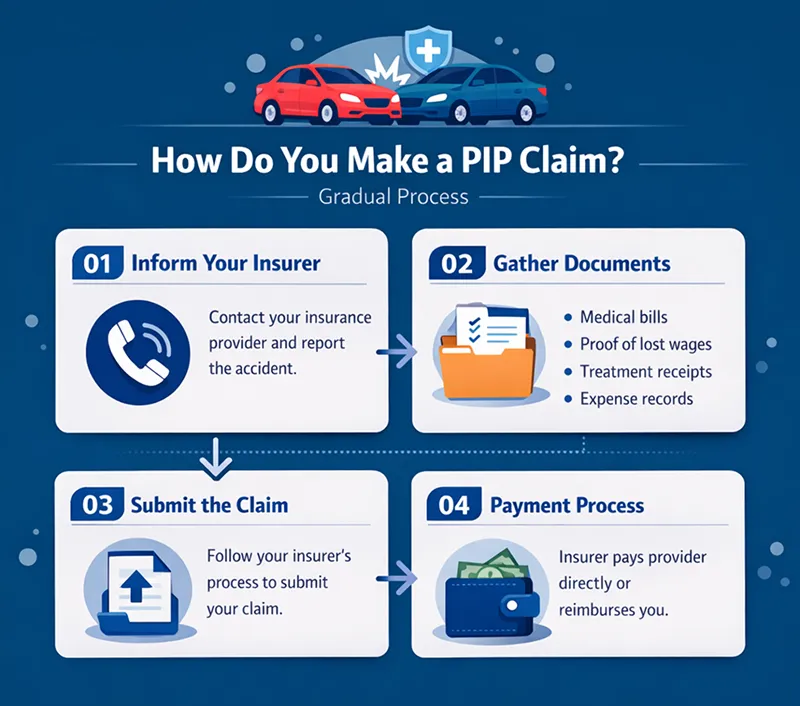
The process of making a claim under personal injury protection is usually simple and direct.
Gradual Process
It is a gradual process including:
1. Inform Your Insurer
The first step is to contact your insurance provider and report what happened after an accident.
2. Gather Documents
In second step you may need to provide:
- Medical bills
- Proof of lost wages
- Receipts for treatment
- Any related expense records
3. Submit the Claim
The third step is to follow the insurer’s process for submitting the claim.
4. Payment Process
In the fourth step the insurer may pay the medical provider directly or may return you if you have already paid.
Data shows that the top 20 personal injury firms handle over 50% of all claims, so getting clear support at the first spot can make a big difference.
This process is usually faster than traditional claims. It does not depend on fault being decided.
What Happens If Your PIP Claim Is Denied?
Sometimes your claim may not be accepted. You still take some steps if this happens.
The First Step of PIP Claim
The first step is to appeal if your claim is denied. You have the right to challenge the decision. Submit a written appeal and provide evidence to support your case.
The Second Step of PIP Claim
If the appeal fails you should take advice from a personal injury lawyer. Know your rights and options.
The Third Step of PIP Claim
The third step involves some options such as a complaint can be made to the Financial Ombudsman Service. They can review disputes between customers and insurers. This is the key part as it shows that there are other options even if the first decision is not in your favour.
Why People Choose PIP
Many people choose it because of the clear personal injury protection benefits it offers after an accident.
It is not just about insurance. It helps reduce stress after an accident by:
- Avoiding delays in treatment
- Reducing financial pressure
- Providing support without legal complexity
Key Takeaways
If you want a quick and simple overview, the key points below will help you understand PIP more clearly:
- PIP is a type of insurance that covers medical and recovery costs after an accident
- It works on a no-fault basis, so you do not need to prove who caused the accident
- It provides quick access to treatment and financial support
- It can cover:
- Medical expenses
- Rehabilitation
- Long-term care
- Lost wages
- It may also apply in cases involving uninsured drivers
- It usually does not cover passengers under the driver’s policy
- It is not compulsory but it can be very useful
- It has limits and time restrictions
- It may work with health insurance
- Claims are usually simple but can be appealed if denied
Real-Life Value of Personal Injury Protection
When you fully understand how personal injury protection works, it helps you to think about real-life situations.
First Case
A driver is involved in a small crash and suffers a whiplash injury. PIP helps cover doctor visits and therapy. There is no need to wait for fault to be decided.
Second Case
A person suffers a broken bone and cannot work for weeks. PIP helps with medical costs. It may also replace lost income.
Third Case
A driver causes an accident to a person. A personal injury claim may be limited. PIP still provides support regardless of fault.
Fourth Case
A person is hit by someone without insurance. PIP may still cover medical costs.
These examples show how flexible and practical the cover can be.
Case Study: How Personal Injury Protection Helped After an Accident
Sarah was driving to work when she was involved in a minor road accident. Later, she began to feel pain in her neck and back. Her doctor confirmed it was whiplash injury.
She had personal injury protection, so she did not have to wait for fault to be decided. She contacted her insurer and the policy helped cover her doctor visits, medical tests, physiotherapy and part of her lost wages while she took time off work.
Even though Sarah was partly at fault, her personal injury protection still helped pay for her recovery. This meant she could focus on getting better instead of worrying about costs.
Conclusion
Personal injury protection works on very simple terms. It gives quick support after a road accident. It also protects you from many of the delays and stress that come with normal claims. Instead of waiting to see who was at fault, it allows treatment and recovery to start at once.
It is not a complete solution on its own but plays a key role in a wider protection plan. Other types of insurance do not give you proper safety. It acts as a safety layer for you and fills the gaps left by other types of insurance.
The real value comes from the personal injury protection benefits, not just what it pays. Its quick response and the stress it removes during recovery are valuable.
Strengthen your PIP claim with expert guidance from Concise Medico. We provide legal and medical support.
Contact us today if you need expert guidance with a personal injury claim.
FAQs
You never know what is coming next in your life. Accidents on the road can happen at any time. A short drive to work, a quick trip to the shop or even a calm ride home can suddenly turn into a bad moment.
When an accident happens, the biggest worry is not always the crash itself. It is what comes after. Medical bills, time away from work and the time it takes to heal can affect daily life in many ways.
It’s a wretched time for people who are injured through no fault of their own. – Brett Dixon, Solicitor
Data shows a 12% decline in personal injury claims in 2025 versus 2024. This drop shows fewer claims. It also shows why fast help like PIP still matters after an accident.
Personal injury protection, often called PIP, helps support people after a road accident. It helps pay costs and gives quick access to care. This is where a personal injury protection claim becomes useful.
Many people also ask:
- What is personal injury protection insurance
- How does personal injury protection help after a road accident
They have heard the term but not all know how it works in real life.
In this blog, you will learn:
- What does personal injury protection mean
- What happens after an accident
- What does PIP cover
- Do you need PIP
- How much does PIP cost
- How does PIP work with health insurance
- Can you increase your coverage
- Why do people choose PIP
What Is PIP
PIP is a type of insurance cover. It is used to pay for medical care and related costs after a road accident. Personal injury protection insurance is often part of a car insurance policy. Some people also choose to add extra cover for higher payouts.
Each policy has a set limit. This means the insurer will pay a fixed amount if an accident happens. This is an amount agreed when the policy is taken out. It works as the maximum cover for medical bills and treatment. It also covers other related expenses including vehicle damage.
The main goal of PIP is simple. It helps injured people get care without wasting time. It also ensures that doctors, hospitals and other medical providers are paid quickly for their services.
Types of Injuries Covered by Personal Injury Protection
PIP usually covers a wide range of injuries that can happen in road accidents. These include:
- Broken bones and fractures
- Sprains, strains and whiplash
- Cuts and bruises
- Loss of limbs
- Loss of sight
- Loss of speech
- Head injuries
- Back injuries
- Spinal injuries
It may also include more complex cases such as:
- Dental reconstruction
- Surgery-related recovery
- Long-term rehabilitation
It is important to note that each policy is different. Some may offer wider cover, while others may have limits. The best approach is to check the details of your own policy.
What Does Personal Injury Protection Cover?
| Category | What It Includes |
|---|---|
| Medical costs | Hospital care, doctor visits, tests |
| Treatment | Surgery, medicines, emergency care |
| Rehabilitation | Physiotherapy, recovery programmes |
| Long-term care | Ongoing treatment and support |
| Lost income | Partial wage replacement |
PIP mainly focuses on medical and recovery-related costs. However, the cover can be wider than many people expect.
1. Medical Expenses
This includes:
- Emergency treatment
- Hospital stays
- Operations
- Doctor visits
- Diagnostic tests
- Medicines
2. Rehabilitation Care
Recovery does not end after the initial treatment. Many people need help to return to normal life. PIP may cover:
- Physical therapy
- Occupational therapy
- Rehabilitation programmes
3. Long-Term Care
In more serious cases, injuries may need ongoing treatment. Some policies help with:
- Long-term medical care
- Recovery support services
4. Lost Income
If injuries prevent you from working, PIP may help replace lost wages. This can reduce financial stress during recovery.
The Key Idea Behind PIP
The most important thing to understand about PIP is that it works on a no-fault basis.
This means:
- You do not need to prove the accident was not your fault
- You do not need to wait for the other driver to be found at fault
- You do not need to depend on the other person’s insurance
Instead, your personal injury protection insurance policy works for you. It pays for your medical care.
This is very different from a normal personal injury protection claim. In many cases, a claim can take time. It often involves proving fault, sharing evidence and waiting for decisions. With the help of PIP, the process works faster and without unnecessary steps.
What Happens After an Accident?
When you look at what happens step by step after an accident, it helps you to understand how PIP works.
Step 1
You may be injured or begin to feel pain later after a road accident.
Step 2
This step is to inform your insurance company to start a personal injury protection claim as soon as possible after the accident.
Step 3
Once the claim is started, your PIP cover becomes active. It does not matter:
- Who caused the accident
- Whether the other driver has personal injury protection insurance
- Whether fault has been decided
Step 4
You can begin treatment right after an accident happens. This may include:
- Hospital visits
- Doctor consultations
- Tests and scans
- Therapy sessions
In many cases, the insurer may pay the medical provider directly. If you have already paid for treatment, the insurer may pay you back.
Step 5
The policy may continue to support your recovery until the coverage limit is reached. It depends on whether your injuries require long-term care.
A Simple Way to Think About Personal Injury Protection
It is a financial safety net that starts working the moment an accident happens. It allows you to focus on recovery instead of worrying about money, blame or delays.
What Makes PIP Different?
| Feature | What It Means |
|---|---|
| No-fault cover | Paid regardless of who caused the accident |
| Fast treatment | No need to wait for legal decisions |
| Financial support | Helps with bills and lost income |
| Uninsured cover | May apply if the other driver has no insurance |
| Simple process | Faster than traditional claims |
There are a few key points that make PIP stand out from other types of insurance.
1. Fast Access to Care
Fast access to care is one of the most important personal injury protection benefits. You do not have to wait for legal decisions before you receive treatment.
2. No-Fault Coverage
You are covered no matter who caused the accident. This reduces stress and delay in receiving care.
3. Supports Real Needs
It does not focus only on medical bills. It also helps with:
- Lost income
- Recovery support
4. Cover for Uninsured Driver Cases
If an uninsured or unknown driver hits you, your PIP may still apply.
Does PIP Cover Passengers?
This is a common question and the answer may surprise you.
In most cases:
- The driver’s PIP only covers the driver
- Passengers in the same car are not covered under that policy
However:
- If a passenger has their own PIP policy, they may still be covered under their own insurance
- The policyholder may also be covered when travelling as a passenger in another vehicle
This detail is important because many people think all passengers are covered automatically.
Do You Need PIP?
PIP is not always required by law. It is usually optional, especially in places like the UK. It totally depends on you. However, it can still be very useful in some situations.
1. It May Be Helpful If
It may be helpful if you drive often, such as going to work every day. You may want quick access to treatment after an accident. You may be concerned about medical costs or you do not want to depend fully on legal claims.
2. It Is Especially Useful If
It is useful if you are partly or fully at fault in an accident. Getting money from a claim can be hard in such cases. Even if the claim is accepted, the amount may be reduced. PIP can help pay costs without waiting for that process.
How Much Does PIP Cost?
Cost is one of the first things people think about before adding any insurance cover. PIP is usually not very costly compared to the benefits it offers. The price can vary.
In many cases, a basic level of PIP may cost around £50 to £100 per year. If someone chooses a higher level of cover with more benefits and a higher payout limit, the cost can increase to around £100 to £300 per year.
The exact price depends on several factors:
- The insurance provider
- The level of coverage chosen
- The policy limit
- The driver’s history
- Where the person lives
- The type of vehicle
If the coverage limit is increased, the premium will also go up. There is always a balance between how much protection is needed and how much one is willing to pay.
What Are the Limits of PIP?
Even though PIP is very useful, it does not cover everything. PIP insurance comes with limits and conditions like all types of insurance.
1. Coverage Limits
Each policy has a maximum payout limit. Once this limit is reached, the insurer will stop paying, and any further costs must be covered either out of pocket or through other insurance.
Some policies may also have sub-limits. This means certain types of costs may have their own smaller caps within the overall policy.
2. What PIP Does Not Cover
PIP mainly focuses on costs related to injury. It does not usually cover:
- Damage to your vehicle
- Property damage
- Pain and suffering
- Injuries to other people
- Costs beyond the policy limit
It may also not cover injuries caused while committing a crime and self-inflicted injuries.
These limits are important to understand, as they show that PIP is only one part of a wider insurance setup.
3. Duration of Benefits
Some policies only provide support for a certain period of time. For example:
- Treatment and benefits may stop after a few years
- Long-term care may not be fully covered forever
This means ongoing recovery may need support from other sources if the time limit is reached.
How Does PIP Work With Health Insurance?
Another key part of understanding PIP is to know how it works with health insurance.
In many cases:
- PIP pays first
- It acts as the basic cover
Once the policy limit is used up, then health insurance may step in. It can cover the remaining medical costs
In some cases, PIP may act as secondary cover as it pays after other insurance has been used. This depends on the policy terms. It is always a good idea to see how the two types of cover work together.
Does PIP Affect No-Claims Discount?
Many people worry that using PIP will affect their no-claims discount.
In most cases:
- PIP claims are often treated separately
- They may not affect your no-claims discount
However:
- This can vary depending on your insurer
- It is important to check your policy terms
This detail can make a big difference when you decide to use the cover.
Can You Increase Your PIP Cover?
Yes, you can increase your PIP cover in most cases.
This means:
- Higher payout limits
- More financial protection after an accident
However, higher cover leads to higher costs. This decision depends on your needs. If you want more security, you may choose higher limits and a person with other support systems may keep it basic.
How Do You Make a PIP Claim?
The process of making a claim under personal injury protection is usually simple and direct.
Gradual Process
It is a gradual process including:
1. Inform Your Insurer
The first step is to contact your insurance provider and report what happened after an accident.
2. Gather Documents
In second step you may need to provide:
- Medical bills
- Proof of lost wages
- Receipts for treatment
- Any related expense records
3. Submit the Claim
The third step is to follow the insurer’s process for submitting the claim.
4. Payment Process
In the fourth step the insurer may pay the medical provider directly or may return you if you have already paid.
Data shows that the top 20 personal injury firms handle over 50% of all claims, so getting clear support at the first spot can make a big difference.
This process is usually faster than traditional claims. It does not depend on fault being decided.
What Happens If Your PIP Claim Is Denied?
Sometimes your claim may not be accepted. You still take some steps if this happens.
The First Step of PIP Claim
The first step is to appeal if your claim is denied. You have the right to challenge the decision. Submit a written appeal and provide evidence to support your case.
The Second Step of PIP Claim
If the appeal fails you should take advice from a personal injury lawyer. Know your rights and options.
The Third Step of PIP Claim
The third step involves some options such as a complaint can be made to the Financial Ombudsman Service. They can review disputes between customers and insurers. This is the key part as it shows that there are other options even if the first decision is not in your favour.
Why People Choose PIP
Many people choose it because of the clear personal injury protection benefits it offers after an accident.
It is not just about insurance. It helps reduce stress after an accident by:
- Avoiding delays in treatment
- Reducing financial pressure
- Providing support without legal complexity
Key Takeaways
If you want a quick and simple overview, the key points below will help you understand PIP more clearly:
- PIP is a type of insurance that covers medical and recovery costs after an accident
- It works on a no-fault basis, so you do not need to prove who caused the accident
- It provides quick access to treatment and financial support
- It can cover:
- Medical expenses
- Rehabilitation
- Long-term care
- Lost wages
- It may also apply in cases involving uninsured drivers
- It usually does not cover passengers under the driver’s policy
- It is not compulsory but it can be very useful
- It has limits and time restrictions
- It may work with health insurance
- Claims are usually simple but can be appealed if denied
Real-Life Value of Personal Injury Protection
When you fully understand how personal injury protection works, it helps you to think about real-life situations.
First Case
A driver is involved in a small crash and suffers a whiplash injury. PIP helps cover doctor visits and therapy. There is no need to wait for fault to be decided.
Second Case
A person suffers a broken bone and cannot work for weeks. PIP helps with medical costs. It may also replace lost income.
Third Case
A driver causes an accident to a person. A personal injury claim may be limited. PIP still provides support regardless of fault.
Fourth Case
A person is hit by someone without insurance. PIP may still cover medical costs.
These examples show how flexible and practical the cover can be.
Case Study: How Personal Injury Protection Helped After an Accident
Sarah was driving to work when she was involved in a minor road accident. Later, she began to feel pain in her neck and back. Her doctor confirmed it was whiplash injury.
She had personal injury protection, so she did not have to wait for fault to be decided. She contacted her insurer and the policy helped cover her doctor visits, medical tests, physiotherapy and part of her lost wages while she took time off work.
Even though Sarah was partly at fault, her personal injury protection still helped pay for her recovery. This meant she could focus on getting better instead of worrying about costs.
Conclusion
Personal injury protection works on very simple terms. It gives quick support after a road accident. It also protects you from many of the delays and stress that come with normal claims. Instead of waiting to see who was at fault, it allows treatment and recovery to start at once.
It is not a complete solution on its own but plays a key role in a wider protection plan. Other types of insurance do not give you proper safety. It acts as a safety layer for you and fills the gaps left by other types of insurance.
The real value comes from the personal injury protection benefits, not just what it pays. Its quick response and the stress it removes during recovery are valuable.
Strengthen your PIP claim with expert guidance from Concise Medico. We provide legal and medical support.
Contact us today if you need expert guidance with a personal injury claim.