TABLE OF CONTENT
List of Psychiatric Conditions or Mental Disorders
The NHS Adult Psychiatric Morbidity Survey found that the number of adults in England with an anxiety disorder or depression rose from 15% in 1993 to 23% by 2024. That means nearly a quarter of adults now live with some form of common mental disorder. This figure does not even include the wider range of conditions covered further on in this mental disorders list.
If you have ever searched for a reliable mental disorders list, you will know how confusing the results can be. Some sources use outdated terms. Others mix up the types or leave out conditions entirely. This guide brings together a proper mental disorders list organised by category. These psychiatric conditions are now classified and understood in the UK today.
What Is a Mental Disorder?
A mental disorder is a health condition that affects how a person thinks, feels, or behaves. It is something that causes real distress in daily life. It is not a personal weakness or a character flaw. It is a known medical condition, just like diabetes or asthma, which are real physical conditions.
Professor Sir Simon Wessely, who is a former president of the Royal College of Psychiatrists, has spoken openly about it. He studied how mental health patients have long been treated unfairly within healthcare. He noted that stigma has meant,
“our patients, our hospitals and ourselves will be treated as second-class citizens.”
That stigma is part of why a clear and accurate list of all mental disorders matters. Knowing what these issues actually are helps reduce the shame so people can ask for help.
Full List of Mental Disorders by Category
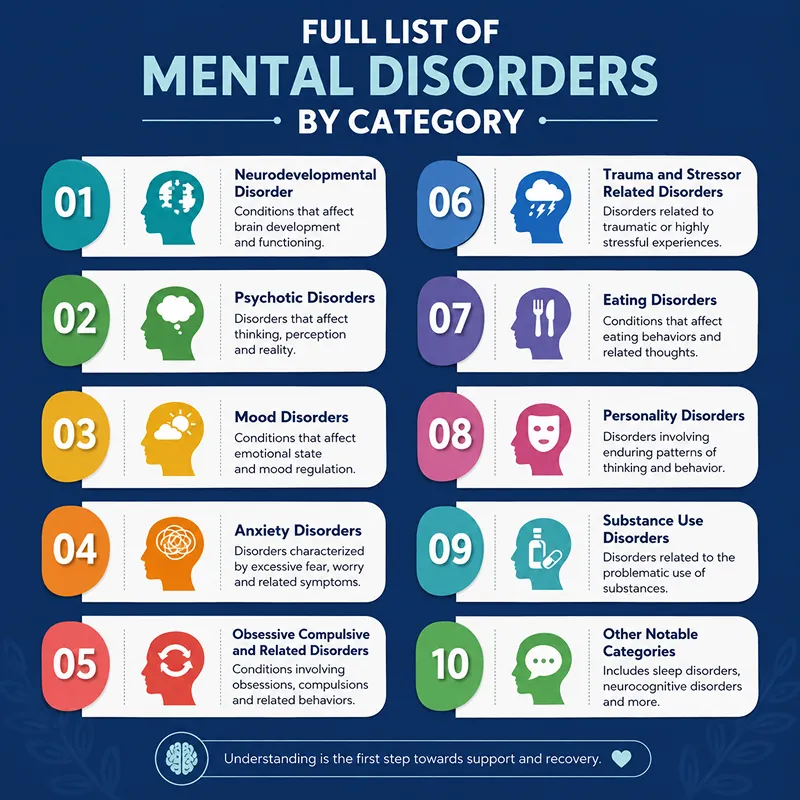
Below is a mental disorders list organised into the major types. Each one groups together conditions that share similar features, causes, or patterns of symptoms.
1. Neurodevelopmental Disorders
These conditions begin early in life and affect how your brain develops. It involves problems with learning, memory, social skills, communication, behaviour, or motor control, which can affect daily life. They include Attention Deficit Hyperactivity Disorder (ADHD), Autism Spectrum Disorder and specific learning issues such as dyslexia. The symptoms often appear in childhood and can carry on as adults.
2. Psychotic Disorders
Psychotic disorders involve a loss of contact with reality. Someone having psychosis may have hallucinations, delusions, or confused thinking that disrupts daily life.
Schizophrenia is the most well-known condition in this category. It involves a number of symptoms including hallucinations, delusions, disorganised speech and low motivation. It typically develops in late adolescence or early adulthood and needs ongoing care.
3. Mood Disorders
Mood disorders affect a person’s emotional state over a long period. It is well beyond normal ups and downs.
Depression
Depression is also called major depressive disorder. It involves low mood, loss of interest in activities and changes in sleep, appetite, or energy that last for at least two weeks.
Bipolar Disorder
Bipolar disorder swings between low mood and high energy. In most cases, mood, energy and activity levels are unusually raised.
4. Anxiety Disorders
Anxiety disorders involve too much worry or fear that interferes with daily life. According to NHS data, general anxiety disorder alone now affects roughly one in twelve adults in England. This makes it one of the most common conditions on this list. Common types include generalised anxiety, panic disorder, social anxiety, and specific phobias.
5. Obsessive Compulsive and Related Disorders
Another one is Obsessive Compulsive Disorder (OCD), where intrusive thoughts lead to repetitive behaviours aimed at reducing distress. It also includes other conditions such as body dysmorphic disorder and hoarding disorder.
6. Trauma and Stressor Related Disorders
These conditions develop after exposure to a traumatic or highly stressful event. Post Traumatic Stress Disorder (PTSD) is the most widely accepted condition in this group. It causes flashbacks, avoidance and raised alertness long after the event has passed.
7. Eating Disorders
Eating disorders involve a number of issues with food, eating, or body image. This category includes anorexia nervosa, bulimia nervosa and binge eating disorder. All of these carry serious physical and mental health risks.
8. Personality Disorders
Personality disorders involve deeply ingrained patterns of thinking that differ from what is typically expected. It causes difficulty in relations or daily functioning. Borderline personality disorder and antisocial personality disorder are among the more widely known examples.
9. Substance Use Disorders
These conditions involve a pattern of alcohol or drug use. This leads to severe problems, including dependence, withdrawal and continued use despite the harm.
10. Other Notable Categories
Many further categories complete a full list of all mental disorders. These include:
- Dissociative disorders where a person feels a disconnect from their thoughts.
- Sleep-wake disorders which affect rest and daily rhythm.
- Neurocognitive disorders such as dementia, which affect memory and thinking, usually later in life.
Case Study: Legal Aspects of Psychiatric Disorder
Let’s see a case following the Hillsborough disaster. In this case, many police officers who had helped victims at the scene later got PTSD. The officers brought a claim for psychiatric injury against their employer. They argued that seeing the disaster had caused them a mental disorder.
The House of Lords ruled that police officers acting as rescuers could not just claim as primary victims. It could be done only if they were exposed to danger or reasonably believed they were. The court drew a clear distinction between primary victims and secondary ones. The primary ones are those who are directly involved or at risk while later includes those who witness harm to others.
This case remains important because it shows that a known psychiatric disorder must still meet strict legal tests before it supports a claim. A confirmed diagnosis alone is not always enough. The situation of how the condition arose matters just as much.
How Concise Medico Can Help
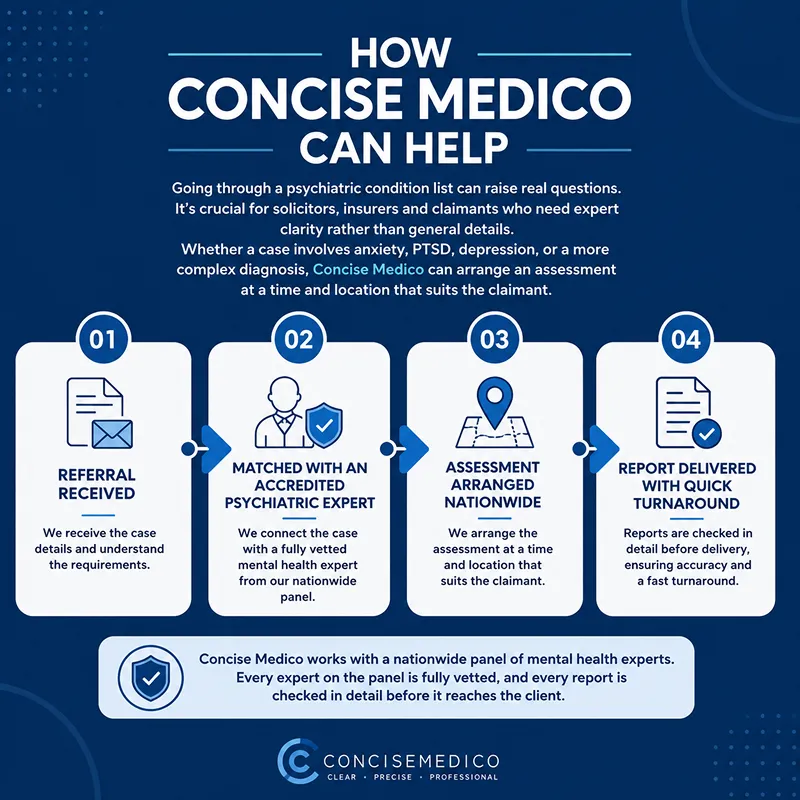
Going through a psychiatric condition list can raise real questions. It’s crucial for solicitors, insurers and claimants who need expert clarity rather than general details. Concise Medico works with a nationwide panel of mental health experts. Every expert on the panel is fully vetted. Also, the reports are checked in detail before they reach the client.
Whether a case involves anxiety, PTSD, depression, or a more complex diagnosis, Concise Medico can arrange an assessment at a time and location that suits the claimant.
Conclusion
This mental disorders list covers the main types recognised across UK healthcare. From mood disorders to trauma-related and personality disorders, each category contains its own set of conditions. Many people go through more than one at a time. Having a detailed list matters not only for patients and families but for the experts. It supports them through diagnosis, treatment and in some cases legal claims.
If you work with clients who need expert psychiatric assessment, Concise Medico’s panel is ready to help.