TABLE OF CONTENT
Ever had sore wrists after typing all day at work? Or the shoulder aches after a hard day at sawing wood? What if that pain never goes away? Such is the danger of injuries caused by repetitive strain.
If you have constant pain from repetitive activity at work, you might have a rightful repetitive strain injury. 1 in 50 workers have reported an RSI condition in the UK. Such injuries cause pain and hinder you from doing your work properly.
This guide explains what RSI is, when an RSI claim can apply in the UK, what compensation can include, the usual three-year time limit, and what evidence matters most.
What Is a Repetitive Strain Injury?
An injury caused by repeated motion of the same kind is characterised as repetitive strain injury, or RSI. At work, due to the nature of the routine, repeated motion is necessary. For instance, a sawyer may suffer from shoulder aches due to repeated use of the same muscles and tendons. Due to repeated motion, these injuries may cause damage to muscles, tendons and nerves.
RSI usually affects:
- Wrists.
- Hands.
- Fingers.
- Arms.
- Shoulders.
- Neck.
It’s most common in work that has people doing the following activities:
- Type all day.
- Use a mouse constantly.
- Work on production lines.
- Use vibrating tools.
- Do repetitive lifting.
While most people tend to ignore minor pain, over time, it can become serious. Some injuries may even become permanent or result in deformations.
It is the duty of your employer to take measures to prevent you from getting RSI. In case they haven’t, you may be able to make repetitive strain injury claims.
What Are Some Common Types of Repetitive Strain Injuries?
RSI is not just one injury. It covers a broad group of conditions.
Theses include:
- Carpal tunnel syndrome.
- Tendinitis.
- Tennis elbow.
- Writer’s cramp.
- Trigger finger.
These issues can lead to severe pain and discomfort. If ignored or tried to work through, they may take a more permanent form.
This can lead to worsened conditions and even deformities. Many people who suffer from these conditions go on to make RSI claims.
What Causes RSI at Work?
The most common cause of RSI is some form of poor working conditions. Such as:
- Bad desk or chair setup.
- No regular breaks.
- Long hours doing repetitive tasks.
- Poor training.
- No ergonomic assessments.
- Old or unsuitable equipment.
UK employers have a legal duty to keep workers safe. If they don’t, they can be held accountable with repetitive strain injury claims.
What Are the Jobs Where RSI Is Common?
RSI can happen in any job or workplace. It can happen almost anywhere.
Jobs with high RSI risk include:
- Office jobs with lots of typing.
- Factory and warehouse work.
- Construction and trades.
- Hairdressing and beauty.
- Cleaning jobs.
- Care work.
If your job involves doing the same movement again and again, RSI is a real risk. If it happens due to employer negligence, you have a right to pursue repetitive strain injury claims.
Related reading: Top 10 Most Common Workplace Injuries and How to Stay Safe.
What Are the Early Warning Signs of RSI?
RSI can be easily ignored. Most people treat aches and pains after work as normal. Over time, they can develop into serious conditions. Here are some early signs you should not ignore.
Some early symptoms are:
- Tingling or numbness.
- Stiffness.
- Mild pain.
- Weak grip.
If ignored, they can change into more serious symptoms, such as:
- Constant pain.
- Swelling.
- Reduced movement.
- Trouble sleeping due to pain.
If you ignore these signs further or try to work through them, they can result in permanent damage.
Can You Make a Repetitive Strain Injury Claim?
You may be able to claim if:
- Your injury was caused by work.
- Your employer failed to protect you.
- The injury affects your daily life.
You don’t have to be off work to make a claim. Many successful repetitive strain injury compensation claims have been made by people who are still working.
You also don’t need to be disabled or seriously injured to make a repetitive strain injury claim. As long as the injury is caused by work, it can qualify.
Who Can Make RSI Claims?
Lots of workers think repetitive strain injury claims are only for office staff. This is false. In the UK, any worker can pursue repetitive strain injury claims if their condition was caused or worsened by employer negligence, typically under the Health and Safety at Work Act 1974.
People who commonly make RSI claims include:
- Office workers.
- Factory workers.
- Builders.
- Cleaners.
- Hairdressers.
- Warehouse staff.
- Healthcare workers.
Many kinds of workers can develop RSI. If work tasks caused or worsened the condition and workplace duties were not met, an RSI claim may apply.
What Are Repetitive Strain Injury Compensation Claims?
Repetitive strain injury compensation claims are the lawsuits pursued by victims of RSI, who acquired the condition in their workplace due to the employer’s negligence. The compensation allows injured workers to receive money for the harm they’ve suffered during work at their workplace.
Compensation can cover:
- Pain and discomfort.
- Medical treatment.
- Lost wages.
- Future loss of earnings.
- Travel costs.
- Rehabilitation.
The aim is to put you back in the position you’d be in if the injury never happened without financial stress.
RSI Compensation: How Much Could You Get?
The amount you receive for a successful repetitive strain injury compensation claim varies. It depends primarily on:
- How severe is the injury?
- How long does it last?
- Does it affect your career?
Compensation amount for repetitive strain injury compensation claims can be:
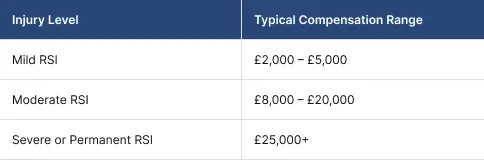
Each claim is different, so exact figures vary.
How Long Do You Have to Make RSI Claims?
Under the Limitation Act 1980, you usually have three years to make a claim.
Here are the time limits for making a claim:
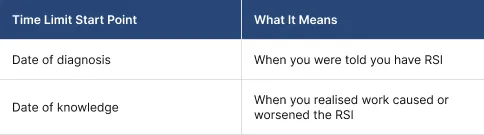
This date is called ‘date of knowledge’. The time limit begins from this date and is up to 36 months onwards. This time limit applies to all RSI claims, so it’s important to apply timely.
Case Study: Warehouse Worker RSI Claim
Jake was a 35-year-old warehouse worker in Leeds. His job involved lifting and scanning parcels for long shifts.
Problems at work included:
- No job rotation.
- No training on safe movement.
- Pressure to work fast.
After three years, Jake developed pain in both arms and shoulders. He was diagnosed with repetitive strain injury and couldn’t lift properly anymore.
Jake decided to start one of many repetitive strain injury claims.
The Result
- Medical evidence linked the injury to his work.
- The employer accepted responsibility.
- Jake received £21,000 in compensation.
What Evidence Do You Need for an RSI Claim?
Good evidence makes repetitive strain injury claims much stronger.
Useful evidence includes:
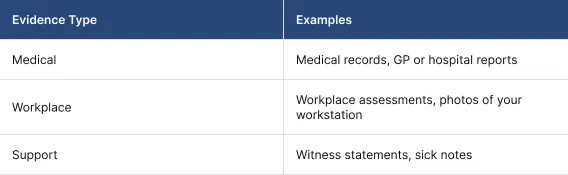
A solicitor can help collect this if you’re unsure. In the meantime, you can check out our guide on what constitutes evidence for a personal injury claim.
Will You Have to Go to Court?
Most people never see a courtroom.
- Most repetitive strain injury claims settle early.
- Employers usually have insurance.
- Many cases end with an agreed payout.
Only difficult cases go that far.
Will Claiming Affect Your Job?
A very common concern preventing victims from pursuing repetitive strain injury claims is how it will affect their jobs. Don’t worry, UK law protects you.
- It’s illegal for an employer to sack you for claiming.
- Most claims are handled through insurance.
- Many people stay in the same job after claiming.
Your health always comes first.
No Win No Fee Explained
Most repetitive strain injury compensation claims are done on a No Win No Fee basis.
This means:
- You don’t pay upfront.
- You don’t pay if you lose.
- Fees are taken from compensation if you win.
This makes claiming much less risky.
What Is the Claims Process Like?
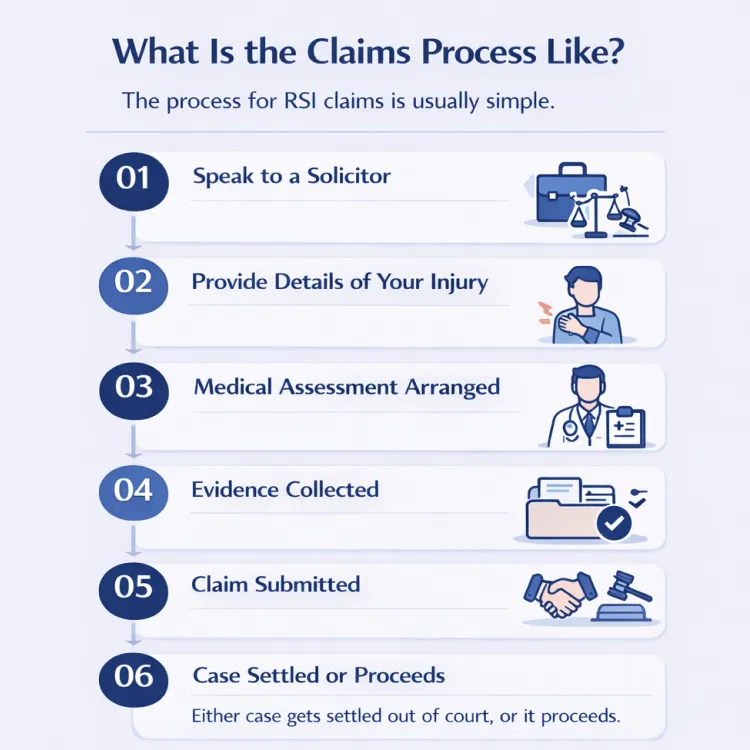
The process for RSI claims is usually simple:
- Speak to a solicitor.
- Provide details of your injury.
- Medical assessment arranged.
- Evidence collected.
- Claim submitted.
- Either case gets settled out of court, or it proceeds.
Most claims are settled before going to court.
What’s the Time Duration of a Case?
Timeframes vary, but most repetitive strain injury claims take:
- 6 to 12 months for straightforward cases.
- Longer for complex or severe injuries.
Delays often happen if medical evidence is still developing.
Can You Claim If You Still Work There?
Many repetitive strain injury claims are made by people still employed by the same company. Employers are encouraged to improve conditions after claims, which helps everyone.
Preventing RSI in the Future
Whether you pursue repetitive strain injury claims or not, prevention is important.
Good habits include:
- Taking regular breaks.
- Adjusting desks and chairs.
- Using ergonomic equipment.
- Stretching during the day.
- Speaking up early.
Employers should support all of this.
Conclusion
Repetitive strain injuries are a silent killer. Many healthy lives are ruined by neglect and ignorance. Many employees suffer in silence because they don’t know their rights or how to pursue legal action.
Hopefully, this guide clears up all the nuances associated with RSI claims.
If you are an employee and are suffering from any of the symptoms, then the time for action is now.
At Concise Medico, we understand the severe nature of RSI that can slowly mess up your life if ignored. If your job caused your injury and your employer didn’t protect you, repetitive strain injury claims are there to help. Contact us to get help today.
FAQs
Ever had sore wrists after typing all day at work? Or the shoulder aches after a hard day at sawing wood? What if that pain never goes away? Such is the danger of injuries caused by repetitive strain.
If you have constant pain from repetitive activity at work, you might have a rightful repetitive strain injury. 1 in 50 workers have reported an RSI condition in the UK. Such injuries cause pain and hinder you from doing your work properly.
This guide explains what RSI is, when an RSI claim can apply in the UK, what compensation can include, the usual three-year time limit, and what evidence matters most.
What Is a Repetitive Strain Injury?
An injury caused by repeated motion of the same kind is characterised as repetitive strain injury, or RSI. At work, due to the nature of the routine, repeated motion is necessary. For instance, a sawyer may suffer from shoulder aches due to repeated use of the same muscles and tendons. Due to repeated motion, these injuries may cause damage to muscles, tendons and nerves.
RSI usually affects:
- Wrists.
- Hands.
- Fingers.
- Arms.
- Shoulders.
- Neck.
It’s most common in work that has people doing the following activities:
- Type all day.
- Use a mouse constantly.
- Work on production lines.
- Use vibrating tools.
- Do repetitive lifting.
While most people tend to ignore minor pain, over time, it can become serious. Some injuries may even become permanent or result in deformations.
It is the duty of your employer to take measures to prevent you from getting RSI. In case they haven’t, you may be able to make repetitive strain injury claims.
What Are Some Common Types of Repetitive Strain Injuries?
RSI is not just one injury. It covers a broad group of conditions.
Theses include:
- Carpal tunnel syndrome.
- Tendinitis.
- Tennis elbow.
- Writer’s cramp.
- Trigger finger.
These issues can lead to severe pain and discomfort. If ignored or tried to work through, they may take a more permanent form.
This can lead to worsened conditions and even deformities. Many people who suffer from these conditions go on to make RSI claims.
What Causes RSI at Work?
The most common cause of RSI is some form of poor working conditions. Such as:
- Bad desk or chair setup.
- No regular breaks.
- Long hours doing repetitive tasks.
- Poor training.
- No ergonomic assessments.
- Old or unsuitable equipment.
UK employers have a legal duty to keep workers safe. If they don’t, they can be held accountable with repetitive strain injury claims.
What Are the Jobs Where RSI Is Common?
RSI can happen in any job or workplace. It can happen almost anywhere.
Jobs with high RSI risk include:
- Office jobs with lots of typing.
- Factory and warehouse work.
- Construction and trades.
- Hairdressing and beauty.
- Cleaning jobs.
- Care work.
If your job involves doing the same movement again and again, RSI is a real risk. If it happens due to employer negligence, you have a right to pursue repetitive strain injury claims.
Related reading: Top 10 Most Common Workplace Injuries and How to Stay Safe.
What Are the Early Warning Signs of RSI?
RSI can be easily ignored. Most people treat aches and pains after work as normal. Over time, they can develop into serious conditions. Here are some early signs you should not ignore.
Some early symptoms are:
- Tingling or numbness.
- Stiffness.
- Mild pain.
- Weak grip.
If ignored, they can change into more serious symptoms, such as:
- Constant pain.
- Swelling.
- Reduced movement.
- Trouble sleeping due to pain.
If you ignore these signs further or try to work through them, they can result in permanent damage.
Can You Make a Repetitive Strain Injury Claim?
You may be able to claim if:
- Your injury was caused by work.
- Your employer failed to protect you.
- The injury affects your daily life.
You don’t have to be off work to make a claim. Many successful repetitive strain injury compensation claims have been made by people who are still working.
You also don’t need to be disabled or seriously injured to make a repetitive strain injury claim. As long as the injury is caused by work, it can qualify.
Who Can Make RSI Claims?
Lots of workers think repetitive strain injury claims are only for office staff. This is false. In the UK, any worker can pursue repetitive strain injury claims if their condition was caused or worsened by employer negligence, typically under the Health and Safety at Work Act 1974.
People who commonly make RSI claims include:
- Office workers.
- Factory workers.
- Builders.
- Cleaners.
- Hairdressers.
- Warehouse staff.
- Healthcare workers.
Many kinds of workers can develop RSI. If work tasks caused or worsened the condition and workplace duties were not met, an RSI claim may apply.
What Are Repetitive Strain Injury Compensation Claims?
Repetitive strain injury compensation claims are the lawsuits pursued by victims of RSI, who acquired the condition in their workplace due to the employer’s negligence. The compensation allows injured workers to receive money for the harm they’ve suffered during work at their workplace.
Compensation can cover:
- Pain and discomfort.
- Medical treatment.
- Lost wages.
- Future loss of earnings.
- Travel costs.
- Rehabilitation.
The aim is to put you back in the position you’d be in if the injury never happened without financial stress.
RSI Compensation: How Much Could You Get?
The amount you receive for a successful repetitive strain injury compensation claim varies. It depends primarily on:
- How severe is the injury?
- How long does it last?
- Does it affect your career?
Compensation amount for repetitive strain injury compensation claims can be:
Each claim is different, so exact figures vary.
How Long Do You Have to Make RSI Claims?
Under the Limitation Act 1980, you usually have three years to make a claim.
Here are the time limits for making a claim:
This date is called ‘date of knowledge’. The time limit begins from this date and is up to 36 months onwards. This time limit applies to all RSI claims, so it’s important to apply timely.
Case Study: Warehouse Worker RSI Claim
Jake was a 35-year-old warehouse worker in Leeds. His job involved lifting and scanning parcels for long shifts.
Problems at work included:
- No job rotation.
- No training on safe movement.
- Pressure to work fast.
After three years, Jake developed pain in both arms and shoulders. He was diagnosed with repetitive strain injury and couldn’t lift properly anymore.
Jake decided to start one of many repetitive strain injury claims.
The Result
- Medical evidence linked the injury to his work.
- The employer accepted responsibility.
- Jake received £21,000 in compensation.
What Evidence Do You Need for an RSI Claim?
Good evidence makes repetitive strain injury claims much stronger.
Useful evidence includes:
A solicitor can help collect this if you’re unsure. In the meantime, you can check out our guide on what constitutes evidence for a personal injury claim.
Will You Have to Go to Court?
Most people never see a courtroom.
- Most repetitive strain injury claims settle early.
- Employers usually have insurance.
- Many cases end with an agreed payout.
Only difficult cases go that far.
Will Claiming Affect Your Job?
A very common concern preventing victims from pursuing repetitive strain injury claims is how it will affect their jobs. Don’t worry, UK law protects you.
- It’s illegal for an employer to sack you for claiming.
- Most claims are handled through insurance.
- Many people stay in the same job after claiming.
Your health always comes first.
No Win No Fee Explained
Most repetitive strain injury compensation claims are done on a No Win No Fee basis.
This means:
- You don’t pay upfront.
- You don’t pay if you lose.
- Fees are taken from compensation if you win.
This makes claiming much less risky.
What Is the Claims Process Like?
The process for RSI claims is usually simple:
- Speak to a solicitor.
- Provide details of your injury.
- Medical assessment arranged.
- Evidence collected.
- Claim submitted.
- Either case gets settled out of court, or it proceeds.
Most claims are settled before going to court.
What’s the Time Duration of a Case?
Timeframes vary, but most repetitive strain injury claims take:
- 6 to 12 months for straightforward cases.
- Longer for complex or severe injuries.
Delays often happen if medical evidence is still developing.
Can You Claim If You Still Work There?
Many repetitive strain injury claims are made by people still employed by the same company. Employers are encouraged to improve conditions after claims, which helps everyone.
Preventing RSI in the Future
Whether you pursue repetitive strain injury claims or not, prevention is important.
Good habits include:
- Taking regular breaks.
- Adjusting desks and chairs.
- Using ergonomic equipment.
- Stretching during the day.
- Speaking up early.
Employers should support all of this.
Conclusion
Repetitive strain injuries are a silent killer. Many healthy lives are ruined by neglect and ignorance. Many employees suffer in silence because they don’t know their rights or how to pursue legal action.
Hopefully, this guide clears up all the nuances associated with RSI claims.
If you are an employee and are suffering from any of the symptoms, then the time for action is now.
At Concise Medico, we understand the severe nature of RSI that can slowly mess up your life if ignored. If your job caused your injury and your employer didn’t protect you, repetitive strain injury claims are there to help. Contact us to get help today.