TABLE OF CONTENT
What Is a Cancer Misdiagnosis? Compensation and Average Claim Amounts
What happens when cancer is missed or found too late? Can a patient claim compensation for the harm caused? Cancer misdiagnosis can delay vital care and may allow the disease to grow or spread. Studies show that in the UK, many cancer patients are diagnosed late, with 65.7% diagnosed at stage 3 or 4.
This shows why a delay in finding cancer can be serious. If a medical error causes extra harm, cancer misdiagnosis claims may be possible. This guide explains cancer misdiagnosis compensation amounts and the factors that can affect a claim.
What Is a Cancer Misdiagnosis Claim?
A cancer misdiagnosis claim is a legal claim for compensation. It can be made where a healthcare professional provides the wrong diagnosis, misses cancer or delays the diagnosis of cancer. It must be shown that the error caused damage which could have been avoided. This may include a worse prognosis, more serious treatment or financial loss.
Can I Claim Compensation for a Cancer Misdiagnosis?
Yes, you may be able to make a cancer misdiagnosis claim if it was due to negligence on the part of a healthcare provider, which resulted in an injury. A difficult diagnosis does not automatically mean that negligence occurred. You have to prove that it was due to medical negligence that worsened your condition.
You must meet the following requirements to make a cancer misdiagnosis claim:
1. Duty of Care
Most medical negligence claims must be made within three years of the medical error. The time limit may also start when you first realise that the error has caused you harm. Some exceptions apply, so getting legal advice early is important.
2. Proof of Negligence
It is important to show that the healthcare provider did not offer a reasonable standard of care. This could include failing to check the symptoms, interpreting the results wrongfully or making delays in referring the patient for cancer.
3. Proof of Harm
You will also need to prove that the negligence led to avoidable harm. For instance, the delay could have helped in the spread of the disease and limited treatment options. But if there is no clear link between the two, then the case is likely to fail.
How Much Compensation Could I Receive for a Cancer Misdiagnosis Claim?
The value of the cancer misdiagnosis claim depends on the level of damages and loss suffered. There is no fixed average payout for cancer misdiagnosis, as every case is different.
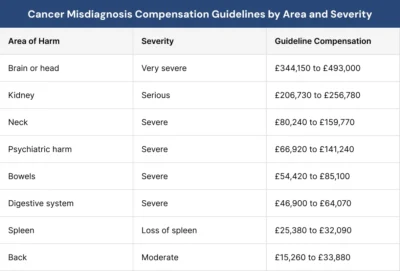
The table below shows how the level of compensation may vary depending on the type of injury. These are based on the Judicial College Guideline and should be treated as guidance only. They do not guarantee the amount a person will receive.
The last category for cancer misdiagnosis claims includes financial loss. Such loss might come from loss of earnings, medical expenses, travel expenses and other costs. There might be a claim that combines various aspects of damage, which would be more valuable than just the amounts mentioned for one type of damage.
This is why an average payout for cancer misdiagnosis cannot accurately predict the value of an individual claim. A solicitor will review the medical evidence and assess the full misdiagnosis cancer compensation that may be available. The final value of a cancer misdiagnosis claim will depend on the specific harm, losses and long-term impact caused by the medical error.
Early diagnosis is one of the best ways to improve cancer survival.
NHS England
What Factors Affect the Compensation Amount I Could Receive?
The compensation amount you could receive depends on many factors. These include the severity of the harm, medical evidence, financial losses, care needs and any contributory negligence.
The following factors can affect the value of a cancer misdiagnosis claim:
1. Injury Severity
The severity of the harm can greatly affect a cancer misdiagnosis claim. A delayed diagnosis may allow the cancer to spread. It may also lead to more complex treatment or a worse prognosis. More serious and lasting harm may lead to higher compensation. This can also affect the value of a claim for misdiagnosis cancer compensation.
2. Medical Evidence
Medical evidence is important in a cancer misdiagnosis claim. Medical records can show what happened and when. Expert evidence may show that the cancer should have been diagnosed earlier. It may also show that the delay caused avoidable harm.
3. Financial Losses
A cancer misdiagnosis claim may include financial losses caused by the medical error, such as misdiagnosis. These can include lost wages, travel costs and treatment expenses. Future losses may also be included if you cannot work. The total losses can affect the final compensation amount. This is why the average payout for cancer misdiagnosis cannot predict every claim.
4. Care and Support
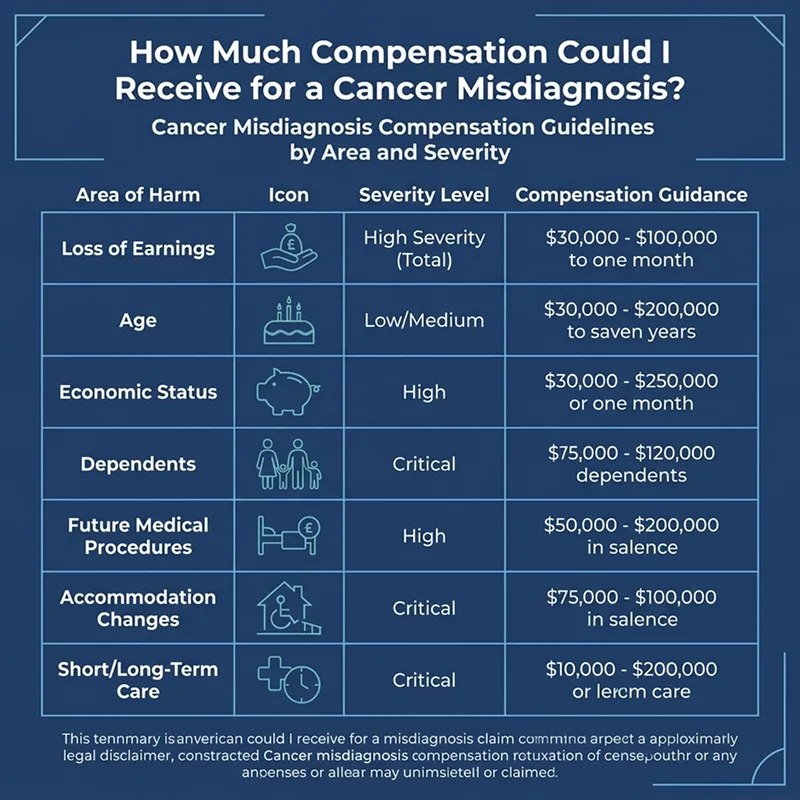
Some people need extra care after a delayed cancer diagnosis. This may include help with daily tasks or long-term support. The cost of professional care may be included in the claim. Support provided by a family member may also be considered in some cases. These needs can increase the value of a claim for misdiagnosis cancer compensation.
5. Contributory Negligence
Sometimes, the claimant may have contributed to the harm. For example, they may have missed an important follow-up appointment. If this is proven, the compensation may be reduced. The reduction will depend on how much the claimant contributed to the harm. This can affect the final value of the cancer misdiagnosis claim.
How Are Cancer Misdiagnosis Compensation Awards Calculated?
Cancer misdiagnosis compensation awards are calculated based on how the mistake affected your health, finances and daily life. The amount also depends on the pain, extra treatment, lost income and other losses caused by the misdiagnosis. These damages are divided into two areas, which are general damages and special damages.
The following areas explain what each type of compensation may cover:
1. General Damages (Physical and Mental Impact)
General damages cover the physical and emotional harm caused by the misdiagnosis. They focus on how the mistake affected your health, wellbeing and quality of life. This harm can continue during treatment or for many years afterwards. The following types of harm may be included.
-
Pain and Suffering
A delayed diagnosis may cause extra physical pain. You may need more serious treatment than would have been needed earlier. You may also suffer pain from surgery, chemotherapy or other treatment. The amount depends on the severity and lasting effect of the harm.
-
Psychological Trauma
A cancer misdiagnosis can cause serious emotional harm. You may experience fear, anxiety, depression or trauma. The stress may continue during treatment and recovery. Psychological harm may be more serious if the delay worsens your condition. Medical evidence can help show the effect of this harm.
-
Loss of Quality of Life
A misdiagnosis may change your daily life. You may no longer be able to work, enjoy hobbies or take part in activities as before. You may also lose independence or need help with normal tasks. This loss of enjoyment may form part of cancer misdiagnosis compensation. The effect on your daily life will be considered when assessing the claim.
2. Special Damages (Financial Losses and Expenses)
Special damages cover the financial losses caused by the misdiagnosis. These losses can happen during treatment and recovery. They may also continue into the future if the misdiagnosis affects your ability to work. You should keep records of costs linked to the illness.
The following expenses may be included in a cancer misdiagnosis claim:
-
Loss of Earnings
You may lose income because of treatment or recovery. You may also be unable to return to your previous job. In some cases, the misdiagnosis can reduce your future earning ability. The compensation amount can cover future as well as the lost earnings of the past. This can be a major part of the financial losses in a misdiagnosis claim of cancer.
-
Medical and Care Costs
You may need extra medical treatment because of the delayed diagnosis. This may include private treatment, medicines or corrective therapy. You may also have travel costs for hospital and specialist appointments. These reasonable costs may be included if they were caused by the misdiagnosis.
-
In-Home Care Support
Some people need help with daily tasks after a serious illness. This may include washing, dressing, cooking or moving around the home. Support may come from a professional carer or a family member. The cost of reasonable care may be included in the claim. This can add to the total cancer misdiagnosis compensation received.
What Is the Time Limit for a Cancer Misdiagnosis Compensation Claim?
In most cases, you have three years to start a cancer misdiagnosis claim. The exact date to make a claim may depend on your case. Some legal exceptions may also change how the time limit applies.
The following rules explain the main time limits and exceptions:
1. General Time Limits
You usually have three years to start a cancer misdiagnosis claim. This time limit may begin from the date the medical negligence happened or from the date you first became aware that the misdiagnosis caused you harm. It is called the date of knowledge. The correct time limit depends on the facts of your case, so it is important to seek legal advice as soon as possible.
2. Special Exceptions
Some people have different rules because of their age, the death of a loved one or their mental capacity. This can affect the three-year timeline. It may also affect whether the time limit is paused. The following situations are important to consider.
-
Children Under 18
A child can usually start a claim before turning 18 through a litigation friend. If no claim is made, they generally have until their 21st birthday to start a claim. This gives them three years from their 18th birthday. Different rules may apply if a claim has already been started.
-
Fatal Cases
If a loved one dies because of a suspected medical error, a claim may be possible. The three-year period may run from the date of death or the date the connection to the negligence became known. The exact time limit depends on the circumstances. The legal cases should be resolved as early as possible.
-
Mental Capacity
A person who lacks the mental capacity to bring a claim may have different time-limit rules. The usual three-year limit may not apply while they lack capacity. It may also be paused unless they regain capacity. The rules can be complex, so early legal advice is important.
Can I Make a Cancer Misdiagnosis Claim on a No Win No Fee Basis?
Yes, you may be able to make a cancer misdiagnosis claim on a No Win, No Fee basis. You usually pay no upfront legal fees. You also normally pay nothing for your solicitor’s legal fees if the claim is unsuccessful. So, in case you win the claim, a success fee will be charged and taken from your compensation. This fee is usually capped at 25%, depending on the agreement.
A No Win, No Fee agreement can reduce the financial risk of making a claim. The following points explain how the agreement usually works:
1. No Upfront Legal Fees
You do not usually pay your solicitor to start or investigate the claim. This can make it easier to seek legal help after a cancer misdiagnosis. Your solicitor should explain all agreement terms before you proceed.
2. Unsuccessful Claims
If your claim does not succeed, you generally do not pay your solicitor’s legal fees. However, some other costs may still apply in certain cases. Your solicitor should explain these costs before you sign the agreement.
3. Successful Claims
If you win, your solicitor may take a success fee from your compensation. This is usually capped at 25% under the agreement. The exact fee should be explained clearly before you start your cancer misdiagnosis claim.
How to Claim Compensation for Cancer Misdiagnosis?
To claim compensation for cancer misdiagnosis, you must show that the delayed, missed or incorrect diagnosis was caused by medical negligence and that it led to avoidable harm. You can claim against the NHS or a private healthcare provider if there is evidence that the standard of care fell below what was reasonably expected. Many people also choose to make a claim under a No Win, No Fee agreement. However, this does not guarantee that a claim will succeed.
The following requirements are usually needed to support a cancer misdiagnosis claim:
1. Proving Medical Negligence
You must show that the healthcare professional provided care below a reasonable standard. This could include missing test results or delaying a referral. It could also involve failing to investigate clear cancer symptoms.
2. Proving the Harm Caused
You must prove that the negligence is the reason for your harm. For example, the delay may have allowed the cancer to spread. It may also have led to more serious treatment or reduced treatment options. Medical evidence is used to show this link.
3. Meeting the Time Limit
The medical negligence claims should be started within time period of three years. This may run from the date of the medical error or the date you knew it caused harm. Some exceptions can apply. You should go for legal advice in order to avoid missing the deadline.
4. Hiring a Specialist Solicitor
A specialist medical negligence solicitor can guide you through the claims process. Many work on a No Win, No Fee basis. They can explain your legal rights and help you avoid common mistakes.
5. Gathering Evidence
Strong evidence is important for your claim. This may include medical records, scan results, test reports and notes about your symptoms. Having a clear timeline of events can also help you in your case.
6. Getting an Independent Medical Review
Your solicitor may ask an independent medical expert to review your case. The expert will decide whether the care fell below a reasonable standard and whether it caused avoidable harm.
7. Sending a Letter of Claim
If there is enough evidence, your solicitor will send a formal letter of claim. This letter explains what went wrong and why you believe medical negligence caused your harm.
Case Study: Bowel Cancer Misdiagnosis
Miss M visited her GP and hospital several times over three years with rectal bleeding, weight loss, stomach pain and back pain. She was diagnosed with other conditions, but doctors did not investigate her symptoms for bowel cancer and misdiagnosed her cancer. An MRI scan later found an abnormality and a biopsy confirmed bowel cancer. By then, the cancer had spread and her treatment options were limited.
She died two years after her diagnosis. Her family made a cancer misdiagnosis claim, arguing that earlier scans could have found the cancer sooner and extended her life by up to five years. The case settled for £200,000. This case shows why early diagnosis and acting within the cancer misdiagnosis claim process are important when avoidable delays cause harm.
Conclusion
A cancer misdiagnosis claim may be possible when a wrong, missed or delayed diagnosis causes avoidable harm. The amount of compensation depends on the effect of the error on your health, treatment and daily life. It may also include financial losses and care costs. There is no single average payout for cancer misdiagnosis. Each claim is different. The evidence must show what went wrong and how it affected you.
At Concise Medico, we help people understand the medical evidence needed to support a possible cancer misdiagnosis claim. If you need an independent medical report to support your case, our team can also help you access professional medical reporting services.