TABLE OF CONTENT
Can Anxiety Disorder Qualify for Disability Benefits in the UK?
Do you know that over 8 million people live with mental health issues in the UK? This means that 1 in 10, old and young, live with an anxiety disorder.
Anxiety disorder is recognised as a disability under the Equality Act 2010. Even then, to claim disability benefits can be difficult. In the UK, only half a million have been able to claim anxiety disability benefits. These low numbers reflect how claims do not rely on the diagnosis alone.
Therefore, this guide explains whether anxiety disorder qualifies for disability benefits in the UK. It also covers who is eligible and how to make a stronger claim.
What Is Anxiety Disorder?
An anxiety disorder is a mental health condition that causes strong, frequent and constant fear about everyday life. This is different from usual fear or worry. These fears make your personal life, work and daily activities difficult.
For some, anxiety can reach the point where it qualifies for anxiety disability benefits. This happens when it keeps you from a normal and worry-free life.
What Counts as Anxiety Disorder?
The sense of worry before a job or a big event is common. When such worries last for more than 6 months, it becomes an anxiety disorder. In short, anxiety disorder is a constant state that affects your daily life, relationships and work.
The main anxiety disorders are discussed below:
1. General Anxiety Disorder (GAD)
GAD is defined by constant and extreme worry, usually without any clear reason. This is the most common form of anxiety disorder.
Common Signs:
- Fear of negative outcomes
- Struggle with worry
- Difficulty to focus
- Endless restlessness
2. Panic Disorder
Panic disorder makes you feel intense fear that affects your activities or thoughts. You feel constant panic attacks in this anxiety disorder.
Common Signs:
- Rapid heartbeat
- Breathlessness
- Chest pain
- Cold sweats
- Dizziness
3. Phobias
A phobia creates a sense of intense and ongoing fear. This can change your normal life.
Common Signs:
- Fainting
- Crying
- Rapid heartbeat
- Muscle stiffness
4. Social Anxiety Disorder
Social anxiety disorder is when you feel intense and ongoing fear of being judged in a social setting. This also includes the fear of being noticed in public.
Common Signs:
- Avoiding social gatherings
- Constant urge to check yourself
- Unable to travel alone
Under these states, you can claim anxiety disability benefits.
Read more about mental health laws in the UK.
“Nothing diminished anxiety faster than action
— Walter Anderson ”
Common Symptoms of Anxiety Disorders
Anxiety becomes a disorder when it limits your ability to manage your work and daily life. In this case, you can claim support and disability benefits.
There are common signs of anxiety disorder. They are grouped into three categories, i.e., physical, emotional and behavioural.
It is vital to understand the signs of anxiety disorders to file claims for anxiety disability benefits.
The common signs include:
1. Emotional Symptoms
This results without any clear cause in anxiety disorder. It can affect your emotional ability for everyday tasks.
Common Signs:
- Too much worry
- Feel afraid often
- Get annoyed easily
- Find it hard to focus
- Feel overwhelmed
- Feel very scared
2. Physical Symptoms
Anxiety disorder affects more than your emotions. It can also cause physical symptoms that make life harder.
Common Signs:
- Fast heartbeat
- Sweat more than usual
- Shake or tremble
- Shortness of breath
- Feel tired all the time
- Stomach problems
- Tight or stiff muscles
3. Daily Life Symptoms
Anxiety disorder can greatly impact your everyday life. You should know how it affects your life to claim anxiety disorder benefits.
Common Signs:
- Struggle with attendance
- Unable to travel alone
- Fear of personal responsibilities
- Limited social circle
- Unable to make vital decisions
When you apply for anxiety disability benefits, these proofs are vital. Experts value the impact of anxiety disorder on your life before they award benefits.
Can Anxiety Disorder Qualify for Disability Benefits in the UK?
Yes, disability benefits for anxiety disorder are available in the UK. It depends on whether your daily life, work or mobility is affected by it.
Since the 2010 reforms, mental health conditions can be a disability. They must have a long-term and significant effect on your daily life. Anxiety disorder can also be a disability if it meets these conditions.
The benefits depend on how it affects your life. The experts see the impact on your daily life, ability to work and personal relationships. It does not depend on the diagnosis alone.
Eligibility Criteria for Anxiety Disability Benefits
The eligibility criteria for anxiety disability benefits are checked by:
- Signs have lasted or are expected to last at least 12 months
- Daily activities are greatly affected
- It creates difficulties in work, education and social situations
Some of the benefits given for anxiety disorders are given below:
1. Personal Independence Payment (PIP)
Personal Independence Payment is one of the main anxiety disability benefits available in the UK. PIP helps people with difficulties in their daily lives and mobility due to anxiety disorders.
Eligibility
You may be eligible if you:
- Are aged 16 or over
- Have had anxiety for at least 3 months
- Expect your anxiety to continue for at least 9 more months
- Struggle with daily tasks or mobility because of anxiety
Criteria
The criteria checks if you can:
- Prepare and cook food
- Manage your medication
- Communicate with other people
- Make everyday decisions
- Plan and follow journeys
- Move around independently
2. Employment and Support Allowance (ESA)
ESA provides financial help if anxiety disorder affects your ability to work.
Eligibility
You may be eligible if you:
- Your anxiety affects your ability to work
- You have medical evidence of your condition
- You meet the work eligibility rules
Criteria
The criteria checks if you can:
- Think clearly and understand information
- Cope with social situations
- Manage everyday tasks
- Stay focused and concentrate
- Travel to and from work safely
3. Universal Credit
Universal Credit provides more benefits in cases where anxiety affects your ability to earn.
Eligibility
You may be eligible based on your:
- Income and savings
- Employment status
- Health condition
- Household circumstances
Criteria
The criteria checks your:
- Work capability through a Work Capability Assessment
The anxiety disorder benefits in the UK are evaluated based on your needs and requirements. Two individuals with the same mental health issues can receive different benefits. Hence, it is vital to know how anxiety disorders are checked for disability benefits in the UK.
How Anxiety Is Assessed for Disability Benefits?
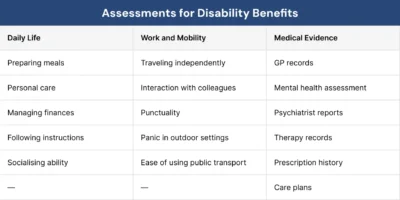
You can make a stronger case when you know how anxiety disability benefits are checked.
You are not assessed on the diagnosis, but on how it affects your life. The experts look at different parts of your daily life, work and medical history. The table shows the main areas they assess.
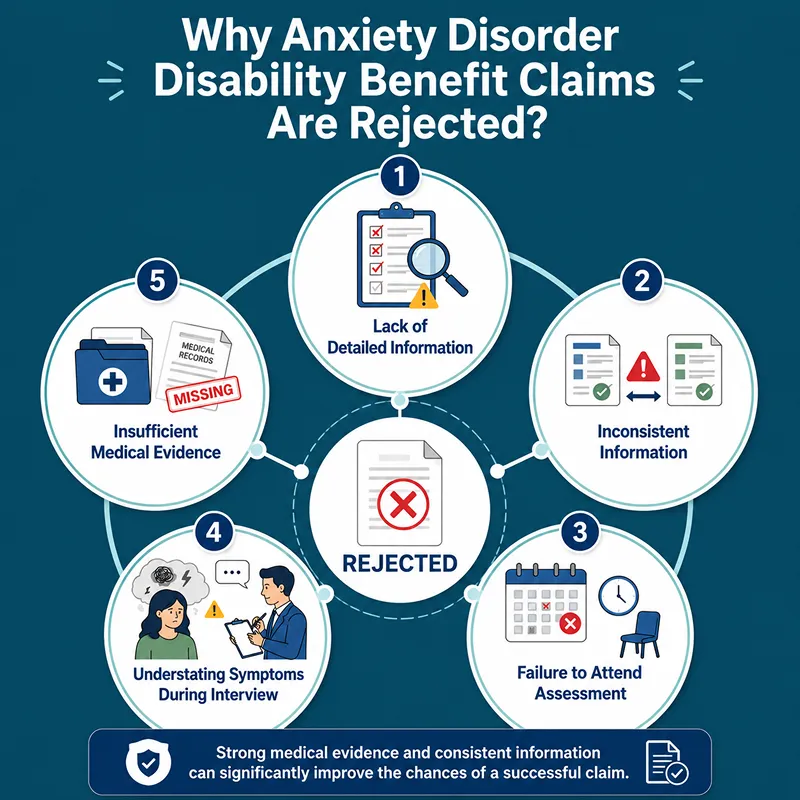
Why Are Anxiety Claims Rejected?
While anxiety disorder is recognised as a disability, not every claim is accepted.
Your claim may be rejected because:
- There is not enough medical evidence.
- The application does not explain how anxiety affects daily life.
- The form contains vague answers.
- Supporting documents are missing.
- The assessment does not show enough difficulty with daily activities or mobility.
Steps to Claim Anxiety Disability Benefits in the UK
The process for PIP, ESA or UC becomes easy when you know the steps to claim anxiety disability benefits. The process can feel too much, especially when you deal with an anxiety disorder.
By breaking the process into easy steps, you can make your claim successful. Given below are the steps to claim anxiety disability benefit in the UK:
1. Choose the Right Benefit
The first step is to choose the benefit that best suits your situation. You may be able to claim:
- Personal Independence Payment (PIP)
- Employment and Support Allowance (ESA)
- Universal Credit
You can claim more than one benefit if you meet the eligibility criteria. If you are unsure, speak to a welfare adviser or benefits specialist.
2. Gather Your Medical Evidence
Medical evidence helps support your claim. Collect documents such as:
- GP records
- Mental health reports
- Psychiatrist reports
- Therapist or counsellor notes
- Medication records
- Hospital records
- Care plan
3. Gather Evidence of Daily Life
You also need to show how anxiety affects your daily life.
Evidence may include:
- Missed work records
- Cancelled appointments
- Statements from family members or carers
- A diary of your symptoms
This evidence helps show how anxiety affects your everyday activities.
4. Start Your Claim
Once you have chosen your benefit and gathered your evidence, you can begin your claim.
The process depends on the benefit:
- PIP – Apply by phone and complete a claim form.
- ESA – You may need to provide extra medical and work-related information.
- Universal Credit – Apply online.
Be honest about all the difficulties you face because of anxiety.
5. Complete the Claim Form
The claim form asks how anxiety affects your daily life.
You may be asked about:
- Daily activities
- Personal care
- Mobility
- Social situations
- Ability to work
- Mental health symptoms
Answer each question with clear and honest examples.
6. Attend an Assessment
You may be asked to attend an assessment before a decision is made.
The assessor may ask about your:
- Symptoms
- Daily routine
- Social life
- Work history
- Mobility
- Mental health treatment
Answer honestly and explain how anxiety affects your daily life.
Case Study
This real UK case shows why detailed evidence is vital when you claim anxiety disability benefits.
Kevin was a working-age man who lived alone. He had long-term mental health problems. He received ESA, PIP, Housing Benefit and Council Tax Reduction. After a reassessment, his benefits were stopped.
Kevin then lost the help of his benefits adviser. He found it hard to manage the claim on his own. His anxiety made it difficult to deal with forms and explain his daily problems.
Kevin later got help with his application. He gave clear details about his symptoms and how anxiety affected him. This helped show why he needed the help.
His claim was successful. This case shows that clear details matter when you apply for anxiety disability benefits. Even if a claim is refused at first, a better and more detailed application can help.
Conclusion
Anxiety disorder can create many challenges that affect your daily life. It can cause problems in your work, personal life and independence.
However, the anxiety disorder benefits can ease this problem with financial help.
Concise Medico can help you qualify for disability benefits such as PIP, ESA and Universal Credit. A strong claim depends on clear medical evidence and real examples of how it affects your daily life.
The claim needs to explain how anxiety affects your daily life, work and mobility. To improve your case, you can always seek guidance from experts before filing for claims.
A medical reporting expert can help you in your claim.