TABLE OF CONTENT
Cancer misdiagnosis is the delayed, wrongful identification or non-detection of a tumour. It is one of the most serious mistakes a professional can make. The effects of cancer misdiagnosis on the treatment are serious.
States and figures show that about 40% of UK patients are misdiagnosed at least once. However, the exact rate can vary by setting and how misdiagnosis is measured.
A missed or delayed cancer diagnosis can mean fewer treatment options, more pain and a lower chance of survival. This is why there is a rise in cancer misdiagnosis claims across the UK.
In this guide, the following points are explained:
- What cancer misdiagnosis is
- How much compensation may be claimed for cancer misdiagnosis claims
- How often misdiagnosis happens in the NHS
- What factors affect compensation
- What the average payout can look like
What Is a Cancer Misdiagnosis?
A cancer misdiagnosis occurs when there is failure to diagnose, delayed diagnosis or an improper diagnosis.
- In failure to diagnose, the cancer is present but missed entirely.
- In delayed diagnosis, the cancer is diagnosed later than it should have been.
- In improper diagnosis, the cancer is classified as the wrong type or at the wrong stage.
How to Prove Cancer Misdiagnosis Claims In The UK
To prove misdiagnosis cancer compensation in the UK, show duty of care, a breach and harm. A breach can be missed warning signs, delayed tests, wrong results, or slow referral. Harm can be later stage cancer or fewer treatment options. Use medical records, referral letters, test results, scan and biopsy reports, and a clear symptom timeline.
These can occur due to:
- Symptoms looked like something else (e.g., an infection or minor condition).
- Tests were not carried out quickly enough.
- Scans or biopsy results were read incorrectly.
- Doctors did not follow standard procedures.
- There were delays in referrals to cancer specialists.
Each case can be a basis for cancer misdiagnosis claims. In the UK, to make a claim, it must be proven:
- A duty of care was owed to you.
- This duty was breached (the care was below standard).
- This breach caused you harm you would not otherwise have had.
If you want to learn more about it, read this: How to Prove Medical Negligence in the UK?
How Common Are Cancer Misdiagnosis Claims in the UK?
Recent NHS figures show:
- While estimates vary, one study indicated that cancer misdiagnosis rates in the UK, along with nine other countries, are around 32%, with some suggesting up to 40%.
- Between 2019 and 2024, more than 8,000 misdiagnosis claims were lodged across NHS Trusts.
- Around 5,600 were settled, with nearly £971 million paid out across all misdiagnosis types, including cancer.
- In the NHS, up to 20% of all the clinical negligence claims are misdiagnosed.
These figures show that cancer diagnosis is not rare in the UK. Besides this, the number of cancer misdiagnoses is rising.
Why Are Cancer Misdiagnosis Claims Increasing in the UK?
Cancer misdiagnosis claims can increase for several system related reasons in the NHS. It happens more often when services are under pressure.
Some of the key reasons include:
- Over 7.3 million people are on waiting lists across the NHS.
- GP appointment shortages.
- Delays in scans and biopsies.
- Staff burnout and staff shortages.
- Communication breakdowns between departments.
Cancer is complex. The delays in assessment, testing or referrals can increase the risk of error.
In 2024, only 21% of adults were satisfied with the NHS. In 2025/26, the number of satisfied adults hovers around the same i.e., 21-24%. This is a high level of disappointment among people. Thus, most people prefer legal action.
How Does Cancer Misdiagnosis Compensation Work?
Compensation is designed to put you in a position you would have been in if a misdiagnosis had not been made.
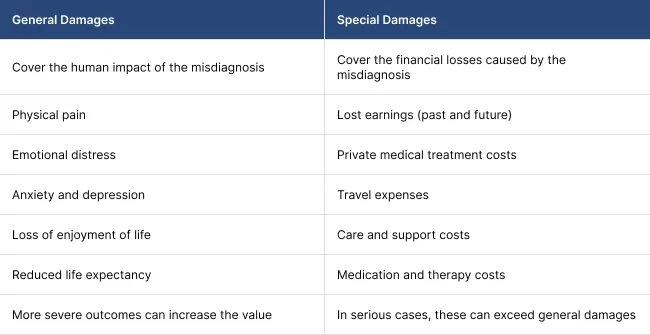
Compensation is split into two parts:
General Damages
These cover the human impact of the misdiagnosis, including:
- Physical pain.
- Emotional distress.
- Anxiety and depression.
- Loss of enjoyment of life.
- Reduced life expectancy.
The severity of the outcome increases the compensation.
Special Damages
These cover the money you have lost because of the misdiagnosis:
- Lost earnings (past and future).
- Private medical treatment costs.
- Travel expenses.
- Care and support costs.
- Medication and therapy.
In serious cases, special damages can be higher than general damages.
How Cancer Misdiagnosis Compensation Is Worked Out In The UK
Once duty, breach, and harm are shown, compensation is worked out in two parts: human impact and financial impact. Human impact includes pain, distress, and loss of recovery chance. Financial impact can include lost earnings, private treatment, travel, and care. Future costs are based on medical reports and proof like payslips and bills. This determines the average payout for cancer misdiagnosis.
Average Payout for Cancer Misdiagnosis Claims in the UK
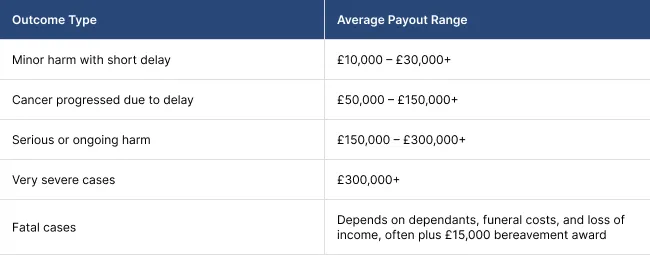
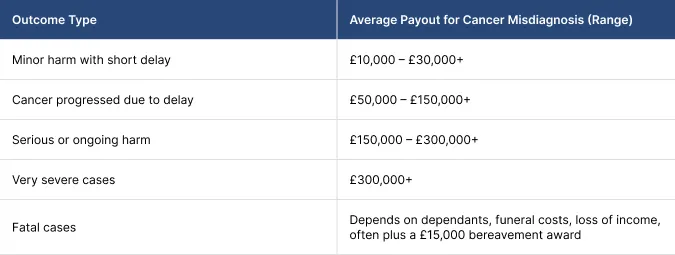
There is no fixed amount for compensation in these cancer misdiagnosis claims. Each claim depends on the facts. However, past outcomes and published NHS figures can still help show a realistic range. Across many cases, the average payout for cancer misdiagnosis is often reported as around £65,000. Some claims settle for much more, and some NHS Trusts have reported average payouts of over £200,000 per claim.
What Affects the Value of Misdiagnosis Cancer Compensation?
A few things can change how much compensation you may get.
Stage of Cancer at Diagnosis
An early diagnosis often leads to better results. If the delay lets the cancer grow or spread, the compensation can be higher
Loss of Treatment Options
If you lose the chance of curative treatment, this heavily impacts claim value.
Age
Younger patients may receive more due to loss of working life and life expectancy.
Impact on Daily Life
Long term pain, disability or dependency on care increases damages.
Financial Losses
Lost income and future care needs significantly affect payouts.
Examples of Cancer Misdiagnosis Compensation in the UK
Every case is different. But some examples shared in UK reports are:
- Stomach cancer missed until it became terminal: £225,000+
- Breast cancer found later than it should have been: £105,000+
- Liver cancer in a child diagnosed late: £96,800
- Skin cancer wrongly diagnosed: £34,500
Each claim is different. These numbers are only to give a rough idea. These amounts often do not include future costs. So the final total can end up higher.
Can You Take Action Against The NHS For Cancer Misdiagnosis?
Yes. Many people in the UK make these claims through NHS Trusts. So, it is very much possible to take action and get compensation for cancer misdiagnosis claims.
Key things to know:
- The claim is usually made against the NHS Trust, not a single doctor.
- NHS Resolution deals with these cases.
Any payout comes from NHS budgets, not from staff pay
Most people use No Win No Fee solicitors, meaning:
- No upfront legal fees.
- You only pay if you win.
- Legal fees are capped by law.
Time Limits for Cancer Misdiagnosis Claims
In most cases, you have 3 years to bring a claim:
- From the date of negligence.
- From when you first realised the misdiagnosis caused harm.
Exceptions apply for:
- Children (time starts at age 18).
- People lacking mental capacity.
Missing the deadline can mean losing your right to compensation entirely.
What Should You Do If You Suspect a Misdiagnosis?
If you ever realise cancer was misdiagnosed, you should do the following:
- Request your medical records.
- Speak to a specialist medical negligence solicitor.
- Get an independent medical opinion.
- Act quickly.
Early advice does not mean you must claim but it protects your options.
Conclusion
Cancer misdiagnosis claims can change lives forever. While misdiagnosis cancer compensation can not undo the damage, it can:
- Fund private treatment.
- Support families.
- Provide financial security.
- Acknowledge what went wrong.
With cancer misdiagnosis claims continuing to rise, understanding your rights has never been more important. Visit Concise Medico to learn more about your rights and to make sure that you get the right amount of compensation.
If you or a loved one has suffered due to a delayed or incorrect cancer diagnosis, getting legal advice early could make all the difference. Contact us now.
FAQs
Cancer misdiagnosis is the delayed, wrongful identification or non-detection of a tumour. It is one of the most serious mistakes a professional can make. The effects of cancer misdiagnosis on the treatment are serious.
States and figures show that about 40% of UK patients are misdiagnosed at least once. However, the exact rate can vary by setting and how misdiagnosis is measured.
A missed or delayed cancer diagnosis can mean fewer treatment options, more pain and a lower chance of survival. This is why there is a rise in cancer misdiagnosis claims across the UK.
In this guide, the following points are explained:
- What cancer misdiagnosis is
- How much compensation may be claimed for cancer misdiagnosis claims
- How often misdiagnosis happens in the NHS
- What factors affect compensation
- What the average payout can look like
What Is a Cancer Misdiagnosis?
A cancer misdiagnosis occurs when there is failure to diagnose, delayed diagnosis or an improper diagnosis.
- In failure to diagnose, the cancer is present but missed entirely.
- In delayed diagnosis, the cancer is diagnosed later than it should have been.
- In improper diagnosis, the cancer is classified as the wrong type or at the wrong stage.
How to Prove Cancer Misdiagnosis Claims In The UK
To prove misdiagnosis cancer compensation in the UK, show duty of care, a breach and harm. A breach can be missed warning signs, delayed tests, wrong results, or slow referral. Harm can be later stage cancer or fewer treatment options. Use medical records, referral letters, test results, scan and biopsy reports, and a clear symptom timeline.
These can occur due to:
- Symptoms looked like something else (e.g., an infection or minor condition).
- Tests were not carried out quickly enough.
- Scans or biopsy results were read incorrectly.
- Doctors did not follow standard procedures.
- There were delays in referrals to cancer specialists.
Each case can be a basis for cancer misdiagnosis claims. In the UK, to make a claim, it must be proven:
- A duty of care was owed to you.
- This duty was breached (the care was below standard).
- This breach caused you harm you would not otherwise have had.
If you want to learn more about it, read this: How to Prove Medical Negligence in the UK?
How Common Are Cancer Misdiagnosis Claims in the UK?
Recent NHS figures show:
- While estimates vary, one study indicated that cancer misdiagnosis rates in the UK, along with nine other countries, are around 32%, with some suggesting up to 40%.
- Between 2019 and 2024, more than 8,000 misdiagnosis claims were lodged across NHS Trusts.
- Around 5,600 were settled, with nearly £971 million paid out across all misdiagnosis types, including cancer.
- In the NHS, up to 20% of all the clinical negligence claims are misdiagnosed.
These figures show that cancer diagnosis is not rare in the UK. Besides this, the number of cancer misdiagnoses is rising.
Why Are Cancer Misdiagnosis Claims Increasing in the UK?
Cancer misdiagnosis claims can increase for several system related reasons in the NHS. It happens more often when services are under pressure.
Some of the key reasons include:
- Over 7.3 million people are on waiting lists across the NHS.
- GP appointment shortages.
- Delays in scans and biopsies.
- Staff burnout and staff shortages.
- Communication breakdowns between departments.
Cancer is complex. The delays in assessment, testing or referrals can increase the risk of error.
In 2024, only 21% of adults were satisfied with the NHS. In 2025/26, the number of satisfied adults hovers around the same i.e., 21-24%. This is a high level of disappointment among people. Thus, most people prefer legal action.
How Does Cancer Misdiagnosis Compensation Work?
Compensation is designed to put you in a position you would have been in if a misdiagnosis had not been made.
Compensation is split into two parts:
General Damages
These cover the human impact of the misdiagnosis, including:
- Physical pain.
- Emotional distress.
- Anxiety and depression.
- Loss of enjoyment of life.
- Reduced life expectancy.
The severity of the outcome increases the compensation.
Special Damages
These cover the money you have lost because of the misdiagnosis:
- Lost earnings (past and future).
- Private medical treatment costs.
- Travel expenses.
- Care and support costs.
- Medication and therapy.
In serious cases, special damages can be higher than general damages.
How Cancer Misdiagnosis Compensation Is Worked Out In The UK
Once duty, breach, and harm are shown, compensation is worked out in two parts: human impact and financial impact. Human impact includes pain, distress, and loss of recovery chance. Financial impact can include lost earnings, private treatment, travel, and care. Future costs are based on medical reports and proof like payslips and bills. This determines the average payout for cancer misdiagnosis.
Average Payout for Cancer Misdiagnosis Claims in the UK
There is no fixed amount for compensation in these cancer misdiagnosis claims. Each claim depends on the facts. However, past outcomes and published NHS figures can still help show a realistic range. Across many cases, the average payout for cancer misdiagnosis is often reported as around £65,000. Some claims settle for much more, and some NHS Trusts have reported average payouts of over £200,000 per claim.
What Affects the Value of Misdiagnosis Cancer Compensation?
A few things can change how much compensation you may get.
Stage of Cancer at Diagnosis
An early diagnosis often leads to better results. If the delay lets the cancer grow or spread, the compensation can be higher
Loss of Treatment Options
If you lose the chance of curative treatment, this heavily impacts claim value.
Age
Younger patients may receive more due to loss of working life and life expectancy.
Impact on Daily Life
Long term pain, disability or dependency on care increases damages.
Financial Losses
Lost income and future care needs significantly affect payouts.
Examples of Cancer Misdiagnosis Compensation in the UK
Every case is different. But some examples shared in UK reports are:
- Stomach cancer missed until it became terminal: £225,000+
- Breast cancer found later than it should have been: £105,000+
- Liver cancer in a child diagnosed late: £96,800
- Skin cancer wrongly diagnosed: £34,500
Each claim is different. These numbers are only to give a rough idea. These amounts often do not include future costs. So the final total can end up higher.
Can You Take Action Against The NHS For Cancer Misdiagnosis?
Yes. Many people in the UK make these claims through NHS Trusts. So, it is very much possible to take action and get compensation for cancer misdiagnosis claims.
Key things to know:
- The claim is usually made against the NHS Trust, not a single doctor.
- NHS Resolution deals with these cases.
Any payout comes from NHS budgets, not from staff pay
Most people use No Win No Fee solicitors, meaning:
- No upfront legal fees.
- You only pay if you win.
- Legal fees are capped by law.
Time Limits for Cancer Misdiagnosis Claims
In most cases, you have 3 years to bring a claim:
- From the date of negligence.
- From when you first realised the misdiagnosis caused harm.
Exceptions apply for:
- Children (time starts at age 18).
- People lacking mental capacity.
Missing the deadline can mean losing your right to compensation entirely.
What Should You Do If You Suspect a Misdiagnosis?
If you ever realise cancer was misdiagnosed, you should do the following:
- Request your medical records.
- Speak to a specialist medical negligence solicitor.
- Get an independent medical opinion.
- Act quickly.
Early advice does not mean you must claim but it protects your options.
Conclusion
Cancer misdiagnosis claims can change lives forever. While misdiagnosis cancer compensation can not undo the damage, it can:
- Fund private treatment.
- Support families.
- Provide financial security.
- Acknowledge what went wrong.
With cancer misdiagnosis claims continuing to rise, understanding your rights has never been more important. Visit Concise Medico to learn more about your rights and to make sure that you get the right amount of compensation.
If you or a loved one has suffered due to a delayed or incorrect cancer diagnosis, getting legal advice early could make all the difference. Contact us now.