TABLE OF CONTENT
Is Heel Pain a Cause of Cancer?
Have you ever felt frustrated by severe heel pain that looks more serious? When heel pain does not improve with treatment, many people begin to worry: Is heel pain a sign of cancer?
Approximately 10% population suffers from heel pain at some stage in their lives. When the discomfort does not go away, they begin to worry about heel pain cancer.
Meanwhile, the reason for the majority of the cases is due to minor injuries or everyday activities. Anyhow, if signs continue, heel pain cancer could be the reason. In case you feel pain in your heel, get suitable medications immediately, as it can be a cancer warning.
You need not worry if the reason for the heel pain is redness or fatigue. In a few cases, it may be a sign of a serious health issue.
Heel pain is not harmful if it occurs because of a wound, ill fitting footwear or overuse. However, if the discomfort increases, visit your nearest GP quickly for a proper check up.
In this blog, we will learn:
- Why does heel pain occurs
- At what stage is medical attention necessary
- What to do if your heel pain signs are persistent
- How healthcare experts diagnose heel pain cancer
- What are the treatment options available for heel pain cancer
What Is Heel Pain Cancer?
Heel pain cancer is a condition where pain in the heel is caused by a malignant tumour. This pain does not occur from common problems like plantar fasciitis. This condition occurs when you notice growth of abnormal cells in the bone or the joining tissues of the heel.
Chondrosarcoma, osteosarcoma and Ewing sarcoma are bone cancers, but they are very rare; they can affect the bones of your foot.
You may encounter long lasting pain or discomfort that increases with time in such conditions. Also, it may come with swelling or difficulty in walking. However, this type of cancer is not common, but if the pain is persistent, go for treatment immediately.
Why Does Heel Pain Happen?
The reason for heel pain can be anything, like falling, redness or pressure. It is suggested that you visit the nearest bone specialist as early as possible to know the reason.
To get relief from lower pain and movement difficulty, physiotherapy is the best technique. You can get information about the main types of physiotherapy and select a suitable one for your discomfort.
During the heel pain, walking may look so difficult to you and the pain level increases with time. But it’s not necessary that every heel pain is because of cancer; it can occur due to the following conditions:
Plantar Fasciitis
On the arch of the foot, there is a tissue which is called the plantar fascia that becomes swollen. Thus, this condition is known as Plantar Fasciitis. It is connected to the bottom of the foot.
The main reasons for these conditions are:
- Overuse
- Ill fitting footwear
- Standing for a long time
You can find numerous solutions for this issue if you want to improve it quickly. Some quick treatments are orthotics, physiotherapy, stretching and anti inflammatory medications. Heel pain in adults is a clear sign of plantar fasciitis.
Achilles Tendinitis
There is a tissue that connects the calf muscles, which becomes swollen. This condition is called Achilles tendinitis. The name is given due to the name of the tissue, which is called the Achilles tendon. This disease happens because of straining or using the foot too much.
People who have more physical activity, like cricketers or runners, face this issue more. You can get many treatments for this issue, for example, rest, ice or physical therapy. Extracorporeal Shockwave Therapy (ESWT) is used in most cases to provide healing and comfort.
Heel Spurs
When you feel a small bone development on the lower side of your heel bone and it combines with plantar fasciitis, heel spurs are formed.
Thus, in this condition, when you walk or stand for a long time, it hurts too much. There are many treatments for this condition, like stretching, fitted footwear and orthotics.
Stress Fractures
In this disease of the heel, a small crack is formed because of overuse or persistent force. People who are involved in high impact activities, like military recruits or athletes, are more likely to get stress fractures. It also becomes a cause of heel pain, especially in athletes and people involved in sports.
This pain is so discomforting and becomes worse due to physical activity. To get relief from this, many treatments are available, such as wearing a walking boot or an athletic supporter. The purpose of these footwear is to lower the weight bearing on the foot that hurts.
Bursitis
There are fluid filled sacs near the heel, which are called bursae and their inflammation is called bursitis. Due to this issue, swelling, redness and pain occur around the heel.
When you stand and work for a long time or do any physical task, this pain becomes so severe. Ice, rest and medicines can help reduce pain and swelling.
Is Heel Pain a Sign of Cancer?
Many people wonder if heel pain can be cancer. This is because they suffer long-lasting pain and do not get relief with any treatment.
Every case of heel pain is not cancer, but in rare cases, it can be linked to bone cancer. If the heel pain doesn’t go away with rest or some standard treatments, it can be an initial sign of cancer.
You will better understand this by knowing what kind of cancer causes heel pain.
What Kind of Cancer Causes Heel Pain
There is a very rare link between cancer and heel pain, but it’s important to get knowledge of the possible risks. The most common types of cancers that have a connection with heel pain are given below.
Bone Cancer
Osteosarcoma is a medical condition that is also called primary bone cancer. It can become the reason for pain in the bones comprising the heel. This cancer is very rare, but when this pain starts, the discomfort becomes more and more severe. Especially at night or during any work, the pain is intolerable.
Patients with bone cancer often experience other symptoms, such as they can’t walk easily and they have swelling in the affected area. However, osteosarcomas are very rare.
Metastatic Cancer
Metastatic cancer is a medical condition in which another part of the body has cancer and it is spread to the bones. Thus, heel pain could be a symptom of this cancer. The following diseases can spread to the bones:
- Thyroid cancer
- Breast cancer
- Prostate cancer
- Lung cancer
People who had cancer in the past, they should be more careful if they ever suffer heel pain.
Soft Tissue Sarcomas
The cancers that start from the soft tissues, like connective tissues, fat and muscles, are called Sarcomas. In some rare cases, such cancers can develop on the ankle area or the foot and cause pain in the heel.
This condition is rare, but like other heel conditions, it can also cause swelling and pain in the affected area.
Case Study of a Patient Diagnosed With Heel Pain Cancer
Christine Lote is a mother of two from the UK. She noticed a strange heel pain in 2019. Soon, swelling also occurred, but she thought it would go away by itself. When she felt discomfort, she went to a doctor.
Her medical expert thought this would be due to a running injury at the start. Later, again falsely diagnosed as tendinitis. As heel pain is commonly linked to overuse injuries, the condition was treated with physiotherapy and other treatments.
Years passed, but she did not get relief from the pain. Again in 2021, she went to the doctor and they diagnosed an abnormal condition in her heel. Thus, chondrosarcoma was diagnosed after tests of biopsy and MRI.
Her doctors advised her to undergo surgery and she followed the instructions, but unfortunately, the cancer had spread. In 2023, it resulted in the removal of her leg.
She did not lose hope and resolved every challenge with courage. She also keeps raising awareness about cancer among everyone. This case shows us how important it is to do a proper check up.
Check out the reference: When Persistent Heel Pain Led to a Rare Cancer Diagnosis
When to Worry About Heel Pain Cancer Symptoms
At this point, most people start asking themselves, is heel pain a sign of cancer when the symptoms become unusual.
Most heel pain cases are linked to common conditions such as heel spurs, plantar fasciitis or Achilles tendinitis. But, most of the warning signs show that the root cause can be more serious, like heel pain cancer.
In the following symptoms, if you come across any one, it is necessary to go for a proper check:
Persistent Pain
After all treatments like stretching or rest, if the pain is still the same, book an appointment with your GP. If symptoms are severe, visit A and E. If the pain is persistent for weeks or more and you have taken so many treatments, it is an alarming sign. At this time, you should be serious about it.
This is necessary to avoid any regrets later and stay safe from heel pain cancer.
Night Pain
If you take proper treatment but the pain does not improve and instead increases over time, you may need further medical assessment. It can be an indication of heel pain cancer. If you have pain in your bone and it is due to cancer, this pain will increase at night and will not let you sleep.
Swelling or Lumps
Around the heel, if you ever feel some lumps or swelling, it may be a serious condition such as cancer. It should be properly checked by a GP to know about heel pain or cancer.
Systemic Symptoms
When you are not getting to the cause of your heel pain and you notice weight loss and fatigue, it can be serious. You have taken proper rest and diet and the pain is still the same, you need an immediate checkup. These are the symptoms of heel pain cancer. From these signs, it looks like the cancer has spread in the body.
Sudden Pain
If a sudden and severe pain in your heel arises and you are wondering why it occurred, you must go for a checkup immediately. A sharp and sudden pain without any cause can be a major sign of a serious health condition.
How do GPs Diagnose Heel Pain Cancer?
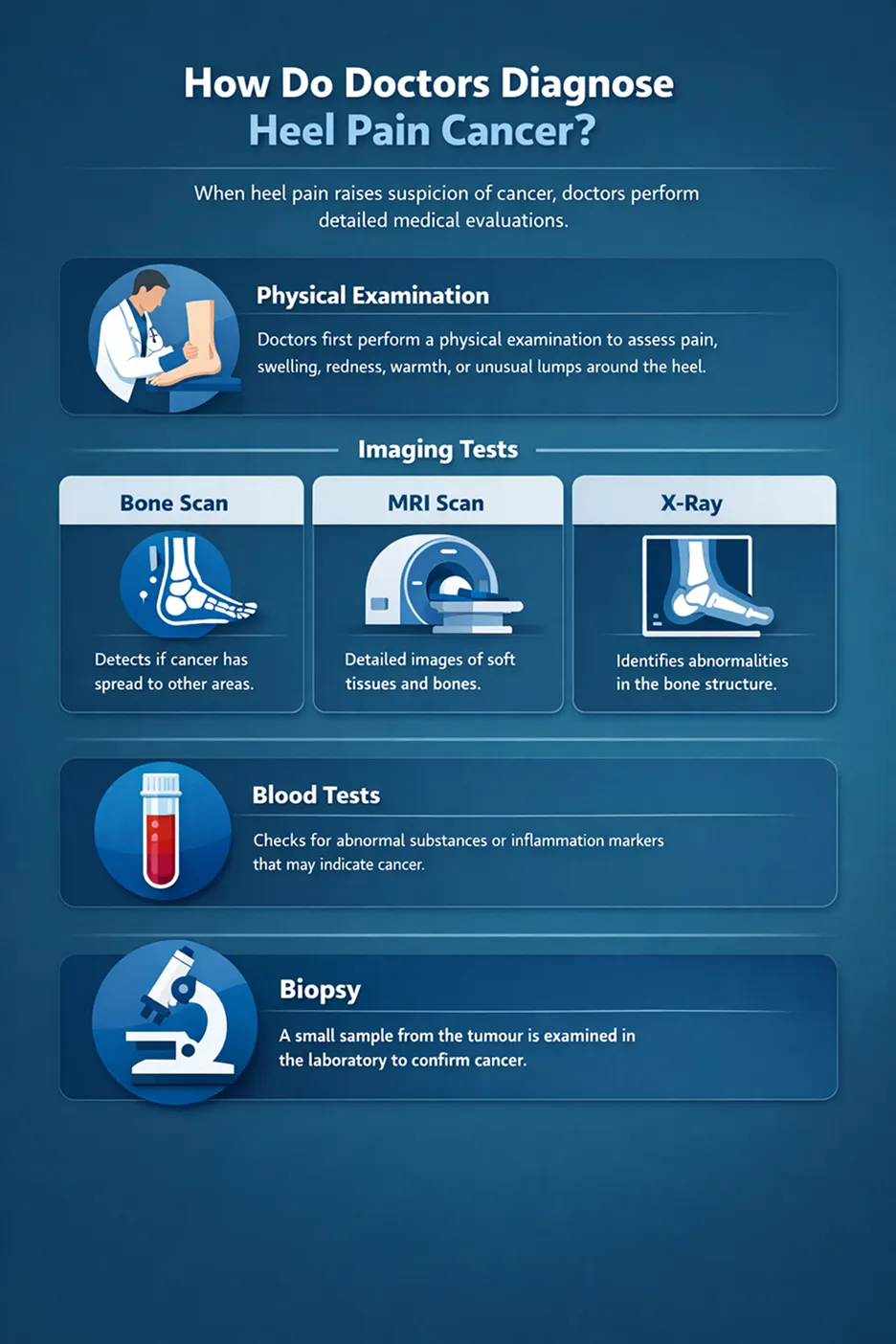
When there is a doubt of cancer as a result of heel pain, the specialists will perform a detailed checkup. In the diagnostic process of cancer, the following processes can be performed:
Physical Examination
When visiting a GP, a physical examination is usually performed to check for pain and swelling. If needed, you may be referred to a specialist for further tests.
Imaging Tests
The healthcare professionals can ask for an imaging test to look at the bones and soft tissues closely. These include:
Bone Scans
This test detects if the cancer has spread to other parts of the body.
MRI Scans
It provides a thorough image of the soft tissues and bones.
X Ray
This evaluation is for the bones. It checks for abnormalities in the bones.
Blood Tests
The purpose of this test is to check for any signs of cancer or inflammation in your blood. In case of any abnormal condition, it is a sign of cancer’s presence or other serious health issues.
Biopsy
After performing the imaging tests, the physician may ask the patient for a biopsy. In this process, a small piece is taken from the tumour and sent to the laboratory for complete examination. In this test, your heel pain cancer is confirmed.
Treatment for Heel Pain Cancer
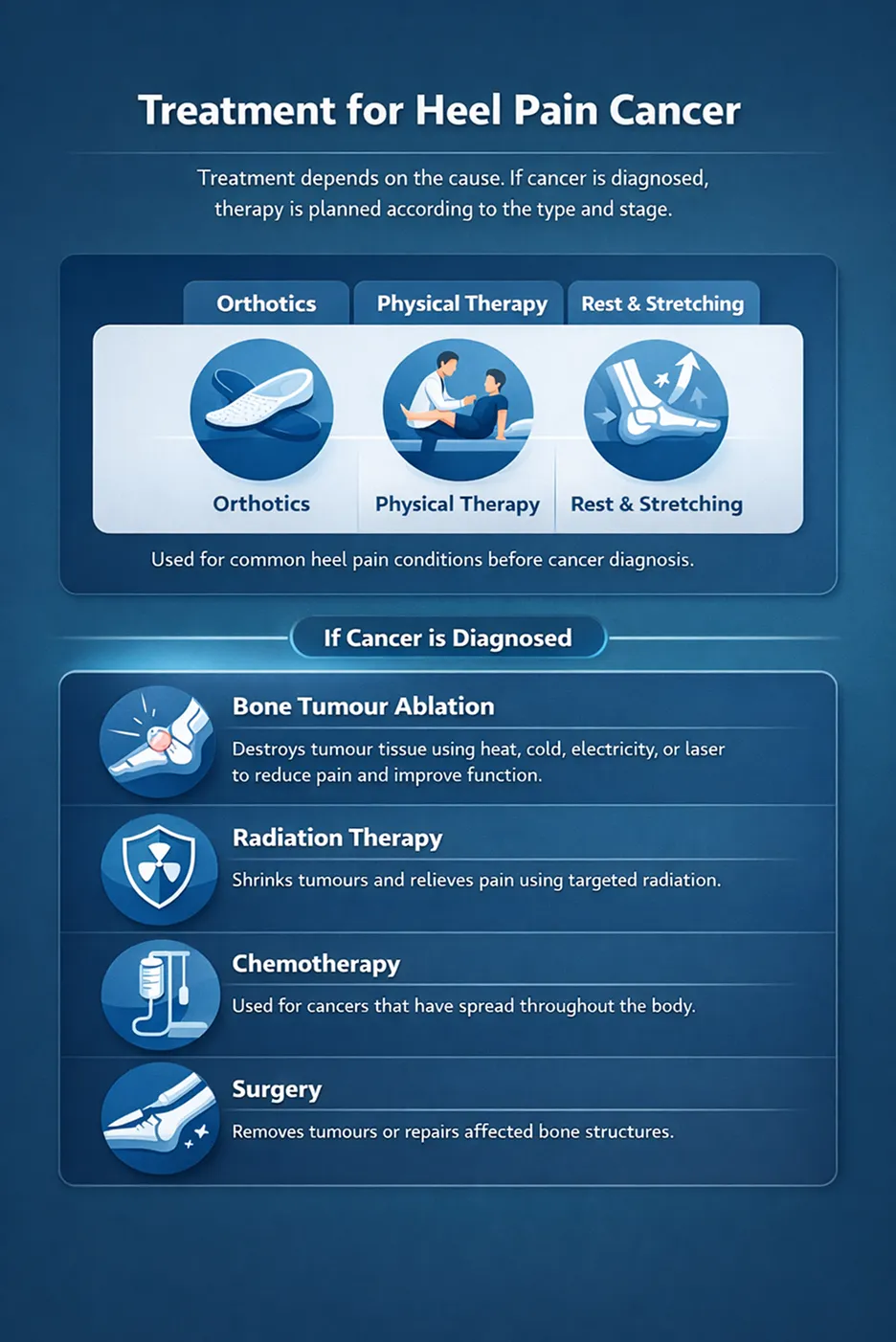
Doctors recommend heel pain cancer treatment according to the cause. They suggest treatments like orthotics, physical therapy, stretching or rest for common conditions.
However, if cancer is diagnosed, its treatment is started according to the type and stage. Thus, if this disease is detected, the following treatments can be done:
Bone Tumour Ablation
This treatment improves the function and lowers the pain. Ablation is a medical treatment in which a part of tissue is destroyed through electricity, heat, cold or laser.
Radiation Therapy
This treatment is used to lower pain and shrink tumours.
Chemotherapy
It is for cancers that have spread across the body.
Surgery
A process to fix bones or to remove a tumour.
How to Prevent Heel Pain Cancer and Stay Healthy
You cannot cure cancerous heel pain directly, but suitable steps can be taken to keep the foot in good health. This way, you lower the risk of common heel issues.
Let’s reveal some useful tips to prevent such a toxic disease:
- Select shoes that support your foot with proper cushioning
- Keep a weight according to your age to avoid putting extra strain on your feet
- Regularly do exercises to improve flexibility
- Avoid too much work and slowly increase activity levels
Taking care of your feet can reduce the risk of common heel pain and help you notice unusual symptoms early.
Effects of Delayed Diagnosis of Heel Pain Cancer
We know that not every heel pain is a sign of cancer, but it is important to understand the effects of late diagnosis.
In most conditions, heel pain can be assigned to harmless cases that can be controlled with traditional treatments. This is why people often ask, is heel pain a sign of cancer, especially when the pain does not respond to normal treatments.
However, if heel pain is caused by cancer and it is not diagnosed early, the condition can become more serious, such as:
Bone Damage
When cancer is transferred to the bones, it can result in fractures or weakened bones. In this situation, the integrity of the bones is weakened and they may break more easily. This should be treated immediately before becoming worse.
Systemic Spread
Metastasis is a situation where cancer spreads from the primary tumour to other parts of the body. So if this situation arises, the cancer becomes more serious and harder to treat, but treatment options may still be available. For example, if cancer spreads from lungs or breast to the bones, it may then spread to other parts of the body. As soon as you detect the disease, the more likely the treatment will be successful.
Reduced Treatment Options
The treatment options are more effective for the early detection of cancer. Thus, the chances of the cancer patients’ recovery are higher. On the other hand, if it is diagnosed late, the chance to recover is low. Also, its treatment options are more difficult, costly and less effective.
This means, if you see the early signs of cancer, go for a check up immediately.
The Role of Early Detection
If cancerous heel pain is detected early, the chances of successful treatment are much higher. If heel pain is diagnosed as cancer, your doctor will recommend tests such as bone scans, MRIs, and X-rays. These tests are useful for the detection of metastasis or abnormalities.
You can find information about early detection of cancer at Role of Ultrasound in Cancer Diagnosis and Monitoring.
If you do a biopsy on time, doctors will be able to confirm the disease early and the necessary treatment will start on time. With early detection of cancer, you can prevent many complications ahead.
If your heel pain becomes severe or is linked with serious symptoms, you should contact the NHS or visit A & E for immediate medical attention.
Final Thoughts
Many conditions, like heel spurs, Achilles tendinitis or fasciitis, become a reason for heel pain. Identifying the real cause of heel pain helps doctors recommend the most suitable treatment.
Most of the heel pains are not so threatening because they can be cured with suitable care, supportive footwear and proper rest. It is important to know the reason behind your heel pain so the right treatment can be given at the right time.
On the other hand, if the pain is unusual or persistent, it is a sign of some serious issue. If you are losing weight day by day or experiencing fatigue, swelling, night discomfort, or severe pain, you should visit a specialist immediately.
Early diagnosis improves treatment outcomes and reduces the risk of complications.
Persistent or unusual symptoms should not be ignored because they are a sign of heel pain cancer. If heel pain lasts for a long time, it is common to question whether heel pain is a sign of cancer and see a doctor.
Concise Medico understands how deeply heel pain cancer can affect everyday life and overall well being. We are available to provide detailed evaluations and individual treatment solutions. It’s our goal to assist you in recovering effectively and without any harm.
If your heel pain is persistent and does not improve, contact us today to book an appointment.
Our team provides thorough evaluations and personalised treatment plans to identify the cause and guide you toward lasting relief. We have helped thousands of patients regain mobility and confidence. Contact us today.
Our team provides thorough evaluations and personalised treatment plans to identify the cause and guide you toward lasting relief. We have helped thousands of patients regain mobility and confidence. Contact us today.