TABLE OF CONTENT
- Key Takeaways
- What Is the Difference Between Clinical and Forensic Psychologists?
- When Do You Need a Clinical Psychologist?
- When Do You Need a Forensic Psychologist?
- Clinical or Forensic Psychologist: Which Expert Does Your Case Need?
- How Do You Choose the Right Psychologist for Your Case?
- Case Example: Matching Psychological Expertise to the Legal Questions
- Choose the Right Psychological Expert for Your Case
- FAQs
- What Is the Difference Between a Clinical and Forensic Psychologist?
- Can a Clinical Psychologist Provide Expert Evidence in Court?
- When Is a Forensic Psychologist Needed?
- Can Clinical and Forensic Psychologists Work on the Same Case?
- What Should You Check Before Instructing a Psychological Expert?
- Does Every Legal Case Involving Mental Health Require a Psychological Expert?
Clinical vs Forensic Psychologist: Which Expert Does Your Case Need?
Choosing between a clinical vs forensic psychologist depends on the nature of the case and the psychological questions that need to be addressed. Although their expertise can overlap, each specialist brings a different perspective to medico-legal assessments.
A clinical psychologist may assess psychological injuries, mental health conditions and their effects on daily life. A forensic psychologist applies psychological knowledge to legal questions, which may involve offending behaviour, risk assessment and other issues arising in criminal or civil proceedings.
The right expert depends on what your case needs to establish. Understanding the differences between clinical and forensic psychologists can help you identify the appropriate specialist, provide clear instructions and obtain relevant psychological evidence for your case.
What Is the Difference Between Clinical and Forensic Psychologists?
A clinical psychologist specialises in assessing and understanding mental health conditions and psychological difficulties. Their expertise includes psychological trauma, anxiety, depression, PTSD and the effects of illness or injury on a person’s daily functioning.
A forensic psychologist applies psychological principles to legal and criminal justice settings. Their work may involve assessing offending behaviour, risk of reoffending, rehabilitation and psychological factors relevant to legal proceedings.
Although these roles have different areas of focus, they can overlap. Clinical psychologists may work in forensic settings, while forensic psychologists may have experience with complex psychological conditions. The most suitable expert depends on the specific questions that need to be addressed in your case.
The following table highlights the key differences between a clinical vs forensic psychologist, including their areas of expertise, typical assessments and roles in legal cases.
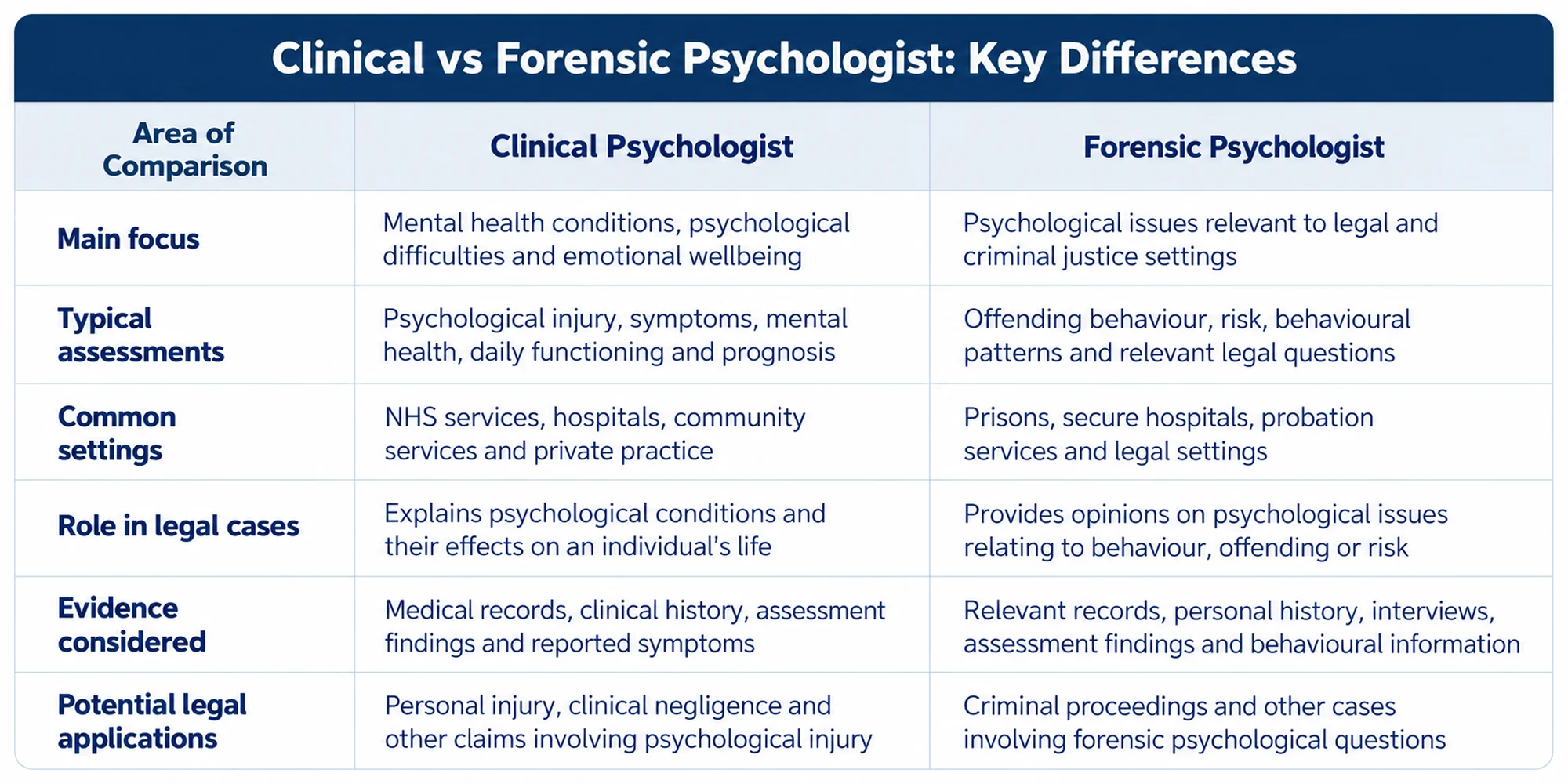
These examples are indicative. An expert’s suitability depends on their qualifications, experience and competence in relation to the specific issues requiring assessment.
When Do You Need a Clinical Psychologist?
A clinical psychologist may be appropriate when a case requires an assessment of psychological symptoms, mental health conditions or psychological injury.
Their expertise can be particularly valuable in cases involving:
- Psychological injury: Assessing the psychological effects of an accident, negligence, abuse or another traumatic event.
- Mental health conditions: Evaluating conditions such as PTSD, anxiety, depression and other psychological difficulties.
- Impact on daily life: Explaining how psychological symptoms affect relationships, employment, independence and everyday activities.
- Prognosis and treatment: Assessing likely recovery, future treatment needs and the potential long-term effects of psychological injury.
In medico-legal cases, a clinical psychologist can provide an independent assessment and report addressing the psychological questions relevant to the claim.
Examples of Cases That May Require a Clinical Psychologist
A clinical psychologist may be appropriate when the principal question concerns psychological injury or mental health.
Examples include:
- Personal injury claims: Assessing psychological difficulties following an accident or traumatic event.
- Clinical negligence claims: Examining psychological injury associated with alleged negligent treatment, where the issues fall within the expert’s competence.
- Psychological injury claims: Assessing symptoms, functional effects and prognosis.
- Cases involving trauma: Evaluating the psychological effects of a reported traumatic experience.
The appropriate expert will depend on the precise questions requiring an opinion. Some cases may also require input from a psychiatrist or another medical specialist.
When Do You Need a Forensic Psychologist?
A forensic psychologist may be more suitable when a case requires specialist psychological evidence relating to offending behaviour, risk or other issues within the criminal justice system.
Examples include:
- Risk assessment: Evaluating the likelihood of future offending or harmful behaviour.
- Criminal proceedings: Assessing psychological factors relevant to offending behaviour, rehabilitation or sentencing.
- Prison and secure settings: Evaluating psychological needs and behaviour in custodial or secure environments.
- Legal decision-making: Providing expert opinion on psychological issues that fall within their specialist competence.
The appropriate expert will depend on the precise legal questions involved and the psychologist’s qualifications and experience.
Examples of Cases That May Require a Forensic Psychologist
A forensic psychologist may be appropriate when the principal questions concern offending behaviour, psychological risk or issues arising within legal proceedings.
Examples include:
- Criminal proceedings: Assessing psychological factors relevant to offending behaviour or criminal justice decisions.
- Risk assessments: Evaluating the likelihood of reoffending or future harmful behaviour.
- Prison and secure settings: Assessing psychological needs, behaviour and rehabilitation requirements.
- Rehabilitation and sentencing: Providing an expert opinion on psychological factors relevant to rehabilitation or sentencing decisions, where these fall within the expert’s competence.
The appropriate expert will depend on the specific legal questions and the psychologist’s qualifications and experience. Cases involving complex mental health conditions may also require input from a clinical psychologist or psychiatrist.
Clinical or Forensic Psychologist: Which Expert Does Your Case Need?
If you are unsure which specialist to instruct, focus on the main question your case needs to resolve.
The following guide can help you identify the type of expertise to consider.
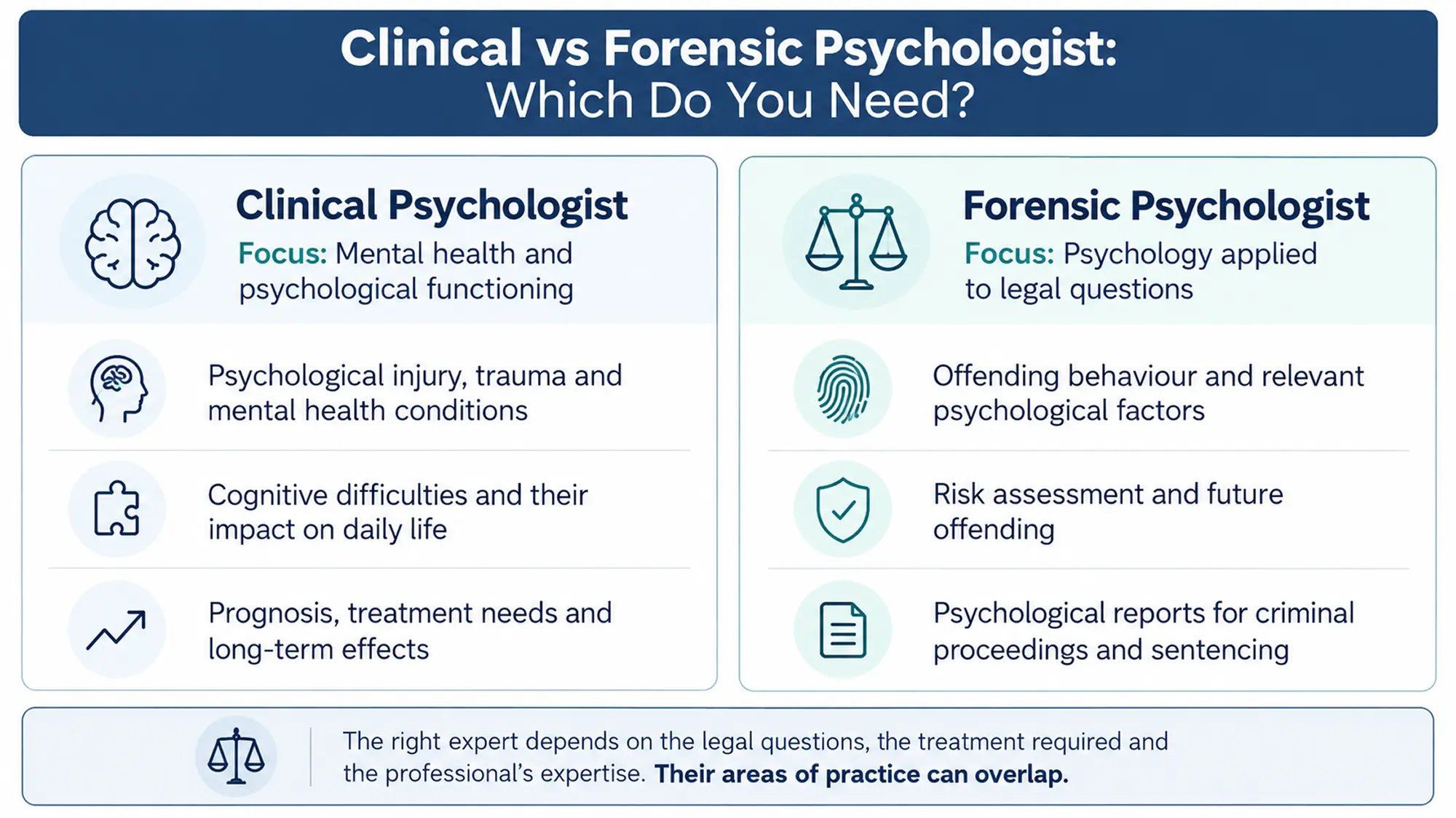
This is a starting point rather than a definitive rule. The issues in your case may overlap, and the most suitable expert will depend on the instructions, evidence and specialist experience required.
How Do You Choose the Right Psychologist for Your Case?
Identifying the relevant specialism is the first step. Before instructing a psychologist, you should also consider their professional registration, experience, assessment methods and ability to address the specific issues in your case.
1. Identify the Questions the Expert Must Answer
Start by defining what your legal team needs to establish.
Is the main issue the nature and effects of a psychological injury, the person’s likely recovery or a question involving behaviour and risk?
Clear questions help you identify the appropriate specialist and give the expert a defined scope of work.
They can also help prevent the assessment from becoming too broad or overlooking an important issue.
2. Check Qualifications and HCPC Registration
In the UK, clinical psychologist and forensic psychologist are protected professional titles regulated by the Health and Care Professions Council (HCPC).
You can check the HCPC Register to confirm whether a professional is registered under the relevant protected title.
However, registration alone does not establish that someone is suitable for every type of medico-legal instruction. You should also consider:
- Relevant qualifications and specialist training.
- Experience with cases involving similar issues.
- Experience preparing medico-legal reports.
- Familiarity with the relevant assessment methods.
- Experience explaining expert opinions in legal proceedings.
The most suitable expert is someone whose professional competence and practical experience match the questions your case raises.
3. Review Relevant Experience
Two psychologists with the same professional title may have different areas of expertise.
For example, one clinical psychologist may have extensive experience assessing psychological injuries in personal injury claims, while another may specialise in a different area of clinical practice.
Similarly, forensic psychologists may have different experience in risk assessment, offending behaviour and particular legal settings.
Before making a decision, check whether the expert has relevant experience in the specific area requiring an opinion.
4. Provide Clear Instructions and Supporting Evidence
A well-defined instruction helps the expert understand the purpose of the assessment and the questions they need to answer.
Depending on the case, you may need to provide:
- Medical records and previous psychological assessments.
- Relevant incident reports and witness statements.
- Information about symptoms, treatment and reported difficulties.
- Details of the relevant legal issues.
- Specific questions about diagnosis, causation, prognosis or risk.
- Any applicable reporting requirements and deadlines.
Providing relevant information at the outset can help the expert understand the case and identify whether further evidence is required.
5. Confirm the Scope and Reporting Requirements
Before proceeding, confirm what the expert will assess, what evidence they need and what the report is expected to cover.
You should also discuss the expected timescale, fees and any requirements for the expert to attend court.
In civil proceedings in England and Wales, expert evidence is subject to the requirements of Part 35 of the Civil Procedure Rules. The court controls the use of expert evidence, and the expert’s duty is to assist the court rather than advocate for the party instructing them.
Understanding these requirements helps you select an expert who is suitable for the case and the purpose of the instruction.
Case Example: Matching Psychological Expertise to the Legal Questions
In a complex psychiatric negligence claim, solicitors needed expert evidence following a patient’s deterioration in mental health after discharge from an acute psychiatric unit. INNEG sourced a consultant psychiatrist to assess clinical care and risk, alongside a consultant clinical psychologist to assess psychological injury, prognosis and future treatment needs. Both experts were secured within 24 hours.
This example illustrates why the questions in a case should guide the selection of experts. Different professionals may be needed to assess different aspects of the same matter.
Choose the Right Psychological Expert for Your Case
A clinical psychologist may be suitable when the central issues concern psychological injury, mental health or daily functioning. A forensic psychologist may be more appropriate when the case involves offending behaviour, risk assessment or other questions requiring forensic psychological expertise.
In complex cases, both specialisms may be needed to address different aspects of the same matter. Ultimately, the right choice depends on the legal questions involved and the expert’s qualifications, experience and area of competence.
Concise Medico helps solicitors source suitable psychological experts for medico-legal assessments. Whether you need a clinical psychologist, a forensic psychologist or both, we can help identify specialists whose expertise aligns with the requirements of your case.
Our experienced orthopaedic specialists provide independent, CPR-compliant medical reports that help solicitors and courts to make informed decisions.
Contact us today to arrange an expert orthopaedic assessment and receive a detailed medical report tailored to your case.
FAQs