TABLE OF CONTENT
- Key Takeaways
- What Is an Immigration Psychiatric Evaluation?
- Psychiatric vs Psychological Assessment
- When Is an Immigration Psychiatric Evaluation Needed?
- What Does an Immigration Psychiatrist Assess?
- What Does an Immigration Psychiatric Expert Witness Report Include?
- How Is an Immigration Psychiatric Evaluation Conducted?
- How Can an Immigration Psychiatric Expert Witness Report Support a Case?
- How to Obtain an Immigration Psychiatric Expert Witness Report
- Case Study: How a Psychiatric Report Helped Prevent Removal
- Getting the Right Psychiatric Evidence for Your Immigration Case
- FAQs
- How do I get a full psychiatric evaluation in the UK?
- How much does an immigration psychiatric evaluation cost in the UK?
- How difficult is it to pass a psychological evaluation for immigration?
- Does UK immigration require a psychological evaluation?
- What is the difference between a psychological and a psychiatric evaluation for immigration?
- What documents are needed for an immigration psychiatric evaluation?
What Is an Immigration Psychiatric Evaluation and Why Is It Needed?
An immigration case can raise questions that legal documents alone may not answer. Has past trauma affected someone’s ability to recall or discuss events? Could a mental health condition affect their ability to participate in legal proceedings? What psychiatric risks might removal from the UK pose?
An immigration psychiatric evaluation can help address these questions. It provides an independent clinical assessment of a person’s mental health and its potential relevance to their immigration case.
What Is an Immigration Psychiatric Evaluation?
An immigration psychiatric evaluation is a clinical assessment carried out by a qualified psychiatrist to examine mental health concerns relevant to an immigration case. It may be appropriate when trauma, a psychiatric condition, vulnerability or the potential effects of removal need to be assessed.
The findings may inform an independent expert report for legal proceedings, helping legal professionals understand the person’s clinical circumstances and consider the evidence alongside the applicable legal requirements.
Psychiatric vs Psychological Assessment
Psychiatric and psychological assessments can both provide evidence about mental health, but they differ in professional training and scope. The most suitable professional depends on the clinical questions that need to be addressed.
These roles can overlap, and neither assessment is automatically more suitable for every immigration case. The instructing legal team should identify the questions requiring expert evidence and select a professional whose expertise matches those needs.
When Is an Immigration Psychiatric Evaluation Needed?
An immigration psychiatric evaluation may be appropriate when mental health concerns affect an issue in a UK immigration case. It is not required for every asylum, settlement or citizenship application. The need for an assessment depends on the person’s circumstances, the issues in dispute and the evidence required.
1. Asylum and Refugee Claims
People seeking asylum may have experienced persecution, torture or violence that affects their mental health. Where these experiences raise clinical questions, a psychiatrist may assess:
- Symptoms associated with conditions such as post-traumatic stress disorder (PTSD), depression or anxiety.
- Whether trauma-related symptoms may affect memory, concentration or the ability to discuss distressing experiences.
- Whether the clinical findings are consistent with the experiences described, while recognising the limits of what an assessment can establish.
This evidence may help explain difficulties during an asylum interview or differences between accounts. However, clinical findings alone cannot establish that persecution occurred or determine the credibility of an asylum claim. These questions must be considered alongside the wider evidence.
2. Settlement and Human Rights Applications
A psychiatric report may be useful in a settlement or human rights application if the person’s mental health is an important part of their case.
Depending on the circumstances, the report may explain:
- The person’s condition, treatment and ongoing care needs.
- Their reliance on family members or support services.
- The potential mental health consequences of a particular immigration decision.
Legal professionals can consider this clinical evidence alongside the applicable legal requirements and other evidence. A diagnosis alone does not establish that an application meets those requirements.
3. Deportation and Removal Cases
Removal from the UK may raise clinical concerns when a person has a serious mental health condition or depends on ongoing treatment.
A psychiatric assessment may examine:
- The person’s current mental state and any risk of deterioration or self-harm.
- The potential consequences of interrupting existing treatment or support.
- Whether removal could affect their mental health, taking account of the care and treatment available in the proposed destination.
Any opinion about treatment availability should be based on reliable, relevant information. The psychiatrist assesses the clinical risks, while the relevant legal authority considers those findings alongside the legal framework and other evidence.
4. Cases Involving Children and Vulnerable Individuals
Children and people with significant mental health difficulties may need additional consideration during immigration proceedings.
An assessment may help explain:
- How mental health difficulties affect communication or participation in interviews and proceedings.
- The person’s developmental needs or specific vulnerabilities.
- Whether ongoing care, family support or other arrangements are important to their wellbeing.
For children, the assessment should account for their age, development and individual circumstances. The findings can help legal professionals understand the person’s needs without assuming that vulnerability alone determines the outcome of a case.
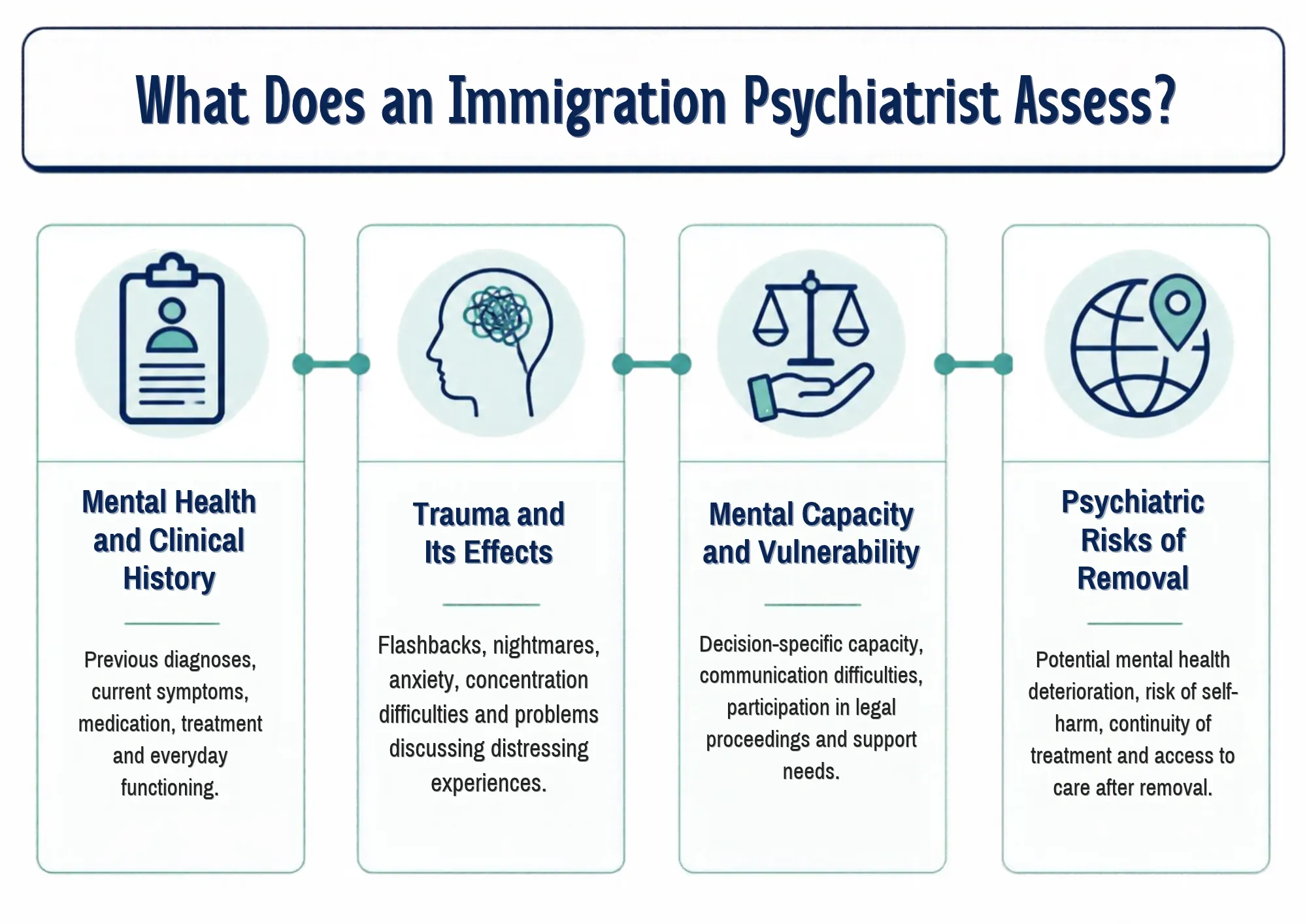
What Does an Immigration Psychiatrist Assess?
The assessment focuses on the person’s mental health and the clinical questions relevant to their immigration case. Its scope depends on the instructions, the person’s circumstances and the evidence available.
The psychiatrist may examine the person’s clinical history, symptoms, experiences of trauma, decision-making capacity where relevant and potential psychiatric risks associated with removal.
1. Mental Health Conditions and Clinical History
The psychiatrist reviews the person’s mental health history to understand their current presentation and how their condition may have changed over time.
This may include:
- Previous diagnoses, such as depression, PTSD or psychosis.
- Current symptoms, medication and treatment.
- The effects of their condition on everyday functioning.
The psychiatrist considers this information alongside the assessment interview and other available evidence. A previous diagnosis provides clinical background, but it does not necessarily establish the person’s current condition or answer the legal questions.
2. Trauma and the Psychological Effects of Migration
Experiences such as persecution, violence, detention or forced displacement may affect mental health.
Depending on the person’s history, the psychiatrist may assess symptoms such as:
- Flashbacks, nightmares or persistent fear.
- Difficulty concentrating or discussing distressing events.
- Anxiety, low mood or sleep disturbances.
These findings can help explain the effects of trauma on the person’s daily functioning and presentation during interviews.
The report should distinguish the person’s account from clinical observations and conclusions because an assessment cannot independently verify that the events described occurred.
3. Mental Capacity and Vulnerability
An immigration psychiatric evaluation may assess whether mental health difficulties affect a person’s capacity to make a specific decision or participate in legal proceedings.
A mental health condition does not automatically mean that someone lacks capacity.
Under the Mental Capacity Act 2005, which applies in England and Wales, capacity is presumed unless established otherwise and is assessed in relation to the particular decision. The applicable legal framework may vary by jurisdiction and context.
The psychiatrist should explain the clinical findings relevant to the question being assessed, while any legal determination remains a matter for the appropriate decision-maker.
4. Psychiatric Risks of Removal or Deportation
Where removal from the UK raises clinical concerns, the psychiatrist may assess:
- The risk of serious deterioration or self-harm.
- The person’s need for ongoing treatment and support.
- The potential effects of interrupted care or difficulties accessing treatment after removal, where reliable information is available.
The report should explain the clinical reasoning behind any opinion and identify uncertainties or gaps in the available information. This allows legal professionals to consider the findings alongside other evidence relevant to the case.
What Does an Immigration Psychiatric Expert Witness Report Include?
An immigration psychiatric expert witness report sets out the psychiatrist’s findings, reasoning and opinion in response to the questions they have been instructed to address.
Its contents depend on the case, but it should explain the evidence relied upon and the limits of the conclusions.
1. Medical History and Relevant Case Documents
The psychiatrist reviews the information needed to understand the person’s clinical history and the circumstances of the case.
This may include:
- Previous diagnoses, treatment and medication.
- Relevant medical records and clinical history.
- Immigration documents, such as asylum interview records or witness statements, where appropriate.
The report should identify the material information relied upon and distinguish documented facts from the person’s account. If important records are missing, that limitation should be made clear.
2. Assessment Findings and Clinical Evidence
This section presents the findings from the assessment and explains the evidence supporting them.
It may cover:
- Reported symptoms and relevant clinical observations.
- The nature and severity of any identified mental health condition.
- Findings from the interview and records that support the clinical opinion.
The psychiatrist should explain how the findings support their conclusions rather than present a diagnosis without sufficient context.
3. The Expert’s Opinion and Clinical Reasoning
The psychiatrist explains their conclusions and how the available evidence supports them.
Depending on the instructions, the opinion may address the effects of a mental health condition on functioning, the possible impact of trauma on the person’s presentation or the psychiatric risks associated with removal from the UK.
The reasoning should be transparent, balanced and within the expert’s area of competence. Any uncertainty or alternative explanation that materially affects the opinion should be acknowledged.
4. Limitations and Answers to the Legal Questions
The report should answer the specific questions in the instructions and identify matters that cannot be answered reliably.
This may include:
- Gaps in the available records or evidence.
- Uncertainty in the clinical findings or prognosis.
- Questions that fall outside the psychiatrist’s expertise.
The expert provides an independent clinical opinion rather than advocating for either party or deciding the immigration case. Where court rules apply, the report must also meet the relevant requirements for expert evidence.
How Is an Immigration Psychiatric Evaluation Conducted?
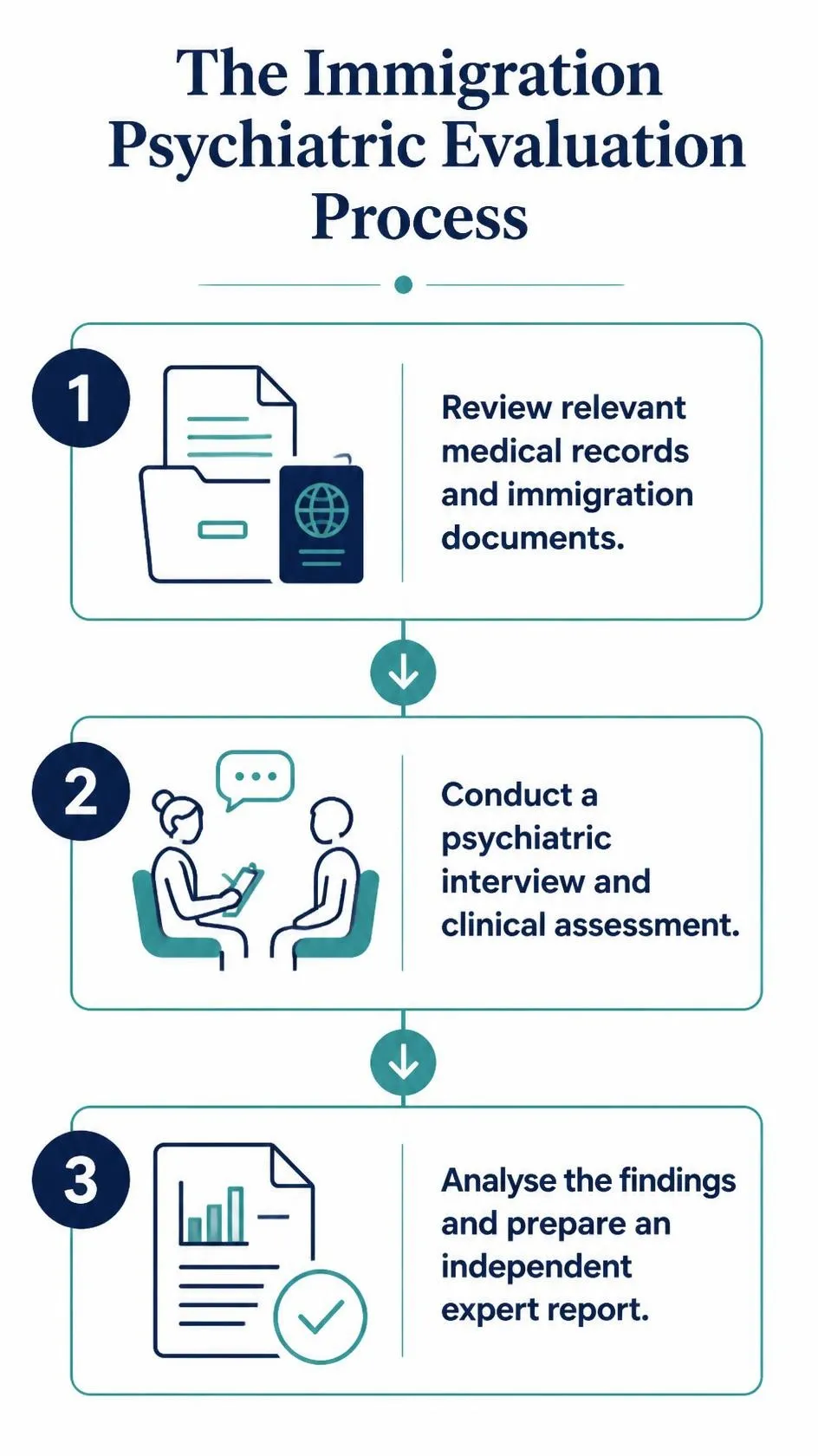
The process depends on the questions the legal team needs answered and the person’s circumstances. It generally involves reviewing the available evidence, conducting the assessment and preparing a report that addresses the instructions.
1. Review Medical Records and Case Documents
The psychiatrist reviews available medical records, previous diagnoses, treatment history and immigration documents to understand the person’s background.
The instructing legal team should explain the issues requiring expert consideration and provide the relevant documents available.
Where possible, asylum interview transcripts should be included alongside medical records. They can help the psychiatrist consider whether trauma-related symptoms may explain difficulties recalling or discussing events. However, they do not, by themselves, establish whether the account is true.
If key information is missing or the instructions are unclear, the psychiatrist may need clarification before reaching a reliable conclusion.
2. Conduct the Psychiatric Interview and Assessment
During the psychiatric evaluation, the individual discusses their symptoms, personal history and relevant experiences.
The psychiatrist considers their account alongside relevant clinical information and observations, tailoring the assessment to the questions in the instructions.
The approach should account for the person’s circumstances, including any communication needs or distress that may affect their participation. An interview is not, by itself, proof that the events described occurred.
3. Analyse Findings and Prepare the Report
The psychiatrist considers the assessment findings alongside the available records to form an independent clinical opinion.
The report explains the conclusions, the evidence supporting them and any limitations that affect their reliability.
The final document should answer the questions set by the instructing legal team without making legal determinations or claiming certainty where the evidence does not support it.
Practical tip: Include asylum interview transcripts
Where available and relevant, provide asylum interview transcripts alongside medical records. They can help the psychiatrist assess whether trauma-related symptoms may explain difficulties recalling or discussing events, without determining whether the account is true.
How Can an Immigration Psychiatric Expert Witness Report Support a Case?
The report prepared by immigration psychiatric expert witness helps legal professionals understand the clinical significance of mental health evidence. Its value depends on how clearly it answers the questions raised by the case and explains the basis of the expert’s opinion.
1. Explain Mental Health Conditions and Vulnerability
The report can describe a psychiatric condition, its severity and its effects on everyday functioning.
Where supported by the assessment, it may also explain how symptoms affect communication, engagement with interviews or participation in proceedings.
2. Address Trauma, Mental Capacity and Psychiatric Risks
When these issues form part of the instructions, the psychiatrist can explain trauma-related symptoms, assess a specific capacity question within the applicable framework or give an opinion on the potential mental health consequences of removal.
The report should distinguish supported clinical conclusions from matters that remain uncertain.
3. Help Legal Decision-Makers Understand the Evidence
Psychiatric terminology can be difficult to interpret without clinical expertise.
A clear report explains the findings and reasoning in accessible language, helping legal professionals consider their significance alongside the person’s account, documentary evidence and applicable legal requirements.
4. Support Court or Tribunal Proceedings
Where expert psychiatric evidence is required in court or tribunal proceedings, the report may help clarify disputed clinical issues. Depending on the proceedings, the expert may also be asked to answer questions or explain their opinion.
The report forms one part of the evidence considered in the proceedings and does not guarantee a particular outcome.
How to Obtain an Immigration Psychiatric Expert Witness Report
Obtaining a useful report starts with identifying the questions that require psychiatric expertise. Clear instructions, appropriate documents and a suitably qualified, independent expert help ensure that the assessment addresses those questions.
1. Identify the Legal Questions for the Expert
The instructing solicitor should outline the specific questions requiring psychiatric expertise.
These might concern the effects of trauma, a capacity question or the potential mental health consequences of removal.
Focused instructions help the psychiatrist understand the purpose of the assessment and avoid producing a general account of the person’s mental health that does not address the issues in the case.
2. Provide Relevant Medical and Legal Documents
Supply the records needed to understand the person’s clinical history and the circumstances of the proceedings.
Depending on the case, these may include:
- Medical records, diagnoses and treatment history.
- Asylum interview transcripts or witness statements.
- Relevant immigration decisions, legal submissions and other case documents.
Provide the available material as early as possible. This gives the psychiatrist time to identify gaps and explain whether missing information limits the conclusions they can reach.
3. Choose a Qualified, Independent Psychiatrist
Check that the psychiatrist has appropriate medical qualifications, relevant specialist experience and experience preparing reports for the type of proceedings involved.
In the UK, a doctor’s registration can be checked through the General Medical Council’s register.
Registration alone does not establish that a professional has the experience required for a particular case. The expert should also be able to explain their reasoning objectively, acknowledge limitations and provide an opinion that is independent of the instructing party’s preferred outcome.
Case Study: How a Psychiatric Report Helped Prevent Removal
The UK charity Medical Justice documented the case of AD, a Sri Lankan torture survivor whose mental health deteriorated severely while detained at Yarl’s Wood. Despite her condition, her removal from the UK was planned.
A psychiatric assessment helped secure an injunction preventing her removal. AD was later transferred to a psychiatric unit for six months and won her asylum appeal on 30 May 2019. The judge referred to the psychiatric report and other medical evidence when considering her case.
The case illustrates how an immigration psychiatric report can document serious mental health concerns and provide clinical evidence for consideration alongside other evidence in asylum and removal proceedings.
Getting the Right Psychiatric Evidence for Your Immigration Case
An immigration psychiatric evaluation can help clarify mental health issues relevant to a UK immigration case. Its usefulness depends on whether the assessment addresses the questions in dispute, draws on appropriate evidence and explains the limits of the expert’s opinion.
For legal professionals, the priority is to instruct a suitably qualified, independent psychiatrist and provide clear questions and relevant documents. The resulting report can then be considered alongside the wider evidence and applicable legal requirements.
FAQs