TABLE OF CONTENT
Orthopaedic Specialists for Personal Injury Medical Reports in the UK
Personal injury claims often need strong medical evidence. When an accident causes injuries to bones, joints or muscles, an orthopaedic specialist can play a key role in assessing the damage.
According to the research, the UK recorded 1.2k road casualty injuries in 2024. Many of which involve fractures and joint injuries, which are assessed by an orthopaedic specialist.
What Is an Orthopaedic Personal Injury Medical Report?
An orthopaedic personal injury medical report is written by a medical expert. It helps to explain injuries to the bones, joints, muscles and tendons.
The report describes how the injury happened and how it affects the daily life of a person. It is used as important evidence in a personal injury claim. Solicitors, insurers and courts use this report to understand the injury and help decide fair compensation.
“A well-prepared medical report helps decision-makers understand both the injury and its consequences.”
– Medico-Legal Consultant
Why Are Medical Reports Important in Personal Injury Claims?
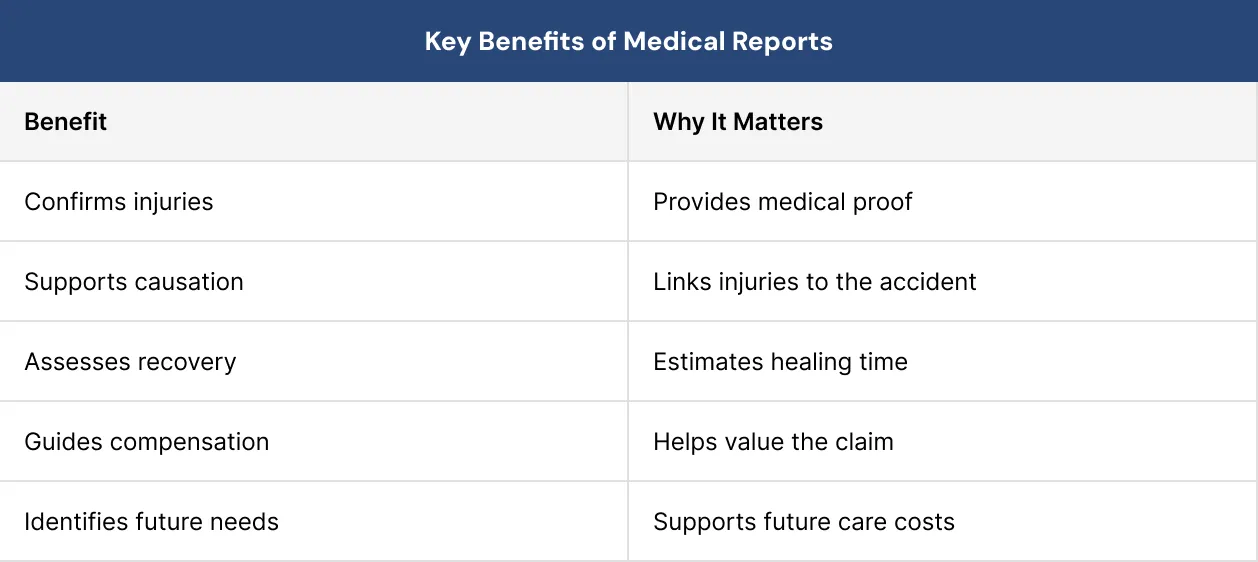
They help to provide the evidence about the injuries of a claimant. Without medical evidence, it can be difficult to prove that the injuries were caused by the accident.
A report helps to explain the nature of the injury and the expected recovery period. This info helps legal teams to assess the value of a claim.
The medical report of the orthopaedic surgeon also identifies the needs of any future treatment.
When Is an Orthopaedic Specialist Required?
Not every injury needs to be assessed by a specialist. Minor injuries can often be treated by a GP.
However, more serious injuries may require the expertise of an orthopaedic specialist. This includes broken bones, joint injuries and tendon tears.
They have expert knowledge of the musculoskeletal system. It includes bones, joints, muscles and tendons. Their expertise helps to ensure that injuries are diagnosed, assessed and managed in a proper way.
What Does an Orthopaedic Specialist Do in Personal Injury Cases?
An orthopaedic specialist checks injuries to the bones, joints, muscles and tendons. They find out how serious the injury is and how it affects the daily life of a claimant.
They also review medical records, X-rays, MRI scans and other imaging test results. After this, they give an expert medical opinion based on the evidence.
Their medical report plays a key role in a personal injury claim. It helps solicitors, insurers and courts to understand the injury and make fair decisions.
1. Assessing Musculoskeletal Injuries
MSI affects the movement of your body. They can range from simple fractures to serious injuries. During an assessment, the specialist examines the injured area and evaluates the issues such as pain, stiffness and loss of movement.
They also consider how the injury affects your daily life. This helps to determine the overall impact on the person’s quality of life.
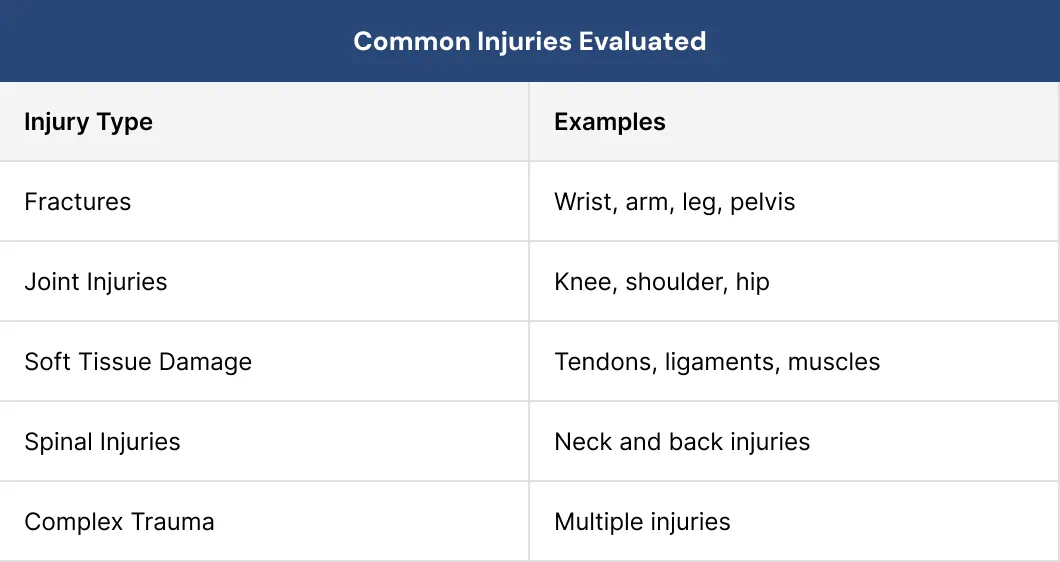
2. Diagnosing Fractures and Joint Injuries
A right diagnosis is one of the most major tasks carried out by an orthopaedic specialist. A correct diagnosis helps to ensure the claim reflects the true nature of the injury.
Fractures can vary in severity. Some heal quickly, while others may require surgery. Joint injuries and soft tissue damage may not always be visible.
3. Evaluating Mobility Issues
The severity of an injury is not judged by pain alone. It is also judged by how much it affects a movement and daily life of a person.
An orthopaedic specialist checks how well the claimant can walk, move and use the injured body part. They also assess strength and balance to understand the injury in a better way.
The orthopaedic surgeon medical report explains whether the injury affects work, exercise or everyday tasks. It may also describe how these movement issues could affect the claimant in the future.
4. Providing Medical Evidence
A key duty of an orthopaedic specialist is to remain independent. Their role is not to support either side of the claim.
Instead, they provide medical evidence based on the findings and medical records.
Courts and insurers rely on these opinions because they are expected to be fair and evidence-based.
How Do Orthopaedic Medical Reports Support Personal Injury Claims?
Medical reports are one of the most important parts of a personal injury claim. Without proper evidence, proving an injury can be difficult.
A detailed report prepared by an orthopaedic specialist. It provides valuable details about the condition of a claimant and future outlook. The report helps solicitors and courts to understand how the injury occurred and how it affects the life of a person.
“Clear medical evidence often forms the foundation of a successful injury claim.”
– Personal Injury Lawyer
1. Establishing Causation Between the Accident and Injury
One of the main jobs of a medical report is to show whether the accident caused the injury. The medical expert reviews the accident details and medical records to decide if the injuries match the accident. This helps support the personal injury claim.
The report may explain whether the injuries are matched with the type of accident described or not. This helps to strengthen the credibility of the claim.
2. Assessing the Severity of an Injury
Not all injuries affect people in the same way. Two people with similar injuries may experience different levels of pain and recovery.
An orthopaedic specialist assesses the type of injury with the help of medical records. This helps to determine whether the injury is minor or serious.
The opinion of an expert helps to ensure that compensation reflects the true impact of the injury.
3. Evidence for Compensation Claims
A medical report helps to provide evidence about pain, recovery time and future medical needs. This info helps legal teams to calculate the damages.
The report may also explain how the injury affects the work, life and daily activities.
The Process of Getting an Orthopaedic Medical Report
Getting a medical report is a key step in many personal injury claims. The report helps to provide evidence about the injuries.
A properly prepared report helps legal experts to understand the full impact of the injury.
Here is a step-by-step guide to get a medical report.
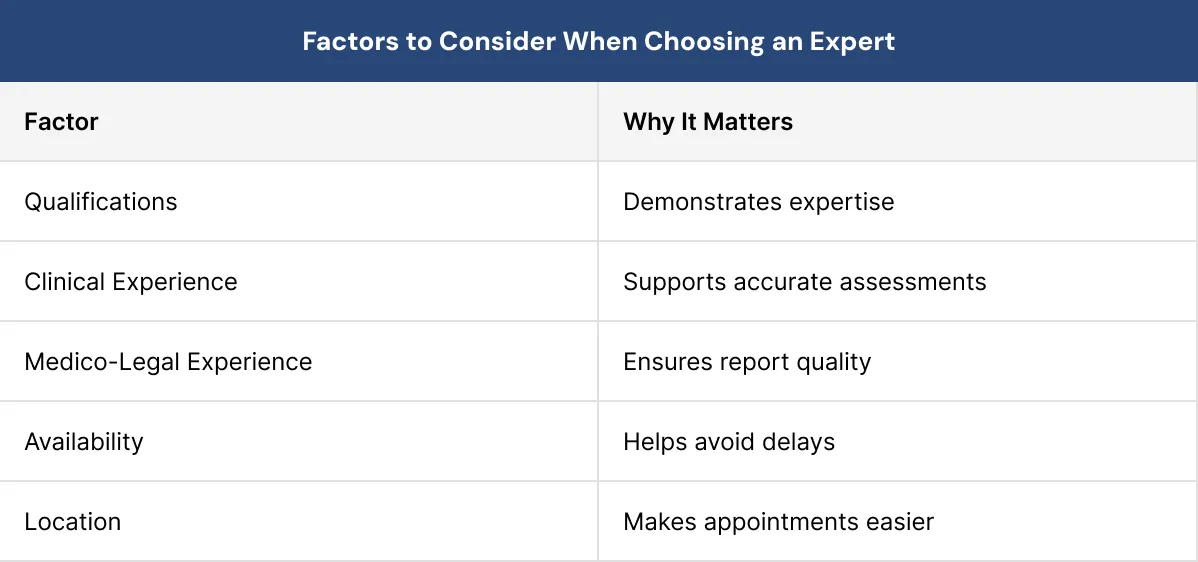
1. Right Expert for the Case
The first step is selecting the right expert for the case. Different injuries may require different levels of expert knowledge.
An orthopaedic expert should have experience in both clinical practice and medico-legal reporting. This ensures that they understand the medical and legal requirements of the case.
2. Issuing the Letter of Instruction (LOI)
Once an expert has been selected, a formal LOI is prepared. This document outlines the purpose of the report and the issues to be considered.
The letter usually contains details about the accident and injuries. An orthopaedic expert relies on this info to understand the case and prepare for the assessment.
3. Providing Medical Records
Medical records play a key role in the claim process. They provide info about the medical history and treatment of a claimant.
They help the expert to build a complete picture of the injury and its effects on the claimant.
An orthopaedic surgeon medical report is often stronger when it is supported by strong medical evidence.
4. Delivery of the Final Report
After reviewing the records, the expert prepares the report. This report contains their findings and opinions.
In this report an expert explains the diagnosis, treatment history and any future needs of care.
The completed orthopaedic surgeon medical report is then sent to the solicitor for review and use within the claim.
5. Using the Report in a Claim
Once the report is received, it is carefully reviewed by the legal team. The findings may influence the settlement discussions or court preparation.
The report often becomes one of the most important pieces of evidence when determining the compensation and future care needs.
How to Choose the Right Orthopaedic Specialist?
Choosing the right medical expert is a key step in any personal injury claim. The right orthopaedic specialist should have strong medico-legal experience and the ability to explain the findings in a proper way.
A well-qualified expert can make complex medical evidence easier for everyone to understand. ”
– UK Legal Consultant
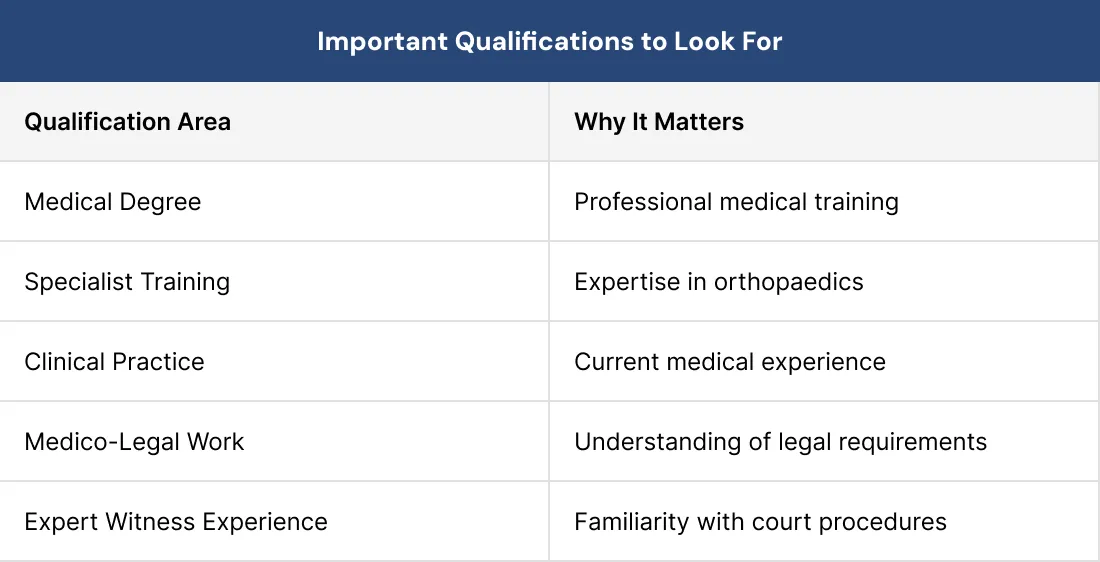
1. Relevant Qualifications and Experience
Qualifications are one of the first things to consider when you choose an expert. Here are some examples given below in the form of a table:
2. Courtroom Experience
Some claims proceed to court. An expert should be able to explain the medical evidence in a proper way.
An expert with courtroom experience should understand how to present the reports in a better way.
Case Study
Lauren injured her knee in an accident when she was 10 years old. Although an X-ray showed a broken kneecap, doctors missed the correct diagnosis and did not find a torn tendon. Her leg was put in a plaster cast instead of receiving the right treatment.
This delay caused long-term pain, swelling and reduced movement.
Years later, an orthopaedic specialist reviewed her case and confirmed that the earlier treatment was not right. The medical evidence showed that the delayed diagnosis caused permanent damage. After the case was proven in court, Lauren received £130,000 in compensation.
This case shows how a personal injury medical report by an orthopaedic specialist can help to prove the cause and long-term effects of an injury.
Conclusion
An orthopaedic specialist plays a vital role in the claims process. From reviewing medical records to preparing reports and giving expert evidence, their role is often valuable.
Whether the claim involves a road accident, workplace injury, sports incident or medical negligence, an orthopaedic expert helps to ensure that decisions are based on accurate medical evidence.
At Concise Medico, we understand that accurate medical evidence is essential when assessing the impact of an injury. Our expert team is here to help you through the claim process.
Our experienced orthopaedic specialists provide independent, CPR-compliant medical reports that help solicitors and courts to make informed decisions.
Contact us today to arrange an expert orthopaedic assessment and receive a detailed medical report tailored to your case.
Our experienced orthopaedic specialists provide independent, CPR-compliant medical reports that help solicitors and courts to make informed decisions.
Contact us today to arrange an expert orthopaedic assessment and receive a detailed medical report tailored to your case.