What Happens If a Scan Is Misread? Radiology Negligence Explained

Published On: May 25th, 2026|Total Views: 1|Daily Views: 1|15.7 min read|3131 words|

TABLE OF CONTENT

Would you like to know how radiology negligence can cause harm to your health? In the clinical industry, medical scans such as CT scans, MRI scans and X-rays are common. These screenings allow surgeons to examine inside the body without having to do surgery.

With the help of such scans, surgeons can easily diagnose serious health issues like internal injuries, infections, fractures and even cancer.

However, it’s not always easy to read these scans, or specialists may not understand or may overlook the important signs. Therefore, this situation could lead to radiology negligence cases.

If specialists inspecting the imaging results do not meet the needed standards, even minor mistakes can harm the patient. Such errors can affect diagnosis, care and the overall recovery process.

Indeed, radiology negligence is a critical medical and legal issue. Research by NHS Resolution shows that there have been more than 2,100 negligence claims against NHS trusts since 2020. These negligence claims were based on errors in radiology scans and £231 million in compensation was paid out.

This blog looks at the risks of radiology negligence and its effect on patient care. Here, you will also find why it’s vital to ensure that scans are understood correctly.

Key Takeaways

  • Radiology negligence can happen when scan results are read wrong or not acted on, so always ask for a clear report and follow-up
  • Medical negligence in radiology may lead to delay in care, so seek a second opinion if symptoms do not match your scan result
  • Radiology negligence cases often involve missed signs like fractures or cancer, so keep all records and note any changes in your health
  • Radiological scans must be done and read with care, so check that results are shared with your doctor and explained to you
  • Can a CT scan be misread? Yes, so if pain or symptoms stay, ask for a repeat scan or review by another expert

What Is Radiology Negligence?

While reporting an imaging test, if doctors make a mistake, this could result in radiology negligence cases. This includes failing to detect an irregularity in the scan, such as a fracture or tumour.

When the radiologists misread the scans, they fail to report the findings to the designated doctor. This careless act can also result in not sharing crucial results promptly.

As a result of these mistakes, they may falsely diagnose and may even affect the patient’s treatment plan.

Why Radiology Negligence Matters?

Radiology negligence can have serious adverse effects on a patient’s treatment. This is why it is so critical. Medical decisions often depend on the findings of imaging tests. So if an oversight is made in analysing the scan, it results in an invalid diagnosis.

When this situation arises, delays happen in the care or improper treatments take place. All this makes the condition of the patient worse. Moreover, this can increase medical risks due to being unable to report or take action on vital findings.

So radiology negligence can have a major effect on the health of the patient. It also impacts care performance.

How Radiology Negligence Happens When a Scan Is Misread?

When the imaging test is misread, it could have one of the following reasons:

Missing an Abnormality

Often, these defects are not spotted, but they can have a serious negative impact. Take an instance of a radiologist who misses a vital section of an X-ray. It can go unseen until the condition gets worse.

Misinterpreting the Reports

In some cases, radiologists misread what they see on the scan report. This results in a whole different diagnosis. Due to this mistake, the patient can receive unnecessary treatments. In the worst scenarios, this leads to wrong treatment.

Failing to Report Findings Correctly

Sometimes the professionals fail in reporting the unusual findings or do not convey urgency. This confusion can also postpone life-saving treatment.

Here, delayed diagnosis means that a patient’s disease can become more severe than a treatable stage. To understand this, you can consider the example of a cancer patient.

Therefore, this defect in the testing process means that the affected person can suffer lasting harm. This can create more serious situations, like loss of function or even death in severe cases.

Communicating Critical Results Improperly

Even minor errors in radiology can create adverse effects because imaging is vital in determining urgent medical decisions. To detect and monitor a disease, radiology is vital. Also, the dependence on these imaging results makes precise analysis even more important.

Hence, a small error becomes a major medical crisis. This not only affects the health of the patient but also the future chances for recovery.

This is the reason that radiologists and other healthcare experts should communicate in detail to reduce such risks.

Good communication between healthcare professionals is essential for safe and effective patient care. General Medical Council

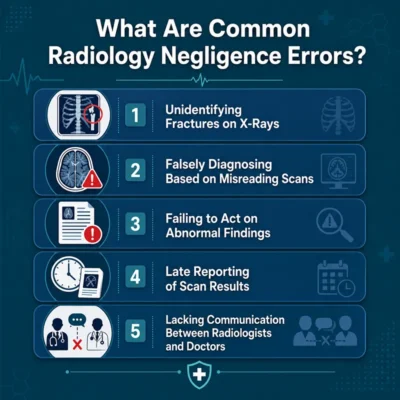
What Are Common Radiology Negligence Errors?

Often, radiology negligence cases happen continuously, with serious effects for patient care. The most commonly occurring errors in radiology are the following:

1. Unidentifying Fractures on X-Rays

Fractures can occur commonly in areas like the collarbone, ankle and spine. If the radiologist does not examine the image carefully, a broken bone may be ignored. The imaging expert may fail to detect the hidden signs of injury.

2. Falsely Diagnosing Based on Misreading Scans

If the doctors misinterpret the scans like X-rays, MRIs or CTs, this can result in a false diagnosis.

For instance, identifying a pneumonia may lead to a misdiagnosis of a tumour. In the same way, physicians can consider a benign cyst to be cancer due to misidentification.

3. Failing to Act on Abnormal Findings

Sometimes, the imaging experts might diagnose some abnormality. However, they fail to reach out to the referring physician quickly. Due to this delay, a lack of rapid action can occur. Therefore, the damage increases more.

4. Late Reporting of Scan Results

One major mistake is the late reporting of the scan results. When the report of the imaging is not available on time, patients may not receive the required care or a check-up promptly. This situation can result in serious health issues.
What Are Common Radiology Negligence Errors?

5. Lacking Communication Between Radiologists and Doctors

Radiologists talk with the healthcare expert about the findings of the imaging scan. If any issue occurs in this communication, it could result in vital details being overlooked. Hence, this leads to delayed or inadequate care.

Did You Know?

Up to half of radiology errors come from missed findings, especially small fractures or early signs of cancer that are hard to spot.

Why Does Radiology Negligence Happen in Healthcare?

Radiology negligence does not occur due to one reason but rather it is a complex issue. A lot of elements combine and make an environment for these errors to occur.

You must understand them to know how negligence happens and what issues scanning experts are facing nowadays. These factors include:

1. Heavy Workload and Pressure on Radiologists

Too much workload and pressure on radiologists is one of the main factors of radiology negligence. Scanning experts have to review a lot of imaging tests every day.

When there are a lot of cases to deal with, it can be stressful to keep up. This pressure makes it more difficult to focus on each report. As a result, they might have to make quick decisions.

When this happens, small amounts of information can be missed. Such mistakes can cause problems later on. Accuracy and speed must be balanced to avoid mistakes.

2. Tiredness and Short Time for Each Report

One major problem is feeling tired. After hours of scanning and reading the complex images, radiologists get tired. That makes it difficult to stay focused. They may make faulty decisions when they become distracted.

Another challenge is time. In busy hospitals, radiologists do not have enough time for each report. They are always in a hurry and it is hard to give each image the attention it requires.

3. Low-Quality or Unclear Imaging

The scenario is made worse by poor-quality images. Radiologists find it trickier to detect issues when the images are fuzzy or lack adequate detail. Even the most competent radiologists can have difficulty with unclear scans.

4. Staff Shortage and Technical Concerns

Hospital staff shortages make matters even worse. If there are fewer skilled workers, the workload for the rest of the team increases. This adds more stress and more chances to commit mistakes.

On top of that, technical problems can make things even more complex. Old or faulty equipment can give rise to blurred images. This can result in inaccurate interpretations or missed issues.

5. Human Errors and Limitations in Viewing

Mistakes are a natural aspect of health care. Radiologists also make errors, just like everyone else. When combined with the limitations of human senses, blunders can become more common. No matter how proficient radiologists are, they can’t diagnose every detail.

6. Intelligence Errors and Missed Diagnosis

An additional difficulty is cognitive bias. This is the result of medical professionals expecting the results from their experience. They believe everything is normal and may neglect significant details.

This can result in missed screenings and delays in treatment, especially for conditions that require immediate attention.

What to Avoid

Do not ignore ongoing symptoms just because a scan result is normal. If pain or issues continue, always ask for a second opinion or repeat the scan.

What Is the Impact of Radiology Negligence on Patients?

Radiology negligence cases can result in severe damage to patients. It has multiple effects on their bodies and minds. Let’s look at what it does to them:

1. Increasing Risk of Medical Issues

Radiology mistakes can complicate medical conditions. If a diagnosis is overlooked, the patient will not be treated for what they need. This can worsen the disease and make it more difficult to cure over time.

2. Late Healing and Treatment

Recovery and medical care are delayed because the condition is not dealt with on time. The patient might not qualify for the needed assistance on time if the diagnosis is incorrect. This delay may slow down healing and lead to additional issues later on.

3. Greater Pain and Suffering

The discomfort and suffering will intensify if the condition is left untreated. As the illness or injury gets more severe, the patient may feel more pain. This excess pain can be difficult to control and impact their day-to-day life.

4. Behavioural Stress

Physical pain often results in psychological distress. Patients may suffer from feelings of tension or stress. They might be worried about their health, particularly if they do not know what is wrong. This ongoing anxiety can make things harder for them to manage.

Related: Psychological effects of delayed diagnosis

5. Poorer Quality of Life

As things get less satisfactory, their quality of living gets worse. Simple daily duties like cooking and going for walks could become more complex.

They may no longer find any satisfaction in the things they used to get involved in. A sense of hopelessness and irritation may result from this.

6. Loss of Income

The patient may not be able to make earnings if they are ill and unfit to work. In addition to their wellness concerns, they have yet another heavy load to bear. They might struggle to cover their costs or care for themselves if they don’t have money.

7. Permanent Injury

Sometimes this results in long-term disability. If you fail to catch a condition like cancer, it can spread and cause permanent damage. This may result in ongoing health issues that the patient is unable to deal with.

8. Life-Threatening Results

There may be a few life-threatening negative side effects. For instance, if cancer or internal harm is neglected, it may become more severe. This can make it more tricky or impossible to treat. Also, it may even negatively impact the life of the patient.

What Is the Radiology Negligence Claims Process?

If you know radiology negligence cases, there is a simple process to follow. Here’s a complete overview of what to expect:

1. Initial Review of the Case

The first step is to evaluate the scenario. This means examining the situation to determine if there was an oversight in the radiology process. Not every fault is a result of negligence. So this step assists in figuring out whether or not there is a valid claim.

2. Gathering Medical Files and Scan Reports

After that, the scan reports and medical records are collected. You can observe what happened during the assessment in the documents.

These papers are made up of the radiologist’s notes and the patient’s scans. These files help to create the case and show whether there was an error.

Related: Keeping evidence for compensation claims

3. Evaluation by Independent Medical Specialists

When the records are put together, the case will be looked at by independent medical experts. These specialists are non-clinical radiologists or medical professionals.

They make sure the radiologists follow the right protocols. Also, they aid in helping to figure out whether negligence caused harm.

4. Detecting Where Negligence Happened

Next, it looks at the question of where the negligence took place. This step is regarding figuring out precisely where the flaw was. The primary stage in verifying the claim is to prove the error.

5. Calculating the Effect and Losses

The second step after identifying the error is to work out the impact and loss. This considers the impact of the fault on the individual. Pain, extra medical bills, lost income and ongoing problems are all calculated. This aids in deciding on an adequate compensation amount for the patient.

6. Negotiating Compensation with the Reliable Party

Compensation talks start when the losses are calculated. The solicitor will get in touch with the liable party, radiologist or hospital. The goal is to achieve a proper amount of compensation. Many situations are settled here without the need to go to court.

7. Settlement or Court Decision If Needed

If talks fail, a deal is made or a court decides what to do. If the two parties can not agree, the matter is taken to the judicial system. A judge will then identify who is at fault and the right amount of compensation to be given.

However, most cases resolve before they arrive in a courtroom.

8. Legal Help During the Process

Solicitors are there to support you across the process. They aid the patient and take care of the legal matters. Also, they ensure that everything is done properly. They will also deal with and argue for the patient in court if necessary.

Legal assistance helps the patient get the best result possible.

What Is the Compensation in Radiology Negligence Claims?

There are two main types of compensation in medical negligence in radiology cases:

General Damages

The primary category is general damages, a legal term that refers to non-economic losses resulting from negligence. They consist of the physical and emotional pain of the error. This comprises:

  • Discomfort and suffering
  • Medical condition getting worse
  • Mental health distress
  • A decline in the quality of living

Special Damages

Special damages are the second category. These pay for the money-related costs you have experienced, such as:

  • Reduction of earnings
  • Medical care expenses
  • Treatment and aid fees
  • Transportation charges
  • Additional economic damages

How Much Time Is Allotted for Radiology Negligence Claims?

In most situations, a medical negligence claim arising in radiology must be brought within 3 years. This can begin with:

  • The time the negligence took place
  • When you first learned about it

There are a couple of special cases. For instance, children and people with mental disorders might have varying time limits.

Early advice seeking is always a beneficial idea. This way, you can avoid leaving out crucial time frames.

What Are No-Win, Zero-Fee Radiology Negligence Claims?

A large number of medical negligence cases are submitted on a no-win, no-fee basis. This means:

  • There are no start-up legal expenses for you to pay
  • If you do not win the case, you do not have to spend even a penny
  • You only pay a success fee if you succeed in your case

This means that patients have simpler paths to compensation, without the stress of money-related risks.

Case Study: Late Diagnosis of Spinal Tumour Due to Misreading X-rays

In the UK, a spinal tumour was not detected on the patient’s X-rays twice. As a result, the diagnosis was put on hold and the illness got worse. The patient was referred to the hospital with ongoing pain.

Both X-rays were taken to the doctor and they viewed them carefully. Both were reported to be normal and the tumour was not seen.

The assessment was postponed as a result of this error. The patient didn’t get medical care at the best time for it to be effective. The illness got worse over time, making recovery more stressful.

The patient afterwards made a claim for medical negligence in radiology. The scans were found to have been misread, which was below the expected care standard. The condition became more severe as a result of the delayed detection.

After the case was resolved, the patient was compensated £80,000 for the harm caused by the delay.

This case shows how easily serious errors can develop from misreading routine X-rays. It reveals the serious and lasting health effects of diagnostic wait times.

Final Thoughts

Radiology negligence takes place when physicians or radiologists misread scans or fail to report them properly. This could lead to treatment-related delays or even incorrect treatment. The impact might be minor sometimes but it can also cause severe health issues.

For instance, a doctor may make an incorrect decision if a scan is misread. This can result in routine care being put on hold or the wrong treatment being given. Sometimes it can even make the health situation more serious.

However, not all errors in radiology are considered negligence.

Also, patients are better able to spot an issue when they are informed of radiology negligence. It could help them know what to do next.

We at Concise Medico understand how risky these errors can be. Talk with our expert if you feel like you have been harmed. We can help you understand your concerns.

To find out how we can assist you, get in touch with us now.

Worried your scan may have been misread and your condition missed?

Our specialist radiology negligence team helps you understand what went wrong and seek compensation.
We review your case with expert medical evidence and guide you through every step of the claim.
We have helped clients secure compensation in complex radiology negligence cases across the UK. Contact us today.


Worried your scan may have been misread and your condition missed?

Our specialist radiology negligence team helps you understand what went wrong and seek compensation.
We review your case with expert medical evidence and guide you through every step of the claim.
We have helped clients secure compensation in complex radiology negligence cases across the UK. Contact us today.
FAQs

Can radiological scans be misread?2026-05-25T06:55:55+00:00

Radiological scans can sometimes be misread due to human error, poor image quality, time pressures, or complex findings. This can lead to missed or incorrect diagnoses, which may affect treatment and recovery.

Can a CT scan be misread?2026-05-25T06:57:39+00:00

A CT scan can be misread. Although CT scans produce detailed images, abnormalities such as small tumours, fractures, or internal issues can still be missed or misinterpreted by the radiologist, potentially delaying the correct diagnosis.

How much is a radiology negligence claim payout in the UK?2026-05-25T06:58:15+00:00

Payouts vary depending on harm caused. Minor cases may be a few thousand pounds, while serious cases involving delayed cancer diagnosis or permanent injury can reach hundreds of thousands or more.

What damages can be recovered in a radiology negligence case?2026-05-25T06:58:57+00:00

You can claim for pain and suffering, emotional distress, and loss of quality of life, as well as financial losses like lost earnings, treatment costs, and ongoing care needs.

What are the 4 things required to prove negligence?2026-05-25T06:59:40+00:00

To prove radiology negligence, you must show that a healthcare professional owed you a duty of care, that this duty was breached through an error such as a misread scan, and that this mistake directly caused you harm or loss.

Share This Article!

Would you like to know how radiology negligence can cause harm to your health? In the clinical industry, medical scans such as CT scans, MRI scans and X-rays are common. These screenings allow surgeons to examine inside the body without having to do surgery.

With the help of such scans, surgeons can easily diagnose serious health issues like internal injuries, infections, fractures and even cancer.

However, it’s not always easy to read these scans, or specialists may not understand or may overlook the important signs. Therefore, this situation could lead to radiology negligence cases.

If specialists inspecting the imaging results do not meet the needed standards, even minor mistakes can harm the patient. Such errors can affect diagnosis, care and the overall recovery process.

Indeed, radiology negligence is a critical medical and legal issue. Research by NHS Resolution shows that there have been more than 2,100 negligence claims against NHS trusts since 2020. These negligence claims were based on errors in radiology scans and £231 million in compensation was paid out.

This blog looks at the risks of radiology negligence and its effect on patient care. Here, you will also find why it’s vital to ensure that scans are understood correctly.

Key Takeaways

  • Radiology negligence can happen when scan results are read wrong or not acted on, so always ask for a clear report and follow-up
  • Medical negligence in radiology may lead to delay in care, so seek a second opinion if symptoms do not match your scan result
  • Radiology negligence cases often involve missed signs like fractures or cancer, so keep all records and note any changes in your health
  • Radiological scans must be done and read with care, so check that results are shared with your doctor and explained to you
  • Can a CT scan be misread? Yes, so if pain or symptoms stay, ask for a repeat scan or review by another expert

What Is Radiology Negligence?

While reporting an imaging test, if doctors make a mistake, this could result in radiology negligence cases. This includes failing to detect an irregularity in the scan, such as a fracture or tumour.

When the radiologists misread the scans, they fail to report the findings to the designated doctor. This careless act can also result in not sharing crucial results promptly.

As a result of these mistakes, they may falsely diagnose and may even affect the patient’s treatment plan.

Why Radiology Negligence Matters?

Radiology negligence can have serious adverse effects on a patient’s treatment. This is why it is so critical. Medical decisions often depend on the findings of imaging tests. So if an oversight is made in analysing the scan, it results in an invalid diagnosis.

When this situation arises, delays happen in the care or improper treatments take place. All this makes the condition of the patient worse. Moreover, this can increase medical risks due to being unable to report or take action on vital findings.

So radiology negligence can have a major effect on the health of the patient. It also impacts care performance.

How Radiology Negligence Happens When a Scan Is Misread?

When the imaging test is misread, it could have one of the following reasons:

Missing an Abnormality

Often, these defects are not spotted, but they can have a serious negative impact. Take an instance of a radiologist who misses a vital section of an X-ray. It can go unseen until the condition gets worse.

Misinterpreting the Reports

In some cases, radiologists misread what they see on the scan report. This results in a whole different diagnosis. Due to this mistake, the patient can receive unnecessary treatments. In the worst scenarios, this leads to wrong treatment.

Failing to Report Findings Correctly

Sometimes the professionals fail in reporting the unusual findings or do not convey urgency. This confusion can also postpone life-saving treatment.

Here, delayed diagnosis means that a patient’s disease can become more severe than a treatable stage. To understand this, you can consider the example of a cancer patient.

Therefore, this defect in the testing process means that the affected person can suffer lasting harm. This can create more serious situations, like loss of function or even death in severe cases.

Communicating Critical Results Improperly

Even minor errors in radiology can create adverse effects because imaging is vital in determining urgent medical decisions. To detect and monitor a disease, radiology is vital. Also, the dependence on these imaging results makes precise analysis even more important.

Hence, a small error becomes a major medical crisis. This not only affects the health of the patient but also the future chances for recovery.

This is the reason that radiologists and other healthcare experts should communicate in detail to reduce such risks.

Good communication between healthcare professionals is essential for safe and effective patient care. General Medical Council

What Are Common Radiology Negligence Errors?

Often, radiology negligence cases happen continuously, with serious effects for patient care. The most commonly occurring errors in radiology are the following:

1. Unidentifying Fractures on X-Rays

Fractures can occur commonly in areas like the collarbone, ankle and spine. If the radiologist does not examine the image carefully, a broken bone may be ignored. The imaging expert may fail to detect the hidden signs of injury.

2. Falsely Diagnosing Based on Misreading Scans

If the doctors misinterpret the scans like X-rays, MRIs or CTs, this can result in a false diagnosis.

For instance, identifying a pneumonia may lead to a misdiagnosis of a tumour. In the same way, physicians can consider a benign cyst to be cancer due to misidentification.

3. Failing to Act on Abnormal Findings

Sometimes, the imaging experts might diagnose some abnormality. However, they fail to reach out to the referring physician quickly. Due to this delay, a lack of rapid action can occur. Therefore, the damage increases more.

4. Late Reporting of Scan Results

One major mistake is the late reporting of the scan results. When the report of the imaging is not available on time, patients may not receive the required care or a check-up promptly. This situation can result in serious health issues.

What Are Common Radiology Negligence Errors?

5. Lacking Communication Between Radiologists and Doctors

Radiologists talk with the healthcare expert about the findings of the imaging scan. If any issue occurs in this communication, it could result in vital details being overlooked. Hence, this leads to delayed or inadequate care.

Did You Know?

Up to half of radiology errors come from missed findings, especially small fractures or early signs of cancer that are hard to spot.

Why Does Radiology Negligence Happen in Healthcare?

Radiology negligence does not occur due to one reason but rather it is a complex issue. A lot of elements combine and make an environment for these errors to occur.

You must understand them to know how negligence happens and what issues scanning experts are facing nowadays. These factors include:

1. Heavy Workload and Pressure on Radiologists

Too much workload and pressure on radiologists is one of the main factors of radiology negligence. Scanning experts have to review a lot of imaging tests every day.

When there are a lot of cases to deal with, it can be stressful to keep up. This pressure makes it more difficult to focus on each report. As a result, they might have to make quick decisions.

When this happens, small amounts of information can be missed. Such mistakes can cause problems later on. Accuracy and speed must be balanced to avoid mistakes.

2. Tiredness and Short Time for Each Report

One major problem is feeling tired. After hours of scanning and reading the complex images, radiologists get tired. That makes it difficult to stay focused. They may make faulty decisions when they become distracted.

Another challenge is time. In busy hospitals, radiologists do not have enough time for each report. They are always in a hurry and it is hard to give each image the attention it requires.

3. Low-Quality or Unclear Imaging

The scenario is made worse by poor-quality images. Radiologists find it trickier to detect issues when the images are fuzzy or lack adequate detail. Even the most competent radiologists can have difficulty with unclear scans.

4. Staff Shortage and Technical Concerns

Hospital staff shortages make matters even worse. If there are fewer skilled workers, the workload for the rest of the team increases. This adds more stress and more chances to commit mistakes.

On top of that, technical problems can make things even more complex. Old or faulty equipment can give rise to blurred images. This can result in inaccurate interpretations or missed issues.

5. Human Errors and Limitations in Viewing

Mistakes are a natural aspect of health care. Radiologists also make errors, just like everyone else. When combined with the limitations of human senses, blunders can become more common. No matter how proficient radiologists are, they can’t diagnose every detail.

6. Intelligence Errors and Missed Diagnosis

An additional difficulty is cognitive bias. This is the result of medical professionals expecting the results from their experience. They believe everything is normal and may neglect significant details.

This can result in missed screenings and delays in treatment, especially for conditions that require immediate attention.

What to Avoid

Do not ignore ongoing symptoms just because a scan result is normal. If pain or issues continue, always ask for a second opinion or repeat the scan.

What Is the Impact of Radiology Negligence on Patients?

Radiology negligence cases can result in severe damage to patients. It has multiple effects on their bodies and minds. Let’s look at what it does to them:

1. Increasing Risk of Medical Issues

Radiology mistakes can complicate medical conditions. If a diagnosis is overlooked, the patient will not be treated for what they need. This can worsen the disease and make it more difficult to cure over time.

2. Late Healing and Treatment

Recovery and medical care are delayed because the condition is not dealt with on time. The patient might not qualify for the needed assistance on time if the diagnosis is incorrect. This delay may slow down healing and lead to additional issues later on.

3. Greater Pain and Suffering

The discomfort and suffering will intensify if the condition is left untreated. As the illness or injury gets more severe, the patient may feel more pain. This excess pain can be difficult to control and impact their day-to-day life.

4. Behavioural Stress

Physical pain often results in psychological distress. Patients may suffer from feelings of tension or stress. They might be worried about their health, particularly if they do not know what is wrong. This ongoing anxiety can make things harder for them to manage.

Related: Psychological effects of delayed diagnosis

5. Poorer Quality of Life

As things get less satisfactory, their quality of living gets worse. Simple daily duties like cooking and going for walks could become more complex.

They may no longer find any satisfaction in the things they used to get involved in. A sense of hopelessness and irritation may result from this.

6. Loss of Income

The patient may not be able to make earnings if they are ill and unfit to work. In addition to their wellness concerns, they have yet another heavy load to bear. They might struggle to cover their costs or care for themselves if they don’t have money.

7. Permanent Injury

Sometimes this results in long-term disability. If you fail to catch a condition like cancer, it can spread and cause permanent damage. This may result in ongoing health issues that the patient is unable to deal with.

8. Life-Threatening Results

There may be a few life-threatening negative side effects. For instance, if cancer or internal harm is neglected, it may become more severe. This can make it more tricky or impossible to treat. Also, it may even negatively impact the life of the patient.

What Is the Radiology Negligence Claims Process?

If you know radiology negligence cases, there is a simple process to follow. Here’s a complete overview of what to expect:

1. Initial Review of the Case

The first step is to evaluate the scenario. This means examining the situation to determine if there was an oversight in the radiology process. Not every fault is a result of negligence. So this step assists in figuring out whether or not there is a valid claim.

2. Gathering Medical Files and Scan Reports

After that, the scan reports and medical records are collected. You can observe what happened during the assessment in the documents.

These papers are made up of the radiologist’s notes and the patient’s scans. These files help to create the case and show whether there was an error.

Related: Keeping evidence for compensation claims

3. Evaluation by Independent Medical Specialists

When the records are put together, the case will be looked at by independent medical experts. These specialists are non-clinical radiologists or medical professionals.

They make sure the radiologists follow the right protocols. Also, they aid in helping to figure out whether negligence caused harm.

4. Detecting Where Negligence Happened

Next, it looks at the question of where the negligence took place. This step is regarding figuring out precisely where the flaw was. The primary stage in verifying the claim is to prove the error.

5. Calculating the Effect and Losses

The second step after identifying the error is to work out the impact and loss. This considers the impact of the fault on the individual. Pain, extra medical bills, lost income and ongoing problems are all calculated. This aids in deciding on an adequate compensation amount for the patient.

6. Negotiating Compensation with the Reliable Party

Compensation talks start when the losses are calculated. The solicitor will get in touch with the liable party, radiologist or hospital. The goal is to achieve a proper amount of compensation. Many situations are settled here without the need to go to court.

7. Settlement or Court Decision If Needed

If talks fail, a deal is made or a court decides what to do. If the two parties can not agree, the matter is taken to the judicial system. A judge will then identify who is at fault and the right amount of compensation to be given.

However, most cases resolve before they arrive in a courtroom.

8. Legal Help During the Process

Solicitors are there to support you across the process. They aid the patient and take care of the legal matters. Also, they ensure that everything is done properly. They will also deal with and argue for the patient in court if necessary.

Legal assistance helps the patient get the best result possible.

What Is the Compensation in Radiology Negligence Claims?

There are two main types of compensation in medical negligence in radiology cases:

General Damages

The primary category is general damages, a legal term that refers to non-economic losses resulting from negligence. They consist of the physical and emotional pain of the error. This comprises:

  • Discomfort and suffering
  • Medical condition getting worse
  • Mental health distress
  • A decline in the quality of living

Special Damages

Special damages are the second category. These pay for the money-related costs you have experienced, such as:

  • Reduction of earnings
  • Medical care expenses
  • Treatment and aid fees
  • Transportation charges
  • Additional economic damages

How Much Time Is Allotted for Radiology Negligence Claims?

In most situations, a medical negligence claim arising in radiology must be brought within 3 years. This can begin with:

  • The time the negligence took place
  • When you first learned about it

There are a couple of special cases. For instance, children and people with mental disorders might have varying time limits.

Early advice seeking is always a beneficial idea. This way, you can avoid leaving out crucial time frames.

What Are No-Win, Zero-Fee Radiology Negligence Claims?

A large number of medical negligence cases are submitted on a no-win, no-fee basis. This means:

  • There are no start-up legal expenses for you to pay
  • If you do not win the case, you do not have to spend even a penny
  • You only pay a success fee if you succeed in your case

This means that patients have simpler paths to compensation, without the stress of money-related risks.

Case Study: Late Diagnosis of Spinal Tumour Due to Misreading X-rays

In the UK, a spinal tumour was not detected on the patient’s X-rays twice. As a result, the diagnosis was put on hold and the illness got worse. The patient was referred to the hospital with ongoing pain.

Both X-rays were taken to the doctor and they viewed them carefully. Both were reported to be normal and the tumour was not seen.

The assessment was postponed as a result of this error. The patient didn’t get medical care at the best time for it to be effective. The illness got worse over time, making recovery more stressful.

The patient afterwards made a claim for medical negligence in radiology. The scans were found to have been misread, which was below the expected care standard. The condition became more severe as a result of the delayed detection.

After the case was resolved, the patient was compensated £80,000 for the harm caused by the delay.

This case shows how easily serious errors can develop from misreading routine X-rays. It reveals the serious and lasting health effects of diagnostic wait times.

Final Thoughts

Radiology negligence takes place when physicians or radiologists misread scans or fail to report them properly. This could lead to treatment-related delays or even incorrect treatment. The impact might be minor sometimes but it can also cause severe health issues.

For instance, a doctor may make an incorrect decision if a scan is misread. This can result in routine care being put on hold or the wrong treatment being given. Sometimes it can even make the health situation more serious.

However, not all errors in radiology are considered negligence.

Also, patients are better able to spot an issue when they are informed of radiology negligence. It could help them know what to do next.

We at Concise Medico understand how risky these errors can be. Talk with our expert if you feel like you have been harmed. We can help you understand your concerns.

To find out how we can assist you, get in touch with us now.

Worried your scan may have been misread and your condition missed?

Our specialist radiology negligence team helps you understand what went wrong and seek compensation.
We review your case with expert medical evidence and guide you through every step of the claim.
We have helped clients secure compensation in complex radiology negligence cases across the UK. Contact us today.
Worried your scan may have been misread and your condition missed?

Our specialist radiology negligence team helps you understand what went wrong and seek compensation.
We review your case with expert medical evidence and guide you through every step of the claim.
We have helped clients secure compensation in complex radiology negligence cases across the UK. Contact us today.

FAQs

Can radiological scans be misread?2026-05-25T06:55:55+00:00

Radiological scans can sometimes be misread due to human error, poor image quality, time pressures, or complex findings. This can lead to missed or incorrect diagnoses, which may affect treatment and recovery.

Can a CT scan be misread?2026-05-25T06:57:39+00:00

A CT scan can be misread. Although CT scans produce detailed images, abnormalities such as small tumours, fractures, or internal issues can still be missed or misinterpreted by the radiologist, potentially delaying the correct diagnosis.

How much is a radiology negligence claim payout in the UK?2026-05-25T06:58:15+00:00

Payouts vary depending on harm caused. Minor cases may be a few thousand pounds, while serious cases involving delayed cancer diagnosis or permanent injury can reach hundreds of thousands or more.

What damages can be recovered in a radiology negligence case?2026-05-25T06:58:57+00:00

You can claim for pain and suffering, emotional distress, and loss of quality of life, as well as financial losses like lost earnings, treatment costs, and ongoing care needs.

What are the 4 things required to prove negligence?2026-05-25T06:59:40+00:00

To prove radiology negligence, you must show that a healthcare professional owed you a duty of care, that this duty was breached through an error such as a misread scan, and that this mistake directly caused you harm or loss.

Go to Top
