TABLE OF CONTENT
Understanding the Rehabilitation Code in Personal Injury Claims
Do you know almost 680,000 workers suffered non-fatal injuries in the UK in 2025? Many of these injuries affect your daily life for weeks, months or even years. During this time, you may need medical care, therapy and workplace support. You need help to return to normal activities. This is where rehabilitation support can make a real difference.
The Rehabilitation Code is a UK framework to help injured claimants access early care support before their compensation claim is settled. This guide explains how it works, what support may be available and how rehab can affect a personal injury claim.
What Is the Rehabilitation Code?
Rehabilitation Code is a set of criteria for personal injury claims in the UK. It is meant to help you access treatment and support for your injury as early as possible. It ensures cooperation between three parties i.e., you, a solicitor and the insurer. It also ensures co-working between the parties to identify rehabilitation needs and provide needed support.
Note that personal injury rehabilitation code is not designed to determine who is at fault. It just focuses on providing support for the injury. This assures recovery begins without delay, while the legal claim is underway.
1. Purpose of the Rehabilitation Code
The purpose of the Rehabilitation Code is to help injured claimants access early support, quicker decisions and better recovery outcomes. Timely care can reduce your pain, improve your mobility and support your mental well-being. It can also help you return to daily life and work with less delay.
2. How the Rehabilitation Code Works
The Rehabilitation Code follows a clear process to help injured claimants access treatment as early as possible. Once all parties agree that rehab is needed, an expert carries out an Initial Needs Assessment. This reviews your injuries, daily life, work situation and your recovery needs.
A rehab plan is then prepared. It may include medical care, physiotherapy and counselling. Once the plan is approved, rehab begins. Your progress is reviewed regularly to ensure the support continues to meet your needs throughout recovery.
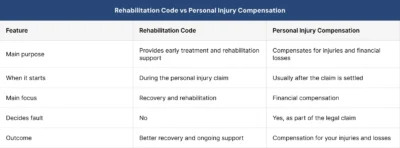
The Rehabilitation Code and compensation claims work together, but they serve different purposes.
Why Is Rehabilitation Code Important in Personal Injury Claims?
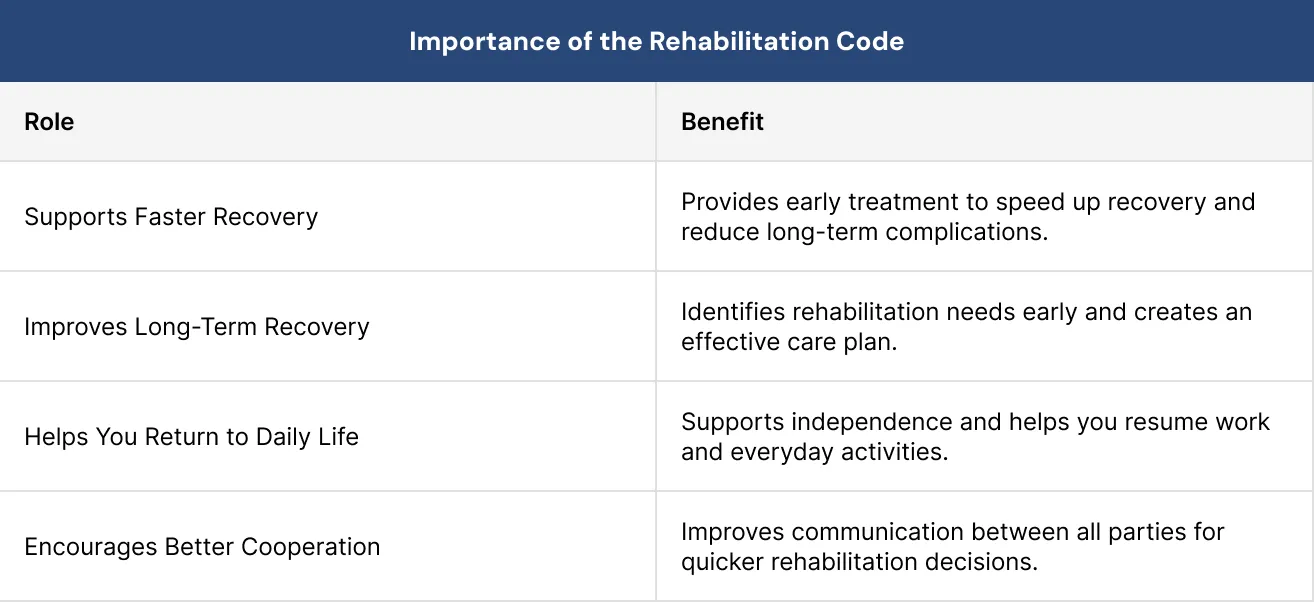
Injury claims are not only about financial compensations. It is about getting back to your normal life as soon as possible. An accident can make simple tasks like driving, working and self-care feel difficult. The right support can help you regain strength, confidence and independence. This is why rehabilitation is important.
Here are the main reasons rehabilitation matters in a personal injury claim:
1. Support Faster Recovery
A timely checkup and care can prevent a long course of recovery. The right support and care can reduce the pain, improve mobility and help you recover sooner. Timely care can keep minor problems from being long-term conditions. Early support gives you access to what you need to recover. This includes physiotherapy, counselling and even specialist care.
2. Improves Long-Term Outcomes
Delayed care can lead to delayed recovery as some injuries can take months or years to heal. Often, people lose hope and become dependent. Personal Injury Rehabilitation Code identifies these needs early on. Once the needs are known, experts make a care plan that ensures your long-term recovery.
3. Helps Return to Daily Life and Work
Accidents can make life hard and work difficult. It can keep you from caring for your family or enjoying your hobbies. Everyday tasks can become a challenge. That is what a serious accident can do to your life. The rehabilitation claims help you regain your life and independence. These claims provide the support you need to make life easier after the accident. It even helps you get ready to work again.
4. Encourages Cooperation Between Parties
A personal injury rehabilitation claim can only work best when everyone is aligned. The goal needs to be one, to support recovery. The rehabilitation code for personal injury ensures that this remains the case. It supports clear communication from the start which brings quicker decisions and care for you. When everyone is aligned, the focus is where it matters. It is to get you all the help you need to recover.
How Does a Personal Injury Rehabilitation Claim Work?
Personal injury rehabilitation claims follow a clear process. The aim is to identify your needs and arrange the right support as early as possible. The process begins soon after your accident. Every step of the rehabilitation claim identifies the support you need. After this, it ensures that you receive the right care with an effective rehabilitation programme.
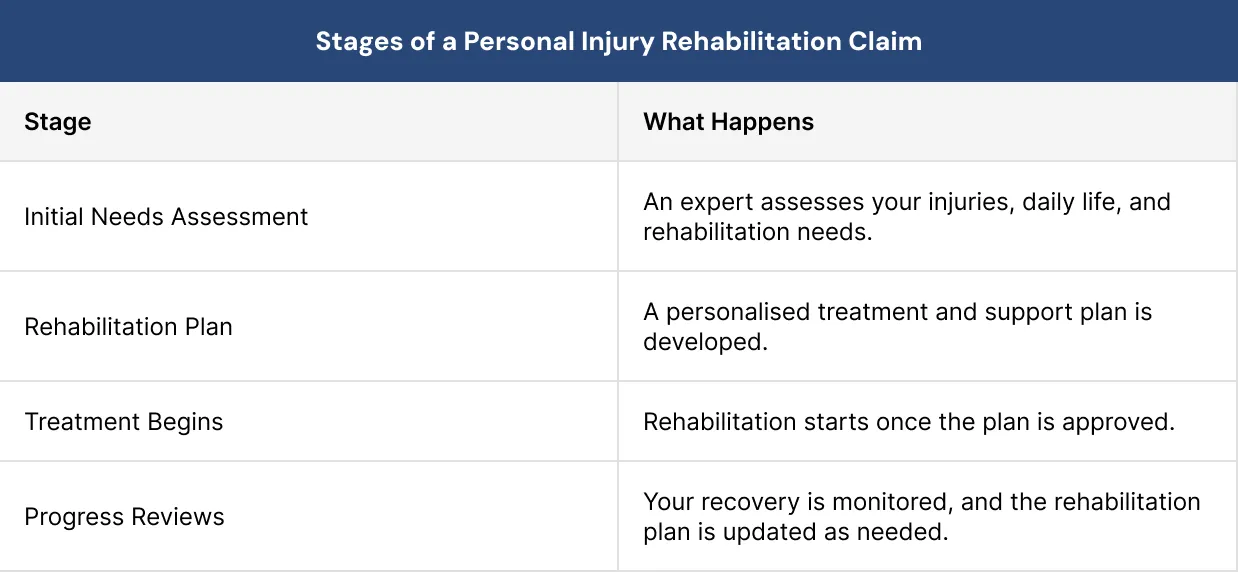
Personal injury rehabilitation claim steps are given below:
Step 1: Initial Needs Assessment (INA)
The first step in a personal injury rehabilitation claim is an Initial Needs Assessment (INA). An expert contacts you to find out how the injury has affected your life. The expert reviews your physical and mental health, work life and daily routine. The expert then evaluates the likely supports you will need to recover. This builds the base for your personal injury rehabilitation claim.
Step 2: Creating a Rehabilitation Plan
After the INA, the expert creates a rehab plan for you. The plan lists the support and care that best suits your recovery. It includes possible care, tests and counselling that will help you recover. Plan details rely on the injury and the effect it has on your life and health. There is no standard checklist that is met.
Step 3: Delivering Rehabilitation
When both parties agree on the plan, the rehab begins. The Rehabilitation Code helps speed up access to early care after an accident. It is meant to provide you timely care without waiting for compensation claims. Timely care prevents further injury and helps you recover quickly.
Step 4: Monitoring Progress
Since recovery doesn’t follow a schedule, the experts remain connected with you. They regularly review your progress throughout the personal injury rehabilitation claim. If your needs change at any point, the expert changes your plan as well. This is meant to ensure you get the right support at every stage of your recovery.
Rehab may be needed in different types of personal injury claims, especially where the injury affects movement, work, mental health or daily life.
The rehabilitation process follows a few simple steps to make sure you receive the right support at the right time.
Case Study: Successful Claim of £13.8 M
The case of Helmot v Simon was successful for the claimant. Manuel Helmot, a former Commonwealth Games cyclist, suffered severe permanent injuries in a road traffic accident. Liability was admitted, so the main issue was how his future losses should be calculated.
The Privy Council upheld the decision that different discount rates could be used for different types of future loss. This helped increase the damages award to around £13.8 million. The case shows why serious injury claims need strong medical evidence, long-term care planning and careful calculation of future needs.
Conclusion
The Rehabilitation Code helps injured claimants access early care, therapy and practical support while their personal injury claim continues. It focuses on recovery, independence and better long-term outcomes. By understanding how the code works, you can make informed decisions and get the right support at the right time. Concise Medico makes the process simple to understand. Our team helps you access the right rehabilitation support and build a stronger personal injury claim. Contact us today to discuss your claim.