Understanding the Limitations and Risks of EMDR Therapy

Published On: June 1st, 2026|Total Views: 1|Daily Views: 1|13.8 min read|2755 words|

TABLE OF CONTENT

Will recalling past experiences help with healing, or can it make things harder before they become easier? This is the most important question that arises regarding the effects of EMDR therapy

EMDR therapy is a form of therapy that allows people to recover from distressing memories by processing these ‘stuck’ memories in the brain by stimulating them with eye movements. The popularity of EMDR therapy is on the rise in the UK for the treatment of PTSD, anxiety and other issues. This therapy enables quicker healing from traumatic experiences compared to most other forms of therapy.

It seems easy to recall memories, but it can be emotionally hard, as there are risks of EMDR therapy. According to NHS England, the demands on mental healthcare in England continue to grow. Along with the increased need for therapies for traumas, concerns about the dangers of EMDR therapy are increasing.

Some patients have experienced severe emotional pain because there are risks of EMDR therapy too. Other patients might have faced symptoms such as anxiety, nightmares, headaches and strong feelings in the therapy session.

So, do consider both pros and cons of the EMDR technique.

Key Takeaways

  • EMDR therapy can help process traumatic memories, but it may also trigger emotional and physical side effects.
  • Common EMDR therapy side effects include anxiety, vivid dreams, headaches, fatigue and emotional sensitivity.
  • The risks of EMDR therapy are higher when trauma is processed too quickly.
  • EMDR is most commonly used for PTSD, but therapists also use it for anxiety and panic disorders.
  • A trained therapist can reduce many dangers of EMDR therapy through grounding and pacing techniques.
  • Some people may need emotional stabilisation before starting EMDR sessions.
  • Avoiding alcohol after EMDR may help emotional processing and sleep quality.
  • Understanding both the benefits and limitations of EMDR helps people make informed decisions.

What Is EMDR Therapy?

EMDR stands for Eye Movement Desensitisation and Reprocessing Therapy. This is a form of psychotherapy that aims at processing traumatic memories in a person’s life. EMDR is mostly used to treat patients suffering from Post-Traumatic Stress Disorder (PTSD) and other mental disorders.

How Does EMDR Therapy Work?

During EMDR, a therapist makes a person focus on traumatic memories while moving eyes, tapping or producing sounds. This technique is called bilateral stimulation.

It helps the brain in processing emotions linked with traumatic memories. It reduces the emotional effect of stored trauma over time. Still, emotional processing might be very strong during the EMDR procedure. So, it is important to know about the risks of EMDR therapy.

Important Detail

EMDR does not erase traumatic memories. It aims to reduce the emotional distress linked to them.

What Are the Stages in EMDR Therapy

EMDR therapy has an organised framework. It has eight stages.

They include:

  • History Taking
  • Preparation
  • Assessment
  • Desensitisation
  • Installation
  • Body Scan
  • Closure
  • Re-Evaluation

But the most important stage is the preparation stage. It involves the development of calming and coping skills by patients before trauma starts. Mostly, the risks of EMDR therapy occur when sessions are rushed.

What EMDR Can Help With?

EMDR can help with conditions such as anxiety disorder, panic attacks and depression. It also helps with phobias and complex trauma. EMDR is mostly popular with those suffering from PTSD. Research support is very strong regarding EMDR and PTSD therapy.

Why EMDR Therapy Has Become So Popular

EMDR therapy has become very popular over the last few years. People nowadays tend to seek a more direct form of therapy for trauma.

Why Some People Choose EMDR over Counselling Sessions

Counselling is something that many people may find hard because of the effort involved in relating traumatic events. It might be easier because the person does not have to relate so much of their life in EMDR sessions.

The structured approach of EMDR and the shorter therapy time might appeal to other people. Even though EMDR is faster, it still does not mean it’s easy. Also, there are risks of EMDR therapy as well.
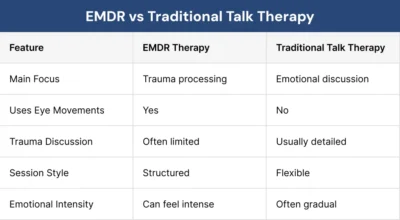
EMDR vs Traditional Talk Therapy

What is the EMDR Therapy Success Rate in the UK

In the UK, EMDR’s NHS talking therapies have a recovery rate for people suffering from PTSD of about 43.6% (with 63% showing improvement). It has been shown in studies that the success of EMDR may be very high while dealing with PTSD. But not everyone responds equally well to this therapy.

Factors influencing the success of EMDR are the degree of trauma suffered, the level of readiness, the experience of the therapist and therapy pace. Why is this important? Because EMDR is not a ‘quick fix’ for all. As there are some risks of EMDR therapy as well.

‘EMDR helps people change the emotions, thoughts, beliefs and behaviours linked to traumatic experiences’

by Sarah Rollins, LMSW, SEP.

Read More: Get PTSD Expert Witness Reports and Testimony Empowering Legal Cases

What Are the Main Risks of EMDR Therapy?

The main risks of EMDR Therapy are as follows:

1. Emotional Pain While Undergoing EMDR Therapy

Among the greatest risks of EMDR therapy is emotional pain. Emotional pain can take the form of anxiety, sadness, anger, fear and crying. Also, some people get emotionally drained after therapy.

2. Can EMDR Create Anxiety?

Yes, EMDR can increase anxiety for a short time. It is usually caused by the activation of the nervous system during the processing of traumatic events. It also comes with the main risks of EMDR therapy.

People may feel restlessness, strong feelings, exhausted and on edge. These feelings usually get better with time for most people. But extreme anxiety needs to be shared with your therapist, as this is one of the risks of EMDR therapy.

Heads Up

Mild emotional distress after EMDR sessions is common. Severe panic or flashbacks should never be ignored.

3. Flashbacks and Re-Traumatisation Risks

EMDR treatment has a chance of retraumatising the patient. For example, flashback episodes could occur during EMDR as it is one of the main risks of EMDR therapy. If the pace is too fast, the emotional distress will be too much for the patient, rather than being useful. So, pacing is vital during EMDR.

4. Dissociation and Emotional Disconnection

It is possible that patients with complex trauma experience some emotional detachment during sessions. Some of the risks of EMDR therapy may involve detachment from reality and emotional numbness.

Calming exercises can help in lowering such experiences and reducing the risks of EMDR therapy. It is essential to note the intensity of emotions during sessions.

What Are the EMDR Therapy Side Effects

There are many EMDR therapy side effects, which are given below:

1. Physical EMDR Therapy Side Effects

Similar to other psychological therapies, EMDR treatment could bring about a few side effects, especially for some people. Typical EMDR therapy side effects can be headache, fatigue, dizziness, muscle tension and nausea.

EMDR therapy side effects are generally short-term. Most practitioners suggest taking rest and staying hydrated after sessions.

2. Sleep Problems and Vivid Dreams

Vivid dreams are among the most common EMDR therapy side effects.

Sleep-related side effects include bad dreams, powerful dreams and poor sleep. It also includes dreams that evoke emotional experiences from memories

This may occur as the brain keeps on feeling emotions after EMDR therapy. For most people, sleep quality eventually improves.

3. Emotional Reactions Between Sessions

It is not uncommon for people to experience an emotional state of being ‘on edge’ before the appointments. Sometimes, even minor situations become overwhelming.

Examples of common EMDR Therapy side effects are mood swings, irritability, mentally tired and sensitivity. This is uncomfortable, yet EMDR therapy side effects will not last for long.

The brain often continues processing information and emotions after EMDR sessions’

by Seth Bolton, Counsellor and Addiction Recovery Expert.

Who Should Be Careful Before Starting EMDR Therapy?

Not everybody will benefit from using EMDR as an entry point into therapy. For some people, it might be necessary to establish emotional stability before starting trauma therapy. So there could be EMDR Therapy side effects as well.

1. People With Severe Dissociation

People with severe dissociation may experience difficulty when engaging in very emotional tasks. EMDR may lead to feeling detached, numbness and detachment from reality. So, calming methods are a must before starting the therapy process.

2. People Experiencing Active Trauma

The use of EMDR might not be right when undergoing active traumatic experiences. For example, domestic violence, living in an unstable environment, active substance abuse and emotional crises. In these cases, safety takes priority.

3. Why No Alcohol After EMDR?

Many people seek information from the internet on: ‘Why should there be no alcohol after EMDR?’ Alcohol is advised against after therapy due to many reasons, as it causes sleep disturbances and numbs emotions.

It alters memory processing. It leads to mood changes. Alcohol consumption could affect the brain’s ability to process normally.

4. People With Specific Health Issues

Some people might require more care before taking EMDR. Specific health issues could include epilepsy, severe migraine attacks and images of health problems. It is vital to seek medical advice before the therapy.

Quick Tip

EMDR should feel challenging, not overwhelming. If sessions feel emotionally unmanageable, the therapy pace may need adjusting.

What Happens During and After an EMDR Session?

It is common for people to be anxious before their EMDR therapy session. The reason behind this may be their lack of awareness regarding what occurs during the process. Knowing what happens during EMDR can help reduce any form of anxiety.

What Occurs During an EMDR Session?

EMDR sessions typically start with calming methods. Some methods therapists might use include focusing on a memory, identifying feelings and following eye movement or tapping patterns.

These sessions are planned out precisely to prevent emotional overload. Still, emotions that are hard to handle can occur during sessions.

How Do People Feel After EMDR Sessions?

People behave differently in EMDR sessions and depending on several things, including how severe the trauma is, emotional preparation for treatment and the treatment phase, the person may have a different experience.

Some people may feel light emotionally, peaceful and relieved. Other people might feel tiredness, anxiety, headaches and strong feelings. These are short-term symptoms that tend to resolve themselves when the brain processes the experience.

How Long Does Emotional Handling Last?

Emotional handling may persist even when the treatment session ends. Some people report experiencing emotional changes for up to a few days following the treatment. One of the reasons therapists make such recommendations is rest, hydration and no alcohol consumption.

Good to Know

Feeling emotional after EMDR does not always mean the therapy is failing. In many cases, it reflects active emotional processing.

What Are the Common Myths About the Risks of EMDR Therapy

The common myths about the risks of EMDR therapy cause unnecessary fear. These myths are given below:

1. EMDR Makes You Forget

The EMDR does not make you forget anything. EMDR tries to decrease the emotional pain related to memories.

2. EMDR Cures You Fast

Some people recover fast, while others require more time. There is no one way to heal from trauma.

3. EMDR Causes False Memories

This is a popular misbelief. It is a therapist’s duty never to force anyone into recalling their traumatic experiences. EMDR deals with emotional experiences rather than forming memories.

4. Everyone Benefits from EMDR

No two people respond similarly to a therapy method. Some people get more from CBT or counselling. That is why a therapy plan must be personal.

How to Lower the Risks of EMDR Therapy

The good part is that several risks of EMDR therapy can be reduced. These can be reduced in the following ways:

1. Get a Trained Therapist

This is one of the key measures. An experienced EMDR therapist will know about pacing trauma and managing emotions. It also includes risks of dissociation and techniques for grounding. Improper sessions increase emotional risks.

2. Develop Coping Skills Before Trauma Work

Calming methods can make clients feel safer during therapy. This involves breathing deeply, mindfulness activities, images of peace and body awareness exercises. They allow people to cope better while undergoing trauma therapy.

3. Allow Yourself Breaks When Needed

People may sometimes be pushed to continue their therapy session due to emotional pressure. But, moving slowly is not only okay but also expected. The best therapists always assess readiness throughout therapy.
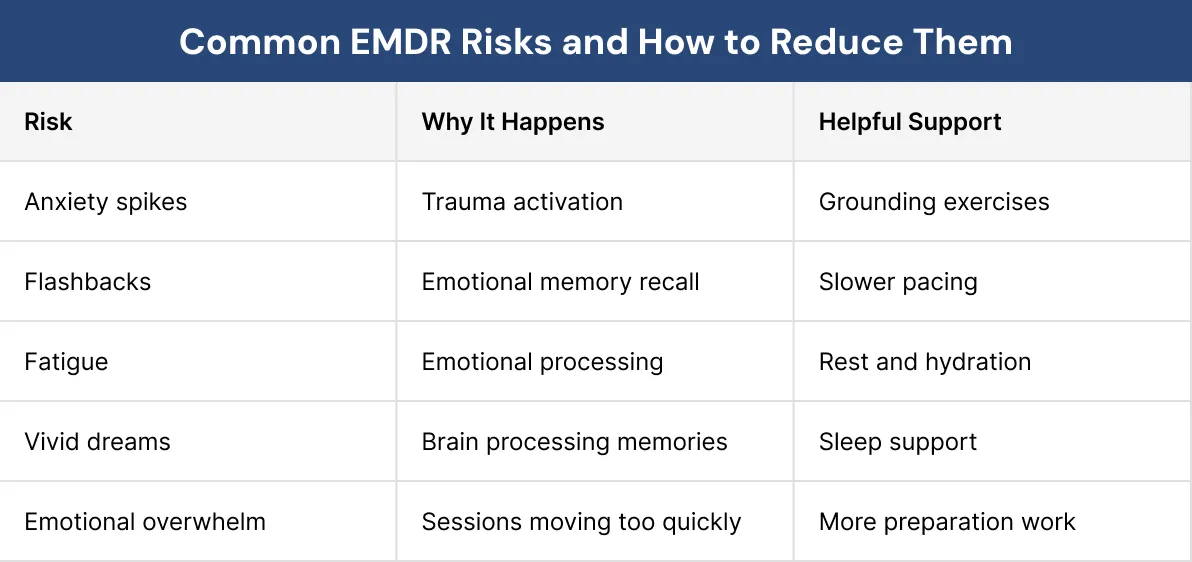
Common EMDR Risks and How to Reduce Them

What Are the Limitations of EMDR Therapy

While EMDR has proven effective for many patients, there are some limitations as well, which are as follows.

1. Researchers Still Debate How EMDR Works

While some researchers focus on eye movements, others argue that the efficacy of EMDR is due to exposure and handling trauma-related emotions. This controversy focuses on the reasons behind the success rather than its existence.

2. EMDR Research Is Strongest for PTSD

Numerous studies prove the effectiveness of EMDR in treating PTSD, both in research articles and statistical data collected by the NHS in the UK.

On the other hand, the evidence for other disorders is still limited and includes eating, psychotic and personality disorders. Also, there is limited access to EMDR in the UK.

3. Access to EMDR Can Be Difficult

It may include barriers such as NHS long waiting times, high prices for private sessions and a lack of trained therapists. This could lead to delays when someone needs EMDR urgently.

Alternatives to EMDR Therapy

The alternatives to EMDR therapy are:

1. Cognitive Behavioural Therapy (CBT)

CBT can help people in recognising and adjusting irrational thoughts. Some common applications for CBT include anxiety, PTSD, panic disorders and depression. Some people may prefer CBT due to its predictable nature.

2. Exposure Therapy

Exposure therapy can help people to heal from their fear associated with trauma. This technique could be helpful for people to heal from avoidance behaviours. But, similar to EMDR, this therapy can be emotionally tough.

3. Mindfulness-Based Therapies

Mindfulness techniques focus on emotional mindfulness and calming the body. These types of therapies can be useful for people struggling with intense trauma. Some examples are Mindfulness-Based Cognitive Therapy (MBCT), breathing and grounding exercises.

4. Why Therapy Should Feel Personal

No therapy is effective in all patients. A therapy plan needs to consider emotional awareness, trauma history and levels of comfort. Mental health requirements should also be considered. That’s why professional evaluation is crucial before starting EMDR.

Case Study: Managing Emotional Pain During EMDR

Each person’s EMDR experience may be different. Some people experience quick improvements. Some require a slow pace.

An article on trauma healing featured a person with PTSD who had intense dreams and anxiety in EMDR sessions, as there are risks of EMDR therapy. The therapist adjusted his pace and focused on calming methods before continuing here with trauma therapy.

Over time, the patient had fewer flashbacks and stable emotions. This shows the importance of pacing and preparing patients for EMDR.

When to Seek Professional Help After EMDR

Talk to a therapist or doctor if you have strong panic attacks. Get help if you have suicidal thoughts. Severe flashbacks also need support. Take help if you feel numb. Trouble with daily tasks is another warning sign. These symptoms may show that your therapy needs adjustment.

When Side Effects Last Too Long

EMDR side effects generally fade away after a few days. Further help is usually required when the side effects persist for a number of weeks. A good therapist should slow the sessions down if things feel too hard. They should not continue if the person feels overwhelmed.

Conclusion

EMDR has proved effective for people who have had traumatic experiences in life. It is just as important to understand the risks of EMDR therapy as the benefits it offers. This is because therapy can trigger anxiety. It may also cause nightmares. Some people feel strong emotions. Flashbacks can also happen.

So, it is vital to be ready before going for EMDR and getting treatment from an experienced EMDR therapist. Not all patients are ready for EMDR directly. Stabilisation is the first thing needed.

At Concise Medico, we understand balanced healthcare content. We focus on evidence-based medical information. If you are looking for professional medical content writing services, do not hesitate to contact us.


Trying to explain complex mental health topics in a clear and reader-friendly way?

Concise Medico helps healthcare brands create accurate, engaging and SEO-focused medical content backed by research and readability best practices. If you need expert healthcare writing support, reach out today.

Trying to explain complex mental health topics in a clear and reader-friendly way?

Concise Medico helps healthcare brands create accurate, engaging and SEO-focused medical content backed by research and readability best practices. If you need expert healthcare writing support, reach out today.

FAQs

What are the negative side effects of EMDR therapy?2026-06-01T05:57:58+00:00

Some of the negative side effects of EMDR therapy may include anxiety, headaches, vivid dreams, fatigue and emotional stress. These effects are usually temporary and improve with time.

Does EMDR cause anxiety?2026-06-01T05:58:37+00:00

Yes, EMDR can cause anxiety for a short period because traumatic memories become emotionally active during sessions. Most people notice these feelings reduce as therapy progresses.

What is the success rate of EMDR?2026-06-01T05:59:26+00:00

The success rate of EMDR is considered high for PTSD and trauma treatment in many studies. However, results can vary depending on the person, trauma history and therapy pace.

Why no alcohol after EMDR?2026-06-01T06:00:08+00:00

Therapists often advise avoiding alcohol after EMDR because it can affect emotional processing and sleep quality. Alcohol may also interfere with the brain’s ability to process trauma memories properly.

Who should avoid EMDR therapy?2026-06-01T06:00:48+00:00

People experiencing severe dissociation, active trauma, or emotional instability may need stabilisation before starting EMDR treatment.

Share This Article!

Will recalling past experiences help with healing, or can it make things harder before they become easier? This is the most important question that arises regarding the effects of EMDR therapy

EMDR therapy is a form of therapy that allows people to recover from distressing memories by processing these ‘stuck’ memories in the brain by stimulating them with eye movements. The popularity of EMDR therapy is on the rise in the UK for the treatment of PTSD, anxiety and other issues. This therapy enables quicker healing from traumatic experiences compared to most other forms of therapy.

It seems easy to recall memories, but it can be emotionally hard, as there are risks of EMDR therapy. According to NHS England, the demands on mental healthcare in England continue to grow. Along with the increased need for therapies for traumas, concerns about the dangers of EMDR therapy are increasing.

Some patients have experienced severe emotional pain because there are risks of EMDR therapy too. Other patients might have faced symptoms such as anxiety, nightmares, headaches and strong feelings in the therapy session.

So, do consider both pros and cons of the EMDR technique.

Key Takeaways

  • EMDR therapy can help process traumatic memories, but it may also trigger emotional and physical side effects.
  • Common EMDR therapy side effects include anxiety, vivid dreams, headaches, fatigue and emotional sensitivity.
  • The risks of EMDR therapy are higher when trauma is processed too quickly.
  • EMDR is most commonly used for PTSD, but therapists also use it for anxiety and panic disorders.
  • A trained therapist can reduce many dangers of EMDR therapy through grounding and pacing techniques.
  • Some people may need emotional stabilisation before starting EMDR sessions.
  • Avoiding alcohol after EMDR may help emotional processing and sleep quality.
  • Understanding both the benefits and limitations of EMDR helps people make informed decisions.

What Is EMDR Therapy?

EMDR stands for Eye Movement Desensitisation and Reprocessing Therapy. This is a form of psychotherapy that aims at processing traumatic memories in a person’s life. EMDR is mostly used to treat patients suffering from Post-Traumatic Stress Disorder (PTSD) and other mental disorders.

How Does EMDR Therapy Work?

During EMDR, a therapist makes a person focus on traumatic memories while moving eyes, tapping or producing sounds. This technique is called bilateral stimulation.

It helps the brain in processing emotions linked with traumatic memories. It reduces the emotional effect of stored trauma over time. Still, emotional processing might be very strong during the EMDR procedure. So, it is important to know about the risks of EMDR therapy.

Important Detail

EMDR does not erase traumatic memories. It aims to reduce the emotional distress linked to them.

What Are the Stages in EMDR Therapy

EMDR therapy has an organised framework. It has eight stages.

They include:

  • History Taking
  • Preparation
  • Assessment
  • Desensitisation
  • Installation
  • Body Scan
  • Closure
  • Re-Evaluation

But the most important stage is the preparation stage. It involves the development of calming and coping skills by patients before trauma starts. Mostly, the risks of EMDR therapy occur when sessions are rushed.

What EMDR Can Help With?

EMDR can help with conditions such as anxiety disorder, panic attacks and depression. It also helps with phobias and complex trauma. EMDR is mostly popular with those suffering from PTSD. Research support is very strong regarding EMDR and PTSD therapy.

Why EMDR Therapy Has Become So Popular

EMDR therapy has become very popular over the last few years. People nowadays tend to seek a more direct form of therapy for trauma.

Why Some People Choose EMDR over Counselling Sessions

Counselling is something that many people may find hard because of the effort involved in relating traumatic events. It might be easier because the person does not have to relate so much of their life in EMDR sessions.

The structured approach of EMDR and the shorter therapy time might appeal to other people. Even though EMDR is faster, it still does not mean it’s easy. Also, there are risks of EMDR therapy as well.

EMDR vs Traditional Talk Therapy

What is the EMDR Therapy Success Rate in the UK

In the UK, EMDR’s NHS talking therapies have a recovery rate for people suffering from PTSD of about 43.6% (with 63% showing improvement). It has been shown in studies that the success of EMDR may be very high while dealing with PTSD. But not everyone responds equally well to this therapy.

Factors influencing the success of EMDR are the degree of trauma suffered, the level of readiness, the experience of the therapist and therapy pace. Why is this important? Because EMDR is not a ‘quick fix’ for all. As there are some risks of EMDR therapy as well.

‘EMDR helps people change the emotions, thoughts, beliefs and behaviours linked to traumatic experiences’

by Sarah Rollins, LMSW, SEP.

Read More: Get PTSD Expert Witness Reports and Testimony Empowering Legal Cases

What Are the Main Risks of EMDR Therapy?

The main risks of EMDR Therapy are as follows:

1. Emotional Pain While Undergoing EMDR Therapy

Among the greatest risks of EMDR therapy is emotional pain. Emotional pain can take the form of anxiety, sadness, anger, fear and crying. Also, some people get emotionally drained after therapy.

2. Can EMDR Create Anxiety?

Yes, EMDR can increase anxiety for a short time. It is usually caused by the activation of the nervous system during the processing of traumatic events. It also comes with the main risks of EMDR therapy.

People may feel restlessness, strong feelings, exhausted and on edge. These feelings usually get better with time for most people. But extreme anxiety needs to be shared with your therapist, as this is one of the risks of EMDR therapy.

Heads Up

Mild emotional distress after EMDR sessions is common. Severe panic or flashbacks should never be ignored.

3. Flashbacks and Re-Traumatisation Risks

EMDR treatment has a chance of retraumatising the patient. For example, flashback episodes could occur during EMDR as it is one of the main risks of EMDR therapy. If the pace is too fast, the emotional distress will be too much for the patient, rather than being useful. So, pacing is vital during EMDR.

4. Dissociation and Emotional Disconnection

It is possible that patients with complex trauma experience some emotional detachment during sessions. Some of the risks of EMDR therapy may involve detachment from reality and emotional numbness.

Calming exercises can help in lowering such experiences and reducing the risks of EMDR therapy. It is essential to note the intensity of emotions during sessions.

What Are the EMDR Therapy Side Effects

There are many EMDR therapy side effects, which are given below:

1. Physical EMDR Therapy Side Effects

Similar to other psychological therapies, EMDR treatment could bring about a few side effects, especially for some people. Typical EMDR therapy side effects can be headache, fatigue, dizziness, muscle tension and nausea.

EMDR therapy side effects are generally short-term. Most practitioners suggest taking rest and staying hydrated after sessions.

2. Sleep Problems and Vivid Dreams

Vivid dreams are among the most common EMDR therapy side effects.

Sleep-related side effects include bad dreams, powerful dreams and poor sleep. It also includes dreams that evoke emotional experiences from memories

This may occur as the brain keeps on feeling emotions after EMDR therapy. For most people, sleep quality eventually improves.

3. Emotional Reactions Between Sessions

It is not uncommon for people to experience an emotional state of being ‘on edge’ before the appointments. Sometimes, even minor situations become overwhelming.

Examples of common EMDR Therapy side effects are mood swings, irritability, mentally tired and sensitivity. This is uncomfortable, yet EMDR therapy side effects will not last for long.

The brain often continues processing information and emotions after EMDR sessions’

by Seth Bolton, Counsellor and Addiction Recovery Expert.

Who Should Be Careful Before Starting EMDR Therapy?

Not everybody will benefit from using EMDR as an entry point into therapy. For some people, it might be necessary to establish emotional stability before starting trauma therapy. So there could be EMDR Therapy side effects as well.

1. People With Severe Dissociation

People with severe dissociation may experience difficulty when engaging in very emotional tasks. EMDR may lead to feeling detached, numbness and detachment from reality. So, calming methods are a must before starting the therapy process.

2. People Experiencing Active Trauma

The use of EMDR might not be right when undergoing active traumatic experiences. For example, domestic violence, living in an unstable environment, active substance abuse and emotional crises. In these cases, safety takes priority.

3. Why No Alcohol After EMDR?

Many people seek information from the internet on: ‘Why should there be no alcohol after EMDR?’ Alcohol is advised against after therapy due to many reasons, as it causes sleep disturbances and numbs emotions.

It alters memory processing. It leads to mood changes. Alcohol consumption could affect the brain’s ability to process normally.

4. People With Specific Health Issues

Some people might require more care before taking EMDR. Specific health issues could include epilepsy, severe migraine attacks and images of health problems. It is vital to seek medical advice before the therapy.

Quick Tip

EMDR should feel challenging, not overwhelming. If sessions feel emotionally unmanageable, the therapy pace may need adjusting.

What Happens During and After an EMDR Session?

It is common for people to be anxious before their EMDR therapy session. The reason behind this may be their lack of awareness regarding what occurs during the process. Knowing what happens during EMDR can help reduce any form of anxiety.

What Occurs During an EMDR Session?

EMDR sessions typically start with calming methods. Some methods therapists might use include focusing on a memory, identifying feelings and following eye movement or tapping patterns.

These sessions are planned out precisely to prevent emotional overload. Still, emotions that are hard to handle can occur during sessions.

How Do People Feel After EMDR Sessions?

People behave differently in EMDR sessions and depending on several things, including how severe the trauma is, emotional preparation for treatment and the treatment phase, the person may have a different experience.

Some people may feel light emotionally, peaceful and relieved. Other people might feel tiredness, anxiety, headaches and strong feelings. These are short-term symptoms that tend to resolve themselves when the brain processes the experience.

How Long Does Emotional Handling Last?

Emotional handling may persist even when the treatment session ends. Some people report experiencing emotional changes for up to a few days following the treatment. One of the reasons therapists make such recommendations is rest, hydration and no alcohol consumption.

Good to Know

Feeling emotional after EMDR does not always mean the therapy is failing. In many cases, it reflects active emotional processing.

What Are the Common Myths About the Risks of EMDR Therapy

The common myths about the risks of EMDR therapy cause unnecessary fear. These myths are given below:

1. EMDR Makes You Forget

The EMDR does not make you forget anything. EMDR tries to decrease the emotional pain related to memories.

2. EMDR Cures You Fast

Some people recover fast, while others require more time. There is no one way to heal from trauma.

3. EMDR Causes False Memories

This is a popular misbelief. It is a therapist’s duty never to force anyone into recalling their traumatic experiences. EMDR deals with emotional experiences rather than forming memories.

4. Everyone Benefits from EMDR

No two people respond similarly to a therapy method. Some people get more from CBT or counselling. That is why a therapy plan must be personal.

How to Lower the Risks of EMDR Therapy

The good part is that several risks of EMDR therapy can be reduced. These can be reduced in the following ways:

1. Get a Trained Therapist

This is one of the key measures. An experienced EMDR therapist will know about pacing trauma and managing emotions. It also includes risks of dissociation and techniques for grounding. Improper sessions increase emotional risks.

2. Develop Coping Skills Before Trauma Work

Calming methods can make clients feel safer during therapy. This involves breathing deeply, mindfulness activities, images of peace and body awareness exercises. They allow people to cope better while undergoing trauma therapy.

3. Allow Yourself Breaks When Needed

People may sometimes be pushed to continue their therapy session due to emotional pressure. But, moving slowly is not only okay but also expected. The best therapists always assess readiness throughout therapy.

Common EMDR Risks and How to Reduce Them

What Are the Limitations of EMDR Therapy

While EMDR has proven effective for many patients, there are some limitations as well, which are as follows.

1. Researchers Still Debate How EMDR Works

While some researchers focus on eye movements, others argue that the efficacy of EMDR is due to exposure and handling trauma-related emotions. This controversy focuses on the reasons behind the success rather than its existence.

2. EMDR Research Is Strongest for PTSD

Numerous studies prove the effectiveness of EMDR in treating PTSD, both in research articles and statistical data collected by the NHS in the UK.

On the other hand, the evidence for other disorders is still limited and includes eating, psychotic and personality disorders. Also, there is limited access to EMDR in the UK.

3. Access to EMDR Can Be Difficult

It may include barriers such as NHS long waiting times, high prices for private sessions and a lack of trained therapists. This could lead to delays when someone needs EMDR urgently.

Alternatives to EMDR Therapy

The alternatives to EMDR therapy are:

1. Cognitive Behavioural Therapy (CBT)

CBT can help people in recognising and adjusting irrational thoughts. Some common applications for CBT include anxiety, PTSD, panic disorders and depression. Some people may prefer CBT due to its predictable nature.

2. Exposure Therapy

Exposure therapy can help people to heal from their fear associated with trauma. This technique could be helpful for people to heal from avoidance behaviours. But, similar to EMDR, this therapy can be emotionally tough.

3. Mindfulness-Based Therapies

Mindfulness techniques focus on emotional mindfulness and calming the body. These types of therapies can be useful for people struggling with intense trauma. Some examples are Mindfulness-Based Cognitive Therapy (MBCT), breathing and grounding exercises.

4. Why Therapy Should Feel Personal

No therapy is effective in all patients. A therapy plan needs to consider emotional awareness, trauma history and levels of comfort. Mental health requirements should also be considered. That’s why professional evaluation is crucial before starting EMDR.

Case Study: Managing Emotional Pain During EMDR

Each person’s EMDR experience may be different. Some people experience quick improvements. Some require a slow pace.

An article on trauma healing featured a person with PTSD who had intense dreams and anxiety in EMDR sessions, as there are risks of EMDR therapy. The therapist adjusted his pace and focused on calming methods before continuing here with trauma therapy.

Over time, the patient had fewer flashbacks and stable emotions. This shows the importance of pacing and preparing patients for EMDR.

When to Seek Professional Help After EMDR

Talk to a therapist or doctor if you have strong panic attacks. Get help if you have suicidal thoughts. Severe flashbacks also need support. Take help if you feel numb. Trouble with daily tasks is another warning sign. These symptoms may show that your therapy needs adjustment.

When Side Effects Last Too Long

EMDR side effects generally fade away after a few days. Further help is usually required when the side effects persist for a number of weeks. A good therapist should slow the sessions down if things feel too hard. They should not continue if the person feels overwhelmed.

Conclusion

EMDR has proved effective for people who have had traumatic experiences in life. It is just as important to understand the risks of EMDR therapy as the benefits it offers. This is because therapy can trigger anxiety. It may also cause nightmares. Some people feel strong emotions. Flashbacks can also happen.

So, it is vital to be ready before going for EMDR and getting treatment from an experienced EMDR therapist. Not all patients are ready for EMDR directly. Stabilisation is the first thing needed.

At Concise Medico, we understand balanced healthcare content. We focus on evidence-based medical information. If you are looking for professional medical content writing services, do not hesitate to contact us.
Trying to explain complex mental health topics in a clear and reader-friendly way?

Concise Medico helps healthcare brands create accurate, engaging and SEO-focused medical content backed by research and readability best practices. If you need expert healthcare writing support, reach out today.

Trying to explain complex mental health topics in a clear and reader-friendly way?

Concise Medico helps healthcare brands create accurate, engaging and SEO-focused medical content backed by research and readability best practices. If you need expert healthcare writing support, reach out today.

FAQs

What are the negative side effects of EMDR therapy?2026-06-01T05:57:58+00:00

Some of the negative side effects of EMDR therapy may include anxiety, headaches, vivid dreams, fatigue and emotional stress. These effects are usually temporary and improve with time.

Does EMDR cause anxiety?2026-06-01T05:58:37+00:00

Yes, EMDR can cause anxiety for a short period because traumatic memories become emotionally active during sessions. Most people notice these feelings reduce as therapy progresses.

What is the success rate of EMDR?2026-06-01T05:59:26+00:00

The success rate of EMDR is considered high for PTSD and trauma treatment in many studies. However, results can vary depending on the person, trauma history and therapy pace.

Why no alcohol after EMDR?2026-06-01T06:00:08+00:00

Therapists often advise avoiding alcohol after EMDR because it can affect emotional processing and sleep quality. Alcohol may also interfere with the brain’s ability to process trauma memories properly.

Who should avoid EMDR therapy?2026-06-01T06:00:48+00:00

People experiencing severe dissociation, active trauma, or emotional instability may need stabilisation before starting EMDR treatment.

Go to Top