TABLE OF CONTENT
What Scans Are Done After a Car Accident in the UK?
In 2025, road accidents left around 127,870 people in the UK injured or dead. Big number, right? It clearly shows one thing. Never ignore a car accident, no matter how small it looks. You might walk away thinking you are completely fine. But some injuries don’t show up right away. You may have internal injuries, soft tissue damage or even a fracture and you might realise it after hours or days.
Doctors recommend a medical scan after a car accident to identify these injuries. However, not everyone needs the same scan after a car accident. The doctors choose the imaging based on your symptoms and suspected injuries. This guide explains what a medical scan is, its common types, when and why they are recommended. It also tells what each type can reveal.
What Is a Medical Scan?
A medical scan is a non-invasive diagnostic tool that examines your internal body structure. It uses diagnostic technologies like X-rays, magnetic fields or sound waves to create detailed images of the inside of your body. Doctors rely on these scans to diagnose diseases, injuries, plan surgeries and monitor how well treatments are working.
What Scans Are Done After a Car Accident in the UK?
Doctors recommend various scans after a car accident in the UK, depending on the extent of your injuries. Among them, X-rays, CT scans and MRIs are the most frequently performed medical scans.
In some cases, doctors also recommend an ultrasound, a PET scan or a fluoroscopy to detect internal hidden injuries. These scans can also identify potential complications from trauma or organ damage.
1. X-Rays
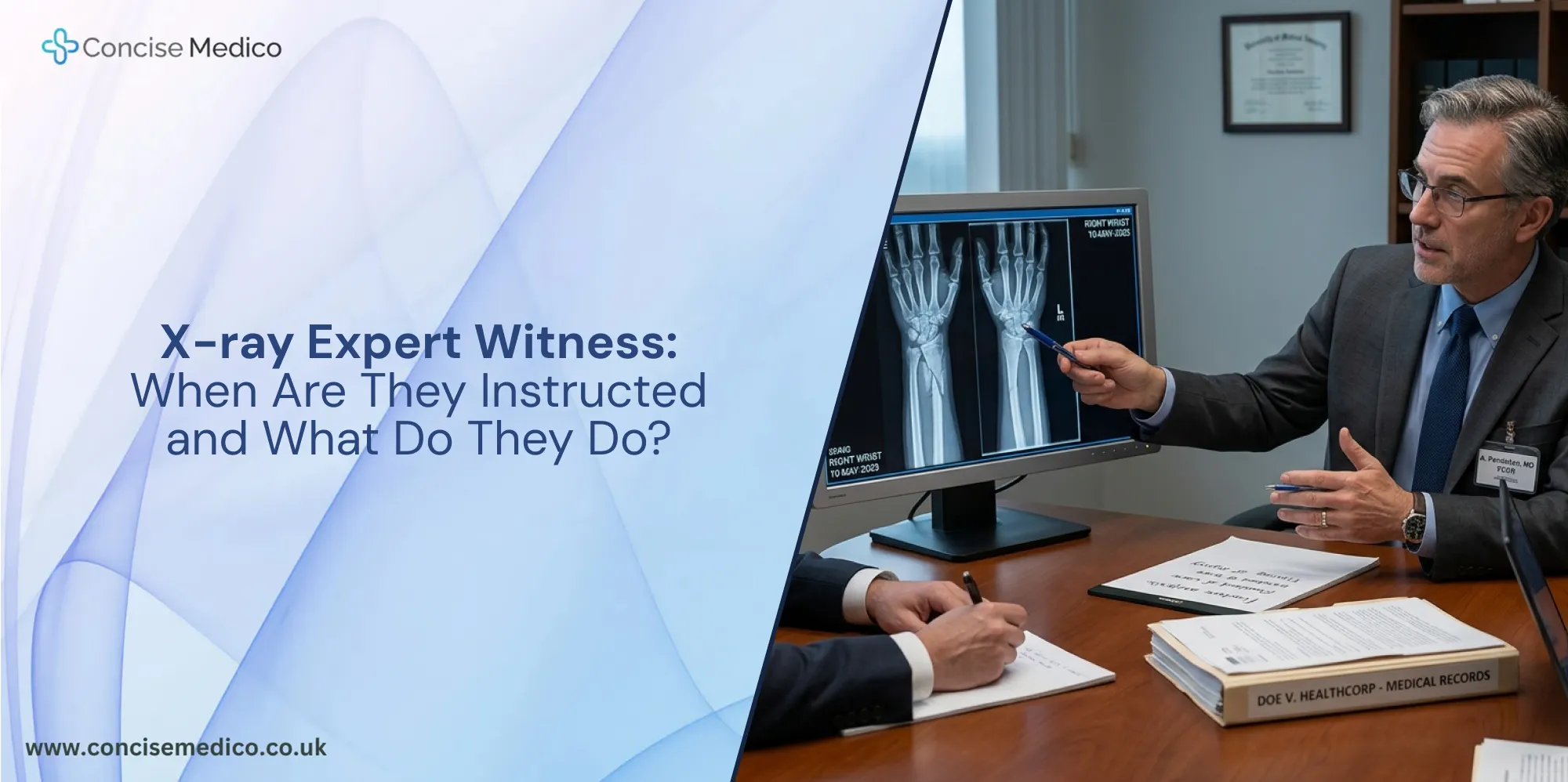
The very first scan that doctors usually recommend after an accident is an X-ray. It is a quick and cost-effective way to check bone damage. In most cases, major injuries are detected easily during the physical check-up. However, for small injuries and dislocations that are not always easy to spot, X-rays are used. X-rays help doctors find those hidden injuries and plan the right treatment.
2. CT Scans
If the situation seems more serious or if you’ve injured your head or abdomen, doctors might recommend a Computed tomography (CT) scan. CT scans are a bit more advanced type of imaging test. They take several X-ray images from different angles and piece them together for a really detailed, cross-sectional image inside your body. CT scans show more than just bones; you can see organs, blood vessels and soft tissue injuries, too. Sometimes, doctors use a special dye during a CT scan to improve the image quality.
A CT scan is often used in emergencies to diagnose various medical conditions, such as infections, cancer and blood vessel problems. In the UK, doctors use a CT scan after a car accident to look for trauma-related injuries. It can detect internal bleeding, damage to organs, broken bones and other serious injuries.
3. MRI
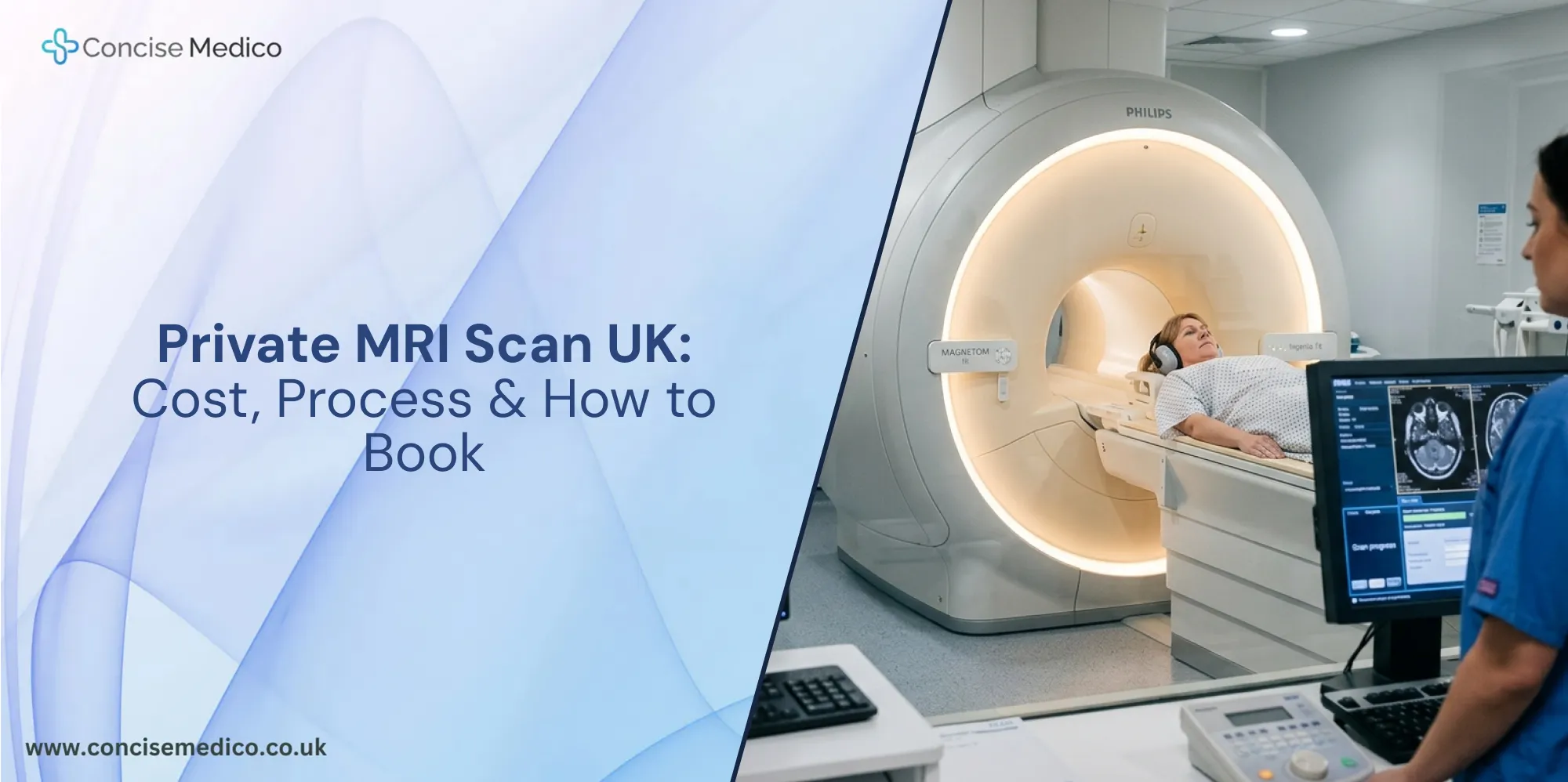
A Magnetic Resonance Imaging (MRI) scan is a painless, radiation-free medical test to check soft tissues, organs and ligaments. It uses strong magnets, radio waves and a computer to create detailed, cross-sectional images of the inside of your body.
Doctors use an MRI scan after a car accident to find injuries that may not appear on X-rays or CT scans. For example, it can detect ligament tears, muscle injuries, bulging or herniated discs and spinal cord injuries.
4. Ultrasound
An ultrasound scan is a safe, painless medical test that uses high-frequency sound waves to create real-time images of the inside of your body. It does not use radiation and is a safe option to diagnose and monitor pregnancies, internal organ pains or swelling. It is also used to monitor unusual symptoms that need a closer look inside the body. Doctors recommend this scan after a car accident to check internal organ damage and fluid or internal bleeding.
5. PET Scans
Positron Emission Tomography (PET) is an advanced medical imaging test that uses a radioactive tracer to detect cellular changes in the body. It scans the tissues and organs working at a metabolic level. This makes it especially helpful to detect traumatic brain injuries.
A doctor injects a small, safe amount of radioactive substance (radiotracer) into the patient’s blood. This tracer shows areas where cells are more active than normal.
Doctors often combine PET scans with CT or MRI to get more precise findings. It is not usually done after a car accident. However, in some cases, doctors recommend it if the symptoms persist despite a normal CT or MRI scan. It may also be recommended to assess possible brain or other injuries that are hard to detect with standard scans.
6. Fluoroscopy
Fluoroscopy is a special imaging scan that uses X-rays to take real-time, moving images of the inside of your body. It is like an X-ray movie that lets doctors monitor the movement of organs and fluids in detail. It is often used with other scans to provide a detailed assessment of the injuries.
After a car accident, fluoroscopy is not routinely used as an initial imaging test. Doctors may recommend it to assess unstable joints and other injuries in real-time and with more precision.
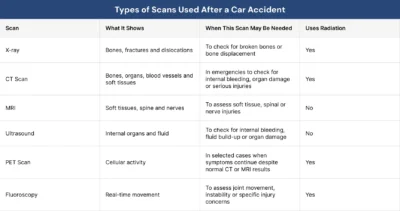
The recommended scan after a car accident depends on your symptoms, physical examination and the doctor’s clinical assessment. The table below explains when each imaging test is typically used for car accident injuries.
How Diagnostic Scans Improved Recovery: Case Study
A driver sustained multiple fractures in a serious road accident. He suffered injuries to the shoulder, elbow, wrist, thigh and knee. Although initial treatment stabilised his injuries, he continued to experience severe pain and mobility problems. This prevented him from returning to work.
Doctors conducted further diagnostic imaging, including MRI scans and independent medical assessments. These scans revealed the full extent of his injuries and helped medical staff develop a rehabilitation plan. Based on the medical evidence, the injured driver received physiotherapy, pain management, occupational therapy and vocational support.
The comprehensive diagnostic findings also played a key role in securing compensation to cover his ongoing treatment and future care needs.
Conclusion
The right scan after a car accident depends on your symptoms and suspected injuries. Early diagnostic imaging helps doctors identify serious conditions quickly, begin the right treatment and reduce the risk of complications.
Concise Medico provides fast access to diagnostic scans after a car accident, including MRI, CT, X-rays, ultrasound and bone scans. Contact us today to find out how our diagnostic services can support your recovery.