TABLE OF CONTENT
- Key Takeaways:
- Who Is a Clinical Psychologist?
- What Are the Problems that Clinical Psychologists Can Treat?
- What is the Role of a Clinical Psychologist
- Role of Clinical Psychologist in Modern Healthcare
- Clinical Psychologists’ Roles in Various Healthcare
- How Clinical Psychologists Treat Patients
- Clinical Psychologist Job Role and Main Duties
- Required Skills to Work Successfully as a Clinical Psychologist
- Are Clinical Psychologists Qualified Enough to Write Prescriptions to Patients?
- How a Clinical Psychologist and a Psychiatrist Differ
- How to Become a Clinical Psychologist in the UK
- Differences Among Counsellors, Therapists and Clinical Psychologists
- Who Works With Clinical Psychologists?
- How Do They Conduct a Checkup?
- Real-World Example of Clinical Psychology Applied
- Challenges in the Clinical Psychologist Job Role
- Case Study: Anxiety and Work Stress
- Clinical Psychology Demand in the Future in the UK
- Conclusion
- FAQs
What Does a Clinical Psychologist Do?
When stress starts affecting daily tasks, knowing the right person to reach for help is vital.
Stress has become a big issue in the UK, where people have started getting expert help from clinical psychologists. Statistics show that in England, one in four people suffers from mental health problems every year.
There has been a growing focus in the clinical psychology field. It is due to better awareness of keeping good mental care. The role of a clinical psychologist is to help people manage mental issues. It also helps with emotional problems. These issues can be stress, low mood, PTSD, addiction and mental stress.
Who Is a Clinical Psychologist?
To understand the role of a clinical psychologist, it is necessary to know who a clinical psychologist is.
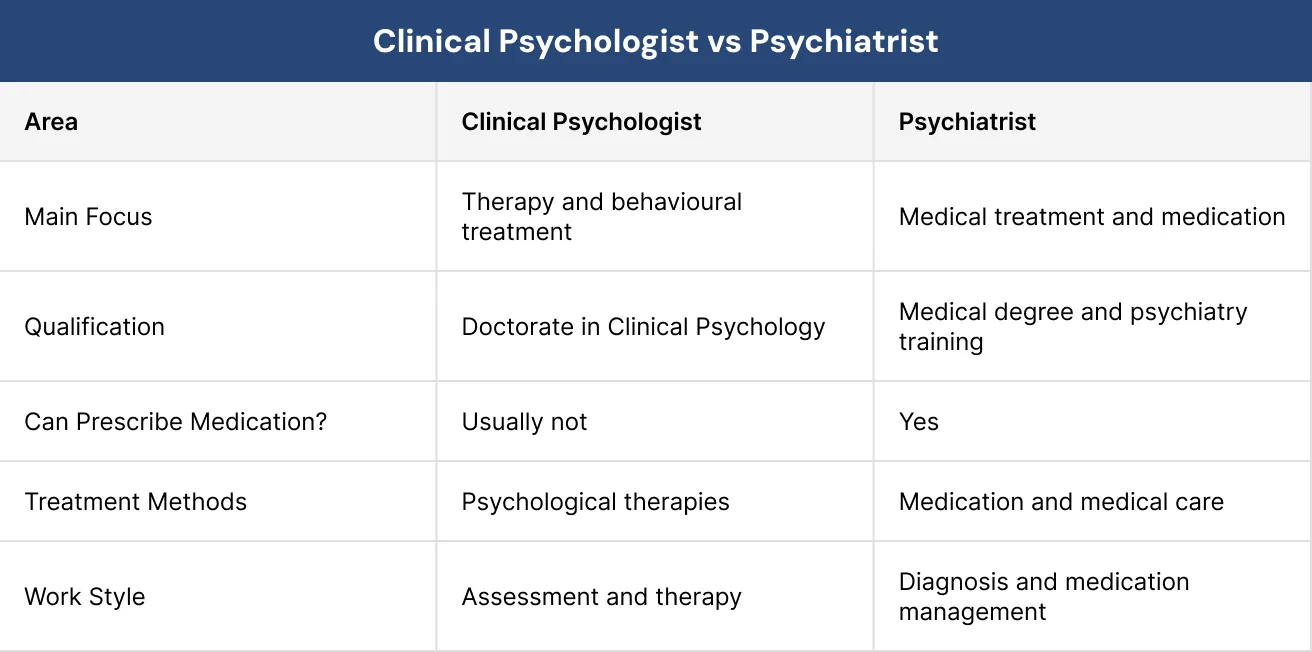
A clinical psychologist is a mental health expert who can check and treat patients for their mental or behavioural problems. Clinical psychologists help patients by teaching them about ways of coping with their daily problems. Clinical psychologists cannot give medicine, unlike psychiatrists.
What Are the Problems that Clinical Psychologists Can Treat?
They help people deal with many cases, such as:
- Stress issues
- Depression
- PTSD
- Addictions
- Trouble eating
- Relationships issues
- Stress and burnout
- Behavioural problems
What is the Role of a Clinical Psychologist
The role of a clinical psychologist involves different jobs each day because of different patient needs. It includes checking patients, giving therapy, offering care and giving emotional support. This involves scientific and social ways.
1. Checking Mental Issues
Their main role is to do checking. It includes talking to patients, observing behaviour and doing mental tests. It also includes checking medical history. This helps in finding the main causes of people’s psychological health.
2. Finding Psychological Problems
Mental issues can be found through careful checking and evaluation. Common problems include depression, stress issues, OCD, PTSD and symptoms of Autism Spectrum. Treatment is right when the right issue is found.
3. Giving Therapy and Psychological Support
Therapy is a key element of the role of a clinical psychologist. The choice of therapy depends on the person’s problems. Types of therapy which are commonly used are CBT, Behavioural therapy, Family therapy, Group therapy and Trauma therapy.
This is the key part of the role of a clinical psychologist is to understand a person’s thoughts, feelings and behaviours. The role of a clinical psychologist is to understand patients’ thoughts, emotions and behaviour patterns. It helps them discover the core of the problem.
In the next stage, a psychologist develops individual programs and selects the right therapies that will help in recovery.
Role of Clinical Psychologist in Modern Healthcare
The role of a clinical psychologist is important because mental issues can affect daily life, work and health. They help manage emotions and improve coping skills.
1. Improve Early Mental Health Support
These issues need early help to stop them from getting worse. This is a very important part of the role of a clinical psychologist in medicine. They help to find emotional triggers, control stress levels, improve daily life and create coping skills.
2. Helping People Improve Daily Life
The role of a clinical psychologist is not only about diagnosing mental issues. They also focus on improving a person’s daily life and overall well-being. This includes trouble sleeping, work stress, social issues, poor confidence and emotional stress.
3. Helping Families and Caretakers
Mental care issues can also harm families. The clinical psychologist can advise parents, spouses or carers on helping the person who suffers from mental issues.
This shows how important the role of a clinical psychologist is in modern UK healthcare.
Clinical Psychologists’ Roles in Various Healthcare
The role of a clinical psychologist is not limited to hospitals or clinics. They work in different industries.
1. Working Within the NHS
Clinical psychologists in the UK mostly work in NHS centres. They work in mental health clinics, hospitals and local health teams. They also work in rehab centres and specialist care units.
2. Working at Colleges and Schools
They also help young adults and children in schools. They help with learning difficulties, behaviour issues, school stress and social skills.
3. Working in Private Practice
They can provide online therapy and private sessions. They also offer workplace mental health support and couples therapy.
4. Supporting Patients in Prisons and Social Care
There are different roles of a clinical psychologist. They work in jails, charities, recovery clinics and social service groups. Their role includes risk checks, anger support and addiction care. They also include trauma help and behaviour change programs.
How Clinical Psychologists Treat Patients
Each patient receives a personal care plan. No two patients receive the same care. Clinical psychologists use tested therapies backed by research and medical evidence.
1. CBT
It helps people notice negative thoughts and replace them with healthier behaviours. It is often used for stress problems, depression, panic issues and OCD.
2. Behavioural Therapy
This focuses on changing unhelpful behaviours by using structured techniques. It helps people replace negative habits with healthier and more positive actions over time.
3. Group and Family Therapy
Some issues affect the whole family or the relationship. For these cases, psychologists involve parents, partners, carers and support groups.
“There is no health without mental health” by the World Health Organisation
Clinical Psychologist Job Role and Main Duties
People interested in this area often want to understand the clinical psychologist’s job role. The role of a clinical psychologist includes mental health checks and therapy. It also includes treatment plans and emotional support.
Common Clinical Psychologist Duties
This includes:
- Perform psychological checks
- Provide therapy
- Develop treatment plans
- Track patients’ progress
- Work together with medical experts
- Write clinical reports
- Help family members and carers
- Do research
Research and Practices Based on Evidence
A clinical psychologist’s work also depends on research. This includes psychological studies, therapy checks, service development projects and scholarly papers. This will enhance mental care services in the UK.
Required Skills to Work Successfully as a Clinical Psychologist
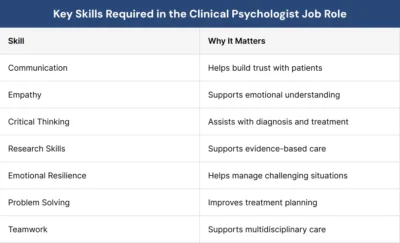
1. Ability to Listen and Explain
Talking to patients takes up the majority of a clinical psychologist’s day. Good communication helps build trust, explain treatment, and support people with emotional problems.
2. Care and Emotional Intelligence
By using care, psychologists can understand how a person feels without being judgmental. This makes patients feel comfortable.
3. Thinking and Research Skills
Clinical psychologists review patient behaviour and check if therapy is helping. Strong research skills also help them use treatments like CBT, behavioural therapy, trauma therapy, and family therapy properly.
Are Clinical Psychologists Qualified Enough to Write Prescriptions to Patients?
In the UK, clinical psychologists are not doctors. So they cannot write prescriptions for patients. They are responsible for talk therapy as well as psychological treatments. But they work with psychiatrists, GPs, nurses and work therapists. If medicine is required, a psychiatrist or a doctor handles it.
How a Clinical Psychologist and a Psychiatrist Differ
Treatment for mental issues is helped by both roles. But there are some differences between them.
How to Become a Clinical Psychologist in the UK
Most people want to know what clinical psychologists do and are also focused in knowing how to become one. In the UK, it takes years of study and training to become a clinical psychologist.
1. College Degree in Psychology
Getting a psychology degree approved by the BPS is the first step toward becoming a clinical psychologist. This gives you the Chartered Membership Graduate Basis (GBC).
2. Gaining Useful Work Experience
Doctorate training involves having work experience. Entry levels include a psychologist’s help, a mental health worker, research help and health care help.
3. Getting a PhD in Clinical Psychology
Students can apply for a PhD in clinical psychology after gaining experience. This involves classroom learning, placements in clinics, performing research and guided practice. Training duration is three years in the UK.
Differences Among Counsellors, Therapists and Clinical Psychologists
Many people use these terms in the same way. But they differ in terms of education and work experience.
Counsellors
Their main role is to give emotional support and talk therapy. They commonly deal with cases like loss, relationship issues, stress and life changes.
Therapists
Therapists help people overcome their emotions and behaviour issues via regular therapy sessions. They usually help people who suffer from anxiety, trauma, stress, depression and relational issues.
Clinical Psychologists
Clinical psychologists are trained mental health experts. They check, diagnose and treat psychological problems using tested therapies. Their training prepares them for senior roles.
Read More: Forensic Psychologist Expert Witness Reports for Unparalleled Success.
Who Works With Clinical Psychologists?
Understanding the population that clinical psychologists serve is crucial. The role of a clinical psychologist differs. They work with people of all ages and races.
1. Children and Young People
Child psychologists help children with behaviour problems and school stress. It also helps with autism issues and emotional control. Child psychologists often work with parents and educators.
2. Adults Dealing with Mental Health Issues
Adults may need help with depression, trauma, workplace issues, addiction and relationships. Treatment programs vary based on the person’s case.
3. Older Adults
Some therapists help older adults. They support dementia and memory loss. They also help with loneliness and grief. They support health-related problems too.
How Do They Conduct a Checkup?
Among other elements, checking is one of the key elements within the role of a clinical psychologist. To start treatment, the psychologist needs to know the patient’s history, experiences and feelings.
1. Initial Talks
This is done via the current issue, medical history, emotional symptoms, relationships and daily habits. This helps in understanding the patient’s needs.
2. Psychological Testing
A mental check is also a part of this. They check memory, attention, personal, emotional control and thinking skills.
3. Treatment Planning
The psychologist uses a personal treatment approach. This includes therapy, behaviour change and coping skills. It also includes family support and teamwork with other experts.
“Mental health needs a great deal of attention. It’s the final taboo.” by Adam Ant
Real-World Example of Clinical Psychology Applied
Let’s get to know a real-life case to better understand what clinical psychologists do.
Example: Supporting Stress and Workplace Burnout
The NHS Services have shown that there is a need for stress services due to the current pandemic. Clinical psychologists help people with many problems. These include panic attacks and workplace burnout.
They also support health stress and sleep problems. They help with emotional exhaustion, too. They used CBT and stress control in the treatment process.
Challenges in the Clinical Psychologist Job Role
There are different challenges in the job role of a clinical psychologist. Though it is rewarding, it can sometimes be emotionally tiring. Clinical psychologists help patients deal with emotional pain and trauma.
1. Managing Difficult Cases
These include risks for self-harming, traumas, addictions and long-term mental illnesses. These issues will need emotional strength and expert help.
2. Heavy Workloads in Mental Health Services
The NHS services still experience high demand in the UK. Such issues put pressure on health experts like clinical psychologists.
3. Keeping Expert Development.
Their tasks involve expert training, clinical guidance, skills learning and research reviews. So that they can offer quality service.
Case Study: Anxiety and Work Stress
A young worker in the UK faced high stress at work. They had low mood and poor sleep. It started affecting daily life. This example helps explain what a clinical psychologist does in real situations.
The person visited a psychologist for support. The psychologist did a full check. They studied thoughts, feelings, and behaviour patterns. The clinical psychologist’s job role included creating a clear treatment plan. The patient received CBT, stress management, and coping skills training.
This reflects the role of a clinical psychologist in helping people manage stress and improve their daily lives. After a few sessions, sleep improved. Anxiety reduced. Work focus also got better.
Clinical Psychology Demand in the Future in the UK
The awareness of mental issues has seen a major rise lately. So, the demand for experts has increased. So, there are different roles of a clinical psychologist.
1. Growing Awareness About Mental Health
More people now understand the value of getting help for emotional wellness. So, there is a growing need for NHS mental health services. There is also more demand for private therapy services. Workplace wellness support is also increasing. Child psychology services are also in higher demand.
2. Growth of Online Therapy Services
Digital healthcare has also changed the role of the clinical psychologist. Many experts now offer online therapy sessions. They also provide remote mental health checks. They offer online support programs, too. Many people have been helped by this.
3. When Should a Person Visit a Clinical Psychologist?
In most cases, people only visit when it is extremely serious. Reaching out to the right expert could have helped much sooner. People should consult a clinical psychologist when they have stress or depression.
They should also visit when having trouble handling stress or PTSD. And also when facing behavioural and relationship problems. A person should also visit when they have problems coping emotionally with daily activities.
Conclusion
Understanding the role of a clinical psychologist helps people make better decisions about mental health support. They help in checking, identifying, and treating emotional and psychological problems.
They will apply their understanding and care to help patients during difficult periods of their lives. The role of a clinical psychologist is vital in supporting mental health across all age groups in the UK.
This field sees growth due to the ever-growing demand for mental care experts across various centres in the UK. At Concise Medico, we understand the value of accurate information on all areas of mental care and treatment. If you need any help related to this area, please feel free to contact us today.