TABLE OF CONTENT
When Is Trauma Surgery Necessary After an Injury
Did you know? The National Major Trauma Registry (NMTR), managed by NHS England, received around 110,000 major trauma cases each year across England, Wales and Ireland. This highlights how serious traumatic injuries remain a major challenge for the NHS.
A serious injury can happen without warning. It may result from a road traffic accident, a fall, a sports injury or an accident at work. While many injuries heal with rest or a cast, some are much more serious. They may damage your bones, organs or blood vessels and require trauma surgery to save your life or prevent long-term injuries.
What Is Trauma Surgery?
Trauma surgery is an emergency surgery which is used to treat serious injuries caused by accidents, falls, violence or other major trauma. The aim is to stop bleeding, repair damaged organs and treat severe injuries when non-surgical treatment is not enough. This type of surgery is often needed when an injury cannot heal safely on its own. Quick treatment can help you prevent further damage and improve recovery.
“Major trauma systems have significantly improved survival and outcomes for seriously injured patients.”
Royal College of Surgeons of England
When Is Trauma Surgery Necessary?
Trauma surgery may be necessary when an injury causes life-threatening bleeding, serious organ damage or loss of blood supply. Doctors only recommend trauma surgery when an injury is severe enough that other treatments are unlikely to work. Their decision depends on the type of injury, the amount of damage and the overall condition of the patient.
Below, we mention injuries that may require trauma surgery.
1. Blunt Trauma
Blunt trauma happens when the body is hit by a strong, external force without piercing the skin. It causes damage through crushing, stretching or acceleration forces. Common causes include:
- Road traffic accidents
- Falls from height
- Sports injuries
- Crush injuries
Although there may not be an open wound, blunt trauma can damage the brain, lungs, liver, spleen or other organs. It can also cause internal bleeding. In many cases, patients can recover without surgery. However, surgery may be necessary if there is:
- Severe internal bleeding
- Organ damage
- An unstable fracture
- Loss of blood supply to an arm or leg
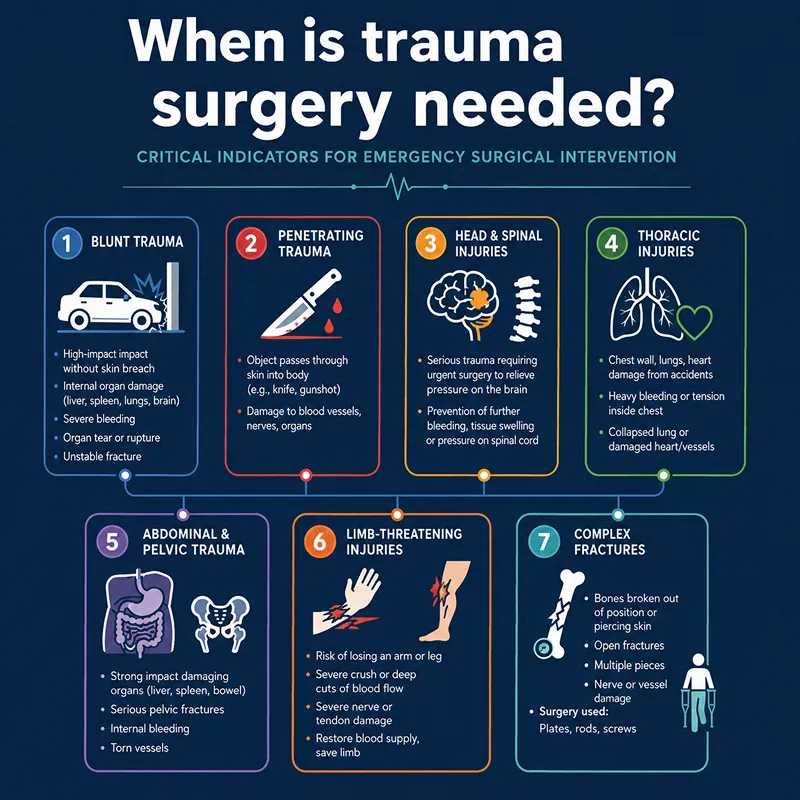
2. Penetrating Trauma
Penetrating trauma occurs when an object passes through the skin and enters the body. Not all penetrating injuries require surgery. Treatment depends on the location and depth of the wound, the structures affected and whether there is serious bleeding or organ damage. Examples include:
- Knife wounds
- Gunshot wounds
- Industrial accidents involving sharp objects
These injuries may damage blood vessels, nerves, muscles or important organs. Some penetrating injuries are small and only need cleaning and stitches.
3. Head and Spinal Injuries
Head and spinal injuries can be very serious. The damages include loss of oxygen, skull fracture, back pain and neck pain. A doctor may recommend trauma surgery if there is:
- Bleeding inside the skull
- Pressure on the brain
- A depressed skull fracture
- An unstable spinal fracture
- Pressure on the spinal cord
The aim of surgery is to reduce pressure, prevent further damage and protect brain or spinal cord function. Doctors often use CT or MRI scans before deciding whether surgery is needed or not.
4. Thoracic Injuries
Thoracic injuries affect the chest wall, lungs, heart, ribs and major blood vessels. These injuries are often a result of road accidents, falls or crush injuries. Not every chest injury needs an operation. Some broken ribs heal with pain relief and rest. However, trauma surgery may be needed if there is:
- Heavy bleeding inside the chest
- A damaged heart or major blood vessel
- A collapsed lung that does not improve with treatment
- A serious injury to the chest wall
Doctors use X-rays, CT scans and ultrasound scans to assess the injury. They also monitor breathing, blood pressure and oxygen levels before deciding on surgery.
5. Abdominal and Pelvic Trauma
The abdomen contains many important organs, including the liver, spleen, stomach, kidneys and intestines. A strong impact of blunt force can damage these organs even if there is no visible wound. While a pelvic injury is damage to the bones, joints or soft tissues of the lower trunk. They are also serious because the pelvis contains large blood vessels.
Doctors may recommend trauma surgery if scans show:
- Internal bleeding
- A torn liver or spleen
- Damage to the bowel
- A serious pelvic fracture
- Injury to major blood vessels
Some patients can be treated without surgery if the bleeding has stopped and the injury is stable. Others need an immediate operation to prevent life-threatening complications.
6. Limb-Threatening Injuries
Limb-threatening injuries are serious injuries that can cause a person to lose an arm or leg if they are not treated quickly. These injuries include the following:
- Severe crush injuries
- Loss of blood flow
- Serious nerve injuries
- Large open wounds
- Badly damaged muscles
In these situations, trauma surgery aims to restore blood flow, repair damaged blood vessels, protect nerves and save as much normal movement as possible.
7. Complex Fractures
A simple fracture often heals with a cast or brace, but a complex fracture is more serious and may need an operation.
Examples include:
- Bone broken into several pieces
- Bone sticking through the skin (open fracture)
- Bone badly out of position
- Fracture with nerve or blood vessel damage
Doctors may use metal plates, screws, rods and pins to hold the bone in the correct position while it heals.
Remember not every complex fracture needs surgery. The decision depends on the type of break, the patient’s health and whether the bone can heal safely without an operation or not.
Who Decides When Trauma Surgery Is Needed?
The decision to perform trauma surgery is made by experienced healthcare professionals after a full assessment. The surgery and trauma team considers:
- The type of injury
- How serious the injury is
- Age of the patient and overall health
- Blood pressure and breathing
- CT scans, MRI scans and X-rays
- The risk of waiting
For patients with major injuries, decisions are often made by a multidisciplinary team. This may include trauma surgeons, orthopaedic surgeons, emergency medicine doctors, general surgeons, anaesthetists, radiologists and critical care specialists.
Each specialist brings different skills to help decide the safest treatment. The team follows UK guidance to make sure every patient receives the right care at the right time.
Case Study: Road Traffic Collision and Trauma Surgery
Graham Huck, a former cycling champion, was hit by a speeding car while he was riding his bicycle near Nottingham. The impact threw him around 60 metres down the road. After this, he suffered a punctured lung, a broken pelvis, five broken ribs and a fractured collarbone.
He was taken to the Nottingham Major Trauma Centre, where a specialist surgery and trauma team quickly assessed his condition. The team carried out emergency treatment and the operations needed to stabilise his injuries.
Graham’s case shows that trauma surgery can be life-saving after severe injuries. Quick assessment, emergency treatment and specialist care at a “major trauma centre” helped him survive and recover.
Conclusion
Trauma surgery becomes necessary when an injury threatens a person’s life, limb or important organs. Serious bleeding, severe fractures, chest injuries and damage to the brain or abdomen often need urgent treatment.
Doctors carefully assess every patient before deciding on surgery. They use physical examinations, scans and national UK guidance to choose the safest treatment. The surgery and trauma team works together to make these decisions and provide the best possible care to the patient. Getting medical help quickly after a serious injury is very important. At Concise Medico, we offer prompt appointments for patients with fractures, sports injuries and traumatic injuries, helping you receive expert care without unnecessary delays.