TABLE OF CONTENT
Have you ever experienced a time when a small injury suddenly made even going back to work feel difficult and uncertain?
An unexpected injury can change your daily life so much that one day everything seems all fine. Then you suddenly find yourself unable to perform simple tasks. It appears that you will be unable to perform your duties as well as you formerly did. You might lose faith and your old way of doing things.
Vocational rehabilitation helps you at this stage. It not only helps you in healing, it also supports your safe return to duty and being ready once again for your work.
According to data from 2022-23 to 2024-25, 623,000 workers in the United Kingdom were wounded in workplace accidents on average per year. This highlights that their working days were missed as a result of the injury.
You should have faith that it is still possible to return to duty with the right help. It takes time but it may happen in a safe and steady manner.
Success is not final, failure is not fatal: it is the courage to continue that counts.
– Winston Churchill, former prime minister of the UK
Key Takeaways
- Vocational rehabilitation helps people return to work after injury or illness
- It helps people get better physically and build their confidence
- Work should fit with a person’s skills and not put them under pressure
- Planning and talking to each other ahead of time increases success
- Legal rights like reasonable adjustments keep workers safe
- Support continues after going back to work
- Long-term unemployment is more likely to happen without help
What Is Vocational Rehabilitation
Vocational rehabilitation is a process that allows you to return to work following an injury or sickness. It helps improve your work ability, confidence and daily function. It is not only medical care but it also includes:
- Social support
- Work planning
- Skill building
The goal is to assist you return to meaningful work that is appropriate for your condition. This type of support is essential because rehabilitation is not always solely physical. You may be worried or even afraid to return to work.
Vocational rehabilitation helps manage both:
- The physical side of recovery
- The emotional side of recovery
The body may heal in weeks when you suffer a back injury. Lifting heavy objects may still feel unsafe. You will need help rebuilding your trust and strength.
Does Everyone Need Vocational Rehabilitation
No, only individuals who are unable to work due to accident or sickness require vocational rehabilitation.
People need vocational rehabilitation:
- who suffer physical injuries
- in the recovery phase after surgery
- with long-term health conditions
- who have mental health issues
- recovering from a brain injury
According to data from 2024-2025, an estimated 1.9 million workers suffered from a condition caused or worsened by their work. This data shows that some people may need support after just two weeks, while others may need months or even years.
Example
The type of job is also important to decide support. A construction worker with a leg injury will require longer time than someone working at a desk. The demands of the job alter the recovery plan.
Is Returning to Work Important After Injuries
Yes, returning to work is about more than just money. It also affects the mental health, routine and confidence of a person.
Long periods away from work can lead to:
- Lower confidence
- Social isolation
- Poor mental health
- Reduced physical activity
Going back to work early without support can cause more harm. Therefore, when recovering from an injury, it is important to do things slowly. The aim is not speed of the recovery. Safety always comes before anything else.
Work can actually help recovery when done in the right way. It helps you feel useful again and builds confidence.
How Does a Return to Work Plan Look Like
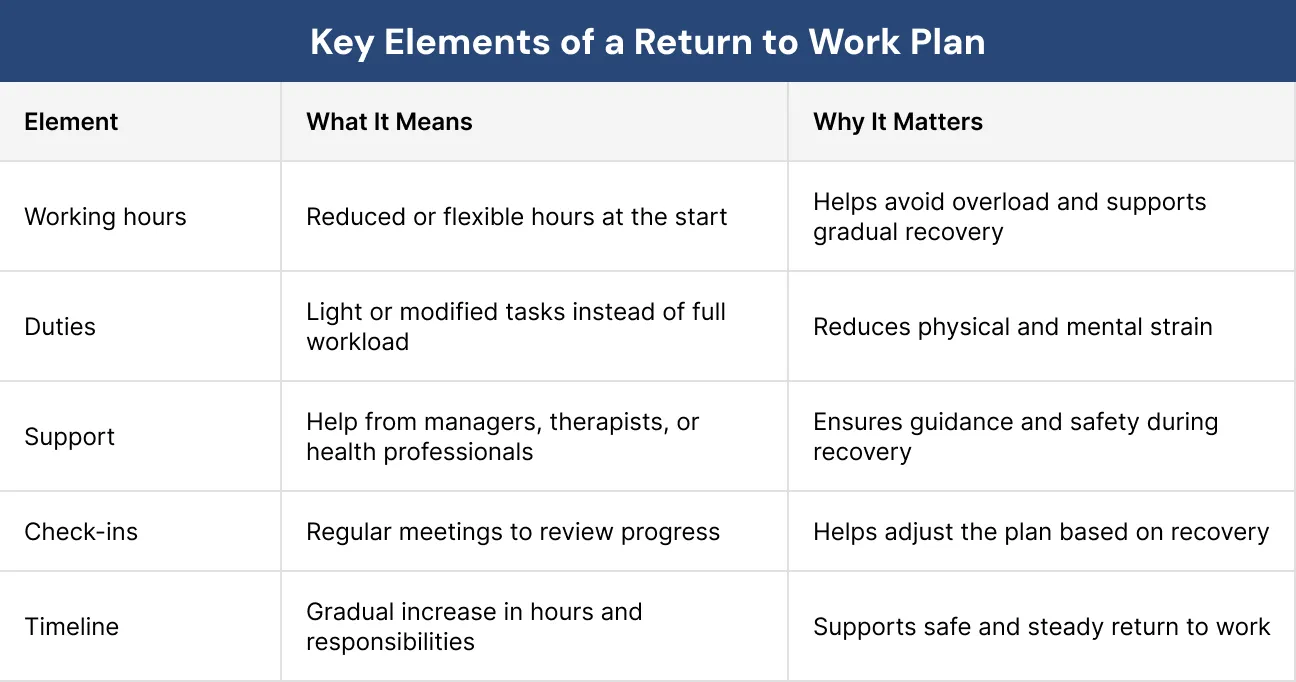
Returning to work should be scheduled so that you may ease back into your employment securely. It includes gradual tasks and active support. You should work at suitable hours that help you rebuild strength and confidence.
This plan is created based on your condition, job role and recovery stage.
It may include:
- Reduced working hours at the start
- Light duties instead of full tasks
- Regular check-ins with managers
- Support from therapists
- Help from health professionals
If you are recovering from an injury, you may start with short shifts. Over time, hours gradually increase to reduce stress.
What Are the Main Types of Return to Work Plans
The two main types of going back to work plans used in the UK are:
1. Phased Return
A phased return focuses on time and working hours increasing slowly over weeks.
For example, following an injury, you could begin with two hours per day and increase by 30 minutes each week.
2. Graded Return
A graded return focuses on tasks and you may work full hours but with lighter duties.
Over time, tasks become more demanding. Both methods aim for a full and safe return to duty. The difference lies in how progress is managed.
Why Must Rehabilitation Be Personalised
Not all injuries have the same effect on you. An injury can have different effects on different people. Rehabilitation needs to be tailored to your physical ability. People also have different job demands and recovery speeds.
This shows why there cannot be one set plan for vocational rehabilitation.
The right help depends on:
- Type of job
- Physical needs
- Being mentally ready
- Goals for yourself
This is also why recovery from an injury needs to be flexible and fit the person.
Example
Two persons can have harmed their knees in the same way. One is a waiter in a hotel, and the other works at an office. The office worker might be back in a week.
What Role Does Confidence Play in Recovery
Confidence is essential in the vocational rehabilitation process. It is one of the most significant impediments to returning to work. It influences how safe and comfortable a person feels upon returning to work.
After an injury, many people worry about:
- Getting injured again
- Not performing well
- Being judged at work
This is also frequent in brain injury therapy, when cognitive changes can impact confidence.
Vocational rehabilitation enables people to move forward. It includes confidence-building support through coaching. It also involves gradual exposure to work activities and good feedback.
What Are the Major Barriers to Returning to Work
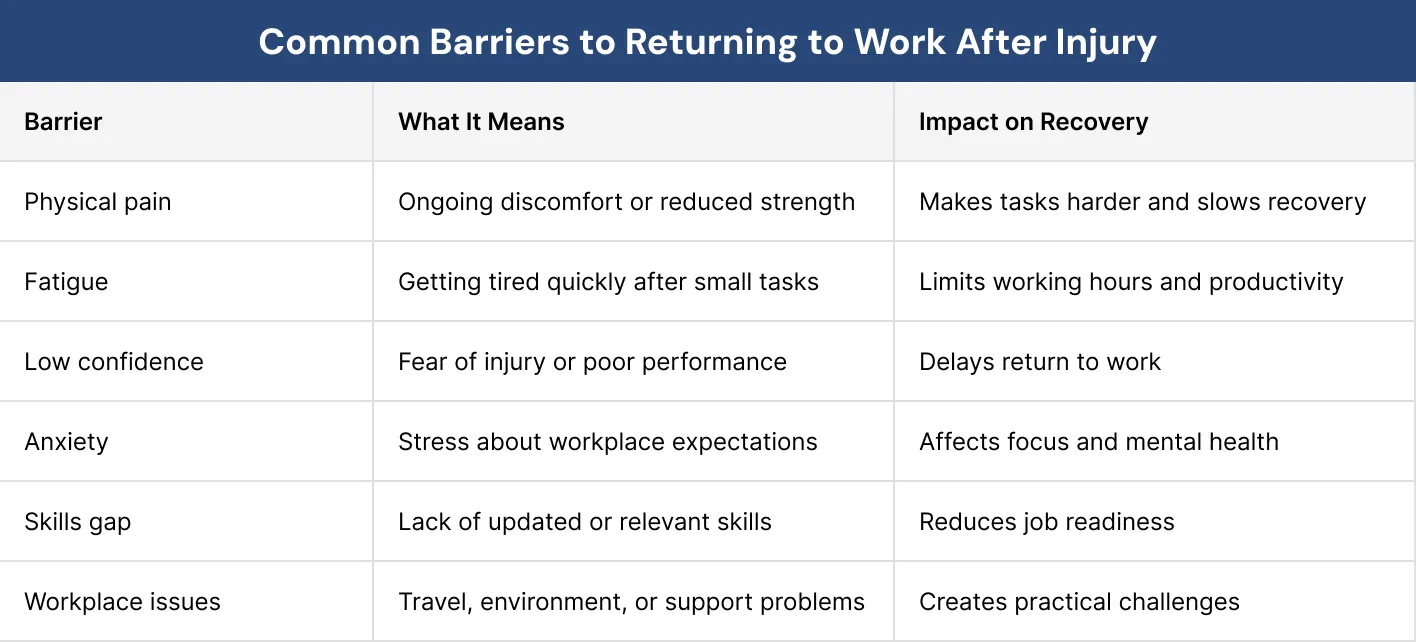
Returning to work is not always simple or effortless. Many challenges can slow down the process. Common barriers include physical limits, low confidence, lack of skills awareness and fear of returning.
Some key barriers include:
- Physical pain or reduced strength
- Fatigue after short tasks
- Anxiety about performance
- Gaps in CV
- Lack of awareness about transferable skills
There are also practical barriers, like travel difficulties, workplace environment and financial concerns. These limitations can result in long-term absences without adequate rehabilitation following an injury.
What Happens if Support is Not Provided
Returning to work becomes much more difficult without assistance. A lack of support might result in unemployment and poor health.
Unemployment can:
- Reduce mental health
- Lower physical activity
- Increase dependency on benefits
Every year in the United Kingdom, thousands of people are forced to leave their jobs permanently owing to injuries.
People may eventually lose confidence and cease working. They may also feel returning is not worth it. This is why vocational rehabilitation is not optional but essential.
How Does Early Communication Help
Communicating early with employers and health professionals helps you return to duty. When communication starts early, employers understand the situation better. They can make improvements while keeping expectations fair.
Health practitioners may also advise employers on:
- Safe duties
- Work limits
- Recovery timelines
This reduces confusion and builds trust.
Employers’ Role in Recovery
Employers play a significant role in the rehabilitation process. Employers support recovery by communicating. They also adjust roles and create a safe return to duty plan.
Employers usually arrange a meeting after a long absence. This helps both sides understand what is needed. Their support is a key part of vocational rehabilitation.
During this discussion, employers may:
- Check if the employee is ready to return
- Share updates about the workplace
- Review medical advice
- Discuss support needs
- Agree on a plan
Good employers stay flexible. They understand that recovery is not always smooth.
Regular check-ins are also necessary. They help identify if:
- The workload is too heavy
- The employee feels tired or stressed
- Adjustments need to be changed
Legal Rights Support in the UK for Employees
Returning to work is not only about recovery. It is also about rights. Employees in the UK are protected by the Equality Act 2010.
This Act gives them the right to reasonable adjustments in the workplace. This enables people to work more comfortably following an injury.
This law prevents individuals from being treated unfairly because of their condition. It also makes returning to work more realistic.
A reasonable adjustment is any change that helps a person perform his job safely and comfortably.
This can include:
- Changing working hours
- Adjusting tasks
- Providing special tools
- Allowing more breaks
If you are healing from an injury, you might need to work shorter shifts at first. Another person suffering from a brain injury could require extra time to finish tasks.
You must consider these adjustments carefully. The changes should be useful and safe for you.
What is Functional Capacity Evaluation?
Sometimes it is unclear what a person can safely do at work. A Functional Capacity Evaluation (FCE) assesses your physical and mental abilities to accomplish work duties.
The FCE looks at:
- Strength and movement
- Ability to complete tasks
- Cognitive function
It helps you understand what kind of work is safe after an injury. This is especially useful in complex cases or after serious injuries.
You may feel ready to return during injury rehabilitation. An assessment helps identify limits that need attention. This prevents further injury and supports long-term recovery.
What help is Still Available After You Go Back to Work
You think everything is fine when you go back to work after an injury. You may still need a support system which includes some steps that help you get back to work.
You may still feel tired, in pain and have trouble adjusting after returning because your energy levels are low following an injury.
This support can include:
- Monitoring the workplace
- Therapist meetings
- Adjustments to tasks
This is more important in brain injury rehabilitation, where recovery can take longer and needs a lot of care. Without this assistance, there is a danger of relapse or extended absence. This is why vocational rehabilitation continues when the individual returns to work.
What Are the Benefits of Vocational Rehabilitation
The benefits are not just for the worker. It benefits businesses and the economy as a whole. Vocational rehabilitation helps patients recover faster, save money, and find long-term employment.
Some important benefits are:
- Faster and safer return to work
- Less long-term absence
- Less expensive for employers
- Better communication between everyone
- Better health and self-esteem
This shows how helpful good support can be. This also highlights why early rehabilitation for injuries is important.
The Effects of Workplace Design on Recovery
Your work environment plays a big role in recovery. Ergonomic (adjusting the work to fit the person) design helps reduce strain and supports a safe return to work.
An ergonomic assessment may look at:
- Desk setup
- Chair support
- Lighting
- Equipment use
Small changes can have a large impact.
Example
- A better chair can reduce back pain
- Proper screen height can reduce neck strain
These changes aid in injury rehabilitation and help to prevent future difficulties.
What Happens if Rehabilitation Does Not Work
It is not always possible to return to the same employment. If rehabilitation does not work, alternative roles, training or support plans may be considered.
In some cases:
- The job might be too hard on your body
- The condition might make some tasks harder
Then, employers may:
- Give people different jobs
- Give training
- Help with job changes
This ensures that the person still has opportunities to work. If you do not take this step, you are more likely to be unemployed for an extended period of time.
Why Quick Action Is Important
Timing is very important for recovery after an injury. Getting help early leads you to better recovery. It also lowers the chances of being absent for a long time from work.
With quick action:
- Recovery goes well
- Confidence grows faster
- Barriers are dealt with sooner
- Delays can cause:
- Loss of routine
- Less motivation
- More trouble coming back
This is why it is critical to begin vocational rehabilitation as soon as feasible.
Case Study
A-38-year old warehouse employee in Manchester got a lower back injury when he had to carry heavy items. The injury caused a sharp pain and it was not safe to resume normal duties.
After six weeks of absence, a vocational rehabilitation plan was implemented. Full warehouse tasks were still too demanding as indicated by a FCE. The phased return was then planned with short shifts and light tasks like inventory checks.
There were also reasonable accommodations that were made by the employer such as lifting aids, change in tasks and more breaks. Together with this, the employee was assisted in restoring confidence and reducing fear of being injured again.
In eight weeks, the worker went back to working part-time more confidently and with reduced pain. At twelve weeks, full-time hours could be done with some task limits remaining.
This case shows that vocational rehabilitation is most effective when it is gradual, practical and tailored to the role of the person and his recovery.
Conclusion
It is difficult for you to resume work after an injury. The hardest part is not the pain. You may also fear not being able to work in the same way again. You are also worried about your old routine.
This is why vocational rehabilitation matters a lot. It helps you move forward in a safe and steady way. It also suits your needs.
A good return to work plan is not about going back fast to work. It is about going back when you feel ready. This is the right time to resume your work . It is only possible with the right support.
Some people may need shorter hours when they return to duty. Others may need lighter duties or extra breaks. They may also need help to build confidence again.
In more difficult cases, you may need:
- Regular checks
- Workplace changes
- Work ability assessments
Recovery should be different for each person. It should match their needs. The same injury affects people in different ways.
The whole process works better when employers, health professionals and workers work together early.
Concise Medico knows that going back to work should not be confusing or unpleasant. The correct counsel can help the process go more smoothly.
Contact us today if you require assistance with planning, strategy or developing the appropriate solutions to help you take the next step. The appropriate team may make a significant difference.
FAQs
Have you ever experienced a time when a small injury suddenly made even going back to work feel difficult and uncertain?
An unexpected injury can change your daily life so much that one day everything seems all fine. Then you suddenly find yourself unable to perform simple tasks. It appears that you will be unable to perform your duties as well as you formerly did. You might lose faith and your old way of doing things.
Vocational rehabilitation helps you at this stage. It not only helps you in healing, it also supports your safe return to duty and being ready once again for your work.
According to data from 2022-23 to 2024-25, 623,000 workers in the United Kingdom were wounded in workplace accidents on average per year. This highlights that their working days were missed as a result of the injury.
You should have faith that it is still possible to return to duty with the right help. It takes time but it may happen in a safe and steady manner.
Success is not final, failure is not fatal: it is the courage to continue that counts.
– Winston Churchill, former prime minister of the UK
Key Takeaways
- Vocational rehabilitation helps people return to work after injury or illness
- It helps people get better physically and build their confidence
- Work should fit with a person’s skills and not put them under pressure
- Planning and talking to each other ahead of time increases success
- Legal rights like reasonable adjustments keep workers safe
- Support continues after going back to work
- Long-term unemployment is more likely to happen without help
What Is Vocational Rehabilitation
Vocational rehabilitation is a process that allows you to return to work following an injury or sickness. It helps improve your work ability, confidence and daily function. It is not only medical care but it also includes:
- Social support
- Work planning
- Skill building
The goal is to assist you return to meaningful work that is appropriate for your condition. This type of support is essential because rehabilitation is not always solely physical. You may be worried or even afraid to return to work.
Vocational rehabilitation helps manage both:
- The physical side of recovery
- The emotional side of recovery
The body may heal in weeks when you suffer a back injury. Lifting heavy objects may still feel unsafe. You will need help rebuilding your trust and strength.
Does Everyone Need Vocational Rehabilitation
No, only individuals who are unable to work due to accident or sickness require vocational rehabilitation.
People need vocational rehabilitation:
- who suffer physical injuries
- in the recovery phase after surgery
- with long-term health conditions
- who have mental health issues
- recovering from a brain injury
According to data from 2024-2025, an estimated 1.9 million workers suffered from a condition caused or worsened by their work. This data shows that some people may need support after just two weeks, while others may need months or even years.
Example
The type of job is also important to decide support. A construction worker with a leg injury will require longer time than someone working at a desk. The demands of the job alter the recovery plan.
Is Returning to Work Important After Injuries
Yes, returning to work is about more than just money. It also affects the mental health, routine and confidence of a person.
Long periods away from work can lead to:
- Lower confidence
- Social isolation
- Poor mental health
- Reduced physical activity
Going back to work early without support can cause more harm. Therefore, when recovering from an injury, it is important to do things slowly. The aim is not speed of the recovery. Safety always comes before anything else.
Work can actually help recovery when done in the right way. It helps you feel useful again and builds confidence.
How Does a Return to Work Plan Look Like
Returning to work should be scheduled so that you may ease back into your employment securely. It includes gradual tasks and active support. You should work at suitable hours that help you rebuild strength and confidence.
This plan is created based on your condition, job role and recovery stage.
It may include:
- Reduced working hours at the start
- Light duties instead of full tasks
- Regular check-ins with managers
- Support from therapists
- Help from health professionals
If you are recovering from an injury, you may start with short shifts. Over time, hours gradually increase to reduce stress.
What Are the Main Types of Return to Work Plans
The two main types of going back to work plans used in the UK are:
1. Phased Return
A phased return focuses on time and working hours increasing slowly over weeks.
For example, following an injury, you could begin with two hours per day and increase by 30 minutes each week.
2. Graded Return
A graded return focuses on tasks and you may work full hours but with lighter duties.
Over time, tasks become more demanding. Both methods aim for a full and safe return to duty. The difference lies in how progress is managed.
Why Must Rehabilitation Be Personalised
Not all injuries have the same effect on you. An injury can have different effects on different people. Rehabilitation needs to be tailored to your physical ability. People also have different job demands and recovery speeds.
This shows why there cannot be one set plan for vocational rehabilitation.
The right help depends on:
- Type of job
- Physical needs
- Being mentally ready
- Goals for yourself
This is also why recovery from an injury needs to be flexible and fit the person.
Example
Two persons can have harmed their knees in the same way. One is a waiter in a hotel, and the other works at an office. The office worker might be back in a week.
What Role Does Confidence Play in Recovery
Confidence is essential in the vocational rehabilitation process. It is one of the most significant impediments to returning to work. It influences how safe and comfortable a person feels upon returning to work.
After an injury, many people worry about:
- Getting injured again
- Not performing well
- Being judged at work
This is also frequent in brain injury therapy, when cognitive changes can impact confidence.
Vocational rehabilitation enables people to move forward. It includes confidence-building support through coaching. It also involves gradual exposure to work activities and good feedback.
What Are the Major Barriers to Returning to Work
Returning to work is not always simple or effortless. Many challenges can slow down the process. Common barriers include physical limits, low confidence, lack of skills awareness and fear of returning.
Some key barriers include:
- Physical pain or reduced strength
- Fatigue after short tasks
- Anxiety about performance
- Gaps in CV
- Lack of awareness about transferable skills
There are also practical barriers, like travel difficulties, workplace environment and financial concerns. These limitations can result in long-term absences without adequate rehabilitation following an injury.
What Happens if Support is Not Provided
Returning to work becomes much more difficult without assistance. A lack of support might result in unemployment and poor health.
Unemployment can:
- Reduce mental health
- Lower physical activity
- Increase dependency on benefits
Every year in the United Kingdom, thousands of people are forced to leave their jobs permanently owing to injuries.
People may eventually lose confidence and cease working. They may also feel returning is not worth it. This is why vocational rehabilitation is not optional but essential.
How Does Early Communication Help
Communicating early with employers and health professionals helps you return to duty. When communication starts early, employers understand the situation better. They can make improvements while keeping expectations fair.
Health practitioners may also advise employers on:
- Safe duties
- Work limits
- Recovery timelines
This reduces confusion and builds trust.
Employers’ Role in Recovery
Employers play a significant role in the rehabilitation process. Employers support recovery by communicating. They also adjust roles and create a safe return to duty plan.
Employers usually arrange a meeting after a long absence. This helps both sides understand what is needed. Their support is a key part of vocational rehabilitation.
During this discussion, employers may:
- Check if the employee is ready to return
- Share updates about the workplace
- Review medical advice
- Discuss support needs
- Agree on a plan
Good employers stay flexible. They understand that recovery is not always smooth.
Regular check-ins are also necessary. They help identify if:
- The workload is too heavy
- The employee feels tired or stressed
- Adjustments need to be changed
Legal Rights Support in the UK for Employees
Returning to work is not only about recovery. It is also about rights. Employees in the UK are protected by the Equality Act 2010.
This Act gives them the right to reasonable adjustments in the workplace. This enables people to work more comfortably following an injury.
This law prevents individuals from being treated unfairly because of their condition. It also makes returning to work more realistic.
A reasonable adjustment is any change that helps a person perform his job safely and comfortably.
This can include:
- Changing working hours
- Adjusting tasks
- Providing special tools
- Allowing more breaks
If you are healing from an injury, you might need to work shorter shifts at first. Another person suffering from a brain injury could require extra time to finish tasks.
You must consider these adjustments carefully. The changes should be useful and safe for you.
What is Functional Capacity Evaluation?
Sometimes it is unclear what a person can safely do at work. A Functional Capacity Evaluation (FCE) assesses your physical and mental abilities to accomplish work duties.
The FCE looks at:
- Strength and movement
- Ability to complete tasks
- Cognitive function
It helps you understand what kind of work is safe after an injury. This is especially useful in complex cases or after serious injuries.
You may feel ready to return during injury rehabilitation. An assessment helps identify limits that need attention. This prevents further injury and supports long-term recovery.
What help is Still Available After You Go Back to Work
You think everything is fine when you go back to work after an injury. You may still need a support system which includes some steps that help you get back to work.
You may still feel tired, in pain and have trouble adjusting after returning because your energy levels are low following an injury.
This support can include:
- Monitoring the workplace
- Therapist meetings
- Adjustments to tasks
This is more important in brain injury rehabilitation, where recovery can take longer and needs a lot of care. Without this assistance, there is a danger of relapse or extended absence. This is why vocational rehabilitation continues when the individual returns to work.
What Are the Benefits of Vocational Rehabilitation
The benefits are not just for the worker. It benefits businesses and the economy as a whole. Vocational rehabilitation helps patients recover faster, save money, and find long-term employment.
Some important benefits are:
- Faster and safer return to work
- Less long-term absence
- Less expensive for employers
- Better communication between everyone
- Better health and self-esteem
This shows how helpful good support can be. This also highlights why early rehabilitation for injuries is important.
The Effects of Workplace Design on Recovery
Your work environment plays a big role in recovery. Ergonomic (adjusting the work to fit the person) design helps reduce strain and supports a safe return to work.
An ergonomic assessment may look at:
- Desk setup
- Chair support
- Lighting
- Equipment use
Small changes can have a large impact.
Example
- A better chair can reduce back pain
- Proper screen height can reduce neck strain
These changes aid in injury rehabilitation and help to prevent future difficulties.
What Happens if Rehabilitation Does Not Work
It is not always possible to return to the same employment. If rehabilitation does not work, alternative roles, training or support plans may be considered.
In some cases:
- The job might be too hard on your body
- The condition might make some tasks harder
Then, employers may:
- Give people different jobs
- Give training
- Help with job changes
This ensures that the person still has opportunities to work. If you do not take this step, you are more likely to be unemployed for an extended period of time.
Why Quick Action Is Important
Timing is very important for recovery after an injury. Getting help early leads you to better recovery. It also lowers the chances of being absent for a long time from work.
With quick action:
- Recovery goes well
- Confidence grows faster
- Barriers are dealt with sooner
- Delays can cause:
- Loss of routine
- Less motivation
- More trouble coming back
This is why it is critical to begin vocational rehabilitation as soon as feasible.
Case Study
A-38-year old warehouse employee in Manchester got a lower back injury when he had to carry heavy items. The injury caused a sharp pain and it was not safe to resume normal duties.
After six weeks of absence, a vocational rehabilitation plan was implemented. Full warehouse tasks were still too demanding as indicated by a FCE. The phased return was then planned with short shifts and light tasks like inventory checks.
There were also reasonable accommodations that were made by the employer such as lifting aids, change in tasks and more breaks. Together with this, the employee was assisted in restoring confidence and reducing fear of being injured again.
In eight weeks, the worker went back to working part-time more confidently and with reduced pain. At twelve weeks, full-time hours could be done with some task limits remaining.
This case shows that vocational rehabilitation is most effective when it is gradual, practical and tailored to the role of the person and his recovery.
Conclusion
It is difficult for you to resume work after an injury. The hardest part is not the pain. You may also fear not being able to work in the same way again. You are also worried about your old routine.
This is why vocational rehabilitation matters a lot. It helps you move forward in a safe and steady way. It also suits your needs.
A good return to work plan is not about going back fast to work. It is about going back when you feel ready. This is the right time to resume your work . It is only possible with the right support.
Some people may need shorter hours when they return to duty. Others may need lighter duties or extra breaks. They may also need help to build confidence again.
In more difficult cases, you may need:
- Regular checks
- Workplace changes
- Work ability assessments
Recovery should be different for each person. It should match their needs. The same injury affects people in different ways.
The whole process works better when employers, health professionals and workers work together early.
Concise Medico knows that going back to work should not be confusing or unpleasant. The correct counsel can help the process go more smoothly.
Contact us today if you require assistance with planning, strategy or developing the appropriate solutions to help you take the next step. The appropriate team may make a significant difference.