Whiplash Treatment Diagnosis Guide

Published On: July 23rd, 2024|Total Views: 5586|Daily Views: 3|16.3 min read|3261 words|

TABLE OF CONTENT

Do you know a minor crash can sometimes lead to major discomfort? Whiplash is one of the most common reasons why it happens.

It is a common neck injury that needs whiplash treatment. It is caused by:

  • A car crash
  • Sudden stop
  • Sports collision

Data shows that whiplash was reported in 96.1% of road traffic injury claims at the start of 2026. This suggests that whiplash remains one of the most common road traffic injuries in the UK.

Whiplash might seem mild at first but the pain can leave your neck hurting for days. You might notice your neck feeling stiff, get headaches or struggle to do simple things. You may also have trouble sleeping at night.

The good news is that if you start whiplash treatment early, it can make a big difference. Many people get better in a few days or weeks. Others may take a bit longer but recovery improves when you know:

  • What to avoid
  • What to do
  • When to ask for help

The greatest wealth is health. – Virgil, Poet & Writer

Key Takeaways

  • Whiplash treatment is needed when a neck injury happens after sudden back-and-forward movement, often from a car accident, sports injury, cycling accident or fall
  • Symptoms may not appear straight away. Neck pain, stiffness, headaches, dizziness, poor sleep and  concentration issues can start hours or days later, so early whiplash injury treatment matters
  • Whiplash is usually diagnosed through symptoms, accident history and  physical examination. X-rays, CT scans or MRI may be used to rule out serious injury before deciding how to treat whiplash
  • Early care matters. Gentle movement, short rest, ice or heat, pain relief and  guided exercises can support faster recovery and form part of effective treatment for whiplash
  • Long use of foam collars is not usually advised in whiplash treatment, as keeping the neck still for too long can weaken muscles and slow healing
  • Physiotherapy can help restore movement, improve posture, build strength and  reduce the risk of chronic whiplash during whiplash injury treatment
  • Seek urgent medical help if symptoms include arm weakness, numbness, severe headache, confusion, vomiting, trouble walking or worsening pain, especially when unsure how to treat whiplash injury safely

What Is Whiplash

Whiplash is a neck (cervical spine) injury that is caused due to sudden back and forth movement of the head. This can hurt:

  • Muscles
  • Ligaments
  • Joints
  • Soft tissue in the neck

It often happens in road traffic accidents, especially rear-end crashes. It can also happen in cycling falls, contact sports, or physical assault.

The neck supports the head and controls movement. In whiplash the neck moves too far and too quickly. It causes tissue damage that leads to pain and stiffness.

What Is Whiplash Associated Disorder

The  Whiplash Associated Disorder (WAD) means the symptoms a person may feel after a whiplash injury. The whiplash treatment depends on WAD. Some people only have neck pain. Others may have:

  • Headaches
  • Shoulder pain
  • Dizziness
  • Sleep issues
  • Anxiety
  • Poor focus

What Causes Whiplash

A motor vehicle crash is the main cause of whiplash. Many people think only serious crashes cause whiplash but a lower speed crash can also cause neck injury.

Data shows that car occupants are a major road casualty group in Great Britain. Whiplash is especially common in car occupants after rear end crashes.

Other causes of whiplash include:

  • Sports injury
  • Cycling accidents
  • Slips
  • Falls
  • Sudden shaking

What Does Whiplash Feel Like

Some people wake up the next day feeling worse than they did after the accident. This delayed pain is common. Whiplash often feels like:

  • Neck stiffness
  • Pain when turning the head
  • Sore shoulders
  • A dull headache at the bottom of the skull

Common Whiplash Symptoms

Whiplash symptoms can vary from person to person. Some may find daily tasks hard and others may feel mild discomfort. Common symptoms include:

  • Neck pain and stiffness
  • Shoulder pain
  • Upper back pain
  • Headaches
  • Tiredness
  • Ringing in the ears
  • Poor sleep
  • Blurred vision
  • Jaw pain
  • Dizziness
  • Memory problems
  • Trouble focusing

Why Whiplash Symptoms Start Later

Many whiplash injuries do not cause severe pain in the first few hours. Adrenaline hormone can hide pain right after an injury. This is produced in your body after stress or shock. Swelling and muscle soreness may start later.

Maybe you have experienced feeling fine on the same day but wake up stiff and sore the next day. Early medical advice is helpful in this situation.

Note:

You may feel fine at first but whiplash pain can start hours or days later.

Diagnosis of Whiplash

Doctors use different ways to diagnose whiplash injury. Following are some ways that help you in diagnosis of whiplash, these include:

1. Clinical Diagnosis

Clinical diagnosis means a doctor diagnoses whiplash through symptoms, such as:

  • History
  • Examination

This helps check if there is a more serious problem. The doctor may ask:

  • How the injury happened
  • Where pain is felt
  • When symptoms started
  • How daily tasks are affected

2. What Happens During the Examination?

The doctor may gently check:

  • Neck movement
  • Shoulder movement
  • Posture
  • Painful areas

They may ask the person:

  • To turn the head
  • Lift the arms
  • Bend the neck slowly

If nerve pain is suspected, they may also check:

  • Reflexes
  • Strength
  • Feeling in the arms

This helps the doctor choose the right whiplash treatment plan.

3. Do You Need Scans for Whiplash

You do not always need a scan for whiplash. Many whiplash injuries do not show clearly on scans but scans can help check for broken bones or other serious damage, such as:

  • An X-ray can check for broken bones or neck alignment problems
  • A CT scan gives a clearer view of bones and structure
  • An MRI scan can show discs, ligaments, muscles and soft tissue injuries

A bone scan may find tiny fractures but it is not usually the first test. Doctors only ask for scans when they are needed in whiplash treatment.

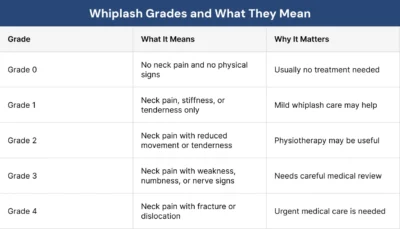
4. Whiplash Grades Explained

Doctors may grade whiplash by how serious it is. This helps guide treatment for whiplash and recovery planning. This includes:
Main Goals of Whiplash Treatment

The aims of whiplash treatment are:

  • Reduce pain
  • Restore neck movement
  • Improve strength
  • Help return to work, study, driving, sleep and daily life
  • Prevent long term problems

1. First 48 Hours After Injury

The first 48 hours matter after whiplash. You should take rest but full bed rest is not helpful in whiplash treatment. This can slow down the healing process. You should avoid painful activity. Short gentle rest and careful movement can help you in recovery.

Ice Packs

Ice packs for 10 to 15 minutes at a time can reduce swelling and pain. A cloth should be placed between ice and skin to prevent ice burns.

2. Should the Neck be Kept Still in Whiplash

Safe movement usually helps more than keeping the neck fully still. Foam collars were common in the past.

Studies suggest using them for too long can weaken neck muscles and slow recovery. A collar may help in some cases to support sleep but it should not be used for long periods without a doctor’s advice.

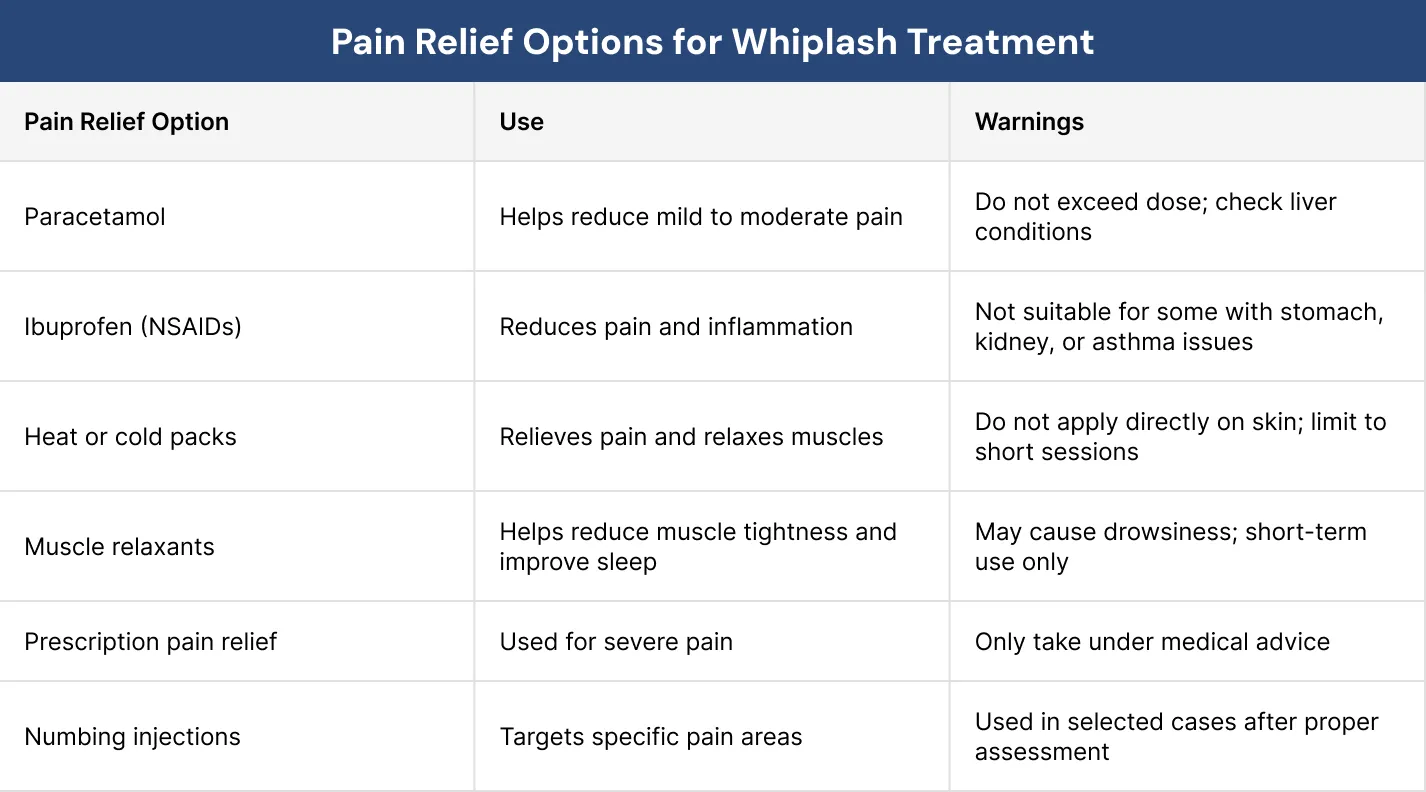
3. Best Whiplash Treatment for Pain Relief

Pain relief depends on the symptoms. Many people use simple medicines like:

  • Paracetamol
  • Ibuprofen

Ibuprofen can help with pain and swelling but it is not safe for everyone. People should ask a doctor first if they have:

  • Stomach problems
  • Kidney problems
  • Asthma

If pain is severe, a doctor may give stronger pain relief. Muscle relaxants may also be used for a short time if:

  • The neck feels very tight
  • Pain affects sleep

4. When Pain Is Severe

A doctor should check it, if pain is very strong, spreads into the arm or affects daily life. The doctor may suggest:

  • Stronger medicine
  • Special injections
  • Refer the person to a specialist

Some injections are used near:

  • Painful joints
  • Nerves
  • Tight muscle points

These treatments are not needed for everyone but they may help in some cases.

Why Early Treatment Matters

Early whiplash treatment often gives you better results. It can also lower the risk of long term pain. People may recover faster who:

Important:

Early care can reduce pain, stiffness and long-term whiplash problems.

  • Start gentle movement
  • Learn what to do
  • Get therapy for whiplash early

Early action does not mean hard exercise. It means taking safe and guided steps. If you wait for months without care, it can make the following worse:

  • Stiffness
  • Weak muscles
  • Fear of movement
  • Poor posture

Recovery Time and Long Term Effects

Following are some points that help explain recovery time and long term effects after a whiplash treatment:

1. How Long Does Whiplash Last

Mild whiplash injuries get better in a few days or weeks. Most people recover within 12 weeks or around 3 months. Some people take longer, especially if:

  • The pain was strong at the start
  • There are other health issues

2. Who may Recover More Slowly

Some factors can make recovery slower during whiplash treatment, such as:

  • Older people may take longer because neck wear and tear is more common with age
  • Past neck pain can also affect healing
  • Strong pain right after the injury may mean the injury is more serious
  • Stress, poor sleep, anxiety or fear of driving after the accident can also slow recovery
  • Some research shows women may report whiplash more often because of differences in neck structure

3. Can Whiplash Become Chronic

Yes, whiplash becomes chronic if symptoms last more than three months. This can include: ongoing pain

  • Headaches
  • Stiffness
  • Poor sleep
  • Fear of movement

Chronic whiplash can still get better but it may need a fuller plan with:

  • Exercise
  • Education
  • Posture support
  • Pain care

4. What Happens if Whiplash Goes Untreated

Some mild whiplash cases get better on their own but if symptoms are ignored, they can become harder to treat, such as:

  • Stiffness may get worse
  • Muscles may become weak
  • Fear of movement may increase
  • Poor posture may also develop

5. Can Whiplash Fully Heal

Yes, many people fully recover from whiplash after whiplash treatment. This is more common when:

  • The injury is mild
  • Treatment starts early
  • Movement improves step by step

Some people take longer but recovery can still happen after months. The body heals better with:

  • Patience
  • Gentle exercise
  • Good sleep
  • The right guidance

Exercise and Rehabilitation

Following are some exercises and rehabilitation plans of whiplash treatment:

1. Best Exercises for Whiplash

Gentle movement is often helpful in whiplash treatment because the neck can become stiff if it stays still for too long. Simple exercises may include in treatment for whiplash, such as:

  • Slowly turning the head left and right
  • Tilting the head side to side
  • Bending the chin towards the chest
  • Rolling the shoulders

These movements should be gentle in the treatment for whiplash. If sharp pain starts, stop and get medical advice. A warm shower or moist heat before exercise may help relax tight muscles and cure whiplash.

Short exercises done often are usually better than one long painful session in whiplash injury treatment.

2. Why Exercise Helps Recovery

After an injury, neck muscles may become tight to protect the area. This can help at first but too much tightness can cause more pain and less movement.

Gentle exercise helps the neck move better. It can help:

  • Improve blood flow
  • Reduce fear of movement
  • Slowly build confidence again
  • Stop weakness when the neck is not used enough

3. What Is Physiotherapy for Whiplash

Physiotherapy is also known as physical therapy. It is often used when pain continues or neck movement is still limited after whiplash treatment. A therapist may check:

  • Your posture
  • Your neck strength
  • Your stiff joints
  • Your Balance
  • Your headaches
  • Your daily habits

Then they make a plan for whiplash injury treatment based on your symptoms. Whiplash treatment may include:

  • Stretching
  • Strengthening
  • Posture training
  • Hands-on joint movement
  • Home exercises

4. Strengthening After the Early Stage of Whiplash Treatment

Once the pain gets better, strengthening becomes important. Weak neck and shoulder muscles can put more pressure on the neck. Strength training can help support the neck better, such as:

  • Light strength exercises
  • Shoulder control
  • Posture practice

Strengthening is also helpful for people going back to desk work, physical jobs or sports.

Additional Whiplash Injury Treatment Options

Following are the additional options for how to treat whiplash injury, such as:

1. Can Massage Help Whiplash

Massage may help for a short time, especially when the neck muscles feel tight or painful. It can make the body feel more relaxed and comfortable. Some people may also sleep better after massage.

How to Heal Whiplash

Massage works best with a full recovery plan. It can help symptoms but movement and strengthening are still important for long term healing.

2. Does Acupuncture Help

Some people feel less neck pain and tension after acupuncture. It uses very thin needles placed in certain areas of the body. When done by a qualified professional, it is usually safe.

Research results are not fully clear but many people find it helpful for pain control. It may be considered if pain is not improving with usual treatment.

3. What About Chiropractic Care

Manual therapy or chiropractic care may help some people with stiffness and limited neck movement. It may include:

  • Gentle joint movement
  • Joint adjustments

It should always be done by a trained and registered professional, especially after an injury. Urgent medical help is more important than manipulation if there is:

  • Numbness
  • Weakness
  • Severe headache
  • A possible fracture

4. Can TENS Machines Help

Some clinics use TENS machines for whiplash pain that means transcutaneous electrical nerve stimulation. It is not a full treatment on its own.

Small pads are placed on the skin and a gentle electric current is used. It may give short term pain relief and comfort for some people.

5. When are Injections Used

Most people with whiplash do not need injections. A doctor may suggest injections if the pain is severe or comes from:

  • A specific joint
  • Nerve
  • Tight muscle point

Injections are usually only used for more difficult cases after a proper check up. These injections may include:

  • Facet joint injections
  • Epidural steroid injections
  • Trigger point injections

Daily Life After Whiplash

Your daily life changes a lot after whiplash injury, such as:

1. The Mental Side of Whiplash

Whiplash is not only about body pain. This is common and should not be ignored. After a road accident, some people may feel:

  • Fear
  • Anxiety
  • Poor sleep
  • Low mood
  • Stress while travelling

Stress can make muscles tighter and pain feel worse and may slow recovery. Counselling, reassurance, slowly returning to driving or mental health support can help a lot in whiplash injury treatment.

2. Sleep Problems After Whiplash

Many people feel nights are the most painful after whiplash. Pain can wake you again and again. Poor sleep can also make pain feel worse the next day. Some simple steps can help, such as:

  • Use a supportive pillow
  • Keep the neck in a comfortable position
  • Avoid screens before bed
  • Use warmth before sleep if it helps

Good sleep is a crucial part of whiplash treatment. If pain is stopping sleep, follow medical advice about pain relief.

3. Best Pillow for Whiplash

There is no perfect pillow for everyone. The main goal is to support the neck, such as:

  • The neck should not bend too high or fall too low
  • A medium height pillow often helps keep the head level with the spine
  • Some people may need to try a few pillows to find the right one
  • An ergonomic pillow may help if neck pain feels worse in the morning

4. Posture Matters More Than Many Think

After an injury, people often keep the neck stiff or sit with rounded shoulders. This can make pain last longer. Good posture does not mean sitting too straight all the time. It means:

  • Moving often
  • Keeping screens at eye level
  • Relaxing the shoulders

5. Returning to Work

Many people worry about going back to work after whiplash. A slow return to work is often the best option. It depends on the symptoms and the type of job, such as:

  • People with desk jobs may return sooner with short breaks, better screen setup and posture support
  • People with physical jobs may need more time or lighter duties first
  • Some safe activity is usually better than doing nothing

6. Driving Again After Whiplash

You need neck movement and focus while driving. Turning the head is painful even after whiplash treatment. Driving may not be safe because strong pain medicine makes you sleepy.  You can drive again when neck movement improves and mirrors can be checked easily.

Safety and Action Steps

Following are the safety and action steps for whiplash treatment and also explain when you should see a doctor for whiplash:

1. Red Flag Symptoms That Need Urgent Help

Not every whiplash case is serious but some symptoms require quick whiplash treatment. These signs are different from normal whiplash, such as:

  • Numbness in the arms
  • Weakness
  • Trouble walking
  • Severe headache
  • Fainting
  • Vomiting
  • Major dizziness
  • Confusion
  • Pain that keeps getting worse

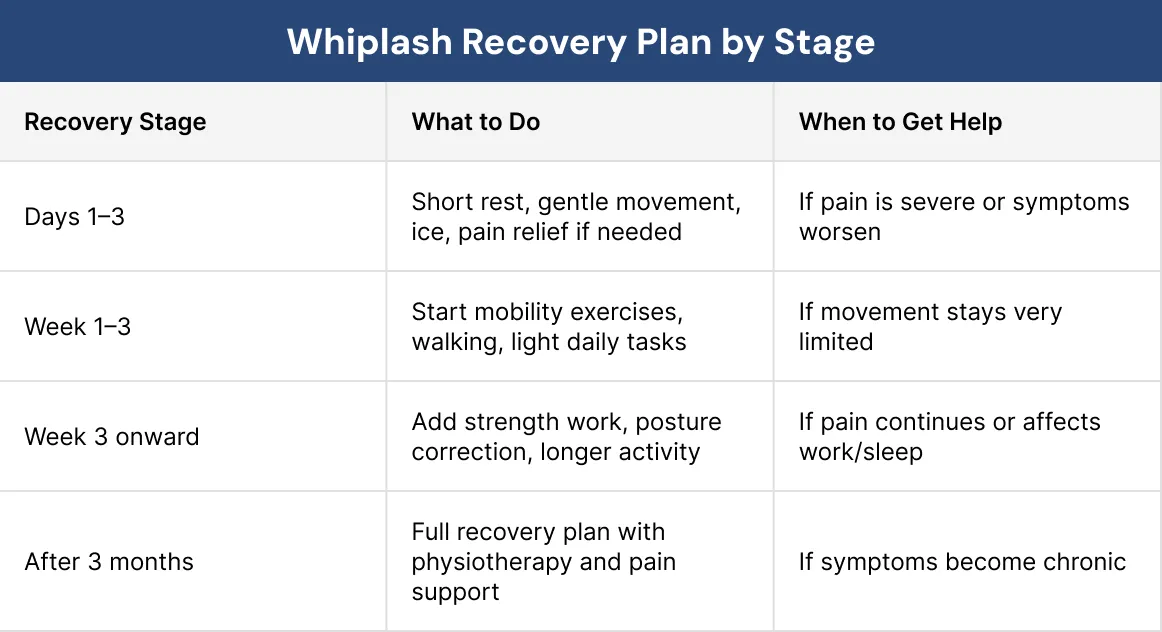
2. A Simple Recovery Plan

Following is a simple recovery plan for whiplash treatment:

Days 1 to 3:

  • Relative rest
  • Gentle movement
  • Ice
  • Pain relief if needed

Week 1 to 3:

  • Start mobility exercises
  • Walking
  • Light daily tasks

Week 3 onward:

  • Add strength work
  • Posture correction
  • Longer activity

You should seek physiotherapy or specialist review if symptoms do not improve.
Case Study

This case is about a serving member of the armed forces in the UK. Following are the details:

Background

Mr Barry was involved in a road traffic accident in 2015. This was caused by a Ministry of Defence driver. He developed whiplash symptoms that affected daily life. So he decided to make a whiplash claim.

Findings

Medical evidence was presented during the case. Doctors confirmed the whiplash injury symptoms and its effects. The court accepted that the accident caused a genuine soft tissue neck injury consistent with whiplash.

Result

The court accepted the claim and compensation was awarded based on pain and recovery of  the claimant.

Why This Case Matters

This case shows that whiplash can be a serious injury. This is also genuine even when there are no broken bones. Courts in the UK rely heavily on:

  • Medical evidence
  • Symptom history
  • Treatment records
  • Injury effects on work and normal living

Lesson

After a whiplash injury, following steps are  important for both recovery and any future claim, such as:

  • Early medical assessment
  • Proper treatment
  • Keeping records of symptoms

Conclusion

Some people delay whiplash treatment because at first symptoms are very mild and they feel fine. Later they start stiffness in the neck, weak muscles and sleep problems. They also experience headaches.

It is important not to avoid early symptoms and start whiplash treatment as soon as possible. It helps in better recovery and stop long term effects.

Simple care can help you recover from most whiplash injuries. Your neck pain can get better with:

  • Pain relief
  • Rest
  • Guided exercises

If symptoms last longer, you can take help with:

  • Posture support
  • Medical advice
  • Physiotherapy
  • Regular movement

If symptoms continue or recovery feels slow, professional support can help.

Concise Medico understands the importance of accurate whiplash diagnosis and the right treatment plan for a safe and smooth recovery.

Contact us today and start your recovery plan with clear support and explore your options.

Neck pain after an accident and not sure how to treat it?

Get clear guidance, proper assessment and the right support for recovery. We have helped many people with whiplash-related concerns. Contact us today and take the first step towards safe and effective recovery.

Neck pain after an accident and not sure how to treat it?

Get clear guidance, proper assessment and the right support for recovery. We have helped many people with whiplash-related concerns. Contact us today and take the first step towards safe and effective recovery.

FAQs

How long does whiplash take to heal?2026-04-30T08:42:36+00:00

Many mild cases improve in days or weeks. Many people recover within 12 weeks, though some take longer.

Should the neck be rested completely?2026-04-30T08:42:27+00:00

No. Short rest may help early on but too much rest can slow healing. Gentle movement is usually better.

Is heat or ice better for whiplash?2026-04-30T08:42:21+00:00

Ice often helps in the first couple of days. Later, heat may relax tight muscles.

Do all whiplash cases need scans?2026-04-30T08:42:15+00:00

No. Scans are used when doctors suspect fracture, nerve issues or other serious injury.

Can whiplash cause headaches?2026-04-30T08:42:10+00:00

Yes. Headaches starting near the base of the skull are common after whiplash.

How do I treat whiplash?2026-04-30T08:42:03+00:00

Whiplash is usually treated with short rest for 1–2 days, heat or cold packs, pain relief medicines, gentle neck exercises and staying active as symptoms improve. A doctor may also suggest prescription medicine, muscle relaxants, physiotherapy or numbing injections if pain is severe or ongoing.

What is the treatment for whiplash?2026-04-30T08:41:54+00:00

Treatment for whiplash focuses on reducing pain and restoring movement. Common options include short rest, heat or cold on the neck for 15 minutes every few hours, over-the-counter pain relief, prescription medicines, muscle relaxants, exercises, physiotherapy and injections for severe cases.

How to cure whiplash at home?2026-04-30T08:41:41+00:00

Home treatment for whiplash may include rest for a short time, ice or heat packs, over-the-counter pain relief, gentle stretching and good posture. Light movement often helps recovery. If symptoms worsen, spread to the arms or last more than a few weeks, seek medical advice.

How do you treat whiplash?2026-04-30T08:41:36+00:00

Whiplash can be treated with physiotherapy, heat therapy, pain relief medicines, massage, acupuncture, chiropractic care, gentle exercise and ergonomic changes at work or home. The best treatment depends on symptom severity and how long the pain lasts.

Share This Article!

Do you know a minor crash can sometimes lead to major discomfort? Whiplash is one of the most common reasons why it happens.

It is a common neck injury that needs whiplash treatment. It is caused by:

  • A car crash
  • Sudden stop
  • Sports collision

Data shows that whiplash was reported in 96.1% of road traffic injury claims at the start of 2026. This suggests that whiplash remains one of the most common road traffic injuries in the UK.

Whiplash might seem mild at first but the pain can leave your neck hurting for days. You might notice your neck feeling stiff, get headaches or struggle to do simple things. You may also have trouble sleeping at night.

The good news is that if you start whiplash treatment early, it can make a big difference. Many people get better in a few days or weeks. Others may take a bit longer but recovery improves when you know:

  • What to avoid
  • What to do
  • When to ask for help

The greatest wealth is health. – Virgil, Poet & Writer

Key Takeaways

  • Whiplash treatment is needed when a neck injury happens after sudden back-and-forward movement, often from a car accident, sports injury, cycling accident or fall
  • Symptoms may not appear straight away. Neck pain, stiffness, headaches, dizziness, poor sleep and  concentration issues can start hours or days later, so early whiplash injury treatment matters
  • Whiplash is usually diagnosed through symptoms, accident history and  physical examination. X-rays, CT scans or MRI may be used to rule out serious injury before deciding how to treat whiplash
  • Early care matters. Gentle movement, short rest, ice or heat, pain relief and  guided exercises can support faster recovery and form part of effective treatment for whiplash
  • Long use of foam collars is not usually advised in whiplash treatment, as keeping the neck still for too long can weaken muscles and slow healing
  • Physiotherapy can help restore movement, improve posture, build strength and  reduce the risk of chronic whiplash during whiplash injury treatment
  • Seek urgent medical help if symptoms include arm weakness, numbness, severe headache, confusion, vomiting, trouble walking or worsening pain, especially when unsure how to treat whiplash injury safely

What Is Whiplash

Whiplash is a neck (cervical spine) injury that is caused due to sudden back and forth movement of the head. This can hurt:

  • Muscles
  • Ligaments
  • Joints
  • Soft tissue in the neck

It often happens in road traffic accidents, especially rear-end crashes. It can also happen in cycling falls, contact sports, or physical assault.

The neck supports the head and controls movement. In whiplash the neck moves too far and too quickly. It causes tissue damage that leads to pain and stiffness.

What Is Whiplash Associated Disorder

The  Whiplash Associated Disorder (WAD) means the symptoms a person may feel after a whiplash injury. The whiplash treatment depends on WAD. Some people only have neck pain. Others may have:

  • Headaches
  • Shoulder pain
  • Dizziness
  • Sleep issues
  • Anxiety
  • Poor focus

What Causes Whiplash

A motor vehicle crash is the main cause of whiplash. Many people think only serious crashes cause whiplash but a lower speed crash can also cause neck injury.

Data shows that car occupants are a major road casualty group in Great Britain. Whiplash is especially common in car occupants after rear end crashes.

Other causes of whiplash include:

  • Sports injury
  • Cycling accidents
  • Slips
  • Falls
  • Sudden shaking

What Does Whiplash Feel Like

Some people wake up the next day feeling worse than they did after the accident. This delayed pain is common. Whiplash often feels like:

  • Neck stiffness
  • Pain when turning the head
  • Sore shoulders
  • A dull headache at the bottom of the skull

Common Whiplash Symptoms

Whiplash symptoms can vary from person to person. Some may find daily tasks hard and others may feel mild discomfort. Common symptoms include:

  • Neck pain and stiffness
  • Shoulder pain
  • Upper back pain
  • Headaches
  • Tiredness
  • Ringing in the ears
  • Poor sleep
  • Blurred vision
  • Jaw pain
  • Dizziness
  • Memory problems
  • Trouble focusing

Why Whiplash Symptoms Start Later

Many whiplash injuries do not cause severe pain in the first few hours. Adrenaline hormone can hide pain right after an injury. This is produced in your body after stress or shock. Swelling and muscle soreness may start later.

Maybe you have experienced feeling fine on the same day but wake up stiff and sore the next day. Early medical advice is helpful in this situation.

Note:

You may feel fine at first but whiplash pain can start hours or days later.

Diagnosis of Whiplash

Doctors use different ways to diagnose whiplash injury. Following are some ways that help you in diagnosis of whiplash, these include:

1. Clinical Diagnosis

Clinical diagnosis means a doctor diagnoses whiplash through symptoms, such as:

  • History
  • Examination

This helps check if there is a more serious problem. The doctor may ask:

  • How the injury happened
  • Where pain is felt
  • When symptoms started
  • How daily tasks are affected

2. What Happens During the Examination?

The doctor may gently check:

  • Neck movement
  • Shoulder movement
  • Posture
  • Painful areas

They may ask the person:

  • To turn the head
  • Lift the arms
  • Bend the neck slowly

If nerve pain is suspected, they may also check:

  • Reflexes
  • Strength
  • Feeling in the arms

This helps the doctor choose the right whiplash treatment plan.

3. Do You Need Scans for Whiplash

You do not always need a scan for whiplash. Many whiplash injuries do not show clearly on scans but scans can help check for broken bones or other serious damage, such as:

  • An X-ray can check for broken bones or neck alignment problems
  • A CT scan gives a clearer view of bones and structure
  • An MRI scan can show discs, ligaments, muscles and soft tissue injuries

A bone scan may find tiny fractures but it is not usually the first test. Doctors only ask for scans when they are needed in whiplash treatment.

4. Whiplash Grades Explained

Doctors may grade whiplash by how serious it is. This helps guide treatment for whiplash and recovery planning. This includes:

Main Goals of Whiplash Treatment

The aims of whiplash treatment are:

  • Reduce pain
  • Restore neck movement
  • Improve strength
  • Help return to work, study, driving, sleep and daily life
  • Prevent long term problems

1. First 48 Hours After Injury

The first 48 hours matter after whiplash. You should take rest but full bed rest is not helpful in whiplash treatment. This can slow down the healing process. You should avoid painful activity. Short gentle rest and careful movement can help you in recovery.

Ice Packs

Ice packs for 10 to 15 minutes at a time can reduce swelling and pain. A cloth should be placed between ice and skin to prevent ice burns.

2. Should the Neck be Kept Still in Whiplash

Safe movement usually helps more than keeping the neck fully still. Foam collars were common in the past.

Studies suggest using them for too long can weaken neck muscles and slow recovery. A collar may help in some cases to support sleep but it should not be used for long periods without a doctor’s advice.

3. Best Whiplash Treatment for Pain Relief

Pain relief depends on the symptoms. Many people use simple medicines like:

  • Paracetamol
  • Ibuprofen

Ibuprofen can help with pain and swelling but it is not safe for everyone. People should ask a doctor first if they have:

  • Stomach problems
  • Kidney problems
  • Asthma

If pain is severe, a doctor may give stronger pain relief. Muscle relaxants may also be used for a short time if:

  • The neck feels very tight
  • Pain affects sleep

4. When Pain Is Severe

A doctor should check it, if pain is very strong, spreads into the arm or affects daily life. The doctor may suggest:

  • Stronger medicine
  • Special injections
  • Refer the person to a specialist

Some injections are used near:

  • Painful joints
  • Nerves
  • Tight muscle points

These treatments are not needed for everyone but they may help in some cases.

Why Early Treatment Matters

Early whiplash treatment often gives you better results. It can also lower the risk of long term pain. People may recover faster who:

Important:

Early care can reduce pain, stiffness and long-term whiplash problems.

  • Start gentle movement
  • Learn what to do
  • Get therapy for whiplash early

Early action does not mean hard exercise. It means taking safe and guided steps. If you wait for months without care, it can make the following worse:

  • Stiffness
  • Weak muscles
  • Fear of movement
  • Poor posture

Recovery Time and Long Term Effects

Following are some points that help explain recovery time and long term effects after a whiplash treatment:

1. How Long Does Whiplash Last

Mild whiplash injuries get better in a few days or weeks. Most people recover within 12 weeks or around 3 months. Some people take longer, especially if:

  • The pain was strong at the start
  • There are other health issues

2. Who may Recover More Slowly

Some factors can make recovery slower during whiplash treatment, such as:

  • Older people may take longer because neck wear and tear is more common with age
  • Past neck pain can also affect healing
  • Strong pain right after the injury may mean the injury is more serious
  • Stress, poor sleep, anxiety or fear of driving after the accident can also slow recovery
  • Some research shows women may report whiplash more often because of differences in neck structure

3. Can Whiplash Become Chronic

Yes, whiplash becomes chronic if symptoms last more than three months. This can include: ongoing pain

  • Headaches
  • Stiffness
  • Poor sleep
  • Fear of movement

Chronic whiplash can still get better but it may need a fuller plan with:

  • Exercise
  • Education
  • Posture support
  • Pain care

4. What Happens if Whiplash Goes Untreated

Some mild whiplash cases get better on their own but if symptoms are ignored, they can become harder to treat, such as:

  • Stiffness may get worse
  • Muscles may become weak
  • Fear of movement may increase
  • Poor posture may also develop

5. Can Whiplash Fully Heal

Yes, many people fully recover from whiplash after whiplash treatment. This is more common when:

  • The injury is mild
  • Treatment starts early
  • Movement improves step by step

Some people take longer but recovery can still happen after months. The body heals better with:

  • Patience
  • Gentle exercise
  • Good sleep
  • The right guidance

Exercise and Rehabilitation

Following are some exercises and rehabilitation plans of whiplash treatment:

1. Best Exercises for Whiplash

Gentle movement is often helpful in whiplash treatment because the neck can become stiff if it stays still for too long. Simple exercises may include in treatment for whiplash, such as:

  • Slowly turning the head left and right
  • Tilting the head side to side
  • Bending the chin towards the chest
  • Rolling the shoulders

These movements should be gentle in the treatment for whiplash. If sharp pain starts, stop and get medical advice. A warm shower or moist heat before exercise may help relax tight muscles and cure whiplash.

Short exercises done often are usually better than one long painful session in whiplash injury treatment.

2. Why Exercise Helps Recovery

After an injury, neck muscles may become tight to protect the area. This can help at first but too much tightness can cause more pain and less movement.

Gentle exercise helps the neck move better. It can help:

  • Improve blood flow
  • Reduce fear of movement
  • Slowly build confidence again
  • Stop weakness when the neck is not used enough

3. What Is Physiotherapy for Whiplash

Physiotherapy is also known as physical therapy. It is often used when pain continues or neck movement is still limited after whiplash treatment. A therapist may check:

  • Your posture
  • Your neck strength
  • Your stiff joints
  • Your Balance
  • Your headaches
  • Your daily habits

Then they make a plan for whiplash injury treatment based on your symptoms. Whiplash treatment may include:

  • Stretching
  • Strengthening
  • Posture training
  • Hands-on joint movement
  • Home exercises

4. Strengthening After the Early Stage of Whiplash Treatment

Once the pain gets better, strengthening becomes important. Weak neck and shoulder muscles can put more pressure on the neck. Strength training can help support the neck better, such as:

  • Light strength exercises
  • Shoulder control
  • Posture practice

Strengthening is also helpful for people going back to desk work, physical jobs or sports.

Additional Whiplash Injury Treatment Options

Following are the additional options for how to treat whiplash injury, such as:

1. Can Massage Help Whiplash

Massage may help for a short time, especially when the neck muscles feel tight or painful. It can make the body feel more relaxed and comfortable. Some people may also sleep better after massage.

How to Heal Whiplash

Massage works best with a full recovery plan. It can help symptoms but movement and strengthening are still important for long term healing.

2. Does Acupuncture Help

Some people feel less neck pain and tension after acupuncture. It uses very thin needles placed in certain areas of the body. When done by a qualified professional, it is usually safe.

Research results are not fully clear but many people find it helpful for pain control. It may be considered if pain is not improving with usual treatment.

3. What About Chiropractic Care

Manual therapy or chiropractic care may help some people with stiffness and limited neck movement. It may include:

  • Gentle joint movement
  • Joint adjustments

It should always be done by a trained and registered professional, especially after an injury. Urgent medical help is more important than manipulation if there is:

  • Numbness
  • Weakness
  • Severe headache
  • A possible fracture

4. Can TENS Machines Help

Some clinics use TENS machines for whiplash pain that means transcutaneous electrical nerve stimulation. It is not a full treatment on its own.

Small pads are placed on the skin and a gentle electric current is used. It may give short term pain relief and comfort for some people.

5. When are Injections Used

Most people with whiplash do not need injections. A doctor may suggest injections if the pain is severe or comes from:

  • A specific joint
  • Nerve
  • Tight muscle point

Injections are usually only used for more difficult cases after a proper check up. These injections may include:

  • Facet joint injections
  • Epidural steroid injections
  • Trigger point injections

Daily Life After Whiplash

Your daily life changes a lot after whiplash injury, such as:

1. The Mental Side of Whiplash

Whiplash is not only about body pain. This is common and should not be ignored. After a road accident, some people may feel:

  • Fear
  • Anxiety
  • Poor sleep
  • Low mood
  • Stress while travelling

Stress can make muscles tighter and pain feel worse and may slow recovery. Counselling, reassurance, slowly returning to driving or mental health support can help a lot in whiplash injury treatment.

2. Sleep Problems After Whiplash

Many people feel nights are the most painful after whiplash. Pain can wake you again and again. Poor sleep can also make pain feel worse the next day. Some simple steps can help, such as:

  • Use a supportive pillow
  • Keep the neck in a comfortable position
  • Avoid screens before bed
  • Use warmth before sleep if it helps

Good sleep is a crucial part of whiplash treatment. If pain is stopping sleep, follow medical advice about pain relief.

3. Best Pillow for Whiplash

There is no perfect pillow for everyone. The main goal is to support the neck, such as:

  • The neck should not bend too high or fall too low
  • A medium height pillow often helps keep the head level with the spine
  • Some people may need to try a few pillows to find the right one
  • An ergonomic pillow may help if neck pain feels worse in the morning

4. Posture Matters More Than Many Think

After an injury, people often keep the neck stiff or sit with rounded shoulders. This can make pain last longer. Good posture does not mean sitting too straight all the time. It means:

  • Moving often
  • Keeping screens at eye level
  • Relaxing the shoulders

5. Returning to Work

Many people worry about going back to work after whiplash. A slow return to work is often the best option. It depends on the symptoms and the type of job, such as:

  • People with desk jobs may return sooner with short breaks, better screen setup and posture support
  • People with physical jobs may need more time or lighter duties first
  • Some safe activity is usually better than doing nothing

6. Driving Again After Whiplash

You need neck movement and focus while driving. Turning the head is painful even after whiplash treatment. Driving may not be safe because strong pain medicine makes you sleepy.  You can drive again when neck movement improves and mirrors can be checked easily.

Safety and Action Steps

Following are the safety and action steps for whiplash treatment and also explain when you should see a doctor for whiplash:

1. Red Flag Symptoms That Need Urgent Help

Not every whiplash case is serious but some symptoms require quick whiplash treatment. These signs are different from normal whiplash, such as:

  • Numbness in the arms
  • Weakness
  • Trouble walking
  • Severe headache
  • Fainting
  • Vomiting
  • Major dizziness
  • Confusion
  • Pain that keeps getting worse

2. A Simple Recovery Plan

Following is a simple recovery plan for whiplash treatment:

Days 1 to 3:

  • Relative rest
  • Gentle movement
  • Ice
  • Pain relief if needed

Week 1 to 3:

  • Start mobility exercises
  • Walking
  • Light daily tasks

Week 3 onward:

  • Add strength work
  • Posture correction
  • Longer activity

You should seek physiotherapy or specialist review if symptoms do not improve.

Case Study

This case is about a serving member of the armed forces in the UK. Following are the details:

Background

Mr Barry was involved in a road traffic accident in 2015. This was caused by a Ministry of Defence driver. He developed whiplash symptoms that affected daily life. So he decided to make a whiplash claim.

Findings

Medical evidence was presented during the case. Doctors confirmed the whiplash injury symptoms and its effects. The court accepted that the accident caused a genuine soft tissue neck injury consistent with whiplash.

Result

The court accepted the claim and compensation was awarded based on pain and recovery of  the claimant.

Why This Case Matters

This case shows that whiplash can be a serious injury. This is also genuine even when there are no broken bones. Courts in the UK rely heavily on:

  • Medical evidence
  • Symptom history
  • Treatment records
  • Injury effects on work and normal living

Lesson

After a whiplash injury, following steps are  important for both recovery and any future claim, such as:

  • Early medical assessment
  • Proper treatment
  • Keeping records of symptoms

Conclusion

Some people delay whiplash treatment because at first symptoms are very mild and they feel fine. Later they start stiffness in the neck, weak muscles and sleep problems. They also experience headaches.

It is important not to avoid early symptoms and start whiplash treatment as soon as possible. It helps in better recovery and stop long term effects.

Simple care can help you recover from most whiplash injuries. Your neck pain can get better with:

  • Pain relief
  • Rest
  • Guided exercises

If symptoms last longer, you can take help with:

  • Posture support
  • Medical advice
  • Physiotherapy
  • Regular movement

If symptoms continue or recovery feels slow, professional support can help.

Concise Medico understands the importance of accurate whiplash diagnosis and the right treatment plan for a safe and smooth recovery.

Contact us today and start your recovery plan with clear support and explore your options.

Neck pain after an accident and not sure how to treat it?

Get clear guidance, proper assessment and the right support for recovery. We have helped many people with whiplash-related concerns. Contact us today and take the first step towards safe and effective recovery.

Neck pain after an accident and not sure how to treat it?

Get clear guidance, proper assessment and the right support for recovery. We have helped many people with whiplash-related concerns. Contact us today and take the first step towards safe and effective recovery.

FAQs

How long does whiplash take to heal?2026-04-30T08:42:36+00:00

Many mild cases improve in days or weeks. Many people recover within 12 weeks, though some take longer.

Should the neck be rested completely?2026-04-30T08:42:27+00:00

No. Short rest may help early on but too much rest can slow healing. Gentle movement is usually better.

Is heat or ice better for whiplash?2026-04-30T08:42:21+00:00

Ice often helps in the first couple of days. Later, heat may relax tight muscles.

Do all whiplash cases need scans?2026-04-30T08:42:15+00:00

No. Scans are used when doctors suspect fracture, nerve issues or other serious injury.

Can whiplash cause headaches?2026-04-30T08:42:10+00:00

Yes. Headaches starting near the base of the skull are common after whiplash.

How do I treat whiplash?2026-04-30T08:42:03+00:00

Whiplash is usually treated with short rest for 1–2 days, heat or cold packs, pain relief medicines, gentle neck exercises and staying active as symptoms improve. A doctor may also suggest prescription medicine, muscle relaxants, physiotherapy or numbing injections if pain is severe or ongoing.

What is the treatment for whiplash?2026-04-30T08:41:54+00:00

Treatment for whiplash focuses on reducing pain and restoring movement. Common options include short rest, heat or cold on the neck for 15 minutes every few hours, over-the-counter pain relief, prescription medicines, muscle relaxants, exercises, physiotherapy and injections for severe cases.

How to cure whiplash at home?2026-04-30T08:41:41+00:00

Home treatment for whiplash may include rest for a short time, ice or heat packs, over-the-counter pain relief, gentle stretching and good posture. Light movement often helps recovery. If symptoms worsen, spread to the arms or last more than a few weeks, seek medical advice.

How do you treat whiplash?2026-04-30T08:41:36+00:00

Whiplash can be treated with physiotherapy, heat therapy, pain relief medicines, massage, acupuncture, chiropractic care, gentle exercise and ergonomic changes at work or home. The best treatment depends on symptom severity and how long the pain lasts.

Go to Top