TABLE OF CONTENT
Claiming Compensation For A Child Through CICA
Did you know NSPCC estimated that half a million children in the UK suffer abuse every year?
It’s quite painful for parents when their child becomes the victim of a violent crime. The physical injury or emotional harm can be quite draining for them. Given this, a key question is how to seek justice for their child. In such cases, CICA (Criminal Injuries Compensation Authority) gives compensation for children who have suffered physical or mental harm due to violent crime. In this blog, we will give you an insight into claiming compensation for a child through CICA and how CICA works for child injury claims.
What is The CICA Compensation For Children?
The CICA is a state scheme in the UK that compensates physically and emotionally injured people. CICA also caters to those who are claiming compensation for a child. Minors need to be assured of fair reward for crimes that have impacted their welfare. Parents or guardians can make claims on behalf of their children. The family of the child bears the costs of medical care, therapies and other treatments for the physical or mental injury.
How to Claim Compensation For Children?
Parents should know the procedure of filing a claim. It may be a tough task, but the process can get smooth with the proper guidance.
Claiming compensation for a child involves several steps:
1. Report the Abuse
Tell the police about the child abuse as soon as possible. A police report is a key part of your claim.
2. Collect Evidence
Gather all the proof that supports your claim. This may include medical records, photos, witness statements or other documents that show how the abuse has affected the child.
3. Send Your Claim
Complete and submit your CICA claim with all the required information and supporting evidence. This includes the national insurance number, police force name, crime reference number and details of the child’s GP or medical treatments.
4. CICA Reviews Your Claim
The CICA will look at your application, check the evidence and decide if you qualify for compensation.
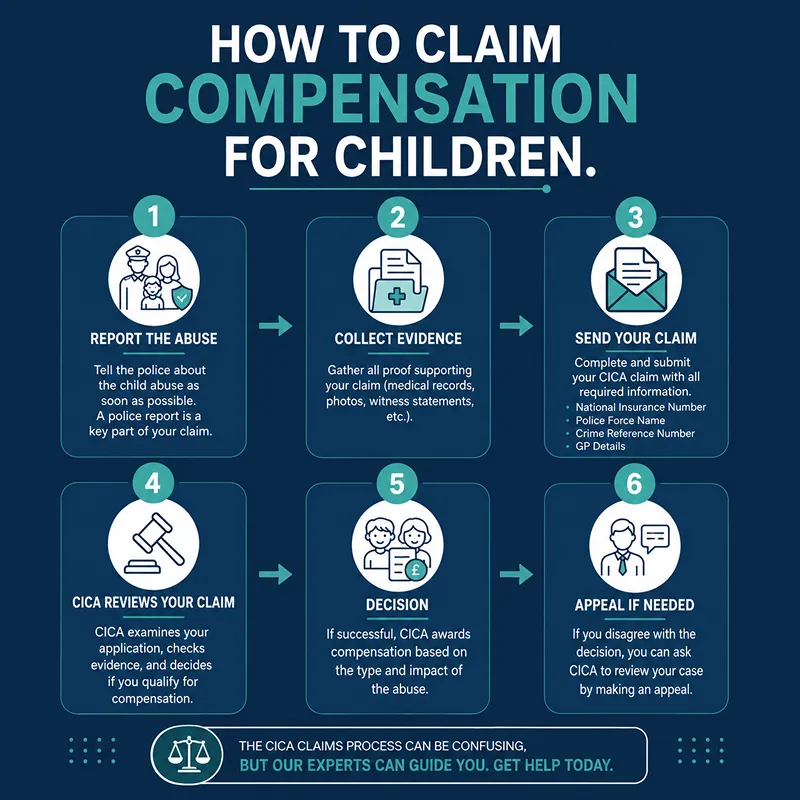
5. Decision
If your claim is successful, the CICA will award you with compensation. The amount depends on the type of abuse and how seriously it affected your child.
6. Appeal if Needed
In case you disagree with the decision, you can ask the CICA to review your case by making an appeal.
Eligibility to Claiming Compensation for a Child
The initial step towards claiming compensation for a child is to meet the criteria for a claim. The claims can be made by a parent or a guardian on the behalf of a child. They can also make a claim on their own once they reach the age of 18 years. For the child to be qualified for the claim, here are the eligibility criteria:
- They must be a victim of a violent crime, assault or abuse and have been harmed by it.
- Their parents have immediately reported it to the police even if the claim is made later.
- All their medical records and reports are well documented.
- They have suffered harm within the duration of the last two years.
‘‘The general rule is that the application must be made within two years of the date of the incident. The time limit may be waived where this is considered to be reasonable and in the interests of justice.”
-N Sugarman
However, this may not apply strictly in cases of sexual abuses because such traumas may have only been identified later in life.
How Much Compensation Can I Get For My Child Abuse Claims?
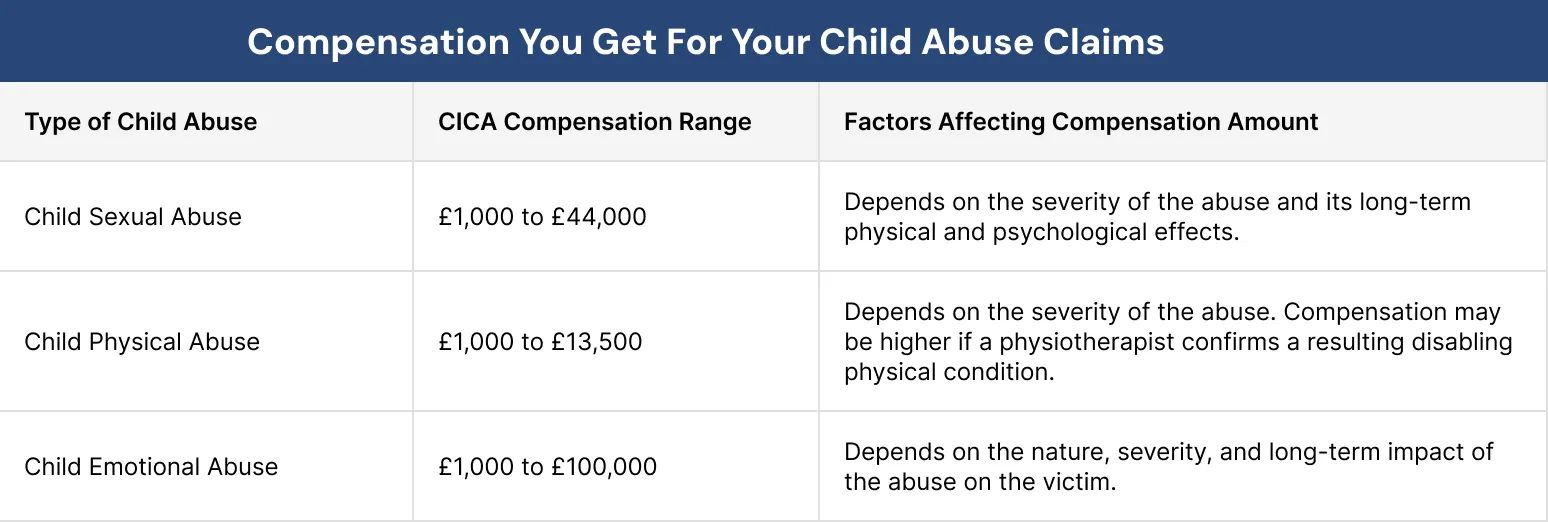
A tariff set by the Criminal Injuries Compensation Scheme 2012 is used while claiming compensation for a child through the CICA. The amount of the payout depends on whether the child abuse was sexual abuse or physical abuse.
- Child sexual abuse claims: In case of sexual abuse, CICA compensation can range from £1,000 to £44,000, depending on how serious the abuse was and its effects.
- Child physical abuse claims: For physical abuse, CICA compensation can range from £1,000 to £13,500. You may receive more if a physiotherapist confirms that the abuse caused a disabling physical condition.
- Child emotional abuse: In case of emotional abuse, CICA compensation can range from about £1,000 to £100,000.
Case study
In a case published by the private news agency, A child, referred to as HND, was sexually abused from the age of 13 by a group of older men. Despite multiple convictions of his abusers, his initial CICA application was refused and he was told he had “consented” to the abuse. Just days before his tribunal hearing, CICA reversed its decision and apologised. The agency accepted his eligibility and acknowledged that his age and vulnerability had been exploited.
Your Go-To Source for Filing a Child Injury Claim
When children fall victim to crime, their families usually suffer from emotional trauma and financial burden. The CICA Compensation is designed to help the child by making up for the harm they have been caused.
At Concise Medico, we support you in filing a child abuse claim by helping you understand all the prerequisites and procedure of the claim. Claiming compensation for a child is not just about getting financial support but also making sure justice is delivered.