Can a Delayed Cancer Diagnosis Be Considered Medical Negligence?

Published On: June 17th, 2026|Total Views: 3|Daily Views: 3|15 min read|3000 words|

TABLE OF CONTENT

Cancer impacts millions of people globally each year. While medical care options continue to improve, one aspect remains especially important: early diagnosis.

When cancer is detected at an initial stage, patients often have more treatment options and a better chance of care.

This is the situation for some people who suffer from a delayed cancer diagnosis or a cancer misdiagnosis. Proper medical care can make a big difference but when cancer is diagnosed late, the patient may encounter harder treatment. They may have fewer choices for treatment and a tougher road to healing.

Family members often feel the weight too, struggling with worry, extra expenses and emotional stress.

A delayed cancer diagnosis implies that cancer was detected later than it should have been. For example, a sign might have been ignored, tests could have been postponed or results might not have been checked correctly.

However, not all delays are the result of medical negligence. Cancer can be hard to detect because initial symptoms often look like common health issues. On the other hand, doctors and medical teams are likely to identify warning signs and take action quickly.

It is very important to go for a check up on time. In March 2026, 79.4% of people in England got their screening results within 28 days of seeing a GP. They were informed whether or not they had cancer depending on the results of their tests. This was higher than NHS England’s 75% level, proving that fast detection is possible but delays can still happen.

In some cases, a delayed cancer detection may be regarded as medical negligence. In this blog, you’ll learn when delays might be negligence and why they take place. You will also explore what symptoms to monitor for and what compensation may be offered.

Key Takeaways

  • Cancer misdiagnosis claims may be possible if a medical error led to the wrong diagnosis, delayed treatment, or avoidable harm
  • Delayed cancer diagnosis compensation can help cover pain, loss of earnings, treatment costs, and future care needs caused by negligence
  • If you were incorrectly diagnosed with cancer, you may have suffered unnecessary treatment, stress, and disruption to your daily life
  • A delayed cancer diagnosis can allow the disease to progress, reducing treatment options and affecting the chances of recovery
  • How much compensation for a delayed cancer diagnosis depends on the harm caused, financial losses, and the long-term impact on your health
  • Cancer misdiagnosis may occur due to missed symptoms, test errors, poor communication, or failures to refer patients for further investigation

What Is a Delayed Cancer Diagnosis?

A delayed cancer diagnosis takes place when cancer is caught later. This issue usually comes up when signs are missed, tests are not done on time or unexpected results are not checked. This case can also occur due to expert advice being delayed.

Delays can happen at several phases of care:

  • In the course of GP visits
  • Hospital routine visits
  • Diagnostic testing
  • Check up steps

If a patient reports signs on multiple instances without proper testing, the cancer may grow before it is detected.

Delayed Cancer Diagnosis vs Incorrectly Diagnosed With Cancer

A delayed diagnosis shows that cancer is finally found but later than it should have been. A misdiagnosis is made when a person is falsely detected with cancer or another condition.

Both of these factors can result in harm but in unique ways. A delayed cancer diagnosis slows medical care. On the other hand, being incorrectly diagnosed with cancer may lead to unnecessary treatments, causing major side effects. Both are examples of cancer-related diagnostic mistakes.

Diagnosing cancer in late stages and the inability to provide treatment condemns many people to unnecessary suffering and early death.

Dr Etienne Krug, Director, World Health Organization (WHO)

Why Does a Delayed Cancer Diagnosis Matter?

In the treatment of cancer, timing is extremely important. Timely detection improves medical care options and may result in better treatment of the disease. Cancer can develop or grow more due to a delayed cancer diagnosis. This may impact treatment preferences and make healing difficult.

More serious cancers often involve more severe treatments such as surgery, chemotherapy or radiation therapy. Emotional stress is also included in it. Patients and families may feel disappointed or worried, wondering what might have been avoided with timely detection. This is why a delayed cancer detection can have both physical and mental health consequences.

Why It Matters!

Even a short delay can affect cancer treatment options. As cancer progresses, it may spread to nearby tissues or other parts of the body, making treatment more complex and reducing the chances of a successful outcome.

What Causes Delayed Cancer Diagnosis?

A delayed cancer diagnosis can happen for many different reasons. Often, initial symptoms are unclear. A cough may appear like an infection, stomach discomfort may look like indigestion and fatigue may be related to stress.

Early hypotheses may seem reasonable but if symptoms continue or worsen, further investigation is required.

Late referrals are an additional common cause. Immediate specialist checks are vital when there are warning symptoms. Delays in referrals can push back detection by weeks or months, which is serious if the cancer develops rapidly.

Errors during medical tests can also be a factor. Scans may be incorrectly read, biopsies may not be reviewed properly and abnormal blood test results may be missed. Poor interaction with GP clinics, hospitals and labs can prolong the delay.

Admin concerns, such as missed appointments or lost files, can also contribute to the problem. Often, it is a blend of small errors that results in a late cancer diagnosis.

Cancer misdiagnosis can postpone vital treatment.

What Signs May Suggest a Delayed Cancer Diagnosis?

A delayed cancer diagnosis is not always easy to detect at the initial stage. However, some warning signs may reveal that cancer should have been detected much earlier. These signals do not always show negligence but they may bring up serious concerns about the treatment received.

1. Multiple Visits With the Same Symptoms

If a patient goes to a doctor multiple times with the same symptoms but no clear diagnosis is given. This may suggest that further tests were required. Repeated symptoms should not be dismissed, especially when they become worse or do not align with the primary diagnosis.

2. Symptoms That Do not Improve with Treatment

Sometimes a patient may be prescribed medical care for a mild condition but their signs continue showing up. For example, persistent pain, bleeding, fatigue, weight loss or a lasting cough may need more testing. If treatment does not prove effective, doctors should look for other possible causes.

3. Missed or Delayed Specialist Referral

A postponed referral can also be a red flag sign. If a patient has signs that may point to cancer, they may need to see a medical professional right away. When this referral is not made on time, necessary tests and care may be delayed.

What Signs May Suggest a Delayed Cancer Diagnosis?

4. Abnormal Test Results Not Followed Up

Test results can play a significant role in detecting cancer. If unusual blood tests, scans, tissue samples or screening results are not reviewed properly, cancer may get ignored. A failure to follow up on these results can cause a delayed cancer detection. It may also bring about unnecessary adverse effects.

Which Cancers Are Often Linked to Delayed Cancer Diagnosis?

Some cancers are more prone to be found late because their initial symptoms can be unclear. They might also be easily mistaken for small health issues.

1. Cancers With Vague Early Symptoms

Bowel, ovarian and pancreatic cancers often develop with signs such as bloating, slight tummy pain, fatigue or changes in appetite. These signs are common and can be caused by many less severe conditions, which makes early detection hard. This raises the possibility of a delayed cancer diagnosis.

2. Cancers Commonly Mistaken for Minor Conditions

A constant cough or mild chest pain could be the initial signs of lung cancer. Urinary changes that are often linked with benign prostate tumours can be caused by prostate cancer. These similar features may cause symptoms to be confused, delaying further analysis.

3. Cancers that Need Urgent Testing and Referral

Breast, cervical and melanoma cancers are among the cancers that need urgent medical care and testing. The disease may worsen if referrals, tests or screenings for these cancers are delayed.

More serious stages and possibly adverse outcomes result from this scenario. To avoid harm and increase the chance of life expectancy, proper investigation is crucial.

How Can a Delayed Cancer Diagnosis Affect Treatment and Daily Life?

Delays in getting a cancer diagnosis can significantly affect daily life and health care results. Medical care may grow more challenging as cancer grows.

As a result, victims and their families may struggle with more severe physical, emotional and financial effects.

1. Fewer Treatment Options

Patients are often given access to a greater variety of medical options when cancer is detected in its early phases. A delay could cause the disease to worsen or spread, leaving some treatments ineffective.

Patients may thus have fewer options and a more difficult method of care.

Families often face emotional strain after a cancer misdiagnosis.

2. More Intensive Treatment May Be Needed

A delayed cancer detection may show that more advanced therapies are required to control the illness. In place of less painful methods, patients may choose to undergo serious surgery, chemotherapy, radiation or a variety of treatments.

These practices can be physically tough and may lead to longer recovery periods.

3. Greater Emotional and Financial Pressure

A delayed diagnosis has more side effects than just physical ones. Patients may suffer from depression, anxiety, frustration and lack of certainty about their future.

Families tend to deal with extra expenses, travel bills, medical costs and caregiving tasks in addition to these concerns.

4. Effects on Work and Family Life

Many aspects of daily life may be negatively affected by a cancer cure. Patients may feel uneasy with routine tasks or need more aid with personal care and household activities.

To provide quality care, family members might also be asked to adjust their daily tasks. This is the reason the family is further stressed emotionally and financially.

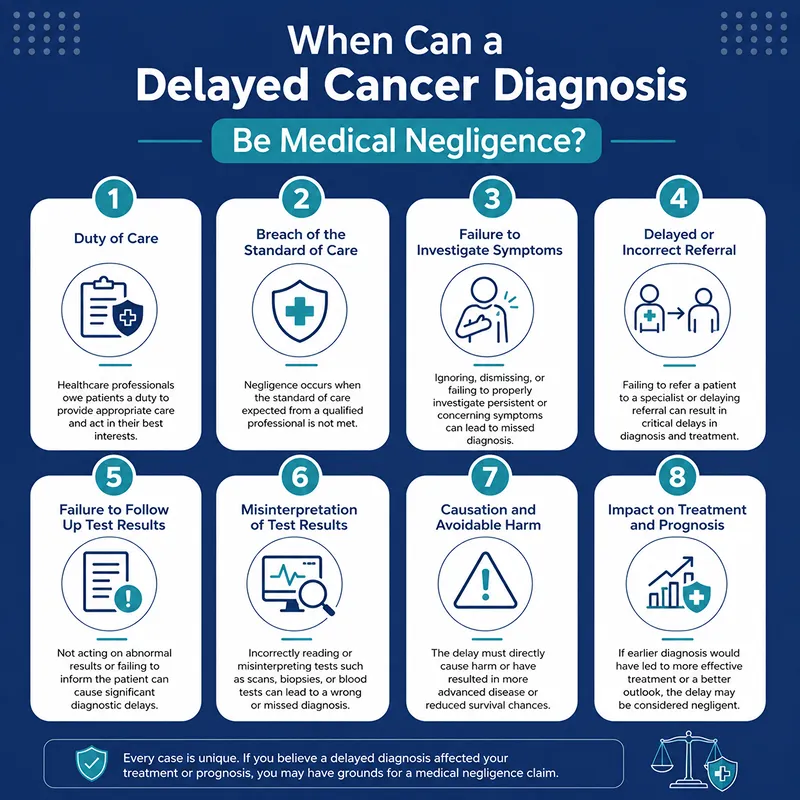
When Is a Delayed Cancer Diagnosis Medical Negligence?

Not all delays are the outcome of medical mistakes. Early signs of cancer are often vague and the disease can be tough to detect.

A delayed cancer detection may be considered negligence if the medical service provider failed to provide reasonable care. Also, if any harm occurred due to this failure, this situation is also regarded as negligence.

This usually refers to ignoring clear symptoms, being unable to refer urgently, misreading tests or not following up unusual results.

The legal test puts an emphasis on whether a skilled professional would have behaved differently at the time. A qualified medical review is often needed to figure out whether negligence took place.

Initial detection helps avoid a cancer misdiagnosis.

What Compensation May be Available for Delayed Cancer Diagnosis Medical Negligence?

Delayed cancer diagnosis compensation is economic aid given when harm occurs due to a negligent delay in detecting cancer.

It is not given immediately for every late detection. Compensation is only offered when it can be proven that the delay could have been prevented. Also, it must be shown that this delay caused real harm to the patient.

1. Pain and Suffering

Patients may get compensation for the bodily and emotional harm of a late cancer diagnosis. This comprises stress, anxiety, fear and the pain caused by more severe disease. This also involves intensive treatments that could have been reduced with timely care.

2. Loss of Earnings and Financial Impact

A delayed diagnosis can impact a patient’s potential to get a job. Compensation may pay for missed salaries or lower income caused by extended treatment or recovery. It can also support families in coping with extra costs related to care or routine changes.

3. Medical Costs and Ongoing Care

Fees for treatments, hospital stays, drugs or specific care that were required because of the delay may be covered.

If continuous care is needed due to more serious disease, compensation can help pay for these lifelong costs.

What Compensation May be Available for Delayed Cancer Diagnosis Medical Negligence?

4. Claims by Families and Legal Agents

In some scenarios, families can file a claim if a patient has passed away because of a negligent delay. Guardians can claim on behalf of children and legal advocates may act for patients who have no mental capacity.

Compensation seeks to deal with both the direct impact on the patient and the broader effects for loved ones.

Keep in Mind!

Not every delayed cancer diagnosis is medical negligence. A successful claim usually requires evidence that the standard of care fell below what was reasonably expected and that the delay caused avoidable harm.

How Do Delayed Cancer Diagnosis Claims Work in the UK?

Claims start with a scrutiny of medical documents, signs and treatment details. Medical specialists determine whether care fell below the level expected.

If negligence is identified, healthcare providers or insurance firms may be referred to for dispute resolution. Many claims are dealt with without proceeding to court.

However, the majority of claims use No Win No Fee agreements. This means patients pay nothing in advance and fees are taken only if the claim is successful.

What Evidence Is Needed for a Delayed Cancer Diagnosis Claim?

To justify negligence, proof is a must. This comprises GP and hospital details, test data, referral records, professional reports, witness statements and financial documents. Expert testimony usually clarifies what should have taken place and how the delay led to damage.

Proof that a patient was wrongly diagnosed with cancer or harmed from cancer mistakes supports the claim. There must be evidence that the treatment was inadequate and that the delay had a significant effect.

How Do You Make a Delayed Cancer Diagnosis Claim?

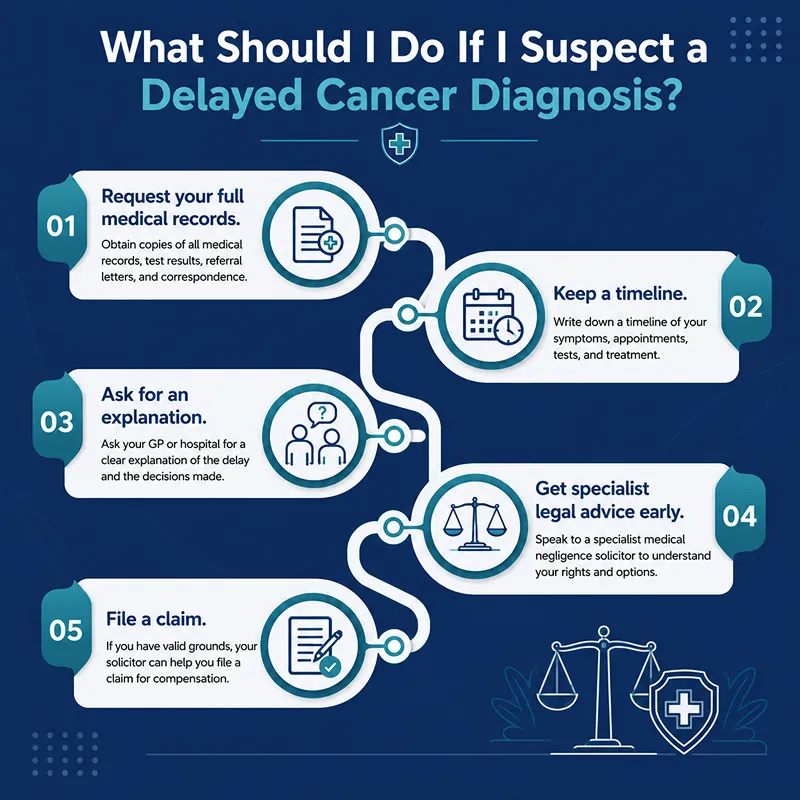
If you feel that a delayed cancer detection was due to medical negligence, there is a step by step process for filing a claim. While every case is unique, most claims follow identical steps:

Step 1: Speak to a Medical Negligence Lawyer

The initial stage is to talk about your matter with a solicitor who specialises in medical negligence cases. They can look at the facts of your diagnosis and determine whether you may have valid reasons for a claim.

Step 2: Collect Medical Records

Your lawyer will ask for necessary medical records involved in your care. They will gather these documents from your GP, hospital, specialists and any other healthcare providers.

These files help clarify what happened and whether there were missed opportunities to diagnose cancer sooner.

Step 3: Get Independent Expert Evidence

Medical specialists are usually required to inspect the documents and give an independent verdict.

They review whether the treatment provided fulfilled recognised medical standards. They also evaluate whether a prior diagnosis would likely have impacted the outcome.

Step 4: Assess the Impact of the Delay

The claim will take into account how the delayed cancer diagnosis affected your health and treatment options. The claim also considers recovery prospects, finances and general quality of life. This helps figuring out the level of compensation that may be sufficient.

Step 5: Submit the Claim

Once enough evidence has been collected, a legal claim is sent to the healthcare provider or organisation liable for treatment. They are allowed to look into and respond to the claims.

Step 6: Negotiate a Settlement

Several late cancer diagnosis claims are addressed via negotiation without going to court. If negligence is accepted, discussion will focus on reaching a reasonable delayed cancer diagnosis compensation deal.

Step 7: Court Proceedings If Necessary

If an agreement cannot be concluded, the case may be taken to court. However, many medical negligence claims resolve before going through a full trial.

Case Study: Delayed Liver Cancer Diagnosis

Richard Excell was a 60 year old man from Devon who was diagnosed with advanced liver cancer. This cancer was detected in December 2020 at Royal Devon and Exeter Hospital.

Screenings from July 2020 had confirmed signs of cancer but they were incorrectly read. Despite being wrongly read, no immediate action was taken. The judiciary discovered that his cancer could have been found about 20 weeks ago. They said further that this might have made it possible to cure.

Due to the delay, Mr Excell had to undergo more intense treatment and faced a longer recovery. He also suffered from emotional pressure, financial strain and also the distress of his family.

According to the review, the hospital admitted to the errors and gave £7,000 to Mr Excell as a courtesy. Besides this, they also took steps to avoid causing identical delays in the future.

Final Thoughts

A delayed cancer diagnosis can be very stressful for people with cancer and their relatives. Each delay is not healthcare negligence, but errors in diagnosis, tests or referrals that could have been avoided can cause harm.

A delayed cancer diagnosis or being incorrectly diagnosed with cancer can further make medical care difficult and add pressure.

Detecting cancer at an early stage is very necessary. Initial detection usually results in more effective treatment options, quicker healing and less stress or financial strain. Patients may be eligible for compensation if their care falls below the required standard due to a delayed diagnosis or misdiagnosis.

At Concise Medico, we understand how stressful a delayed cancer detection can be. We assist in helping patients and families learn about their options and what actions they can take.

If you feel that you or a loved one has been harmed by a late cancer diagnosis, contact us today.

Worried that a delayed cancer diagnosis has affected your treatment or recovery?

Our specialist medical negligence team can assess your case and help you pursue the compensation you may deserve.
We have helped with thousands of medical negligence matters and support clients through every stage of the claims process. Reach us today.

Worried that a delayed cancer diagnosis has affected your treatment or recovery?

Our specialist medical negligence team can assess your case and help you pursue the compensation you may deserve.
We have helped with thousands of medical negligence matters and support clients through every stage of the claims process. Reach us today.

FAQs

Can I make cancer misdiagnosis claims if my treatment was delayed?2026-06-17T05:46:56+00:00

Cancer misdiagnosis claims may be possible if a healthcare professional failed to diagnose cancer correctly or delayed treatment through avoidable errors. You must usually show that the mistake caused additional harm or worsened your outcome.

How much compensation for delayed cancer diagnosis could I receive?2026-06-17T05:47:35+00:00

How much compensation for delayed cancer diagnosis depends on the severity of the harm caused, the impact on your health, financial losses, and future care needs. Every claim is assessed individually based on its specific circumstances and evidence.

How long do you have to wait for a cancer diagnosis in the UK?2026-06-17T05:48:02+00:00

In England, the NHS aims for patients referred with suspected cancer to receive a diagnosis or have cancer ruled out within 28 days of referral. However, waiting times can vary depending on the type of cancer, required tests, and local service demand.

Which cancers are usually diagnosed late?2026-06-17T05:48:27+00:00

Cancers such as pancreatic, ovarian, lung, bowel, and some blood cancers are often diagnosed later because their early symptoms can be vague or similar to less serious conditions. This can make early detection more challenging.

Can you sue the NHS for a late cancer diagnosis?2026-06-17T05:49:08+00:00

You may be able to bring a medical negligence claim against the NHS if a late cancer diagnosis resulted from substandard care and caused avoidable harm. Each case depends on whether the delay could reasonably have been prevented and affected the outcome.

Share This Article!

Cancer impacts millions of people globally each year. While medical care options continue to improve, one aspect remains especially important: early diagnosis.

When cancer is detected at an initial stage, patients often have more treatment options and a better chance of care.

This is the situation for some people who suffer from a delayed cancer diagnosis or a cancer misdiagnosis. Proper medical care can make a big difference but when cancer is diagnosed late, the patient may encounter harder treatment. They may have fewer choices for treatment and a tougher road to healing.

Family members often feel the weight too, struggling with worry, extra expenses and emotional stress.

A delayed cancer diagnosis implies that cancer was detected later than it should have been. For example, a sign might have been ignored, tests could have been postponed or results might not have been checked correctly.

However, not all delays are the result of medical negligence. Cancer can be hard to detect because initial symptoms often look like common health issues. On the other hand, doctors and medical teams are likely to identify warning signs and take action quickly.

It is very important to go for a check up on time. In March 2026, 79.4% of people in England got their screening results within 28 days of seeing a GP. They were informed whether or not they had cancer depending on the results of their tests. This was higher than NHS England’s 75% level, proving that fast detection is possible but delays can still happen.

In some cases, a delayed cancer detection may be regarded as medical negligence. In this blog, you’ll learn when delays might be negligence and why they take place. You will also explore what symptoms to monitor for and what compensation may be offered.

Key Takeaways

  • Cancer misdiagnosis claims may be possible if a medical error led to the wrong diagnosis, delayed treatment, or avoidable harm
  • Delayed cancer diagnosis compensation can help cover pain, loss of earnings, treatment costs, and future care needs caused by negligence
  • If you were incorrectly diagnosed with cancer, you may have suffered unnecessary treatment, stress, and disruption to your daily life
  • A delayed cancer diagnosis can allow the disease to progress, reducing treatment options and affecting the chances of recovery
  • How much compensation for a delayed cancer diagnosis depends on the harm caused, financial losses, and the long-term impact on your health
  • Cancer misdiagnosis may occur due to missed symptoms, test errors, poor communication, or failures to refer patients for further investigation

What Is a Delayed Cancer Diagnosis?

A delayed cancer diagnosis takes place when cancer is caught later. This issue usually comes up when signs are missed, tests are not done on time or unexpected results are not checked. This case can also occur due to expert advice being delayed.

Delays can happen at several phases of care:

  • In the course of GP visits
  • Hospital routine visits
  • Diagnostic testing
  • Check up steps

If a patient reports signs on multiple instances without proper testing, the cancer may grow before it is detected.

Delayed Cancer Diagnosis vs Incorrectly Diagnosed With Cancer

A delayed diagnosis shows that cancer is finally found but later than it should have been. A misdiagnosis is made when a person is falsely detected with cancer or another condition.

Both of these factors can result in harm but in unique ways. A delayed cancer diagnosis slows medical care. On the other hand, being incorrectly diagnosed with cancer may lead to unnecessary treatments, causing major side effects. Both are examples of cancer-related diagnostic mistakes.

Diagnosing cancer in late stages and the inability to provide treatment condemns many people to unnecessary suffering and early death.

Dr Etienne Krug, Director, World Health Organization (WHO)

Why Does a Delayed Cancer Diagnosis Matter?

In the treatment of cancer, timing is extremely important. Timely detection improves medical care options and may result in better treatment of the disease. Cancer can develop or grow more due to a delayed cancer diagnosis. This may impact treatment preferences and make healing difficult.

More serious cancers often involve more severe treatments such as surgery, chemotherapy or radiation therapy. Emotional stress is also included in it. Patients and families may feel disappointed or worried, wondering what might have been avoided with timely detection. This is why a delayed cancer detection can have both physical and mental health consequences.

Why It Matters!

Even a short delay can affect cancer treatment options. As cancer progresses, it may spread to nearby tissues or other parts of the body, making treatment more complex and reducing the chances of a successful outcome.

What Causes Delayed Cancer Diagnosis?

A delayed cancer diagnosis can happen for many different reasons. Often, initial symptoms are unclear. A cough may appear like an infection, stomach discomfort may look like indigestion and fatigue may be related to stress.

Early hypotheses may seem reasonable but if symptoms continue or worsen, further investigation is required.

Late referrals are an additional common cause. Immediate specialist checks are vital when there are warning symptoms. Delays in referrals can push back detection by weeks or months, which is serious if the cancer develops rapidly.

Errors during medical tests can also be a factor. Scans may be incorrectly read, biopsies may not be reviewed properly and abnormal blood test results may be missed. Poor interaction with GP clinics, hospitals and labs can prolong the delay.

Admin concerns, such as missed appointments or lost files, can also contribute to the problem. Often, it is a blend of small errors that results in a late cancer diagnosis.

Cancer misdiagnosis can postpone vital treatment.

What Signs May Suggest a Delayed Cancer Diagnosis?

A delayed cancer diagnosis is not always easy to detect at the initial stage. However, some warning signs may reveal that cancer should have been detected much earlier. These signals do not always show negligence but they may bring up serious concerns about the treatment received.

1. Multiple Visits With the Same Symptoms

If a patient goes to a doctor multiple times with the same symptoms but no clear diagnosis is given. This may suggest that further tests were required. Repeated symptoms should not be dismissed, especially when they become worse or do not align with the primary diagnosis.

2. Symptoms That Do not Improve with Treatment

Sometimes a patient may be prescribed medical care for a mild condition but their signs continue showing up. For example, persistent pain, bleeding, fatigue, weight loss or a lasting cough may need more testing. If treatment does not prove effective, doctors should look for other possible causes.

3. Missed or Delayed Specialist Referral

A postponed referral can also be a red flag sign. If a patient has signs that may point to cancer, they may need to see a medical professional right away. When this referral is not made on time, necessary tests and care may be delayed.

What Signs May Suggest a Delayed Cancer Diagnosis?

4. Abnormal Test Results Not Followed Up

Test results can play a significant role in detecting cancer. If unusual blood tests, scans, tissue samples or screening results are not reviewed properly, cancer may get ignored. A failure to follow up on these results can cause a delayed cancer detection. It may also bring about unnecessary adverse effects.

Which Cancers Are Often Linked to Delayed Cancer Diagnosis?

Some cancers are more prone to be found late because their initial symptoms can be unclear. They might also be easily mistaken for small health issues.

1. Cancers With Vague Early Symptoms

Bowel, ovarian and pancreatic cancers often develop with signs such as bloating, slight tummy pain, fatigue or changes in appetite. These signs are common and can be caused by many less severe conditions, which makes early detection hard. This raises the possibility of a delayed cancer diagnosis.

2. Cancers Commonly Mistaken for Minor Conditions

A constant cough or mild chest pain could be the initial signs of lung cancer. Urinary changes that are often linked with benign prostate tumours can be caused by prostate cancer. These similar features may cause symptoms to be confused, delaying further analysis.

3. Cancers that Need Urgent Testing and Referral

Breast, cervical and melanoma cancers are among the cancers that need urgent medical care and testing. The disease may worsen if referrals, tests or screenings for these cancers are delayed.

More serious stages and possibly adverse outcomes result from this scenario. To avoid harm and increase the chance of life expectancy, proper investigation is crucial.

How Can a Delayed Cancer Diagnosis Affect Treatment and Daily Life?

Delays in getting a cancer diagnosis can significantly affect daily life and health care results. Medical care may grow more challenging as cancer grows.

As a result, victims and their families may struggle with more severe physical, emotional and financial effects.

1. Fewer Treatment Options

Patients are often given access to a greater variety of medical options when cancer is detected in its early phases. A delay could cause the disease to worsen or spread, leaving some treatments ineffective.

Patients may thus have fewer options and a more difficult method of care.

Families often face emotional strain after a cancer misdiagnosis.

2. More Intensive Treatment May Be Needed

A delayed cancer detection may show that more advanced therapies are required to control the illness. In place of less painful methods, patients may choose to undergo serious surgery, chemotherapy, radiation or a variety of treatments.

These practices can be physically tough and may lead to longer recovery periods.

3. Greater Emotional and Financial Pressure

A delayed diagnosis has more side effects than just physical ones. Patients may suffer from depression, anxiety, frustration and lack of certainty about their future.

Families tend to deal with extra expenses, travel bills, medical costs and caregiving tasks in addition to these concerns.

4. Effects on Work and Family Life

Many aspects of daily life may be negatively affected by a cancer cure. Patients may feel uneasy with routine tasks or need more aid with personal care and household activities.

To provide quality care, family members might also be asked to adjust their daily tasks. This is the reason the family is further stressed emotionally and financially.

When Is a Delayed Cancer Diagnosis Medical Negligence?

Not all delays are the outcome of medical mistakes. Early signs of cancer are often vague and the disease can be tough to detect.

A delayed cancer detection may be considered negligence if the medical service provider failed to provide reasonable care. Also, if any harm occurred due to this failure, this situation is also regarded as negligence.

This usually refers to ignoring clear symptoms, being unable to refer urgently, misreading tests or not following up unusual results.

The legal test puts an emphasis on whether a skilled professional would have behaved differently at the time. A qualified medical review is often needed to figure out whether negligence took place.

Initial detection helps avoid a cancer misdiagnosis.

What Compensation May be Available for Delayed Cancer Diagnosis Medical Negligence?

Delayed cancer diagnosis compensation is economic aid given when harm occurs due to a negligent delay in detecting cancer.

It is not given immediately for every late detection. Compensation is only offered when it can be proven that the delay could have been prevented. Also, it must be shown that this delay caused real harm to the patient.

1. Pain and Suffering

Patients may get compensation for the bodily and emotional harm of a late cancer diagnosis. This comprises stress, anxiety, fear and the pain caused by more severe disease. This also involves intensive treatments that could have been reduced with timely care.

2. Loss of Earnings and Financial Impact

A delayed diagnosis can impact a patient’s potential to get a job. Compensation may pay for missed salaries or lower income caused by extended treatment or recovery. It can also support families in coping with extra costs related to care or routine changes.

3. Medical Costs and Ongoing Care

Fees for treatments, hospital stays, drugs or specific care that were required because of the delay may be covered.

If continuous care is needed due to more serious disease, compensation can help pay for these lifelong costs.

What Compensation May be Available for Delayed Cancer Diagnosis Medical Negligence?

4. Claims by Families and Legal Agents

In some scenarios, families can file a claim if a patient has passed away because of a negligent delay. Guardians can claim on behalf of children and legal advocates may act for patients who have no mental capacity.

Compensation seeks to deal with both the direct impact on the patient and the broader effects for loved ones.

Keep in Mind!

Not every delayed cancer diagnosis is medical negligence. A successful claim usually requires evidence that the standard of care fell below what was reasonably expected and that the delay caused avoidable harm.

How Do Delayed Cancer Diagnosis Claims Work in the UK?

Claims start with a scrutiny of medical documents, signs and treatment details. Medical specialists determine whether care fell below the level expected.

If negligence is identified, healthcare providers or insurance firms may be referred to for dispute resolution. Many claims are dealt with without proceeding to court.

However, the majority of claims use No Win No Fee agreements. This means patients pay nothing in advance and fees are taken only if the claim is successful.

What Evidence Is Needed for a Delayed Cancer Diagnosis Claim?

To justify negligence, proof is a must. This comprises GP and hospital details, test data, referral records, professional reports, witness statements and financial documents. Expert testimony usually clarifies what should have taken place and how the delay led to damage.

Proof that a patient was wrongly diagnosed with cancer or harmed from cancer mistakes supports the claim. There must be evidence that the treatment was inadequate and that the delay had a significant effect.

How Do You Make a Delayed Cancer Diagnosis Claim?

If you feel that a delayed cancer detection was due to medical negligence, there is a step by step process for filing a claim. While every case is unique, most claims follow identical steps:

Step 1: Speak to a Medical Negligence Lawyer

The initial stage is to talk about your matter with a solicitor who specialises in medical negligence cases. They can look at the facts of your diagnosis and determine whether you may have valid reasons for a claim.

Step 2: Collect Medical Records

Your lawyer will ask for necessary medical records involved in your care. They will gather these documents from your GP, hospital, specialists and any other healthcare providers.

These files help clarify what happened and whether there were missed opportunities to diagnose cancer sooner.

Step 3: Get Independent Expert Evidence

Medical specialists are usually required to inspect the documents and give an independent verdict.

They review whether the treatment provided fulfilled recognised medical standards. They also evaluate whether a prior diagnosis would likely have impacted the outcome.

Step 4: Assess the Impact of the Delay

The claim will take into account how the delayed cancer diagnosis affected your health and treatment options. The claim also considers recovery prospects, finances and general quality of life. This helps figuring out the level of compensation that may be sufficient.

Step 5: Submit the Claim

Once enough evidence has been collected, a legal claim is sent to the healthcare provider or organisation liable for treatment. They are allowed to look into and respond to the claims.

Step 6: Negotiate a Settlement

Several late cancer diagnosis claims are addressed via negotiation without going to court. If negligence is accepted, discussion will focus on reaching a reasonable delayed cancer diagnosis compensation deal.

Step 7: Court Proceedings If Necessary

If an agreement cannot be concluded, the case may be taken to court. However, many medical negligence claims resolve before going through a full trial.

Case Study: Delayed Liver Cancer Diagnosis

Richard Excell was a 60 year old man from Devon who was diagnosed with advanced liver cancer. This cancer was detected in December 2020 at Royal Devon and Exeter Hospital.

Screenings from July 2020 had confirmed signs of cancer but they were incorrectly read. Despite being wrongly read, no immediate action was taken. The judiciary discovered that his cancer could have been found about 20 weeks ago. They said further that this might have made it possible to cure.

Due to the delay, Mr Excell had to undergo more intense treatment and faced a longer recovery. He also suffered from emotional pressure, financial strain and also the distress of his family.

According to the review, the hospital admitted to the errors and gave £7,000 to Mr Excell as a courtesy. Besides this, they also took steps to avoid causing identical delays in the future.

Final Thoughts

A delayed cancer diagnosis can be very stressful for people with cancer and their relatives. Each delay is not healthcare negligence, but errors in diagnosis, tests or referrals that could have been avoided can cause harm.

A delayed cancer diagnosis or being incorrectly diagnosed with cancer can further make medical care difficult and add pressure.

Detecting cancer at an early stage is very necessary. Initial detection usually results in more effective treatment options, quicker healing and less stress or financial strain. Patients may be eligible for compensation if their care falls below the required standard due to a delayed diagnosis or misdiagnosis.

At Concise Medico, we understand how stressful a delayed cancer detection can be. We assist in helping patients and families learn about their options and what actions they can take.

If you feel that you or a loved one has been harmed by a late cancer diagnosis, contact us today.

Worried that a delayed cancer diagnosis has affected your treatment or recovery?

Our specialist medical negligence team can assess your case and help you pursue the compensation you may deserve.
We have helped with thousands of medical negligence matters and support clients through every stage of the claims process. Reach us today.

Worried that a delayed cancer diagnosis has affected your treatment or recovery?

Our specialist medical negligence team can assess your case and help you pursue the compensation you may deserve.
We have helped with thousands of medical negligence matters and support clients through every stage of the claims process. Reach us today.

FAQs

Can I make cancer misdiagnosis claims if my treatment was delayed?2026-06-17T05:46:56+00:00

Cancer misdiagnosis claims may be possible if a healthcare professional failed to diagnose cancer correctly or delayed treatment through avoidable errors. You must usually show that the mistake caused additional harm or worsened your outcome.

How much compensation for delayed cancer diagnosis could I receive?2026-06-17T05:47:35+00:00

How much compensation for delayed cancer diagnosis depends on the severity of the harm caused, the impact on your health, financial losses, and future care needs. Every claim is assessed individually based on its specific circumstances and evidence.

How long do you have to wait for a cancer diagnosis in the UK?2026-06-17T05:48:02+00:00

In England, the NHS aims for patients referred with suspected cancer to receive a diagnosis or have cancer ruled out within 28 days of referral. However, waiting times can vary depending on the type of cancer, required tests, and local service demand.

Which cancers are usually diagnosed late?2026-06-17T05:48:27+00:00

Cancers such as pancreatic, ovarian, lung, bowel, and some blood cancers are often diagnosed later because their early symptoms can be vague or similar to less serious conditions. This can make early detection more challenging.

Can you sue the NHS for a late cancer diagnosis?2026-06-17T05:49:08+00:00

You may be able to bring a medical negligence claim against the NHS if a late cancer diagnosis resulted from substandard care and caused avoidable harm. Each case depends on whether the delay could reasonably have been prevented and affected the outcome.

Go to Top