TABLE OF CONTENT
Psychologist vs Psychiatrist
Did you know around 1 in 4 people in England experience a mental health problem each year, showing the high demand for psychologists and psychiatrists.
Mental health is just as important as your physical health. Many people look for help when they feel stressed, anxious, depressed or have other mental health concerns. At this point, they may wonder whether they should see a psychologist or a psychiatrist.
Understanding the difference between a psychologist vs psychiatrist can help you choose the right type of care. A psychologist mainly helps you through talking therapies and behaviour support. A psychiatrist is a medical doctor who can diagnose mental health conditions, prescribe medicines and manage more complex mental illnesses.
What Is a Psychologist?
A psychologist is a trained mental health expert who studies how people think, feel and behave. They help you to understand your emotions and develop healthy ways to cope with life’s challenges. Remember they are not medical doctors, so they do not prescribe medicine in the UK. Psychologists use research-based methods to assess mental health and provide you different types of talking therapy.
What Is a Psychiatrist?
A psychiatrist is a medical doctor who specialises in mental health. They diagnose, treat and help you manage mental health conditions. Unlike psychologists, psychiatrists prescribe medicine because they have completed their medical training. Their work generally involves assessing conditions with medical or biological components. They work with people who have mild, moderate or severe mental health conditions.
“There is no health without mental health.”
— Professor Sir Simon Wessely, Psychiatrist and former president of the Royal College of Psychiatrists.
Psychologist vs Psychiatrist: Key Differences
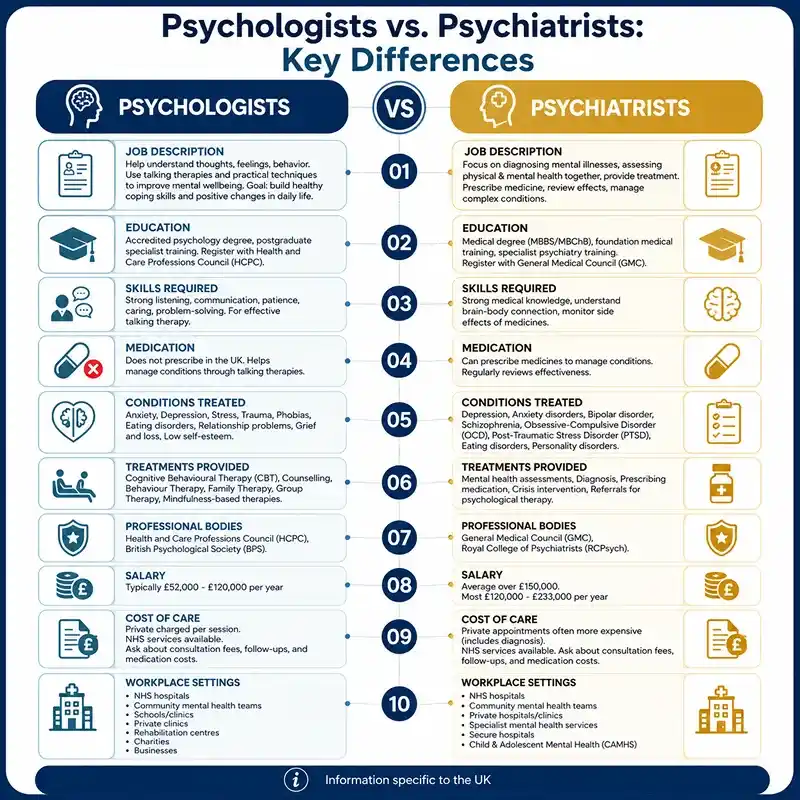
Although both experts help you with mental health, they have different qualifications, responsibilities and treatment methods. Understanding these differences can help you to decide who is best suited to your needs. The comparison below gives you a quick overview of psychologists vs psychiatrists.
1. Job Description
- Psychologists: They help you understand your thoughts, feelings and behaviour. They use talking therapies and practical techniques to improve your mental wellbeing. Their goal is to help you build healthy coping skills and make positive changes in daily life.
- Psychiatrist: They focus on diagnosing mental illnesses, assessing physical and mental health together and providing the right medical treatment. They can also prescribe medicine, review its effects and manage more complex mental health conditions.
2. Education
The education of these two experts is different from each other.
- Psychologist: They must complete an accredited psychology degree, postgraduate specialist training and also register themself with the Health and Care Professions Council (HCPC).
- Psychiatrist: They must complete a medical degree, foundation medical training, specialist psychiatry training and also register themself with the General Medical Council (GMC).
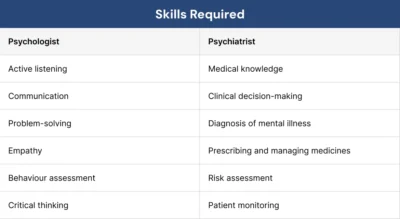
3. Skills Required
- Psychologist: They need strong listening and communication skills to understand the thoughts and feelings of a person. They must also be patient, caring and good at solving problems. These skills help them to provide effective talking therapy.
- Psychiatrist: They must have strong medical knowledge. They need to understand how mental health conditions affect your brain and body. Psychiatrists must also know how different medicines work and monitor patients for side effects.
4. Medication
- Psychiatrist: They can prescribe medicines to help manage mental health conditions. They regularly review whether the medicine is working or not.
- Psychologist: They do not prescribe medication in the UK. Instead, they help you to manage your condition through talking therapies.
5. Conditions Treated
Both experts treat many of the same mental health conditions. However, they treat them in different ways.
Common conditions treated by a psychiatrist:
- Depression
- Anxiety disorders
- Bipolar disorder
- Schizophrenia
- Obsessive-Compulsive Disorder (OCD)
- Post-Traumatic Stress Disorder (PTSD)
- Eating disorders
- Personality disorders
Common conditions treated by a psychologist:
- Anxiety
- Depression
- Stress
- Trauma
- Phobias
- Eating disorders
- Relationship problems
- Grief and loss
- Low self-esteem
6. Treatments Provided
Both experts provide treatments according to their domain and knowledge. A psychologist provides you treatment based on therapies, while a psychiatrist provides medical-based treatment.
Treatments provided by a psychologist:
- Cognitive Behavioural Therapy (CBT)
- Counselling
- Behaviour Therapy
- Family Therapy
- Group Therapy
- Mindfulness-based therapies
Treatments provided by a psychiatrist:
- Mental health assessments
- Diagnosis of mental health conditions
- Prescribing medication
- Crisis intervention
- Referrals for psychological therapy
7. Professional Bodies
Professional bodies help both of them to make sure they meet high standards of education, ethics and patient care.
- Psychologists: In the UK, they are usually registered with the Health and Care Professions Council (HCPC). Many also belong to the British Psychological Society (BPS).
- Psychiatrists: They must be registered with the General Medical Council (GMC) before they can practise medicine. Many also belong to the Royal College of Psychiatrists (RCPsych).
These organisations help to protect patients by making sure experts maintain their skills and follow strict standards.
8. Salary
Both of them have the potential to earn high salaries.
- Psychologist: They typically make between £52,000 to £120,000 per year.
- Psychiatrists: on average, they earn over £150,000 annually, most making between £120,000 to £233,000 per year.
Salary should not be the main factor when comparing psychologist vs psychiatrist. Both careers require years of education.
9. Cost of Care
The cost of care varies across the UK depending on the clinic you choose, location and the specialist’s experience.
In general:
- Private appointments with psychologists are usually charged per therapy session.
- Private appointments with a psychiatrist are often more expensive because they include diagnosis.
- Follow-up appointments usually cost less than the first consultation.
Many people begin with NHS services through their GP, while others choose private care to reduce the waiting times.
Before booking an appointment, it is helpful for you to ask:
- What is included in the consultation fee?
- Are follow-up appointments charged separately?
- Will treatment require more than one session?
- Are medication costs included?
Cost of care is a useful part of comparing psychologist vs psychiatrist, especially if you are considering a private doctor in the UK.
10. Workplace Settings
Psychologists: In the UK, they work in many settings, such as:
- NHS hospitals
- Community mental health teams
- Schools and universities
- Private clinics
- Rehabilitation centres
- Charities
- Prisons
- Businesses and workplaces
Psychiatrists: In the UK, they work in settings such as:
- NHS hospitals
- Community mental health teams
- Private hospitals and clinics
- Specialist mental health services
- Secure hospitals
- Child and adolescent mental health services (CAMHS)
Psychologist vs Psychiatrist: How They Work Together
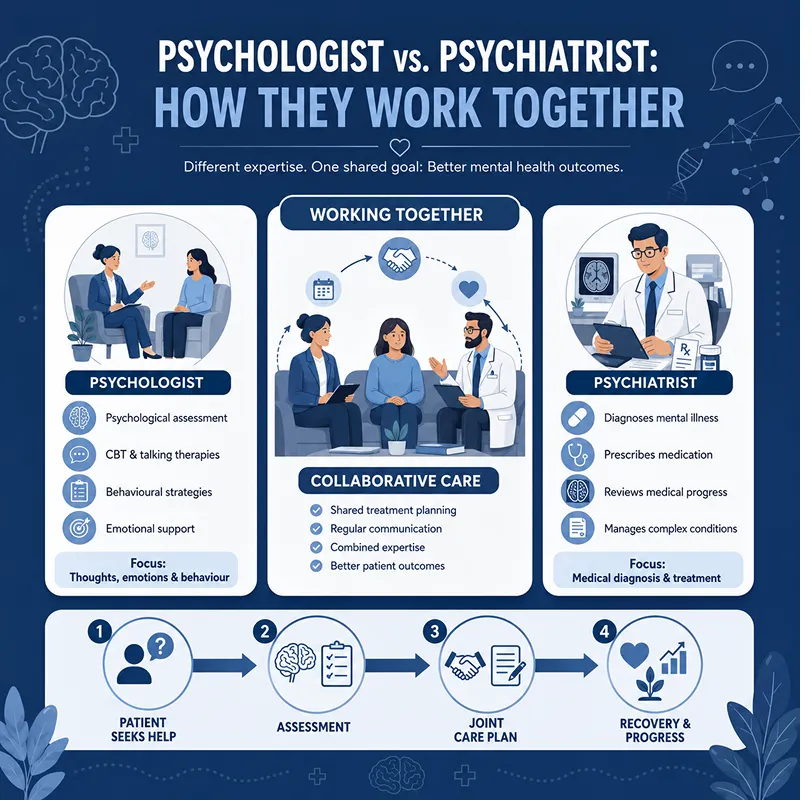
They both often work as part of the same healthcare team. They have different skills, but they share the same goal of helping people improve their mental health. When they work together, it allows patients to receive complete care that meets both their emotional and medical needs.
For example, a psychiatrist may diagnose depression and prescribe medication. At the same time, a psychologist can provide CBT therapy to help the person manage negative thoughts and develop healthy coping skills.
When to Choose a Psychologist
A psychologist is a good choice if you need support with your thoughts or feelings, but do not need medication. You may benefit from seeing them if you:
- Feel anxious or stressed most days.
- Have mild or moderate depression.
- Want help coping with grief or loss.
- Struggle with relationships.
- Have low confidence or self-esteem.
- Need support after a traumatic event.
- Want to learn healthier ways to manage your emotions.
They use evidence-based talking therapies to help you build practical coping skills. Treatment usually takes place over several sessions.
When to Choose a Psychiatrist
A psychiatrist may be the right choice for you if your mental health requires medical care or medication. You should consider seeing a psychiatrist if you:
- Have severe depression.
- Experience delusions.
- Have bipolar disorder.
- Need medication to manage your symptoms.
- Have not improved with talking therapy alone.
- Have complex mental health conditions that need more care.
They assess both your physical and mental health before deciding on the best treatment. They may prescribe medication or work with other mental health experts to create a better care plan.
Case Study: How Collaborative Care Improves Patient Mental Health
An NHS England case study showed how a psychologist and a psychiatrist worked together to improve the mental health of the patient.
A 68-year-old woman living in a care home had dementia and severe mental health issues. She often became distressed and had threatened to harm herself.
A psychiatrist reviewed her health, treated an underlying medical problem and changed her medication. At the same time, a psychologist helped care home staff to understand her behaviour and suggest practical ways to support her without relying on medication. As a result, the woman’s wellbeing improved and staff were better able to care for her.
This case shows that both experts often achieve the best results when they work together.
Conclusion
Understanding the differences between psychologist vs psychiatrist can help you make an informed decision about your care. If you are unsure which expert is right for you, speak to a Concise Medico and let our experts guide you throughout the process, from suggesting the right care to booking an appointment.