Missed Diagnosis vs Delayed Diagnosis: What’s the Difference?

Published On: June 16th, 2026|Total Views: 1|Daily Views: 1|9 min read|1800 words|

TABLE OF CONTENT

When you visit a doctor, you want to receive the correct diagnosis and treatment as well. But sometimes you can face issues which are caused by mistakes.

Some mistakes might happen by your GP during the diagnoses, and these mistakes may have serious effects on your overall health and may affect your quality of life.

A delayed diagnosis happens when a medical condition is identified, but not within a time. This delay can allow the illness to become worse.

A missed diagnosis occurs when a doctor identifies the wrong condition or fails to identify any condition at all.

A major UK study found diagnostic errors including missed and delayed diagnosis in about 4.3% of GP consultations.

Understanding the difference between a delayed and a missed diagnosis is important for you because it may help you to identify your case.

Key Takeaways

  • A missed diagnosis happens when a doctor fails to identify the correct condition or diagnoses the wrong illness, leaving the real problem untreated.
  • A delayed diagnosis occurs when the correct condition is eventually identified, but only after a significant and often harmful delay.
  • Both missed diagnosis and delayed diagnosis fall under the broader category of diagnostic errors, which are a major cause of preventable patient harm.
  • A missed diagnosis often leads to wrong or no treatment, while a delayed diagnosis usually results in late treatment and disease progression.
  • Common causes of both include poor examination, misread test results, failure to order tests, and communication gaps between healthcare professionals.
  • Serious conditions such as cancer, stroke, heart attack, and sepsis are most affected by diagnostic errors due to the need for urgent treatment.
  • Diagnostic errors are not always negligence, but they may become a legal issue if they fall below an acceptable medical standard and cause harm.
  • Patients may notice warning signs such as persistent symptoms, worsening health, conflicting diagnosis, or ineffective treatment.
  • In the UK, research shows diagnostic errors occur in a significant number of GP and hospital cases, contributing to avoidable harm.
  • Early medical attention, second opinions, and proper follow-ups can reduce the risk of both missed and delayed diagnosis.
  • Legal claims may be possible if it can be proven that a missed diagnosis or delayed diagnosis directly caused avoidable injury or worsening of a condition.
  • Understanding the difference between the two helps patients take timely action and seek appropriate medical or legal support when needed.

What Is a Diagnostic Error?

A diagnostic error occurs when a doctor fails to identify a medical condition on time. This can include a delayed diagnosis or a missed diagnosis.

These errors may happen during the testing or the review of medical records. Even a small mistake can lead to serious health issues.

It affects the people of all ages and can occur with both minor and serious illnesses. Conditions such as cancer, stroke and heart disease are a few such examples of serious illness.

Common Types of Diagnostic Errors

The most common types of diagnostic errors include delayed, missed and wrong diagnosis. Each type can affect the patient’s health in different ways.
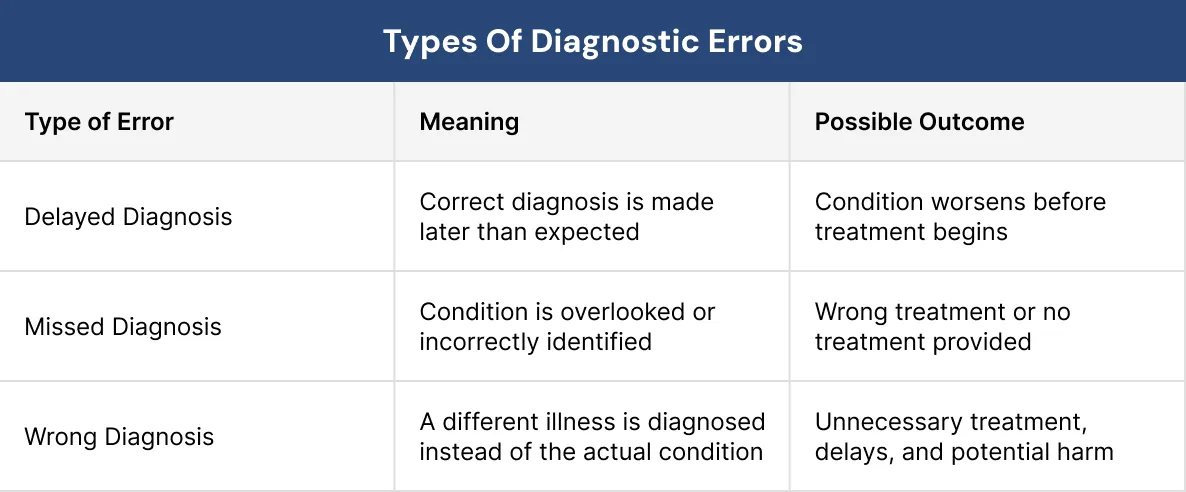
Types of Diagnostic Errors

What Is a Missed Diagnosis?

A missed diagnosis happens when a doctor fails to identify the medical condition of a patient.

It can lead to serious health issues. The patient does not receive the treatment they actually need. Sometimes this can also lead to a delayed diagnosis and making the condition more difficult to treat later.

Medical experts are expected to find the symptoms carefully. When important signs are ignored then a missed diagnosis may occur.

How a Missed Diagnosis Happens?

A missed diagnosis can occur for many reasons. Sometimes a doctor may fail to ask enough questions about the symptoms of a patient.

In other cases, important tests may not be taken or results of the test may not be read carefully. When symptoms appear similar to another condition, doctors may focus on the wrong diagnosis and also overlook the actual illness.

Causes of Missed Diagnosis

  • Failure to listen carefully to patient concerns
  • Incomplete medical tests
  • Failure to order diagnostic tests
  • Failure to refer patients to specialists
  • Poor communication between healthcare providers
  • Relying on assumptions rather than evidence

Examples of Missed Diagnosis Cases

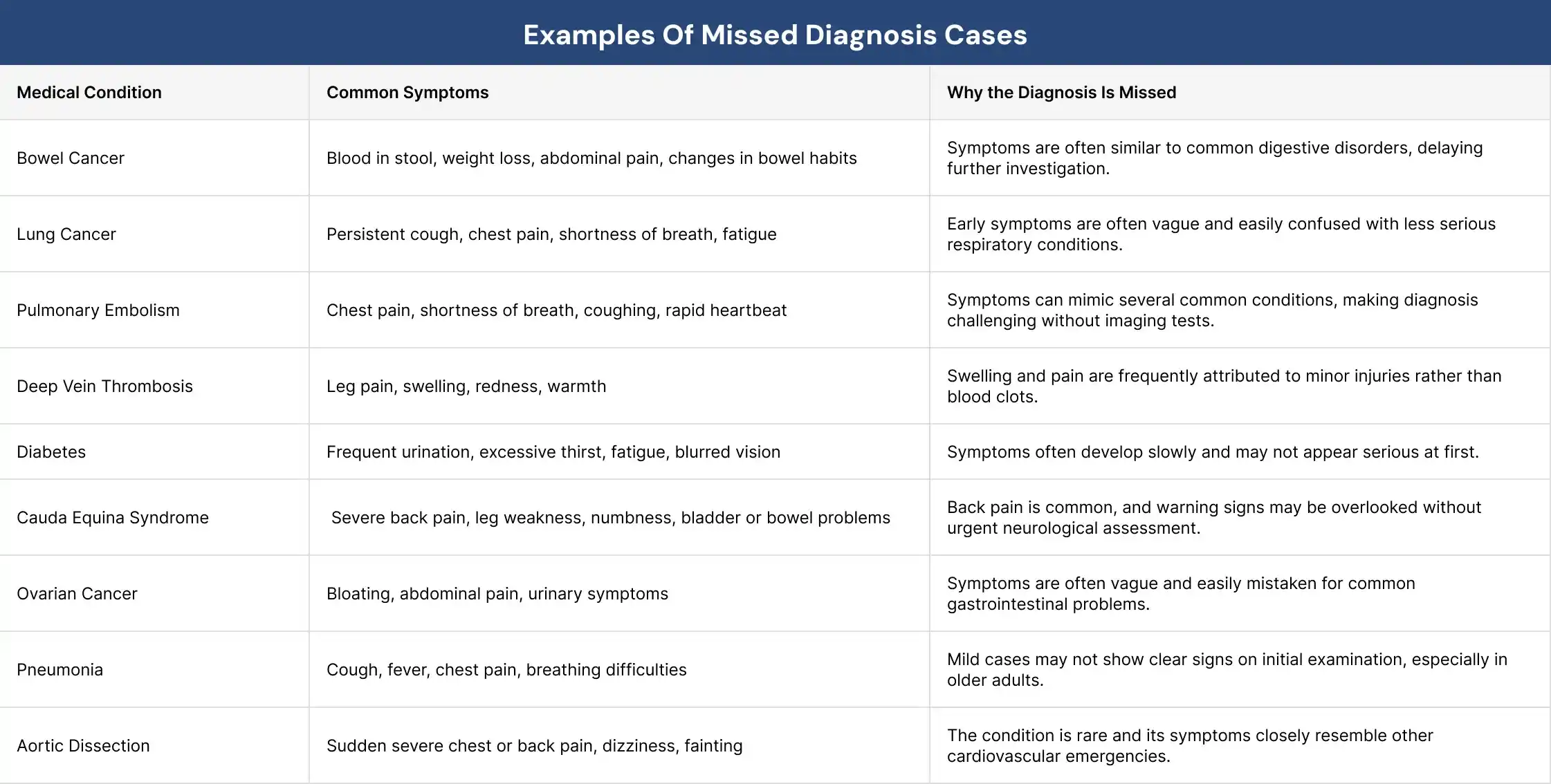
Some medical conditions are more commonly linked to a missed diagnosis. Because their symptoms can resemble other illnesses. Serious diseases require early detection to achieve the best results.

Some common examples of missed diagnosis cases are following:
Consequences of a Missed Diagnosis

The effects of a missed diagnosis can vary depending on the condition. Some patients face temporary issues, while others may face lifetime issues.

One major consequence is the growth of the untreated illness. Without the correct treatment you may face serious issues. In this case, the condition may require more intensive medical care.

Patients may also receive treatment for a condition they do not actually have. These unnecessary treatments can cause side effects. In severe cases, it can result in permanent disability or death.

Possible Consequences of a Missed Diagnosis include:

  • Worsening medical condition
  • Delayed treatment
  • Increased medical expenses
  • Wrong medication
  • Physical pain
  • Reduced quality of life
  • Disability

What Is Delayed Diagnosis?

A delayed diagnosis means when a doctor makes a delay to identify the right medical condition. The diagnosis is not completely missed, but the valuable time is lost.

During this period, the patient may continue to suffer from symptoms. In some cases, they may receive treatment for another condition. While the real illness continues to grow.

“A delayed diagnosis often occurs not from a single error, but from a combination of subtle signs being underestimated over time.”

— UK NHS Consultant Physician 

How Delayed Diagnosis Occurs?

A delayed diagnosis can occur for many reasons. Sometimes doctors may ignore the symptoms and assume that they are caused by a less serious condition. As a result, important treatment may not take place quickly.

In other situations, diagnostic tests may not be taken when needed.

Delays can also occur when results of the test are not reviewed in a proper way. Another reason is that patients are not referred to specialists at the right time.

Common Causes of Delayed Diagnosis

  • Failure to recognise warning signs
  • Delays in taking medical tests
  • Misreading test results
  • Delayed specialist referrals
  • Admin mistakes
  • Long waiting times for appointments
  • Failure to monitor ongoing symptoms

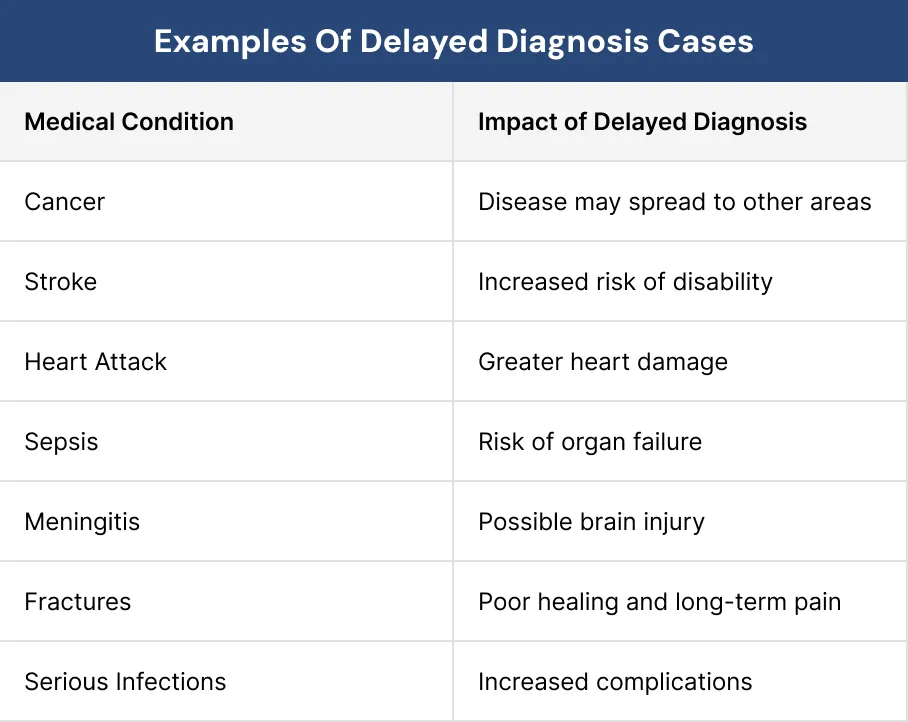
Common Examples of Delayed Diagnosis Cases

Certain medical conditions are associated with a delayed diagnosis. Because early symptoms may be difficult to identify. These illnesses often require prompt treatment to achieve the best outcome.
What Are the Health Risks of Delayed Diagnosis?

Here are some health risks of delayed diagnosis including;

  • Progression of disease
  • Reduced treatment options
  • Longer recovery periods
  • Increased medical costs
  • Permanent organ damage
  • Disability
  • Increased the risk of death

Missed Diagnosis vs Delayed Diagnosis: Key Differences

Many people use the terms missed diagnosis and delayed diagnosis as if they mean the same thing. While both are diagnostic errors and there are important differences between them.

A delayed diagnosis means the correct condition is identified, but after some time. A missed diagnosis means the doctor fails to identify the correct condition.

Both situations can lead to serious harm. They can result in increased medical costs. However, the way these errors occur and their impact on patients can differ.

1. Differences in Timing and Diagnosis Process

The timing of diagnosis plays a major role in a missed and delayed diagnosis. In a delayed diagnosis, the condition is eventually identified, but only after some time. It may allow the illness to increase till the diagnosis is found.

On the other side, a missed diagnosis often means the condition is not identified at all. This can lead to repeated visits and also lead to ongoing symptoms.

The diagnostic process also differs. A delayed diagnosis usually involves late testing or late referrals. However, a missed diagnosis often results from failure to find the symptoms properly.

2. Differences in Treatment Outcomes

Treatment outcomes often depend on whether the patient faces a delayed or a missed diagnosis. The accuracy of diagnosis plays a major role in recovery.

With a delayed diagnosis, the patient may receive the correct treatment. However, by the time treatment begins, the condition may have worsened. This can lead to longer recovery times and also more complex medical care.

A missed diagnosis may expose patients to wrong medication. At the same time, the real illness remains untreated. This can create more health issues.

For serious issues such as cancer, heart attack or stroke, both diagnoses can affect the chances of recovery.

Read more: What Is a Cancer Misdiagnosis? Compensation and Average Claim Amounts

3. Differences in Patient Harm

The harm caused by a delayed diagnosis can increase day by day. Patients may face more symptoms while waiting for the correct diagnosis.

A missed diagnosis can cause harm because treatment may focus on the wrong condition. Patients may have to deal with medical tests which are not suitable.

In many cases, it leads to a delayed diagnosis. When the original diagnosis proves incorrect, further tests may finally reveal the true condition.

Although both diagnostic errors can be serious for health, they differ in several ways. The table below highlights the difference between a delayed and a missed diagnosis.
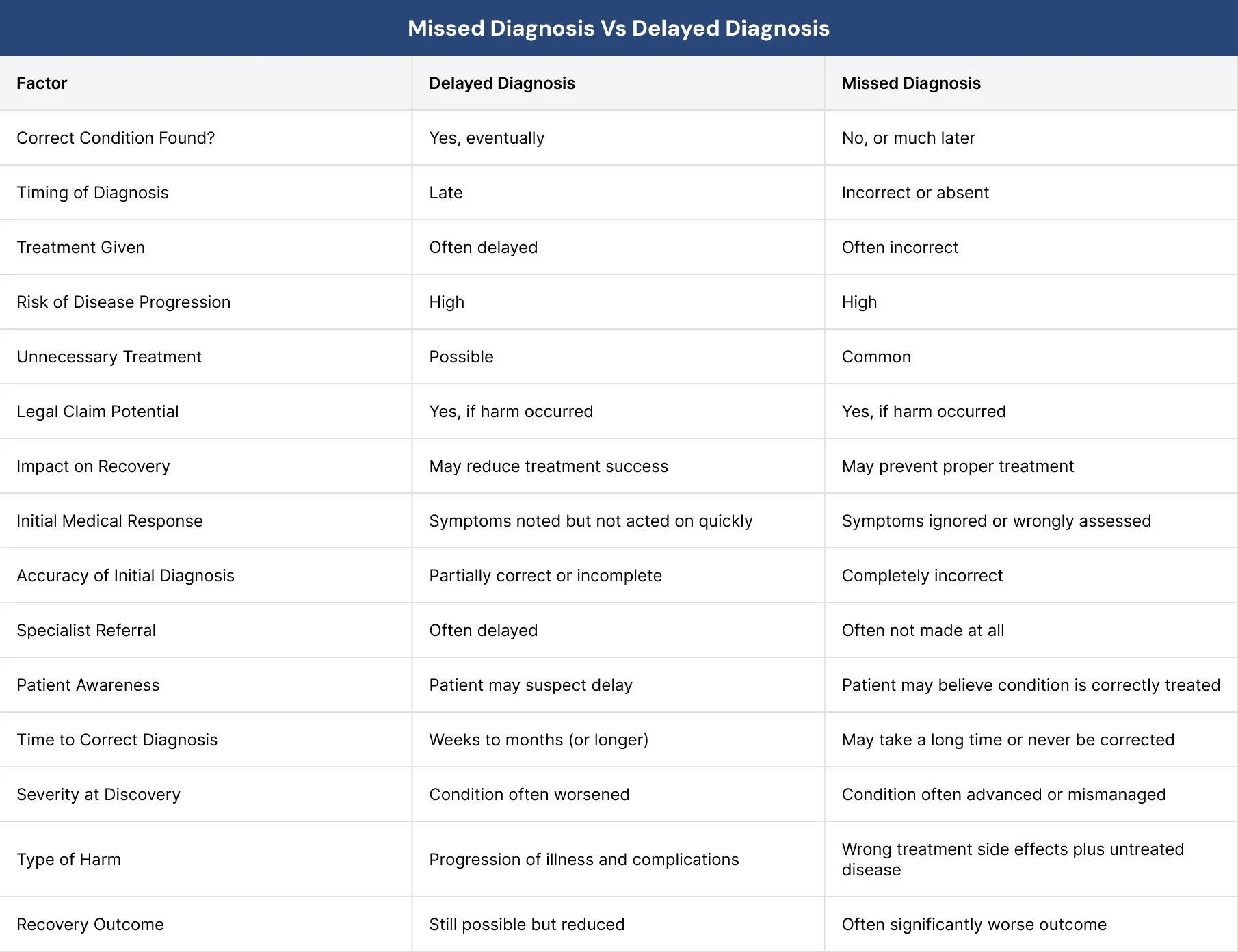
Missed Diagnosis vs Delayed Diagnosis info

Case Study: Missed Diagnosis vs Delayed Diagnosis

A 52-year-old patient in the UK visited a GP with chest pain. The GP thought it was acid reflux and gave the antacids. No single test was done at that time.

After two weeks, the patient returned with worse pain and shortness of breath. This time, the hospital diagnosed a heart attack. Treatment was started, but some heart damage had already occurred.

This was a delayed diagnosis, not a fully missed diagnosis. The condition was eventually found, but after a harmful delay. If it had been diagnosed earlier, the outcome could have been much better.

Conclusion

A delayed diagnosis happens when a condition is identified too late. While a missed diagnosis occurs when the condition is not identified correctly at all. Both can lead to serious harm if treatment is not given on time.

Understanding the differences between both types helps patients to recognise when something may have gone wrong with their medical care.

At Concise medico, we understand that diagnostic errors can affect the quality of life. But don’t worry, our specialist Medical team is here to help you.


If you or a family member have been affected by missed or delayed diagnosis, then we are here to help you in the process of claim and to recover any compensation you deserve. For this feel free to contact us today.

FAQs

What is the main difference between delayed diagnosis and missed diagnosis?2026-06-16T06:31:19+00:00

A delayed diagnosis means the correct condition is found late, while a missed diagnosis means the condition is not identified correctly.

Can a delayed diagnosis be medical negligence?2026-06-16T06:31:57+00:00

Yes, if the delay was avoidable and caused harm to the patient, it may be considered negligence.

Is misdiagnosis more serious than delayed diagnosis?2026-06-16T06:32:31+00:00

Both can be serious. A misdiagnosis may lead to wrong treatment, while a delayed diagnosis can allow the illness to worsen.

What should I do if I suspect a diagnostic error?2026-06-16T06:33:19+00:00

You should seek a second opinion, keep medical records, and consult a medical negligence solicitor.

Can I claim compensation for delayed diagnosis?2026-06-16T06:33:47+00:00

Yes, if you can prove that the delayed diagnosis caused harm or worsened your condition.

Share This Article!

When you visit a doctor, you want to receive the correct diagnosis and treatment as well. But sometimes you can face issues which are caused by mistakes.

Some mistakes might happen by your GP during the diagnoses, and these mistakes may have serious effects on your overall health and may affect your quality of life.

A delayed diagnosis happens when a medical condition is identified, but not within a time. This delay can allow the illness to become worse.

A missed diagnosis occurs when a doctor identifies the wrong condition or fails to identify any condition at all.

A major UK study found diagnostic errors including missed and delayed diagnosis in about 4.3% of GP consultations.

Understanding the difference between a delayed and a missed diagnosis is important for you because it may help you to identify your case.

Key Takeaways

  • A missed diagnosis happens when a doctor fails to identify the correct condition or diagnoses the wrong illness, leaving the real problem untreated.
  • A delayed diagnosis occurs when the correct condition is eventually identified, but only after a significant and often harmful delay.
  • Both missed diagnosis and delayed diagnosis fall under the broader category of diagnostic errors, which are a major cause of preventable patient harm.
  • A missed diagnosis often leads to wrong or no treatment, while a delayed diagnosis usually results in late treatment and disease progression.
  • Common causes of both include poor examination, misread test results, failure to order tests, and communication gaps between healthcare professionals.
  • Serious conditions such as cancer, stroke, heart attack, and sepsis are most affected by diagnostic errors due to the need for urgent treatment.
  • Diagnostic errors are not always negligence, but they may become a legal issue if they fall below an acceptable medical standard and cause harm.
  • Patients may notice warning signs such as persistent symptoms, worsening health, conflicting diagnosis, or ineffective treatment.
  • In the UK, research shows diagnostic errors occur in a significant number of GP and hospital cases, contributing to avoidable harm.
  • Early medical attention, second opinions, and proper follow-ups can reduce the risk of both missed and delayed diagnosis.
  • Legal claims may be possible if it can be proven that a missed diagnosis or delayed diagnosis directly caused avoidable injury or worsening of a condition.
  • Understanding the difference between the two helps patients take timely action and seek appropriate medical or legal support when needed.

What Is a Diagnostic Error?

A diagnostic error occurs when a doctor fails to identify a medical condition on time. This can include a delayed diagnosis or a missed diagnosis.

These errors may happen during the testing or the review of medical records. Even a small mistake can lead to serious health issues.

It affects the people of all ages and can occur with both minor and serious illnesses. Conditions such as cancer, stroke and heart disease are a few such examples of serious illness.

Common Types of Diagnostic Errors

The most common types of diagnostic errors include delayed, missed and wrong diagnosis. Each type can affect the patient’s health in different ways.

Types of Diagnostic Errors

What Is a Missed Diagnosis?

A missed diagnosis happens when a doctor fails to identify the medical condition of a patient.

It can lead to serious health issues. The patient does not receive the treatment they actually need. Sometimes this can also lead to a delayed diagnosis and making the condition more difficult to treat later.

Medical experts are expected to find the symptoms carefully. When important signs are ignored then a missed diagnosis may occur.

How a Missed Diagnosis Happens?

A missed diagnosis can occur for many reasons. Sometimes a doctor may fail to ask enough questions about the symptoms of a patient.

In other cases, important tests may not be taken or results of the test may not be read carefully. When symptoms appear similar to another condition, doctors may focus on the wrong diagnosis and also overlook the actual illness.

Causes of Missed Diagnosis

  • Failure to listen carefully to patient concerns
  • Incomplete medical tests
  • Failure to order diagnostic tests
  • Failure to refer patients to specialists
  • Poor communication between healthcare providers
  • Relying on assumptions rather than evidence

Examples of Missed Diagnosis Cases

Some medical conditions are more commonly linked to a missed diagnosis. Because their symptoms can resemble other illnesses. Serious diseases require early detection to achieve the best results.

Some common examples of missed diagnosis cases are following:

Consequences of a Missed Diagnosis

The effects of a missed diagnosis can vary depending on the condition. Some patients face temporary issues, while others may face lifetime issues.

One major consequence is the growth of the untreated illness. Without the correct treatment you may face serious issues. In this case, the condition may require more intensive medical care.

Patients may also receive treatment for a condition they do not actually have. These unnecessary treatments can cause side effects. In severe cases, it can result in permanent disability or death.

Possible Consequences of a Missed Diagnosis include:

  • Worsening medical condition
  • Delayed treatment
  • Increased medical expenses
  • Wrong medication
  • Physical pain
  • Reduced quality of life
  • Disability

What Is Delayed Diagnosis?

A delayed diagnosis means when a doctor makes a delay to identify the right medical condition. The diagnosis is not completely missed, but the valuable time is lost.

During this period, the patient may continue to suffer from symptoms. In some cases, they may receive treatment for another condition. While the real illness continues to grow.

“A delayed diagnosis often occurs not from a single error, but from a combination of subtle signs being underestimated over time.”

— UK NHS Consultant Physician 

How Delayed Diagnosis Occurs?

A delayed diagnosis can occur for many reasons. Sometimes doctors may ignore the symptoms and assume that they are caused by a less serious condition. As a result, important treatment may not take place quickly.

In other situations, diagnostic tests may not be taken when needed.

Delays can also occur when results of the test are not reviewed in a proper way. Another reason is that patients are not referred to specialists at the right time.

Common Causes of Delayed Diagnosis

  • Failure to recognise warning signs
  • Delays in taking medical tests
  • Misreading test results
  • Delayed specialist referrals
  • Admin mistakes
  • Long waiting times for appointments
  • Failure to monitor ongoing symptoms

Common Examples of Delayed Diagnosis Cases

Certain medical conditions are associated with a delayed diagnosis. Because early symptoms may be difficult to identify. These illnesses often require prompt treatment to achieve the best outcome.

What Are the Health Risks of Delayed Diagnosis?

Here are some health risks of delayed diagnosis including;

  • Progression of disease
  • Reduced treatment options
  • Longer recovery periods
  • Increased medical costs
  • Permanent organ damage
  • Disability
  • Increased the risk of death

Missed Diagnosis vs Delayed Diagnosis: Key Differences

Many people use the terms missed diagnosis and delayed diagnosis as if they mean the same thing. While both are diagnostic errors and there are important differences between them.

A delayed diagnosis means the correct condition is identified, but after some time. A missed diagnosis means the doctor fails to identify the correct condition.

Both situations can lead to serious harm. They can result in increased medical costs. However, the way these errors occur and their impact on patients can differ.

1. Differences in Timing and Diagnosis Process

The timing of diagnosis plays a major role in a missed and delayed diagnosis. In a delayed diagnosis, the condition is eventually identified, but only after some time. It may allow the illness to increase till the diagnosis is found.

On the other side, a missed diagnosis often means the condition is not identified at all. This can lead to repeated visits and also lead to ongoing symptoms.

The diagnostic process also differs. A delayed diagnosis usually involves late testing or late referrals. However, a missed diagnosis often results from failure to find the symptoms properly.

2. Differences in Treatment Outcomes

Treatment outcomes often depend on whether the patient faces a delayed or a missed diagnosis. The accuracy of diagnosis plays a major role in recovery.

With a delayed diagnosis, the patient may receive the correct treatment. However, by the time treatment begins, the condition may have worsened. This can lead to longer recovery times and also more complex medical care.

A missed diagnosis may expose patients to wrong medication. At the same time, the real illness remains untreated. This can create more health issues.

For serious issues such as cancer, heart attack or stroke, both diagnoses can affect the chances of recovery.

Read more: What Is a Cancer Misdiagnosis? Compensation and Average Claim Amounts

3. Differences in Patient Harm

The harm caused by a delayed diagnosis can increase day by day. Patients may face more symptoms while waiting for the correct diagnosis.

A missed diagnosis can cause harm because treatment may focus on the wrong condition. Patients may have to deal with medical tests which are not suitable.

In many cases, it leads to a delayed diagnosis. When the original diagnosis proves incorrect, further tests may finally reveal the true condition.

Although both diagnostic errors can be serious for health, they differ in several ways. The table below highlights the difference between a delayed and a missed diagnosis.

Missed Diagnosis vs Delayed Diagnosis info

Case Study: Missed Diagnosis vs Delayed Diagnosis

A 52-year-old patient in the UK visited a GP with chest pain. The GP thought it was acid reflux and gave the antacids. No single test was done at that time.

After two weeks, the patient returned with worse pain and shortness of breath. This time, the hospital diagnosed a heart attack. Treatment was started, but some heart damage had already occurred.

This was a delayed diagnosis, not a fully missed diagnosis. The condition was eventually found, but after a harmful delay. If it had been diagnosed earlier, the outcome could have been much better.

Conclusion

A delayed diagnosis happens when a condition is identified too late. While a missed diagnosis occurs when the condition is not identified correctly at all. Both can lead to serious harm if treatment is not given on time.

Understanding the differences between both types helps patients to recognise when something may have gone wrong with their medical care.

At Concise medico, we understand that diagnostic errors can affect the quality of life. But don’t worry, our specialist Medical team is here to help you.

If you or a family member have been affected by missed or delayed diagnosis, then we are here to help you in the process of claim and to recover any compensation you deserve. For this feel free to contact us today.

FAQs

What is the main difference between delayed diagnosis and missed diagnosis?2026-06-16T06:31:19+00:00

A delayed diagnosis means the correct condition is found late, while a missed diagnosis means the condition is not identified correctly.

Can a delayed diagnosis be medical negligence?2026-06-16T06:31:57+00:00

Yes, if the delay was avoidable and caused harm to the patient, it may be considered negligence.

Is misdiagnosis more serious than delayed diagnosis?2026-06-16T06:32:31+00:00

Both can be serious. A misdiagnosis may lead to wrong treatment, while a delayed diagnosis can allow the illness to worsen.

What should I do if I suspect a diagnostic error?2026-06-16T06:33:19+00:00

You should seek a second opinion, keep medical records, and consult a medical negligence solicitor.

Can I claim compensation for delayed diagnosis?2026-06-16T06:33:47+00:00

Yes, if you can prove that the delayed diagnosis caused harm or worsened your condition.

Go to Top