TABLE OF CONTENT
Neurological Rehabilitation After Brain Injury: What Does Recovery Look Like?
A brain injuries can affect many parts of your life. They can affect your movement, speech, memory, emotions and daily tasks. Recovery looks different for everyone, but it often begins with medical care, followed by rehabilitation and long-term support. Neurological rehabilitation after brain injury helps you to regain skills, improve independence and adjust to changes after an injury.
According to the WHO, an estimated 69 million people experience a Traumatic Brain Injury (TBI) every year worldwide, showing how rehabilitation is important in their lives. Recovery does not happen overnight. It takes time, patience and the right treatment plan. With the right care, many people gradually improve their quality of life.
What Is Neurological Rehabilitation?
Neurological rehabilitation after brain injury is the process of healing and learning new ways to perform the daily activities in a better way after damage to the brain. Recovery may begin in the hospital and continue for months or even years. During this time, the brain and body work together to regain the lost skills. Neurological rehabilitation after brain injury plays a key role in this journey. It supports physical recovery, improves thinking skills and helps you to become more independent.
How Rehab Helps After a Brain Injury
Neurological rehabilitation after brain injury helps you to improve abilities like walking, communicate clearly and how you control your emotions with the help of structured therapy. Treatment plans are based on your goals and may change as progress is made.
Common Types of Therapy for a Brain Injury
Recovery after a brain injury often involves more than one type of therapy. Each therapy focuses on a different area of recovery.
The main types of therapy for brain injury rehabilitation are given below.
1. Physical Therapy
Physical therapy helps you to improve your strength, balance and movement. It is often one of the first therapies introduced after a brain injury.
2. Occupational therapy
It helps you to relearn activities of daily living (ADLs) such as dressing, bathing and cooking.
3. Speech Therapy
Some people have difficulty with speaking after a brain injury. This therapy helps to improve this skill. As part of neurological rehabilitation after brain injury, it can also improve your confidence in social gatherings.
4. Cognitive Therapy
A brain injury can affect your memory, planning and problem-solving skills. This type of therapy helps you to strengthen these skills through structured activities and regular practice.
5. Specialised Therapy
Specialised therapy is the treatment that is designed to meet a person’s specific needs after a brain injury. It improves skills such as movement, speech, memory or daily activities to support recovery.
6. Neuropsychology Therapy
This type of therapy helps you deal with psychological changes after a brain injury. Emotional changes are treated to help you better deal with emotions with therapy.
Neurological Rehabilitation After Brain Injury: Stages of Recovery
Recovery after a brain injury takes time and often involves different stages, but they do not always happen in the same order. Each stage has its own goals and recovery period. Some people recover faster than others, depending on the type of injury and their overall health.
Here are the stages of neurological rehabilitation after brain injury.
Stage 1: Medical Stabilisation
The first stage starts right after the brain injury. Doctors and nurses focus on treating the injury and making sure that you are medically stable. They provide you immediate care so your condition doesn’t become worse. Once it is safe, then simple activities for rehabilitation may begin. These can include gentle movements and changing positions of the body to prevent stiffness and other health issues. This early care prepares you for the next stage of rehabilitation.
Stage 2: Inpatient Care
After leaving intensive medical care, some people move to a rehabilitation centre or hospital. Here, they receive therapy every day for recovery. Such treatments help you improve movement, speech, memory and daily living skills. Family members are often involved at this stage. They learn how to support their loved one during recovery.
Stage 3: Physical Recovery
This stage focuses on improving your strength and balance. It is aimed to help you regain your strength, grip and mobility. Such therapy helps you to become more confident and reduces the risk of falls.
Stage 4: Cognitive Rehabilitation
A brain injury can affect your memory and problem-solving skills. Cognitive rehabilitation helps you to improve these skills. Therapists use simple activities and exercises to train your brain. They also teach helpful ways to manage the daily tasks, such as using reminders or making lists.
Stage 5: Communication Rebuilding
Some people have issues with speaking, reading or writing after a brain injury. Here, speech therapy helps you improve these skills. Therapists create activities that match your needs. Family members are also encouraged to practise these skills at home. Better speaking skills help you to feel more confident and stay connected with others.
Stage 6: Emotional Support
A brain injury can affect your emotions and behaviour. Some people feel anxious, sad or upset during the process of recovery. Psychologists help you understand these feelings and learn healthy ways to manage them. Families also receive advice on how to support their loved ones with a brain injury.
Stage 7: Functional Training
This stage helps you to become more independent in your daily life. Therapy focuses on everyday tasks that may have become difficult after the injury. Tasks like getting dressed, cooking meals, managing money, using public transport and doing household chores.
Stage 8: Community Role
As recovery continues, you begin returning to everyday life. This may include spending time with family and friends, taking part in hobbies or going back to work. Therapists help you to overcome any challenges you may still face. Family support also plays a key role during this stage.
Stage 9: Long-Term Adaptation
Recovery does not stop when formal therapy ends. Many people continue to improve for months or even years after a brain injury. Check-ups on a regular basis help healthcare experts review your progress and update treatment plans when needed. New goals may be added as recovery continues.
Some people also continue attending brain injury rehab sessions to maintain their skills and enjoy a better quality of life.
Why Is Every Rehab Recovery Journey Unique?
Every brain injury is different. Two people can have a similar injury, but they recover in very different ways. One person may improve quickly, while another may need more time and support. Some people have issues with movement and balance. Others may struggle with speech or emotions.
As a result of this, treatment should be based on the needs of each person. Neurological rehabilitation after brain injury is designed to support the areas that need the most help. Doctors look at the strengths of each person before creating a treatment plan.
Recovery goals can also change over time. As a condition improves, the rehabilitation team may adjust the plan to match new needs and help them continue progress.
‘Recovery is not simply about surviving the injury. It is about helping people return to meaningful lives.’
Professor Lyn Turkstra
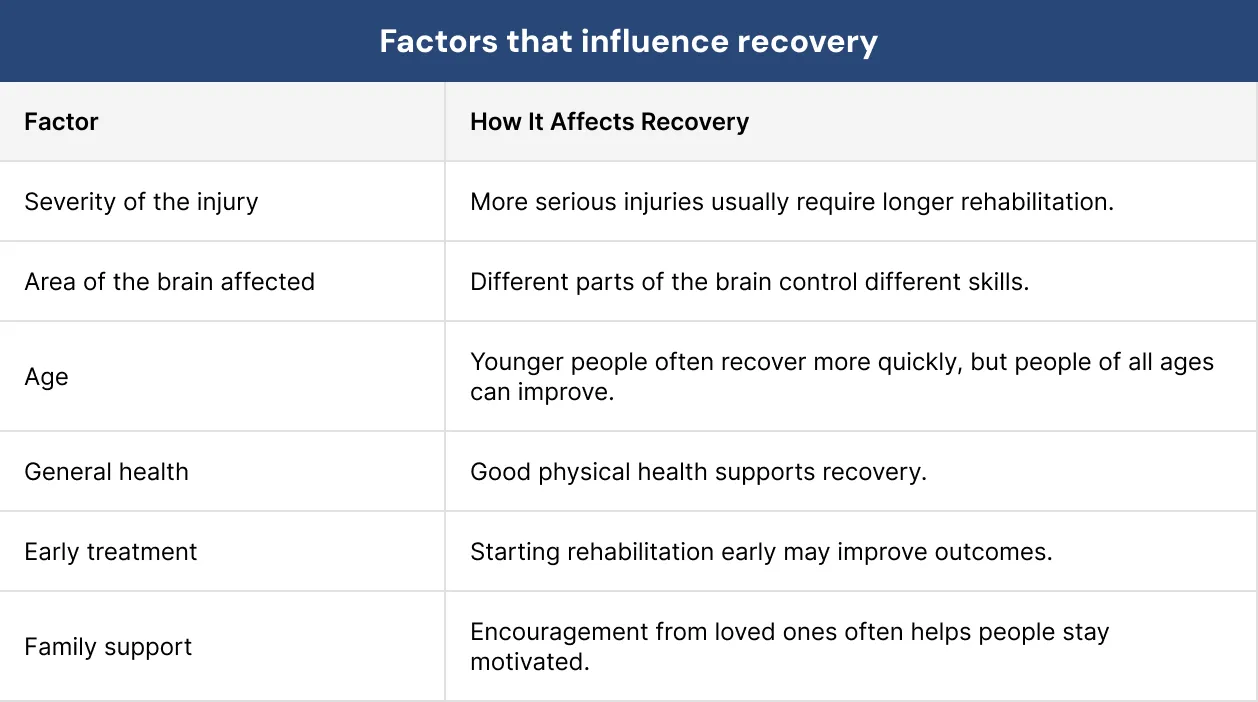
What Factors Influence Recovery After Brain Injury?
Many things affect how well someone recovers after a brain injury. Some people improve quickly, while others need long-term support.
The most important factors include:
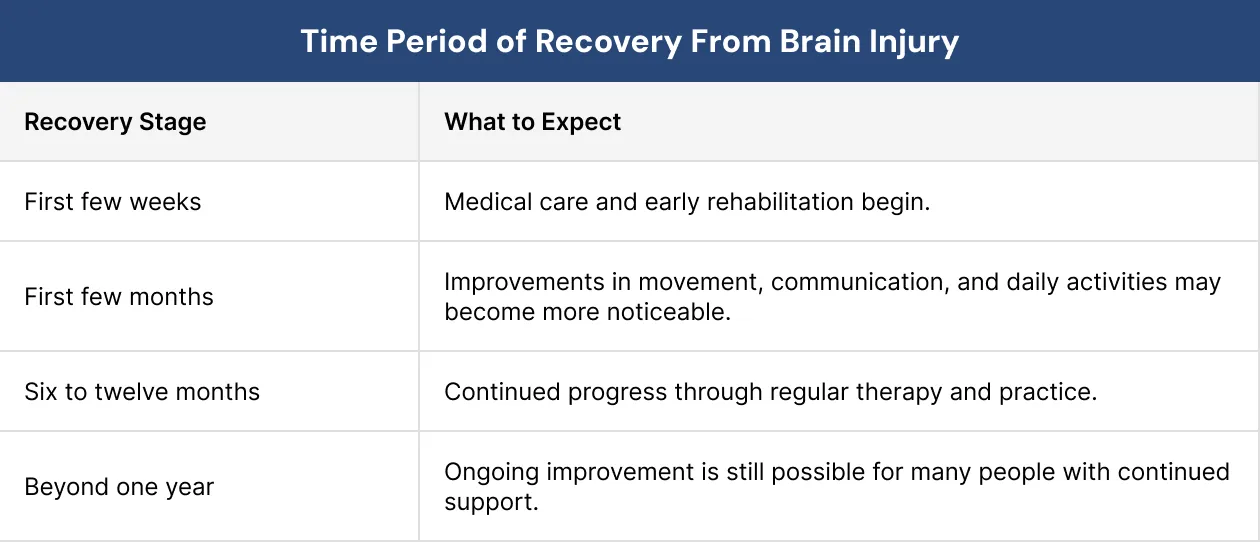
How Long Does it Take to Recover From a Brain Injury?
The recovery time in a brain injury varies from person to person. Some people recover within a few months, while others continue making progress for several years. There is no single timeline that applies to everyone. The table below shows a general guide.
Case Study
In the UK, 50-year-old Alan suffered a brain injury after a fall. At first, he had severe headaches and later on, he needed proper care. After his condition became stable, he started neurological rehabilitation after brain injury and received cognitive therapy.
During this period, he worked with therapists and nurses to regain his lost cognitive skills. His therapy began with children’s book, but soon improved to other levels. After several weeks of neurological rehabilitation after brain injury, he regained many of his skills and became well enough to return home.
Conclusion
Recovering from a brain injury takes time, patience and the right support. Rehab can help you to regain the key skills. In this guide, we have explained how neurological rehabilitation after brain injury helps you to recover from injury. From physical therapy to speech therapy, every stage helps you to improve your daily life.
With the right treatment plan, regular therapy and support from family, many people continue to make progress over time. Early rehab and right care can help you to improve overall quality of life. At Concise Medico, we provide you trusted care and guidance throughout the recovery process.