TABLE OF CONTENT
Do you know what causes the delay in clinical negligence cases? Often, it is simply because the expert was not instructed clearly.
At the start, many clinical negligence cases look simple but you cannot easily find the facts in records. This is because of the messy timeline of records.
Data shows that NHS Resolution received 14,428 new clinical negligence claims and reported incidents in 2024 and 2025. It supports why strong expert evidence and clear letters of instruction matter in clinical negligence.
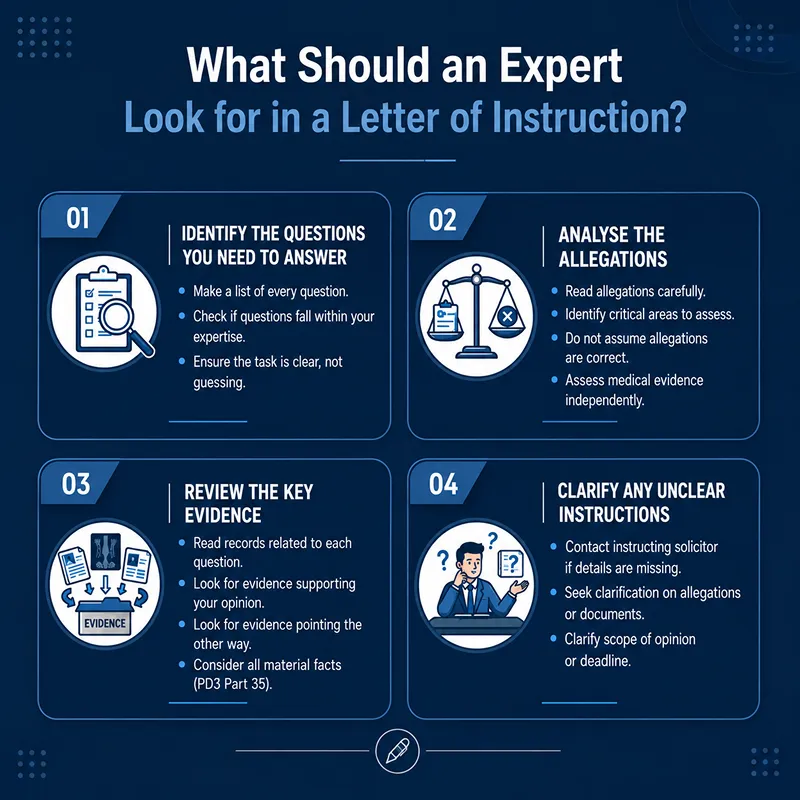
This is where a letter of instruction in clinical negligence becomes crucial. It is more than a formal letter. It is a letter of instruction to a medical expert. It explains:
- The case
- The questions
- The evidence
Every expert should know:
- How to write a proper letter of instruction to medical expert
- What a good letter of instruction looks like
- What should be inside the letter of instruction
Experts should know what to do when something feels wrong or incomplete in a letter of instruction. That knowledge:
- Protects the expert by avoiding unclear opinions
- Helps the solicitor by raising problems before the report is written
- Supports the court with fair evidence
What Is a Letter of Instruction in Clinical Negligence
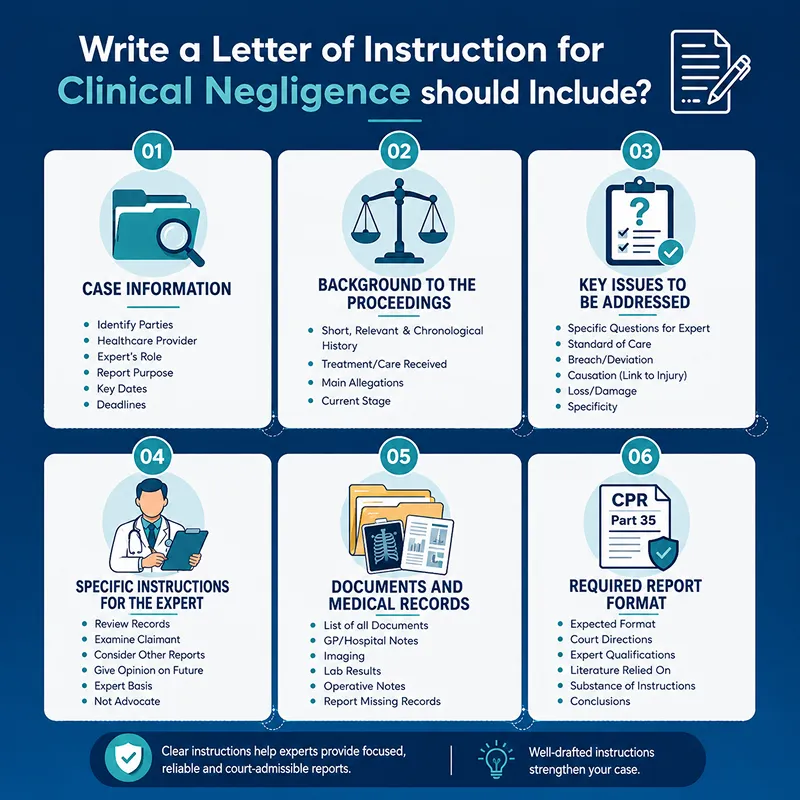
A formal document sent by a solicitor to a medical expert is called a letter of instruction.It explains the case and sets out the instructions for the expert’s review. It also asks the expert to prepare an independent report. The letter explains:
- Who the parties are
- What happened
- What issues need an opinion
- What records are enclosed
- What questions need answers
- When the report is required
In simple words, it tells the expert what job needs to be done. The letter of instruction shows where the expert should focus and where the expert should not go beyond their own expertise.
The Role of a Letter of Instruction
A letter of instruction matters so much because courts need careful evidence before reaching decisions. The expert report is often one of the most important parts of that evidence. A clinical negligence claim can involve:
- Serious injury
- Long treatment
- Loss of income
The letter of instruction matters for three main reasons:
Direction:
Without clear direction, an expert may spend time on points that do not matter.
Reduces confusion:
Clear questions often lead to clear answers.
Improves fairness:
Both sides should know the real issues in dispute.
When the original instructions are unclear, disputes become expensive because of delays, extra work and confusion. This problem is more common than many people realise.
The Legal Guidance That Supports Expert Instruction
Experts in civil claims should know that the letter of instruction is governed by Part 35 of the Civil Procedure Rules. It refers to the rules that control how expert evidence is used for trials of civil cases in England and Wales.
Before an expert is instructed, the solicitor should also think about:
- The experts qualifications
- Relevant experience
- Ability to report within a reasonable time
- Cost proportionality
- Availability for trial
- Conflict of interest
The Stages of Letter of Instruction
Many experts just think of it as one simple letter. In reality, there are often two stages. Knowing the difference helps an expert respond properly.
1. Letter of Approach
The first stage is a letter of approach. This is early contact and asks if the expert may be available and suitable. This approach may involve dates, likely issues and fee discussion.
2. Formal Letter of Instruction
The second stage is the formal letter of instruction. This is the detailed document that starts the real work. The formal letter of instruction should contain all the relevant papers.
What Documents Might Be Requested From the Expert
Many solicitors ask for supporting details before formal instruction. These details help the solicitor prepare a proper letter of instruction to expert.This may include:
- An updated CV
- Medico legal experience
- Terms and conditions
- Hourly rate
- Cancellation fees
- Court attendance charges and availability
For balance and fairness, some firms may ask:
- How much work the expert has done for claimant and defendant
- Whether oral evidence has been given at trial before
What Issues Is the Expert Usually Asked to Address
A letter of instruction to a medical expert often asks for input on:
1. Breach of Duty
This asks whether the healthcare provider acted below a reasonable standard expected from a competent professional.
Example: Was a serious symptom ignored when urgent referral was needed?
2. Causation
This asks whether the alleged failing caused injury or loss.
Example: If treatment had happened earlier, would the outcome likely be better?
3. Condition and Prognosis
This asks about the current condition and likely future outlook.
Example: Will pain continue? Will more surgery be needed?
4. Combined Questions
Some letters ask for all three issues in one report.
Experts should read carefully and know exactly what is being requested.

The Role of Clear Questions
The key part of many letters of instruction is the questions section because:
- Good questions are specific and easy to understand
- Poor questions are broad and confusing
Specific questions usually lead to stronger reports. If a question is unclear, the expert should ask for clarification before writing the final report.
Can an Expert Refuse Certain Questions
Yes, an expert can refuse questions outside their expertise.
- A cardiologist should be careful before answering psychiatric prognosis
- A psychiatrist should be careful before giving surgical standard opinions
If one section falls outside expertise, the expert can explain this clearly and suggest another suitable discipline.
The Role of Medical Records
Medical records matter so much in letters of instruction. They are often the strongest evidence in clinical negligence cases. That is why records should be read carefully, not quickly. They are created close to the events and can show:
- Symptoms
- Decisions
- Treatment
- Timing
- Changes in condition
It often happens that a key fact sits in one short line in the records. These may include:
- GP notes
- Hospital records
- Nursing notes
- Ambulance records
- Clinic letters
- Scan reports
- Operation notes
- Discharge summaries
How Should Experts Review Records
An expert should review records in the following steps:
- Start with a broad read. Understand the story first
- Then build a timeline. Dates matter greatly in negligence cases
- Then return to disputed periods and read in detail
- Then compare records with witness statements or allegations
- Then note missing records if gaps appear
Example:
That may become important, if someone claims they had severe pain for months but medical visits show no record of any complaints. If records are missing during a critical week, that also matters.
Experts should stay balanced and must consider all the evidence because:
- Some evidence may support the claim
- Some may weaken the claim
Why Chronology Is So Important
Many clinical negligence cases are really about timing, such as:
- Was the referral late
- Was treatment delayed
- Was the diagnosis missed for too long
- Was deterioration ignored overnight
A clean chronology often reveals the truth faster than long arguments. That is why a good letter of instruction often includes:
- A timeline
- Or summary chronology
Time errors can change the whole value of a case. If not included, the expert may need to build one from the records.
What If Instructions Are Incomplete
Sometimes it happens that instructions are incomplete in the letter of instruction to solicitor, such as:
- Records may be missing
- Questions may be vague
- Key witness statements may not be enclosed
- The report deadline may be unrealistic
When this happens, the best step is to raise concerns early. Experts should ask:
- Are all records provided
- Are the questions clear
- Is another expert already instructed
- Is the deadline practical
- Is any factual issue unclear
Asking questions early can save trouble later. Staying silent at the start can create stress near the deadline.
Asking questions early can prevent problems later. Staying silent at the start can lead to pressure and stress close to the deadline.
Should Experts Discuss Early Views With Solicitors
Yes, experts should discuss early views with solicitors with care. It can help if the letter of instruction to a solicitor does not fully explain the issues. A brief conversation can help you to determine if there are missing documents, false claims or that you need a different kind of specialist.
Do not change your own opinion to fit the clients needs, make sure you follow all of the instructions and the report addresses the problems. Experts should be independent at all times.
Claimant Instructions Vs Defendant Instructions
Experts often work for both sides because that balance can build trust. Following are the instructions for both sides:
1. Claimant Side
The expert may focus on:
- What went wrong
- What harm followed
- Future condition
- Losses linked to injury
2. Defendant Side
The expert may focus on whether:
- Care was reasonable
- Outcome was unavoidable
- Injury would have happened anyway
- Records support the allegations
Even when instructed by one side, the duty remains the same. The expert serves the court with an honest opinion.
How Should an Expert Structure the Report
A strong report should be easy to follow. If the report feels messy, the opinion may lose credibility and appear less trustworthy. The following points help an expert structure the report:
1. Introduction
This part should explain who wrote the report, their qualifications and what documents were read. This also explains the date of the examination if there was one and why the report was prepared. This helps the reader understand the report from the start.
2. Background and History
This section should provide a short summary of the important medical history. This also provides facts of the case. Long extra detail can hide the key points.
3. Issues to Be Addressed
List the questions from the letter of instruction. Rewrite them if they are not clear. Do not change the meaning.
4. Analysis
This is the main part of the report. Each point should be explained clearly and supported by evidence. The expert should explain
- What happened
- What standard of care should have been followed
- Whether that standard was missed
- Whether that caused the injury
5. Opinion
In this part the expert should give a simple final opinion in clear words. The expert should not hide any truth.
6. Prognosis or Future Position
If asked, explain future outlook, treatment needs, recovery path or ongoing symptoms.
This part should explain the future forecast such as:
- Treatment that may still be needed
- The possible recovery
- Symptoms that may continue
7. References
They should be listed properly, if the report uses:
- Medical books
- Studies
- Guidance
- Professional rules

Why Direct Answers Matter
The long reports of experts that do not answer the main questions clearly, can cause delay and stress.
If the solicitor asks, did delay in diagnosis cause avoidable harm? The report should answer this first before giving detail such as:
- Yes, likely
- No, unlikely
- Not clear from the current evidence
Then explain the reason. Courts value clear answers rather than long sections that do not deal with the real issue.
How Much Detail Is Enough
Your report looks weak with too little detail while too much detail can hide the main answer. You should provide enough detail to support each opinion.
For example, if saying that treatment delay caused worsening infection, the report should explain:
- Symptoms already present
- Records showing the delay
- Treatment that should have happened
- Likely effect of the late treatment
That is enough detail to support the opinion well. You don’t need to copy every line of the records.
Should Experts Quote Medical Records
Not always but sometimes a quote can be a powerful tool. For example, the patient has reported sudden chest pain since yesterday. This one line matters a lot. You should not use quotes often. You need to be very careful with quotes. Quotes are helpful when:
- Symptoms are disputed
- Timing matters
- Consent wording matters
- Warnings were given or not given
- Advice is clearly recorded
What Should be the Language of the Report
Simple language is always powerful. It helps judges and lawyers easily understand the issue. It also saves time. For example, instead of saying, ‘the clinical chronology demonstrates a probable suboptimal escalation pathway. Just say, the patient should likely have escalated sooner’.
Everything should be made as simple as possible but not simpler. – Albert Einstein, Physicist
What Makes an Expert Credible
A credible expert gives you clear answers and knows their limits. They stay calm and consider fair opposing points. They help you understand legal terms by using simple words.
An expert who does not accept clear evidence may lose the trust of judges. The court gives priority to experts who act fairly.
What If Evidence Supports Both Sides
This usually happens when cases support both sides. The report should say this clearly if one evidence supports negligence and the other supports reasonable care.
For example, the records show the review was delayed but they also show some early symptoms that were mild and unclear. This two sided evidence helps judges to make fair decisions.
What If the Solicitor Wants a Stronger Opinion
Sometimes a request may put pressure on experts to make stronger evidence. They can change opinion in case of new records and facts. They can also change their opinion if a new medical research appears. This shows an expert should be independent.
Common Mistakes Experts Should Avoid
Many times letters of instruction have avoidable mistakes. The following are the mistakes that expert do:
- They accept unclear instructions that can cause confusion later
- They give opinions outside their field
- They often do not look both sides of evidence
- The solicitors do not tell that the report is not ready on time and waste court timings
- They use medical terms without explaining the meaning
- They often support one party instead of helping the court with an honest opinion
- They do not tell clearly that the care caused the injury or made it worse
Why Deadlines Matter in Clinical Negligence Cases
Deadlines matter in clinical negligence because courts may need reports before:
- Case management hearings
- Joint expert meetings
- Settlement discussions
- Trial preparation
The expert should inform the instructing solicitor if they could not provide the report before the deadline. A professional expert always communicates early and protects working relationships.
What Happens After the Report Is Served
A new stage begins after the report is served. Experts should stay available for later steps that are mentioned in the letter of instruction, there may be:
- Written questions from the other side
- Meetings with lawyers
- Joint talks with another expert
- New reports
- Court attendance
What Are Written Questions in Letter of Instruction
After exchange of reports, the other side may ask focused written questions. These should usually be answered carefully and directly.
The aim is often to clarify points, test reasoning or narrow disagreement. Good replies are:
- Polite
- Concise
- Evidence based
Meetings Between Experts
In some cases, experts from both sides meet and prepare a joint statement. This process often identifies:
- Agreed facts
- Agreed standards
- Real areas of dispute
- Issues no longer worth contesting
Experts should approach this professionally. It is not a battle. Sometimes respectful discussion narrows a large dispute into one small issue. That can help settlement.
How Can One Hidden Record Change a Case
This happens often when one hidden record changes a case, such as:
- An old GP note may show pre-existing symptoms
- A later clinic letter may reveal an alternative cause
- A consent form may show warnings were given
- A scan timing entry may prove delay
Small records can carry huge weight. That is why careful reading matters more than speed. In complex claims, one overlooked page may shift the whole opinion.
Why Some Cases Fail Before Trial
Some claims weaken because the allegations are too many and too weak. A stronger approach is often a few clear points supported by evidence.
Example
Weak approach: Ten vague complaints about poor care.
Stronger approach: Failure to act on clear red flag symptoms despite repeated attendances.
A Practical Checklist Before Starting Work
Before writing a letter of instruction to a solicitor, an expert should ask:
- Is this within the right speciality
- Any conflict of interest
- Are all key records present
- Are questions clear
- Is chronology available
- Is the deadline realistic
- Is examination required
- Is another speciality also needed
Ten careful minutes here can save ten stressful hours later.
A Practical Checklist Before Sending the Report
Before finalising the report, the expert should also review whether the letter of instruction to a solicitor has been answered properly in the report, such as:
- Have all questions been answered
- Is reasoning easy to follow
- Are dates accurate
- Are opinions consistent
- Is language fair and balanced
- Are literature references correct
- Have obvious typing errors been removed
- Is the conclusion clear
How Good Letters of Instruction Help Everyone
Strong instructions often lead to stronger reports. A good letter of instruction to a medical expert helps the:
- Expert with clear scope and focused questions
- Solicitor with useful evidence aligned to issues
- Client with less delay and stronger case management
- Court with better quality evidence and clearer disputes
Data shows that 83% of clinical negligence claims were resolved without formal court cases in 2024/25. This explains how strong early evidence and expert opinion can help disputes.
Case Study
This is a real life case of medical negligence that happened in the UK in 2005. Following are the details of this case:
Background
This case is about a healthy 37 years old woman Elaine Bromiley. She went to Worthing Hospital for routine sinus surgery. The doctors accidentally damaged her airway during the operation. Emergency steps were also delayed when her oxygen levels dropped. As a result, she lost her life due to severe brain injury.
Findings
Later an independent review found that the medical team did not act fast enough to create a surgical airway or wake her sooner after anaesthesia. The doctors did not follow the emergency airway plan.
Result
This case explains well that a good letter of instruction in clinical negligence to an anaesthetics expert should ask clear questions in this case such as:
- Was the airway management below a reasonable standard of care
- Did emergency airway access happen too late
- Did delay cause avoidable brain injury
- Did communication problems and human factors play their role
Lesson
This case gave a strong lesson and later became a safety learning guide for patient safety in the UK. It is often used in training for:
- Anaesthetists
- Surgeons
- Hospital teams
- Expert witnesses
- Risk management professionals
This case also explains why one clear and well written letter of instruction to a medical expert can shape the whole case. In clinical negligence claims, the outcome may depend on:
- Clear timeline
- Theatre records
- Expert and witness evidence
- Proper analysis of causation
Conclusion
Many people think expert work is about impressive qualifications alone. Qualifications matter but they are only one part. Real expert value often comes from:
- Careful reading
- Disciplined thinking
- Honest limits
- Calm reasoning
- Clear writing
- Fairness under pressure
A good letter of instruction in clinical negligence is where that work begins. The expert has a strong start when the letter is:
- Clear
- Complete
- Thoughtful
When the expert responds with independence and care, the whole case improves. That is what every expert should know.
Concise Medico understands that expert evidence and trusted medical insight can make all the difference to your case.
Contact us today to get clear guidance on clinical neglect cases.
Our clinical negligence team helps secure clear instructions, trusted experts and strong case strategy. We have helped with complex medical negligence matters and expert evidence issues.
Contact us today for trusted advice on clinical negligence claims.
Our clinical negligence team helps secure clear instructions, trusted experts and strong case strategy. We have helped with complex medical negligence matters and expert evidence issues.
Contact us today for trusted advice on clinical negligence claims.
FAQs
Do you know what causes the delay in clinical negligence cases? Often, it is simply because the expert was not instructed clearly.
At the start, many clinical negligence cases look simple but you cannot easily find the facts in records. This is because of the messy timeline of records.
Data shows that NHS Resolution received 14,428 new clinical negligence claims and reported incidents in 2024 and 2025. It supports why strong expert evidence and clear letters of instruction matter in clinical negligence.
This is where a letter of instruction in clinical negligence becomes crucial. It is more than a formal letter. It is a letter of instruction to a medical expert. It explains:
- The case
- The questions
- The evidence
Every expert should know:
- How to write a proper letter of instruction to medical expert
- What a good letter of instruction looks like
- What should be inside the letter of instruction
Experts should know what to do when something feels wrong or incomplete in a letter of instruction. That knowledge:
- Protects the expert by avoiding unclear opinions
- Helps the solicitor by raising problems before the report is written
- Supports the court with fair evidence
What Is a Letter of Instruction in Clinical Negligence
A formal document sent by a solicitor to a medical expert is called a letter of instruction.It explains the case and sets out the instructions for the expert’s review. It also asks the expert to prepare an independent report. The letter explains:
- Who the parties are
- What happened
- What issues need an opinion
- What records are enclosed
- What questions need answers
- When the report is required
In simple words, it tells the expert what job needs to be done. The letter of instruction shows where the expert should focus and where the expert should not go beyond their own expertise.
The Role of a Letter of Instruction
A letter of instruction matters so much because courts need careful evidence before reaching decisions. The expert report is often one of the most important parts of that evidence. A clinical negligence claim can involve:
- Serious injury
- Long treatment
- Loss of income
The letter of instruction matters for three main reasons:
Direction:
Without clear direction, an expert may spend time on points that do not matter.
Reduces confusion:
Clear questions often lead to clear answers.
Improves fairness:
Both sides should know the real issues in dispute.
When the original instructions are unclear, disputes become expensive because of delays, extra work and confusion. This problem is more common than many people realise.
The Legal Guidance That Supports Expert Instruction
Experts in civil claims should know that the letter of instruction is governed by Part 35 of the Civil Procedure Rules. It refers to the rules that control how expert evidence is used for trials of civil cases in England and Wales.
Before an expert is instructed, the solicitor should also think about:
- The experts qualifications
- Relevant experience
- Ability to report within a reasonable time
- Cost proportionality
- Availability for trial
- Conflict of interest
The Stages of Letter of Instruction
Many experts just think of it as one simple letter. In reality, there are often two stages. Knowing the difference helps an expert respond properly.
1. Letter of Approach
The first stage is a letter of approach. This is early contact and asks if the expert may be available and suitable. This approach may involve dates, likely issues and fee discussion.
2. Formal Letter of Instruction
The second stage is the formal letter of instruction. This is the detailed document that starts the real work. The formal letter of instruction should contain all the relevant papers.
What Documents Might Be Requested From the Expert
Many solicitors ask for supporting details before formal instruction. These details help the solicitor prepare a proper letter of instruction to expert.This may include:
- An updated CV
- Medico legal experience
- Terms and conditions
- Hourly rate
- Cancellation fees
- Court attendance charges and availability
For balance and fairness, some firms may ask:
- How much work the expert has done for claimant and defendant
- Whether oral evidence has been given at trial before
What Issues Is the Expert Usually Asked to Address
A letter of instruction to a medical expert often asks for input on:
1. Breach of Duty
This asks whether the healthcare provider acted below a reasonable standard expected from a competent professional.
Example: Was a serious symptom ignored when urgent referral was needed?
2. Causation
This asks whether the alleged failing caused injury or loss.
Example: If treatment had happened earlier, would the outcome likely be better?
3. Condition and Prognosis
This asks about the current condition and likely future outlook.
Example: Will pain continue? Will more surgery be needed?
4. Combined Questions
Some letters ask for all three issues in one report.
Experts should read carefully and know exactly what is being requested.

The Role of Clear Questions
The key part of many letters of instruction is the questions section because:
- Good questions are specific and easy to understand
- Poor questions are broad and confusing
Specific questions usually lead to stronger reports. If a question is unclear, the expert should ask for clarification before writing the final report.
Can an Expert Refuse Certain Questions
Yes, an expert can refuse questions outside their expertise.
- A cardiologist should be careful before answering psychiatric prognosis
- A psychiatrist should be careful before giving surgical standard opinions
If one section falls outside expertise, the expert can explain this clearly and suggest another suitable discipline.
The Role of Medical Records
Medical records matter so much in letters of instruction. They are often the strongest evidence in clinical negligence cases. That is why records should be read carefully, not quickly. They are created close to the events and can show:
- Symptoms
- Decisions
- Treatment
- Timing
- Changes in condition
It often happens that a key fact sits in one short line in the records. These may include:
- GP notes
- Hospital records
- Nursing notes
- Ambulance records
- Clinic letters
- Scan reports
- Operation notes
- Discharge summaries
How Should Experts Review Records
An expert should review records in the following steps:
- Start with a broad read. Understand the story first
- Then build a timeline. Dates matter greatly in negligence cases
- Then return to disputed periods and read in detail
- Then compare records with witness statements or allegations
- Then note missing records if gaps appear
Example:
That may become important, if someone claims they had severe pain for months but medical visits show no record of any complaints. If records are missing during a critical week, that also matters.
Experts should stay balanced and must consider all the evidence because:
- Some evidence may support the claim
- Some may weaken the claim
Why Chronology Is So Important
Many clinical negligence cases are really about timing, such as:
- Was the referral late
- Was treatment delayed
- Was the diagnosis missed for too long
- Was deterioration ignored overnight
A clean chronology often reveals the truth faster than long arguments. That is why a good letter of instruction often includes:
- A timeline
- Or summary chronology
Time errors can change the whole value of a case. If not included, the expert may need to build one from the records.
What If Instructions Are Incomplete
Sometimes it happens that instructions are incomplete in the letter of instruction to solicitor, such as:
- Records may be missing
- Questions may be vague
- Key witness statements may not be enclosed
- The report deadline may be unrealistic
When this happens, the best step is to raise concerns early. Experts should ask:
- Are all records provided
- Are the questions clear
- Is another expert already instructed
- Is the deadline practical
- Is any factual issue unclear
Asking questions early can save trouble later. Staying silent at the start can create stress near the deadline.
Asking questions early can prevent problems later. Staying silent at the start can lead to pressure and stress close to the deadline.
Should Experts Discuss Early Views With Solicitors
Yes, experts should discuss early views with solicitors with care. It can help if the letter of instruction to a solicitor does not fully explain the issues. A brief conversation can help you to determine if there are missing documents, false claims or that you need a different kind of specialist.
Do not change your own opinion to fit the clients needs, make sure you follow all of the instructions and the report addresses the problems. Experts should be independent at all times.
Claimant Instructions Vs Defendant Instructions
Experts often work for both sides because that balance can build trust. Following are the instructions for both sides:
1. Claimant Side
The expert may focus on:
- What went wrong
- What harm followed
- Future condition
- Losses linked to injury
2. Defendant Side
The expert may focus on whether:
- Care was reasonable
- Outcome was unavoidable
- Injury would have happened anyway
- Records support the allegations
Even when instructed by one side, the duty remains the same. The expert serves the court with an honest opinion.
How Should an Expert Structure the Report
A strong report should be easy to follow. If the report feels messy, the opinion may lose credibility and appear less trustworthy. The following points help an expert structure the report:
1. Introduction
This part should explain who wrote the report, their qualifications and what documents were read. This also explains the date of the examination if there was one and why the report was prepared. This helps the reader understand the report from the start.
2. Background and History
This section should provide a short summary of the important medical history. This also provides facts of the case. Long extra detail can hide the key points.
3. Issues to Be Addressed
List the questions from the letter of instruction. Rewrite them if they are not clear. Do not change the meaning.
4. Analysis
This is the main part of the report. Each point should be explained clearly and supported by evidence. The expert should explain
- What happened
- What standard of care should have been followed
- Whether that standard was missed
- Whether that caused the injury
5. Opinion
In this part the expert should give a simple final opinion in clear words. The expert should not hide any truth.
6. Prognosis or Future Position
If asked, explain future outlook, treatment needs, recovery path or ongoing symptoms.
This part should explain the future forecast such as:
- Treatment that may still be needed
- The possible recovery
- Symptoms that may continue
7. References
They should be listed properly, if the report uses:
- Medical books
- Studies
- Guidance
- Professional rules

Why Direct Answers Matter
The long reports of experts that do not answer the main questions clearly, can cause delay and stress.
If the solicitor asks, did delay in diagnosis cause avoidable harm? The report should answer this first before giving detail such as:
- Yes, likely
- No, unlikely
- Not clear from the current evidence
Then explain the reason. Courts value clear answers rather than long sections that do not deal with the real issue.
How Much Detail Is Enough
Your report looks weak with too little detail while too much detail can hide the main answer. You should provide enough detail to support each opinion.
For example, if saying that treatment delay caused worsening infection, the report should explain:
- Symptoms already present
- Records showing the delay
- Treatment that should have happened
- Likely effect of the late treatment
That is enough detail to support the opinion well. You don’t need to copy every line of the records.
Should Experts Quote Medical Records
Not always but sometimes a quote can be a powerful tool. For example, the patient has reported sudden chest pain since yesterday. This one line matters a lot. You should not use quotes often. You need to be very careful with quotes. Quotes are helpful when:
- Symptoms are disputed
- Timing matters
- Consent wording matters
- Warnings were given or not given
- Advice is clearly recorded
What Should be the Language of the Report
Simple language is always powerful. It helps judges and lawyers easily understand the issue. It also saves time. For example, instead of saying, ‘the clinical chronology demonstrates a probable suboptimal escalation pathway. Just say, the patient should likely have escalated sooner’.
Everything should be made as simple as possible but not simpler. – Albert Einstein, Physicist
What Makes an Expert Credible
A credible expert gives you clear answers and knows their limits. They stay calm and consider fair opposing points. They help you understand legal terms by using simple words.
An expert who does not accept clear evidence may lose the trust of judges. The court gives priority to experts who act fairly.
What If Evidence Supports Both Sides
This usually happens when cases support both sides. The report should say this clearly if one evidence supports negligence and the other supports reasonable care.
For example, the records show the review was delayed but they also show some early symptoms that were mild and unclear. This two sided evidence helps judges to make fair decisions.
What If the Solicitor Wants a Stronger Opinion
Sometimes a request may put pressure on experts to make stronger evidence. They can change opinion in case of new records and facts. They can also change their opinion if a new medical research appears. This shows an expert should be independent.
Common Mistakes Experts Should Avoid
Many times letters of instruction have avoidable mistakes. The following are the mistakes that expert do:
- They accept unclear instructions that can cause confusion later
- They give opinions outside their field
- They often do not look both sides of evidence
- The solicitors do not tell that the report is not ready on time and waste court timings
- They use medical terms without explaining the meaning
- They often support one party instead of helping the court with an honest opinion
- They do not tell clearly that the care caused the injury or made it worse
Why Deadlines Matter in Clinical Negligence Cases
Deadlines matter in clinical negligence because courts may need reports before:
- Case management hearings
- Joint expert meetings
- Settlement discussions
- Trial preparation
The expert should inform the instructing solicitor if they could not provide the report before the deadline. A professional expert always communicates early and protects working relationships.
What Happens After the Report Is Served
A new stage begins after the report is served. Experts should stay available for later steps that are mentioned in the letter of instruction, there may be:
- Written questions from the other side
- Meetings with lawyers
- Joint talks with another expert
- New reports
- Court attendance
What Are Written Questions in Letter of Instruction
After exchange of reports, the other side may ask focused written questions. These should usually be answered carefully and directly.
The aim is often to clarify points, test reasoning or narrow disagreement. Good replies are:
- Polite
- Concise
- Evidence based
Meetings Between Experts
In some cases, experts from both sides meet and prepare a joint statement. This process often identifies:
- Agreed facts
- Agreed standards
- Real areas of dispute
- Issues no longer worth contesting
Experts should approach this professionally. It is not a battle. Sometimes respectful discussion narrows a large dispute into one small issue. That can help settlement.
How Can One Hidden Record Change a Case
This happens often when one hidden record changes a case, such as:
- An old GP note may show pre-existing symptoms
- A later clinic letter may reveal an alternative cause
- A consent form may show warnings were given
- A scan timing entry may prove delay
Small records can carry huge weight. That is why careful reading matters more than speed. In complex claims, one overlooked page may shift the whole opinion.
Why Some Cases Fail Before Trial
Some claims weaken because the allegations are too many and too weak. A stronger approach is often a few clear points supported by evidence.
Example
Weak approach: Ten vague complaints about poor care.
Stronger approach: Failure to act on clear red flag symptoms despite repeated attendances.
A Practical Checklist Before Starting Work
Before writing a letter of instruction to a solicitor, an expert should ask:
- Is this within the right speciality
- Any conflict of interest
- Are all key records present
- Are questions clear
- Is chronology available
- Is the deadline realistic
- Is examination required
- Is another speciality also needed
Ten careful minutes here can save ten stressful hours later.
A Practical Checklist Before Sending the Report
Before finalising the report, the expert should also review whether the letter of instruction to a solicitor has been answered properly in the report, such as:
- Have all questions been answered
- Is reasoning easy to follow
- Are dates accurate
- Are opinions consistent
- Is language fair and balanced
- Are literature references correct
- Have obvious typing errors been removed
- Is the conclusion clear
How Good Letters of Instruction Help Everyone
Strong instructions often lead to stronger reports. A good letter of instruction to a medical expert helps the:
- Expert with clear scope and focused questions
- Solicitor with useful evidence aligned to issues
- Client with less delay and stronger case management
- Court with better quality evidence and clearer disputes
Data shows that 83% of clinical negligence claims were resolved without formal court cases in 2024/25. This explains how strong early evidence and expert opinion can help disputes.
Case Study
This is a real life case of medical negligence that happened in the UK in 2005. Following are the details of this case:
Background
This case is about a healthy 37 years old woman Elaine Bromiley. She went to Worthing Hospital for routine sinus surgery. The doctors accidentally damaged her airway during the operation. Emergency steps were also delayed when her oxygen levels dropped. As a result, she lost her life due to severe brain injury.
Findings
Later an independent review found that the medical team did not act fast enough to create a surgical airway or wake her sooner after anaesthesia. The doctors did not follow the emergency airway plan.
Result
This case explains well that a good letter of instruction in clinical negligence to an anaesthetics expert should ask clear questions in this case such as:
- Was the airway management below a reasonable standard of care
- Did emergency airway access happen too late
- Did delay cause avoidable brain injury
- Did communication problems and human factors play their role
Lesson
This case gave a strong lesson and later became a safety learning guide for patient safety in the UK. It is often used in training for:
- Anaesthetists
- Surgeons
- Hospital teams
- Expert witnesses
- Risk management professionals
This case also explains why one clear and well written letter of instruction to a medical expert can shape the whole case. In clinical negligence claims, the outcome may depend on:
- Clear timeline
- Theatre records
- Expert and witness evidence
- Proper analysis of causation
Conclusion
Many people think expert work is about impressive qualifications alone. Qualifications matter but they are only one part. Real expert value often comes from:
- Careful reading
- Disciplined thinking
- Honest limits
- Calm reasoning
- Clear writing
- Fairness under pressure
A good letter of instruction in clinical negligence is where that work begins. The expert has a strong start when the letter is:
- Clear
- Complete
- Thoughtful
When the expert responds with independence and care, the whole case improves. That is what every expert should know.
Concise Medico understands that expert evidence and trusted medical insight can make all the difference to your case.
Contact us today to get clear guidance on clinical neglect cases.
Our clinical negligence team helps secure clear instructions, trusted experts and strong case strategy. We have helped with complex medical negligence matters and expert evidence issues.
Contact us today for trusted advice on clinical negligence claims.
Our clinical negligence team helps secure clear instructions, trusted experts and strong case strategy. We have helped with complex medical negligence matters and expert evidence issues.
Contact us today for trusted advice on clinical negligence claims.