Psychiatric Expert Assessment

Published On: June 2nd, 2026|Total Views: 1|Daily Views: 1|6.4 min read|1284 words|

TABLE OF CONTENT

Psychiatric expert assessment is the process of checking mental health, condition and planning treatment plans. This is an important process for both medical as well as legal purposes. NHS England announced that mental health support will reach nearly 3.8 million people in 2023/24.

A psychiatric assessments is an expert mental health evaluation for legal purposes. It helps courts, lawyers and insurance companies understand a patient’s mental health. This assessment is mainly used to provide a fair opinion for the court

Key Takeaways

  • Psychiatric expert assessments help courts understand mental health conditions in legal cases.
  • These assessments are carried out by qualified psychiatrists for legal purposes.
  • Psychiatric reports are commonly used in criminal, family, workplace and personal injury cases.
  • The assessment may include interviews, medical records and mental health history.
  • Expert psychiatric evidence helps courts make fair and informed decisions.
  • Mental health assessments are becoming more important in modern legal proceedings.

1. What Is a Psychiatric Expert Assessment?

A psychiatric expert assessment is a mental health check carried out by a trained psychiatrist for a legal case. It helps the court to see a patient’s feelings, actions, thoughts and general state of mind. Psychiatrist also prepares a report that can be used in:

  • Medical records
  • Past therapy
  • Interviews
  • Police reports
  • Witness claims
  • Family and social background

The Study may help identify:

  • Depression
  • Anxiety
  • Risk of harm
  • Ability to face trial

2. Why Psychiatric Expert Assessments Are Important

Mental health issues can affect the patient’s memory, behaviour and daily life. Courts sometimes need medical opinions to see these effects properly. A psychiatric expert witness helps the court by:

  • Giving fair medical facts
  • Explaining health problems
  • Checking symptom
  • Testing risks

Without psychiatry expert witnesses many valid cases would become difficult to resolve.
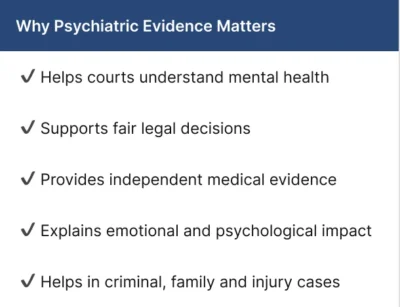
Why Psychiatric Evidence Matters

Why it matters:

Psychiatric assessment help courts make fair and informed decisions.

3. Types of Cases That Need Psychiatric Expert Assessments

Psychiatric assessments are used in many different legal situations. Here are some types:

1. Criminal Court Cases

Illegal court checks help the judges to understand whether a patient was mentally fit during the crime or able to face trial.

Common issues include:

  • Mental illness
  • Risk of harm
  • Fitness to stand trial
  • Criminal responsibility

2. Personal Injury Claims

Personal injury occurs after serious accidents or stress. Some people develop mental health problems.

Examples include:

  • Road crashes
  • Workplace accidents

3. Family Court Cases

Family judges may request an analysis when mental health affects parenting or child safety. The study may look at:

  • Parenting ability
  • Emotional stability
  • Risk to children

4. Workplace Cases

In the workplace, the psychiatric assessments reports may also help in work-related cases:

  • Stress at work
  • Bullying
  • Harassment
  • Burnout

5. Mental Capacity Cases

Some cases involve the mental limit to check whether you can make important decisions about:

  • Money
  • Medical treatment
  • Legal matter
  • Property issues

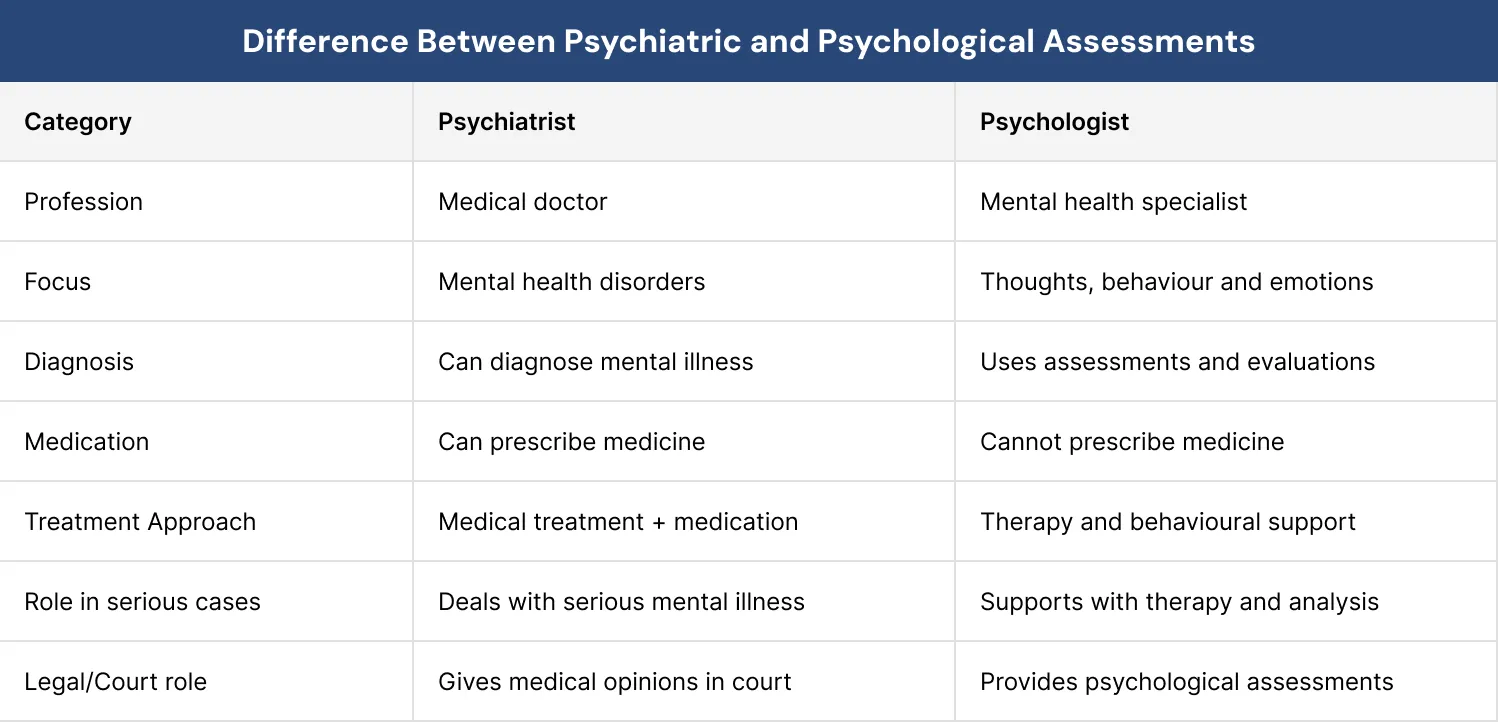
4. Difference Between Psychiatric and Psychological Assessments

Many people think that the psychiatric and psychological assessments are the same. But they are different. A psychiatrist is a doctor who is trained to treat mental health problems. They can:

  • Diagnose mental illness
  • Give medicine
  • Check serious mental health terms
  • Give medical advice
  • Suggest treatment

A psychologist mainly studies

  • Person behaviour
  • Feelings and thoughts.
Difference Between Psychiatric and Psychological Assessments

5. What Happens During a Psychiatric Assessment?

Many people feel nervous before a process. But the process is usually calm and organised. The psychiatrist’s job is to collect facts and give a fair opinion. During the evaluation psychiatrist may review:

  • Medical and hospital records
  • Police reports
  • Witness claims
  • Previous treatment records

They may also ask questions about:

  • Family life
  • Education
  • Work
  • Mental health history
  • Sleep and daily routine
  • Current Signs

The psychiatrist also observes the person’s actions, mood, speech and thinking. In some cases, they may check risks such as self harm or harm to others.

6. What Is Included in a Psychiatric Report?

A psychiatric assessments expert report is an important document used in cases. It gives the judges the facts about a person’s mental health. Most reports include:

  • Medical history
  • Documents reviewed
  • Health results
  • Risk evaluation
  • Treatment advice

7. The Role of the Psychiatric Expert Witness

A psychiatric expert witness plays an important role in legal cases involving mental health. Their job is to provide fair medical reports and help the judges to understand a person’s mental health.

Their duties include:

  • Stay fair
  • Giving clear facts
  • Explaining mental health
  • Preparing expert reports
  • Answering judges questions

Psychiatrists do not support one side unfairly. Their main duty is to assist the court honestly and professionally.

8. Importance of Medical Records

Medical records are very important in psychiatric assessments. They help the psychiatrist to see your mental health. They provide facts to the court.

Healthcare may review:

  • Personal history
  • Medical observations

9. Can Psychiatric Experts Decide Legal Decisions?

Psychiatric experts do not decide that someone is guilty or legally responsible. Their job is to give medical opinions based on their knowledge and experience. The final decision is always made by the court.

Important Note

Psychiatric experts do not decide legal outcomes. They only provide independent medical opinions.

10. Challenges in Psychiatric Assessments

Psychiatry can sometimes be difficult because every case is different. In some cases, the psychiatrist may not receive complete or clear facts. Common issues include:

  • Missing medical records
  • Different witness claims
  • Mental health history
  • Mental health history

11. Court Attendance and Cross Study

In many cases, the psychiatrist expert assessment expert may need to attend court. During court appearances, the psychiatrist may:

  • Explain the report
  • Clarify results
  • Answer valid questions
  • Respond to the cross-test

12. How Long Does a Psychiatric Assessment Take?

The length of the assessment review depends on the difficulty of the case. Some tasks may last:

  • One to two hours
  • Several sessions
  • Longer for complex cases

The final report may take days or weeks, depending on:

  • Record review
  • Additional facts
  • Case Difficulty
  • Urgent court deadlines

13. Preparing for a Psychiatric Expert Assessment

People attending a psychiatrist’s expert assessment should try to stay calm and honest. Giving clear and accurate information helps the psychiatrist prepare a fair report. Helpful preparation steps include:

  • Bring important docs
  • Give correct facts
  • Explain symptoms clearly
  • Be honest about history
  • Answer questions openly

14. Growing Need for Psychiatric Evidence

Mental health awareness has increased greatly in recent years. Now judges recognise the importance of the health process in legal cases. Psychiatric experts are increasingly used in:

  • Illegal law
  • Employment cases
  • Family case
  • Limit assessments

Case Study

A man who was involved in a road accident and later grew anxiety, stress and sleep problems. Although his physical injuries were minor. But his mental health became worse and affected his daily life. The court requested a psychiatrist to assess his condition. The doctor reviewed your medical records, interviewed the person and examined his health. After the case study, the psychiatrist identified emotional trauma linked to the accident. A medical report was prepared for the court with therapy advice. The report helped the court to learn the psychological impact. The accident and supported a fair legal decision.

Final Thought

Psychiatric expert assessments are an important part of many legal cases. They help judges to understand the mental health conditions. The cases involve accidents, criminal cases, family issues and mental limits.
These assessments process include observing records, interviews and professional reports for the court. They help courts properly see mental health issues

At Concise Medico, we provide professional psychiatric expert assessments and medico-legal support. Contact us today to learn more about our services.
Need professional psychiatric expert assessments for a legal case?

We provide reliable medico-legal reports and expert psychiatric assessments for courts, solicitors and insurance companies. Reach us today to learn more about our services.

Need professional psychiatric expert assessments for a legal case?

We provide reliable medico-legal reports and expert psychiatric assessments for courts, solicitors and insurance companies. Reach us today to learn more about our services.

FAQs

What is a psychiatric expert assessment?2026-06-02T06:39:37+00:00

A psychiatric expert assessment is a mental health evaluation used in legal cases. It helps courts understand a person’s mental condition.

What types of cases need psychiatric assessments?2026-06-02T06:43:07+00:00

They are commonly used in criminal, family, workplace and personal injury cases.

Can a psychiatrist decide the outcome of a case?2026-06-02T06:43:58+00:00

No. The psychiatrist only gives an independent medical opinion. The final decision belongs to the court.

Share This Article!

Psychiatric expert assessment is the process of checking mental health, condition and planning treatment plans. This is an important process for both medical as well as legal purposes. NHS England announced that mental health support will reach nearly 3.8 million people in 2023/24.

A psychiatric assessments is an expert mental health evaluation for legal purposes. It helps courts, lawyers and insurance companies understand a patient’s mental health. This assessment is mainly used to provide a fair opinion for the court

Key Takeaways

  • Psychiatric expert assessments help courts understand mental health conditions in legal cases.
  • These assessments are carried out by qualified psychiatrists for legal purposes.
  • Psychiatric reports are commonly used in criminal, family, workplace and personal injury cases.
  • The assessment may include interviews, medical records and mental health history.
  • Expert psychiatric evidence helps courts make fair and informed decisions.
  • Mental health assessments are becoming more important in modern legal proceedings.

1. What Is a Psychiatric Expert Assessment?

A psychiatric expert assessment is a mental health check carried out by a trained psychiatrist for a legal case. It helps the court to see a patient’s feelings, actions, thoughts and general state of mind. Psychiatrist also prepares a report that can be used in:

  • Medical records
  • Past therapy
  • Interviews
  • Police reports
  • Witness claims
  • Family and social background

The Study may help identify:

  • Depression
  • Anxiety
  • Risk of harm
  • Ability to face trial

2. Why Psychiatric Expert Assessments Are Important

Mental health issues can affect the patient’s memory, behaviour and daily life. Courts sometimes need medical opinions to see these effects properly. A psychiatric expert witness helps the court by:

  • Giving fair medical facts
  • Explaining health problems
  • Checking symptom
  • Testing risks

Without psychiatry expert witnesses many valid cases would become difficult to resolve.

Why Psychiatric Evidence Matters

Why it matters:

Psychiatric assessment help courts make fair and informed decisions.

3. Types of Cases That Need Psychiatric Expert Assessments

Psychiatric assessments are used in many different legal situations. Here are some types:

1. Criminal Court Cases

Illegal court checks help the judges to understand whether a patient was mentally fit during the crime or able to face trial.

Common issues include:

  • Mental illness
  • Risk of harm
  • Fitness to stand trial
  • Criminal responsibility

2. Personal Injury Claims

Personal injury occurs after serious accidents or stress. Some people develop mental health problems.

Examples include:

  • Road crashes
  • Workplace accidents

3. Family Court Cases

Family judges may request an analysis when mental health affects parenting or child safety. The study may look at:

  • Parenting ability
  • Emotional stability
  • Risk to children

4. Workplace Cases

In the workplace, the psychiatric assessments reports may also help in work-related cases:

  • Stress at work
  • Bullying
  • Harassment
  • Burnout

5. Mental Capacity Cases

Some cases involve the mental limit to check whether you can make important decisions about:

  • Money
  • Medical treatment
  • Legal matter
  • Property issues

4. Difference Between Psychiatric and Psychological Assessments

Many people think that the psychiatric and psychological assessments are the same. But they are different. A psychiatrist is a doctor who is trained to treat mental health problems. They can:

  • Diagnose mental illness
  • Give medicine
  • Check serious mental health terms
  • Give medical advice
  • Suggest treatment

A psychologist mainly studies

  • Person behaviour
  • Feelings and thoughts.
Difference Between Psychiatric and Psychological Assessments

5. What Happens During a Psychiatric Assessment?

Many people feel nervous before a process. But the process is usually calm and organised. The psychiatrist’s job is to collect facts and give a fair opinion. During the evaluation psychiatrist may review:

  • Medical and hospital records
  • Police reports
  • Witness claims
  • Previous treatment records

They may also ask questions about:

  • Family life
  • Education
  • Work
  • Mental health history
  • Sleep and daily routine
  • Current Signs

The psychiatrist also observes the person’s actions, mood, speech and thinking. In some cases, they may check risks such as self harm or harm to others.

6. What Is Included in a Psychiatric Report?

A psychiatric assessments expert report is an important document used in cases. It gives the judges the facts about a person’s mental health. Most reports include:

  • Medical history
  • Documents reviewed
  • Health results
  • Risk evaluation
  • Treatment advice

7. The Role of the Psychiatric Expert Witness

A psychiatric expert witness plays an important role in legal cases involving mental health. Their job is to provide fair medical reports and help the judges to understand a person’s mental health.

Their duties include:

  • Stay fair
  • Giving clear facts
  • Explaining mental health
  • Preparing expert reports
  • Answering judges questions

Psychiatrists do not support one side unfairly. Their main duty is to assist the court honestly and professionally.

8. Importance of Medical Records

Medical records are very important in psychiatric assessments. They help the psychiatrist to see your mental health. They provide facts to the court.

Healthcare may review:

  • Personal history
  • Medical observations

9. Can Psychiatric Experts Decide Legal Decisions?

Psychiatric experts do not decide that someone is guilty or legally responsible. Their job is to give medical opinions based on their knowledge and experience. The final decision is always made by the court.

Important Note

Psychiatric experts do not decide legal outcomes. They only provide independent medical opinions.

10. Challenges in Psychiatric Assessments

Psychiatry can sometimes be difficult because every case is different. In some cases, the psychiatrist may not receive complete or clear facts. Common issues include:

  • Missing medical records
  • Different witness claims
  • Mental health history
  • Mental health history

11. Court Attendance and Cross Study

In many cases, the psychiatrist expert assessment expert may need to attend court. During court appearances, the psychiatrist may:

  • Explain the report
  • Clarify results
  • Answer valid questions
  • Respond to the cross-test

12. How Long Does a Psychiatric Assessment Take?

The length of the assessment review depends on the difficulty of the case. Some tasks may last:

  • One to two hours
  • Several sessions
  • Longer for complex cases

The final report may take days or weeks, depending on:

  • Record review
  • Additional facts
  • Case Difficulty
  • Urgent court deadlines

13. Preparing for a Psychiatric Expert Assessment

People attending a psychiatrist’s expert assessment should try to stay calm and honest. Giving clear and accurate information helps the psychiatrist prepare a fair report. Helpful preparation steps include:

  • Bring important docs
  • Give correct facts
  • Explain symptoms clearly
  • Be honest about history
  • Answer questions openly

14. Growing Need for Psychiatric Evidence

Mental health awareness has increased greatly in recent years. Now judges recognise the importance of the health process in legal cases. Psychiatric experts are increasingly used in:

  • Illegal law
  • Employment cases
  • Family case
  • Limit assessments

Case Study

A man who was involved in a road accident and later grew anxiety, stress and sleep problems. Although his physical injuries were minor. But his mental health became worse and affected his daily life. The court requested a psychiatrist to assess his condition. The doctor reviewed your medical records, interviewed the person and examined his health. After the case study, the psychiatrist identified emotional trauma linked to the accident. A medical report was prepared for the court with therapy advice. The report helped the court to learn the psychological impact. The accident and supported a fair legal decision.

Final Thought

Psychiatric expert assessments are an important part of many legal cases. They help judges to understand the mental health conditions. The cases involve accidents, criminal cases, family issues and mental limits.
These assessments process include observing records, interviews and professional reports for the court. They help courts properly see mental health issues

At Concise Medico, we provide professional psychiatric expert assessments and medico-legal support. Contact us today to learn more about our services.
Need professional psychiatric expert assessments for a legal case?

We provide reliable medico-legal reports and expert psychiatric assessments for courts, solicitors and insurance companies. Reach us today to learn more about our services.
Need professional psychiatric expert assessments for a legal case?

We provide reliable medico-legal reports and expert psychiatric assessments for courts, solicitors and insurance companies. Reach us today to learn more about our services.

FAQs

What is a psychiatric expert assessment?2026-06-02T06:39:37+00:00

A psychiatric expert assessment is a mental health evaluation used in legal cases. It helps courts understand a person’s mental condition.

What types of cases need psychiatric assessments?2026-06-02T06:43:07+00:00

They are commonly used in criminal, family, workplace and personal injury cases.

Can a psychiatrist decide the outcome of a case?2026-06-02T06:43:58+00:00

No. The psychiatrist only gives an independent medical opinion. The final decision belongs to the court.

Go to Top