TABLE OF CONTENT
How Psychological Trauma Is Assessed for Compensation Claims
A serious accident can leave more than visible injuries. Mental harm may not show on the outside but it can affect sleep, work, relationships and daily life long after the accident.
After an accident, some people develop fear, anxiety, poor sleep or panic attacks. Others avoid reminders of the event. For many, these problems can last longer than the physical injuries.
NHS data shows why psychological trauma compensation matters. PTSD rates in England have increased from 4.4% to 5.7%, highlighting the growing impact of psychological trauma.
Mental health problems after an accident are real. If trauma is linked to an accident, workplace event, medical mistake or crime, psychological trauma compensation may be available.
Psychological trauma claims need evidence. In this blog, you will learn how psychological trauma is assessed, what evidence may be needed and how compensation claims are supported by medical experts.
What Is Psychological Trauma?
Psychological trauma is a mental health injury that develops after a frightening or upsetting event. It can happen after:
- A car accident
- An accident at work
- A violent attack
- Medical negligence
- A traumatic event at home or in public
Common signs include anxiety, fear, nightmares, poor sleep, panic attacks, low mood and flashbacks. Some people may also stop enjoying hobbies, avoid social activities or feel unable to return to normal routines.
Psychological trauma can also affect the body. A person may have headaches, tiredness, poor focus or appetite changes.
These symptoms can be different for each person. Some people recover quickly, while others need help for months or years. This is why psychological trauma compensation cases often need careful medical checks.
How Psychological Trauma Is Assessed for Compensation Claims in the UK?
In the UK, psychological trauma is assessed by looking at what caused it and how it affects daily life. The aim is to see if the trauma is linked to a specific accident or event. The assessment also looks at how serious the symptoms are.
1. Medical Experts Involved in the Assessment
In most cases, a psychologist or psychiatrist carries out the assessment. The expert will ask about the traumatic event, the symptoms and how the person’s life has changed. They may also ask about work, relationships, social life and daily tasks.
2. Symptoms and Records Considered During Assessment
The assessment may cover symptoms such as anxiety, depression, flashbacks, nightmares, panic attacks, poor sleep, fear and emotional distress.
The expert may also review GP records, treatment notes and other medical evidence. Sometimes, they may use forms or psychological tests.
3. Contents of the Medico-Legal Report
The expert will then write a medico-legal report. This report explains the diagnosis. It also states whether the condition was caused by the accident or event.
The report may also give a prognosis. This means an expert opinion on whether the person is likely to recover fully or have long-term problems.
4. Evidence Used to Support the Claim
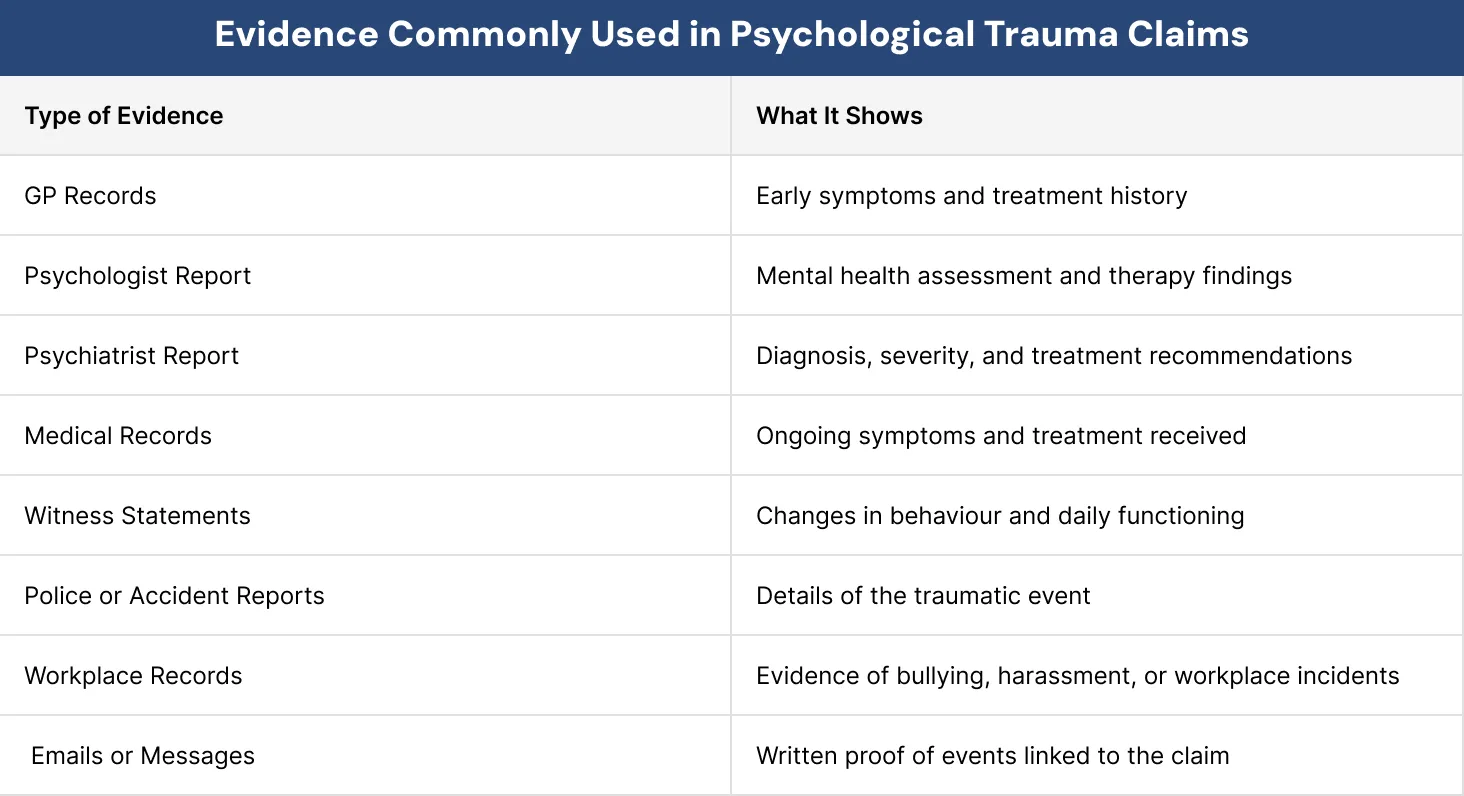
Medical records, expert reports, treatment notes, witness statements and accident records can all support the psychological trauma claim. This evidence helps show how the trauma has affected the person and what compensation may be considered.
Can You Claim Psychological Trauma Compensation?
Yes, mental health injuries can be included in a compensation claim when they are linked to an accident or traumatic event. The person may be directly involved in the accident or may have witnessed a serious accident involving someone close to them.
Many people think only physical injuries count. That is not true. A person may suffer whiplash and severe anxiety after a road accident. Another person may have little or no physical injury but still develop PTSD because of the experience. The key issue is proving the link between the event and the mental health condition.
Some people are called primary victims. These are people directly involved in the accident or event. Physical injury is not always needed if the person was in real danger and the experience caused serious mental harm.
There are also secondary victims. These are people who develop psychological trauma after seeing a serious accident happen to someone close to them. Usually, there must be a close relationship, and the person must have seen the accident or its immediate aftermath.
Every case is different. Medical evidence and legal evidence help decide if compensation for psychological trauma may be available.
What Are the Common Types of Psychological Trauma?
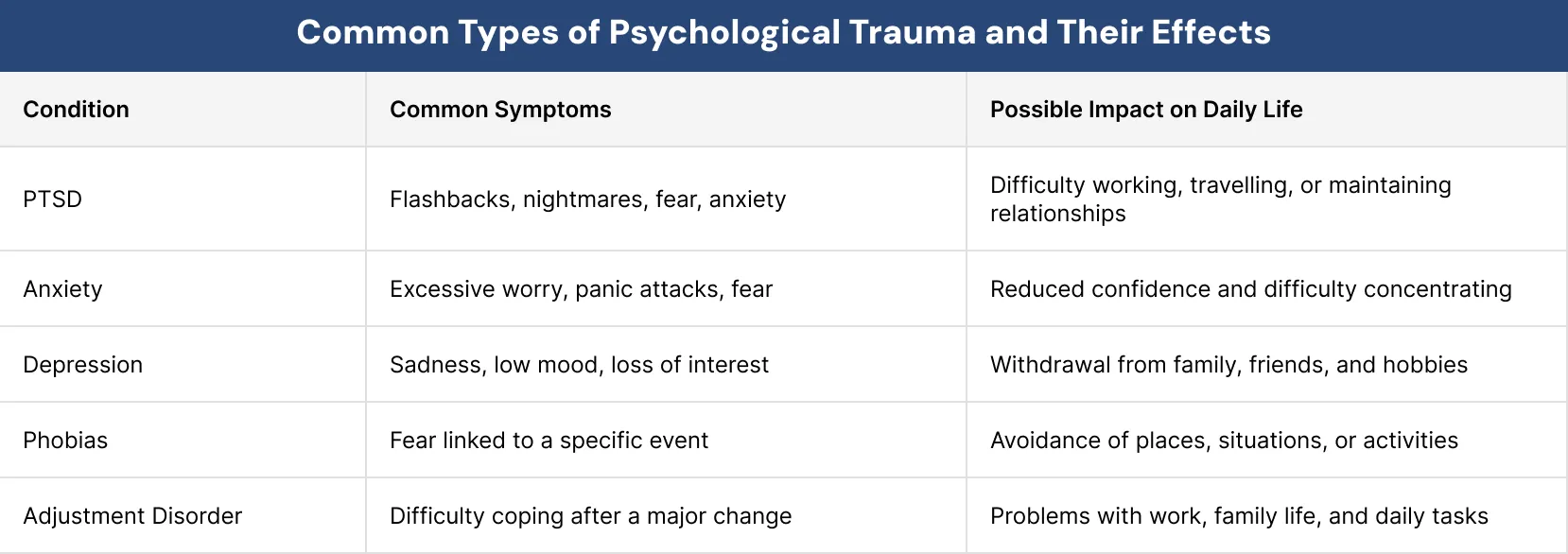
Several mental health conditions often appear in psychological trauma compensation claims. The common types include:
1. Post-Traumatic Stress Disorder (PTSD)
PTSD is one of the best-known mental health conditions linked to trauma. It can happen after a very frightening or life-threatening event.
Common symptoms include:
- Flashbacks
- Nightmares
- Upsetting memories
- Fear
- Anxiety
- Avoiding reminders of the event
Many people with PTSD feel tense all the time. Some find it hard to return to normal life. PTSD is often seen as one of the most serious conditions in psychological trauma compensation cases because it can affect daily life for a long time.
2. Anxiety
Anxiety is very common after a traumatic event. An anxious person may worry about their health. They may worry about money or fear another accident.
During anxiety some people have panic attacks. Others become afraid of situations that never worried them before. For example, someone involved in a serious car crash may become afraid of travelling by car again.
3. Depression
Depression can also develop after trauma. A person may feel sad most of the time. They may lose interest in hobbies and social activities.
Some people pull away from friends and family. Others find it difficult to work or follow normal routines.
4. Phobias
Trauma can sometimes create new fears. A person injured in a road accident may become afraid of driving. Someone injured at work may become nervous about returning to the workplace. These fears can affect independence and everyday life.
5. Adjustment Disorders
Some people struggle to adjust after an accident. They may find it hard to return to work. Family life may change. Daily tasks may become more difficult. This is often called an adjustment disorder.
It may not be called PTSD but it still plays a role in psychological trauma compensation claims.
How Does Psychological Trauma Affect Daily Life?
Psychological trauma can affect almost every part of life. Relationships are often one of the first things affected.
Anxiety and depression can make social situations difficult. Some people stop seeing friends. Others pull away from family members. Work can also become harder.
A person may struggle to focus or make decisions. Productivity may fall. Some people need time away from work. Others cannot return to their old job.
Mental trauma can also affect physical health. Poor sleep, headaches and tiredness are common. These problems can slow recovery and make daily life harder.
Quality of life may also change. Activities that once brought happiness may no longer feel enjoyable. Even simple daily tasks can feel difficult.
These effects matter because compensation for psychological trauma often looks at how much an incident changed a person’s life.
How Can Psychological Trauma Be Proven With Medical Evidence?
Psychological trauma can be proven with medical records, expert reports, treatment notes and other evidence that show the injury is real, serious and linked to the accident or event.
In a psychological trauma compensation claim, the assessment checks what condition is present, how serious it is and how it affects daily life. It also checks whether the condition was caused by the accident or traumatic event.
Medical reports from a GP, psychologist, psychiatrist or independent expert may be needed. These reports can explain the symptoms, how long they have lasted and how they affect work, sleep, relationships and daily tasks.
A psychologist or psychiatrist may also write about anxiety, depression, PTSD, poor sleep, poor focus or other mental health problems linked to the trauma.
Courts, insurance companies and solicitors often rely on these reports because they come from trained medical professionals. Strong evidence makes it easier to show the full effect of the psychological injury.
How to Start a Psychological Trauma Compensation Claim?
- To start a psychological trauma compensation claim, the first step is usually to speak to a GP or medical professional.
- A GP may then refer the person to a psychologist or psychiatrist for a full mental health assessment.
- The specialist may ask about poor sleep, anxiety, depression, flashbacks, panic attacks and emotional wellbeing.
- They will also check how the condition affects work, family life and daily activities.
A diagnosis does not guarantee psychological trauma compensation but it creates medical evidence that can support a psychological trauma compensation claim.
What Is the Step-by-Step Process for a Psychological Trauma Compensation Claim?
Many people know they are struggling after a traumatic event. However, they are often unsure what happens next. The process usually involves several stages. They include:
Step 1: Get Medical Help
The first thing is to get medical support. A GP may refer the person to a psychologist or psychiatrist. Early treatment is important. It helps with recovery and creates medical evidence.
Step 2: Get a Diagnosis
The specialist will assess the symptoms and decide whether a mental health condition is present. This may be PTSD, anxiety, depression or something else.
Step 3: Gather Evidence to Support the Claim
Evidence is needed to support the psychological trauma compensation claim. This may include medical records, treatment notes, accident reports, workplace records, police reports and statements from people who saw what happened.
Step 4: Prove the Link to the Event
It must be established that the psychological trauma was as a result of the accident. This is one of the significant steps in making a psychological trauma compensation claim.
Step 5: Assess the Impact on Daily Life
This involves evaluating the effect the injury has had on the performance of activities, personal or professional and whether treatment would be required in future.
Step 6: Calculate the Psychological Trauma Compensation
The amount of compensation depends on how serious the condition is. It also depends on how long it lasts, how much treatment costs, loss of earnings and the overall impact on quality of life.
Step 7: Submit and Resolve the Claim for Psychological Trauma Compensation
Once the evidence is collected, the psychological trauma compensation claim can move forward. Some claims settle through negotiation, while others may require further legal proceedings before compensation is awarded.
What Other Evidence Can Help Prove Psychological Trauma?
Other evidence that can help may include witness statements, accident reports, police reports, workplace records, emails, text messages and written complaints.
Family, friends and workmates may notice changes. A person may avoid social events, lose confidence or find it hard to focus. These details can show how psychological trauma has affected daily life.
For example, a workplace bullying claim may use emails to show repeated harassment. A road accident claim may use police reports and accident records. The more proof there is, the easier it is to show the effect of the trauma.
How Is Psychological Trauma Compensation Calculated?
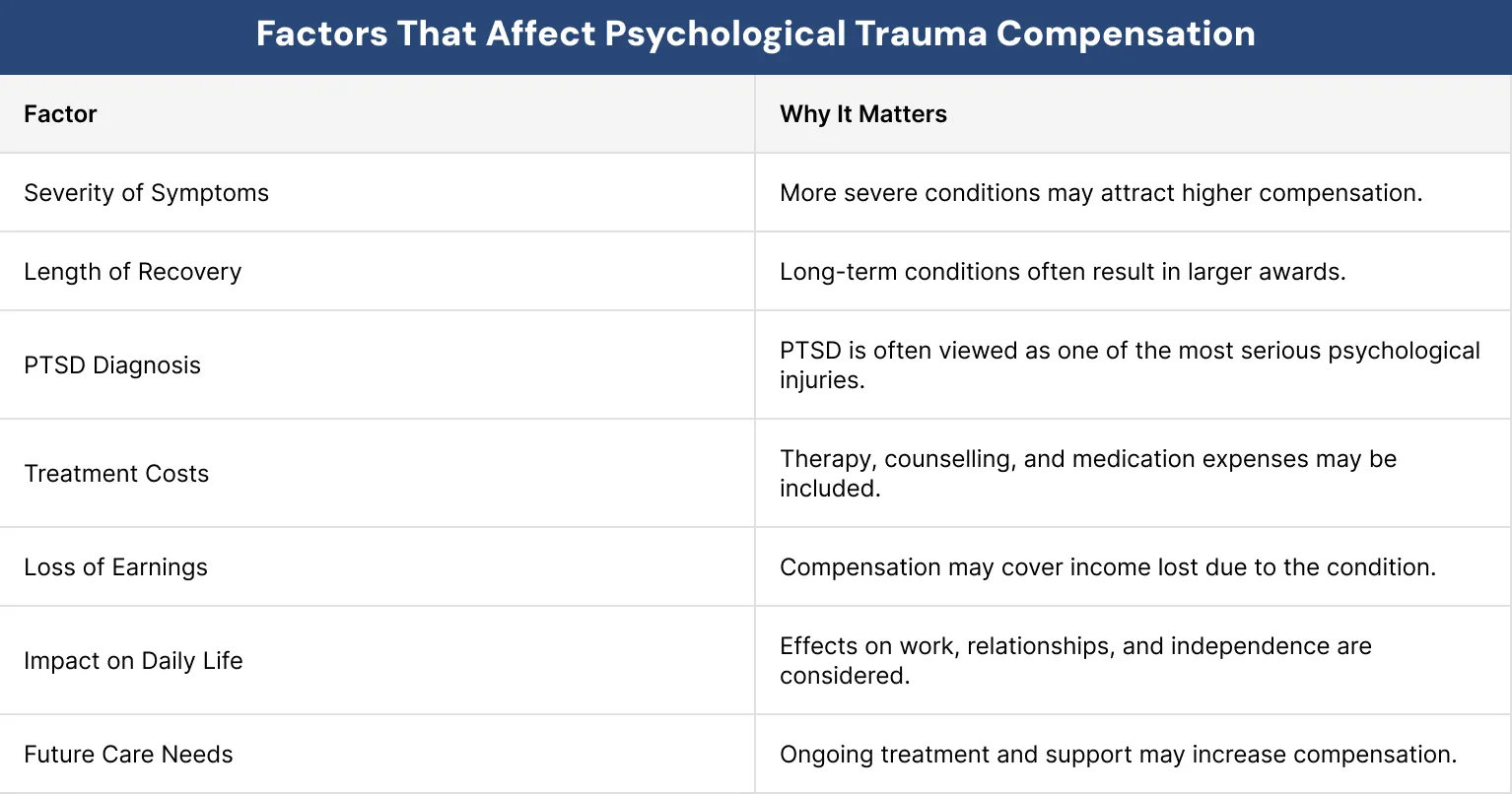
Psychological trauma compensation is calculated by looking at how serious the condition is, how long it lasts and how much it affects daily life. There is no fixed amount. Severe PTSD may lead to more compensation than mild anxiety that improves easily.
Treatment cost and length are also considered. This may include therapy, counselling or medication. Work is another important factor. If a person cannot return to work, they may have greater financial losses. Family life, social life and quality of life are also taken into account.
What Can Psychological Trauma Compensation Cover?
Psychological trauma compensation can help cover the effects of the injury and the costs that come with it. This may include pain, worry, fear, stress and a loss of enjoyment in daily life. It may also cover the cost of therapy, counselling, medication and travel for treatment.
If the injury affects work, compensation may help cover lost earnings. Some people may also receive money for future treatment if they need ongoing care.
What Are the Long-Term Effects of Psychological Trauma?
Psychological trauma can affect a person for a long time. It can affect mental health, physical health and daily life.
Some common long-term effects include PTSD, anxiety, low mood, fear, poor sleep and trouble doing daily tasks.
Some people may find it hard to focus or remember things. Others may struggle with relationships, work or social life. Trauma can affect the body too. It may cause headaches, pain, tiredness or stress symptoms.
Some people get better with treatment. Others may need help for many years. This help may include counselling, therapy, medicine or mental health care.
If symptoms are likely to continue, future treatment may be included in the assessment. These future costs may also form part of compensation for psychological trauma.
Although the world is full of suffering, it is also full of overcoming it.
– Helen Keller
Why Does Early Assessment Matter in a Functional Neurological Disorder Claim?
Early assessment matters because it creates a clear medical record and helps treatment start sooner. Many people wait before seeking help. Some hope the symptoms will go away on their own. This can make things harder later.
Psychologists and psychiatrists can spot problems early and suggest the right treatment. For compensation purposes, early medical records can also help show that the trauma was caused by the event.
Case Study
This is a real UK case known as Page v Smith. The claimant was in a road accident caused by another driver. He did not have any physical injuries but the accident made an old health condition much worse. It affected both his mind and body.
The other side said the mental injury could not have been expected because the crash was not very serious. The House of Lords agreed with the claimant.
The court said he was a primary victim because he was directly involved in the accident. This meant he could claim for his psychiatric injury, even without a physical injury.
This case is still important in psychological trauma claims. It shows that a person may be able to claim compensation for psychological trauma when a recognised mental health condition develops after an accident.
Medical evidence and expert reports are still needed. They help prove the condition and show how it affects daily life.
Conclusion
The effects of psychological trauma are not always visible but they can be life-changing. A proper assessment helps show how trauma has affected a person’s daily life, work, treatment needs and future care. It provides the evidence needed to support a compensation claim.
Whether the trauma was caused by an accident, medical mistake or another event, early treatment and professional evidence can make a strong difference. Psychological injuries deserve the same attention and support as physical injuries.
Concise Medico provides expert medico-legal assessments to help support psychological trauma compensation claims. Contact us today to find out how our assessments can assist your psychological trauma claim.