TABLE OF CONTENT
- Key Takeaways
- How Much Compensation Could You Receive for PTSD in the UK?
- What Factors Affect a PTSD Compensation Award?
- Can You Claim for Lost Earnings and Other Expenses?
- What Is PTSD and Can You Claim Compensation for It?
- What Evidence Is Needed for a PTSD Compensation Claim?
- How Does the PTSD Compensation Claims Process Work?
- How Long Do You Have to Make a PTSD Compensation Claim?
- Case Study: Road Accident Claim Results in £140,000 in Damages
- Understanding Your PTSD Compensation Claim
- FAQs
- How much compensation can you get for PTSD in the UK?
- Can you claim compensation for PTSD without physical injuries?
- How long does a PTSD compensation claim tak
- Can you claim compensation if PTSD symptoms appear months later?
- What evidence is needed to claim PTSD compensation?
- Does a psychiatric medico-legal report guarantee compensation?
How Much Compensation Could You Receive for PTSD in the UK?
PTSD may develop after an accident, assault or another traumatic event. You may be entitled to compensation if someone else was legally responsible for causing your injury. PTSD can affect many parts of life, including work, relationships, sleep and everyday activities. Seeking compensation may help you recover eligible financial losses and account for the impact of your injury.
The amount you could receive depends on the severity of your symptoms, how long they are expected to last, their effect on your daily life and any financial losses caused by the condition. A claim may include compensation for the psychological injury itself, as well as eligible losses such as lost earnings, treatment costs and travel expenses.
Medical evidence is important when establishing the condition, explaining its effects and assessing its likely long-term impact. This blog explains how a PTSD compensation claim is assessed, what evidence you may need, how the claims process works and when specialist psychiatric evidence may be required.
How Much Compensation Could You Receive for PTSD in the UK?
PTSD compensation amounts vary considerably because every case involves different symptoms, circumstances and consequences. Legal professionals often refer to the Judicial College Guidelines when assessing general damages for psychiatric injuries. These guidelines provide a starting point, but the appropriate award depends on the medical evidence and the individual circumstances of your PTSD compensation claim.
PTSD Compensation Payouts by Severity
PTSD compensation is assessed by looking at factors such as symptom severity, the likelihood of recovery, the effect on relationships and employment, and the extent to which the condition disrupts everyday life.
| Indicative PTSD Compensation Ranges in the UK | |
|---|---|
| Severity | Indicative Compensation Range |
| Less severe | £5,220 – £10,810 |
| Moderate | £10,810 – £30,580 |
| Moderately severe | £30,580 – £79,080 |
| Severe | £79,080 – £133,000 |
They are guideline ranges rather than fixed payouts. The guidelines are not binding on the court, and the amount awarded in an individual case may differ.
A less severe injury may involve significant symptoms followed by substantial recovery. At the other end of the scale, severe PTSD may have a lasting effect on a person’s ability to work, maintain relationships and manage everyday activities. The category is not determined by the diagnosis alone. The medical evidence, likely recovery, effect on daily life and wider circumstances all matter.
These figures also relate to general damages for the psychological injury. They do not automatically include lost earnings, treatment costs or other financial losses. Those losses may be assessed separately where they are legally recoverable and supported by evidence.
What Factors Affect a PTSD Compensation Award?
Several factors can influence how much compensation a claimant may receive. Understanding these factors can help you see why two people who experience similar traumatic events may receive different awards.
- Severity of symptoms. The frequency and intensity of flashbacks, nightmares, anxiety, avoidance and other symptoms can affect the assessment.
- Duration and prognosis. The expected course of the condition matters, including the likelihood of recovery and whether symptoms are likely to continue.
- Impact on daily life. Difficulties with work, relationships, social activities and independent living can demonstrate the wider effects of the injury.
- Medical evidence. Psychiatric assessments, treatment records and a clear prognosis help establish the nature and extent of the condition.
- Legal responsibility. The claimant must establish the relevant legal basis for the claim, including another party’s liability where required.
- Financial losses. Proven losses caused by the injury may increase the overall value of the PTSD compensation claim.
No single factor determines the award. The assessment considers the evidence as a whole, including how PTSD affects the claimant and how those effects are expected to develop.
Can You Claim for Lost Earnings and Other Expenses?
PTSD can affect a person’s ability to work, attend appointments, travel independently or manage everyday responsibilities. If these difficulties result from the injury, your PTSD compensation claim may include financial losses in addition to compensation for the psychological injury itself.
Depending on the circumstances, recoverable losses may include:
- Earnings lost during periods of absence from work.
- Future loss of earnings if the condition affects the ability to work.
- Reasonable treatment and rehabilitation costs.
- Travel expenses associated with treatment.
- Care or assistance needed because of the injury.
- Other reasonable expenses directly caused by the condition.
Keep relevant receipts, payslips, employment records and other documents showing the losses you have incurred. Future losses may require additional evidence, such as medical opinions about your ability to work and financial records showing the likely impact.
Not every expense will automatically be recoverable. A loss must be sufficiently connected to the injury, legally recoverable and supported by appropriate evidence.
What Is PTSD and Can You Claim Compensation for It?
Post-traumatic stress disorder (PTSD) is a mental health condition that can develop after a person experiences or witnesses a traumatic event. Symptoms may include intrusive memories, nightmares, flashbacks, avoidance of reminders, heightened alertness and changes in mood or thinking.
People experience PTSD differently. Some may struggle with travel, sleep or social situations, while others may find that their symptoms interfere with employment, relationships or routine activities.
A PTSD diagnosis does not automatically establish entitlement to compensation. A claimant will generally need to demonstrate a recognised psychiatric injury and establish the legal responsibility of another party for causing it. The circumstances of the incident, medical evidence and applicable legal rules all influence whether a PTSD compensation claim can succeed.
1. Incidents That Can Lead to PTSD Compensation Claims
PTSD compensation claims may arise from different traumatic circumstances, provided the relevant legal requirements are met. Potential situations include:
- Road traffic accidents. A collision or another serious road incident may result in PTSD, even when physical injuries are limited.
- Workplace incidents. A traumatic workplace accident may lead to a psychiatric injury where an employer or another party is legally responsible.
- Physical or sexual assault. A person may develop PTSD following an assault or another violent incident.
- Medical negligence. A traumatic experience arising from negligent medical treatment may form the basis of a PTSD compensation claim where the legal requirements are satisfied.
- Other traumatic events. Certain incidents involving serious harm or threats to safety may give rise to claims, depending on the circumstances and applicable law.
Experiencing a traumatic event does not, by itself, establish a right to compensation. Liability, the nature of the psychiatric injury and the connection between the incident and the condition must be considered in each case.
2. PTSD Compensation Claims Without Physical Injuries
You do not necessarily need to have suffered a physical injury to make a PTSD compensation claim. Psychological injuries can have substantial consequences in their own right, affecting a person’s ability to work, maintain relationships and carry out everyday activities.
However, PTSD compensation claims involving psychiatric injury without physical harm can raise specific legal questions. Depending on the circumstances, the claimant may need to establish a duty of care, a breach of that duty, causation and a recognised psychiatric injury.
Medical evidence is particularly important because it helps distinguish a diagnosed psychiatric condition from temporary distress or upset. An appropriate assessment should explain the symptoms, their severity, their effect on daily functioning and their likely course.
3. Delayed PTSD Symptoms and Compensation Claims
PTSD symptoms do not always appear immediately after a traumatic incident. Some people notice difficulties weeks or months later, while others recognise the effect on their mental health only when symptoms begin interfering with everyday life.
A delay in recognising symptoms does not automatically prevent a PTSD compensation claim. However, it may be important to establish when the condition developed, how it relates to the incident and when the claimant knew, or could reasonably have known, about the relevant injury.
Medical records, treatment history and a detailed account of the symptoms can help clarify this timeline. The applicable limitation rules should also be considered, particularly where the claimant did not initially recognise the psychological consequences of the incident.
What Evidence Is Needed for a PTSD Compensation Claim?
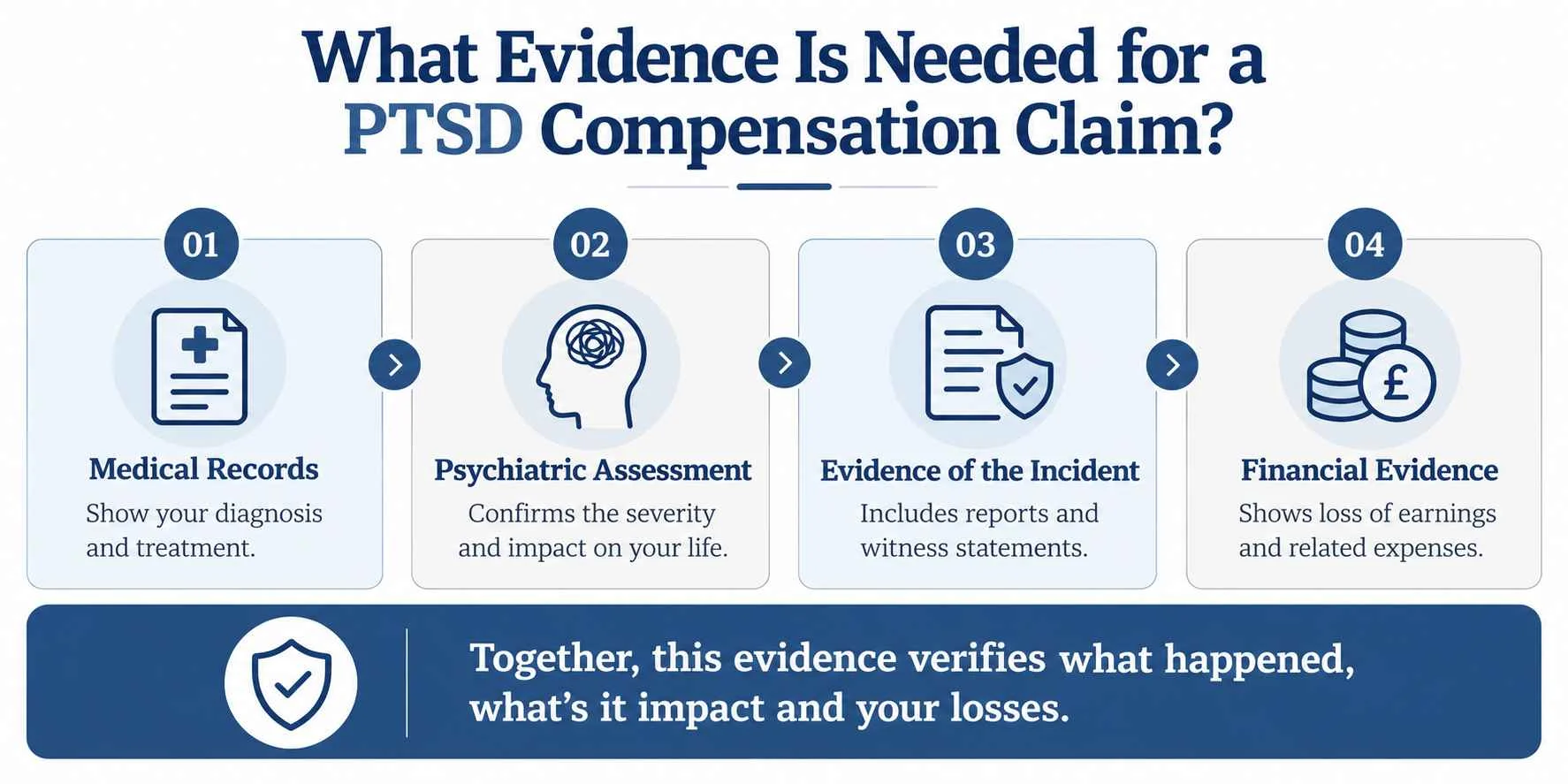
A successful PTSD compensation claim generally requires evidence of the psychiatric injury, the incident that caused it and the losses or consequences being claimed. The precise evidence needed depends on the circumstances and the issues in dispute.
Relevant documents may include medical records, psychiatric assessments, incident reports, witness statements and financial records. Together, these can help establish what happened, how the condition developed and how it has affected the claimant.
Psychiatric Diagnosis and Medical Records
Medical records can provide important evidence of a claimant’s symptoms, treatment history and progress. Records from a GP, psychiatrist, psychologist or other treating professional may help establish when the difficulties began and how they have affected the person over time.
A psychiatric diagnosis is also important when assessing whether the claimant has PTSD or another recognised mental health condition. The assessment should consider the reported symptoms, their duration, their severity and their relationship to the incident.
When a PTSD compensation claim requires an independent medical opinion, the expert should assess the relevant records and the claimant’s account rather than relying on the diagnosis alone. This can help clarify the nature of the injury, its likely prognosis and any continuing effects.
How Does a Psychiatric Medico-Legal Report Help?
A psychiatric medico-legal report provides an independent expert opinion for use in legal proceedings or the assessment of a claim. It can help clarify the diagnosis, explain the relationship between the incident and the condition, and assess the likely impact on the claimant’s future.
Depending on the case, the report may address:
- The claimant’s psychiatric symptoms and diagnosis.
- The history and development of the condition.
- The relationship between the incident and the psychological injury.
- The severity of the symptoms and their effect on daily functioning.
- Treatment needs, prognosis and the likelihood of recovery.
- Any relevant pre-existing or additional psychological conditions.
The PTSD expert witness must provide an impartial opinion based on the available evidence. A report does not guarantee that a claim will succeed or determine the final compensation award. Instead, it supports the legal assessment by addressing the relevant medical questions.
Evidence of Financial Losses and the Incident
Medical evidence helps establish the psychiatric injury, but other documents may be needed to explain the event and demonstrate legal responsibility. The appropriate evidence depends on the type of incident.
This may include:
- Accident or incident reports. Records from an employer, organisation or relevant authority may help establish what happened.
- Witness statements. Accounts from people who witnessed the incident or observed its aftermath may provide additional context.
- Police or official records. Where relevant, these may document an assault, road traffic accident or another reported event.
- Employment records. Absence records, changes in duties or correspondence with an employer may help demonstrate the effect on work.
- Financial documents. Payslips, invoices, receipts and other records may support PTSD compensation claims for earnings and expenses.
Evidence should be consistent with the claimant’s account and the medical findings. Where there are gaps or differences between records, these may need to be explained as part of the claim.
How Does the PTSD Compensation Claims Process Work?
The process varies according to the type of incident, the parties involved and whether liability is disputed. A typical claim may involve the following stages.
- Initial review. The circumstances of the incident, the potential legal basis for the claim and the available evidence are reviewed.
- Medical assessment. Relevant records are gathered, and an appropriate psychiatric assessment may be arranged to establish the diagnosis, severity and prognosis.
- Evidence of liability and losses. Documents relating to the incident, legal responsibility and financial consequences are collected.
- Submission of the claim. The claim is presented to the relevant defendant or insurer, supported by the available evidence.
- Liability and valuation. The parties consider responsibility for the injury and the appropriate level of compensation. Further evidence or clarification may be required.
- Settlement or court proceedings. If the claim can be resolved by agreement, compensation may be negotiated. If liability or the value of the claim remains disputed, court proceedings may be necessary.
Not every claim follows the same sequence, and some stages may overlap. The time required depends on factors such as the complexity of the case, the claimant’s medical prognosis, the availability of evidence and whether the parties dispute liability.
How Long Do You Have to Make a PTSD Compensation Claim?
In England and Wales, you generally have three years to make a PTSD compensation claim. The time limit usually starts from the date of the incident or when you became aware of your PTSD and its possible link to the incident, depending on the circumstances.
PTSD symptoms can develop weeks or months after a traumatic event. If you experience delayed symptoms, you may still be able to pursue a PTSD compensation claim. However, the deadline does not automatically start from the date you first notice your symptoms. The circumstances of your case will determine which time limit applies.
Exceptions may apply to PTSD compensation claims involving children or people who lack the relevant legal capacity. Different limitation rules also apply in Scotland and Northern Ireland.
If you are considering making a PTSD compensation claim, seek legal advice as soon as possible. This can help you understand the applicable deadline and whether you can still bring a claim.
Case Study: Road Accident Claim Results in £140,000 in Damages
A published case study from Worthingtons Solicitors describes a road traffic accident claim involving PTSD and a dispute over the claimant’s psychiatric condition.
The claimant experienced symptoms including nightmares, flashbacks, social withdrawal and anxiety about travelling. The medical evidence was contested. The defendant’s expert attributed the symptoms to an adjustment disorder, while the claimant’s consultant psychiatrist diagnosed PTSD. The court accepted the claimant’s psychiatrist’s opinion.
The damages included compensation for PTSD and physical injuries, as well as loss of earnings.
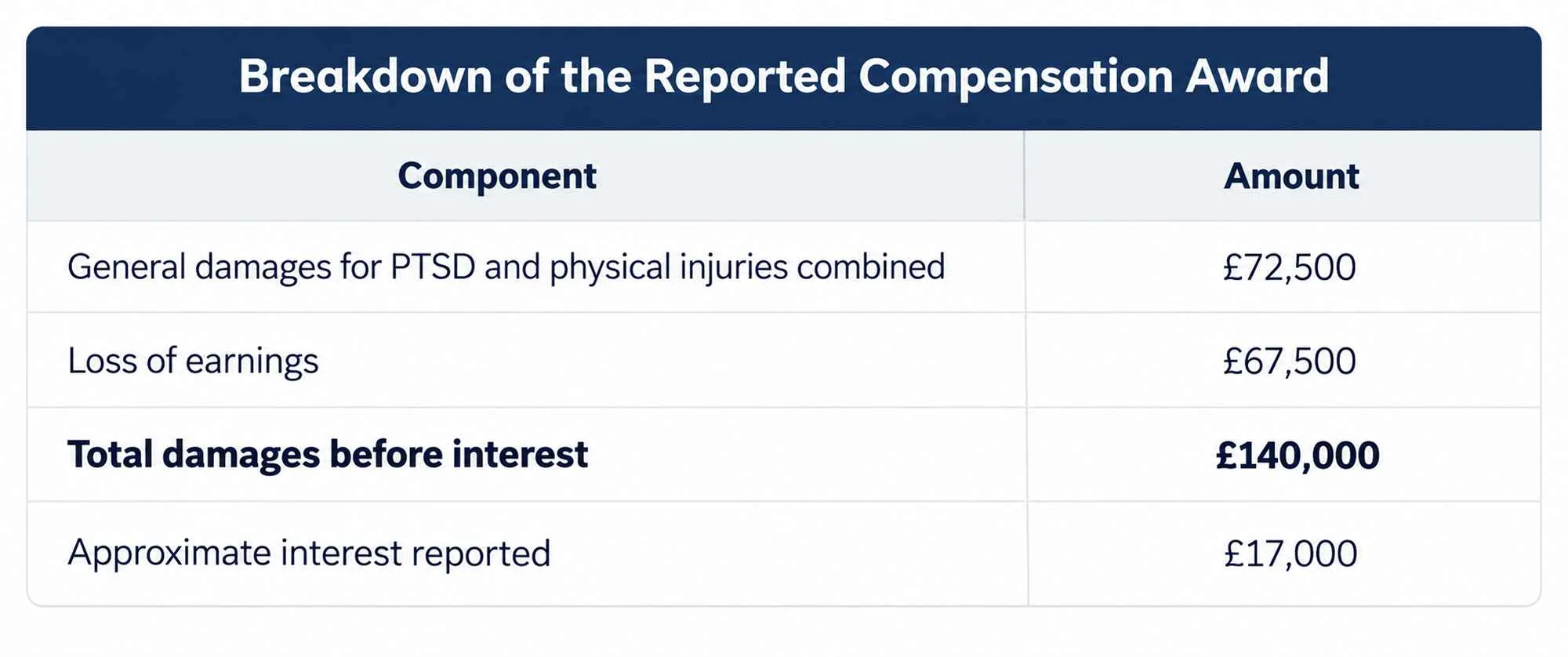
The £140,000 figure was the total damages before interest, not compensation for PTSD alone. The general damages covered both psychiatric and physical injuries, while the loss-of-earnings award accounted for a separate financial consequence.
The case illustrates why medical evidence and the practical consequences of a psychiatric injury can be important when assessing a PTSD compensation claim. It also shows why a total award should not be treated as a standard PTSD payout. The outcome depends on the injuries, losses and evidence in the individual case.
Understanding Your PTSD Compensation Claim
The amount you may receive for PTSD depends on the severity of the condition, its effect on your life, the strength of the evidence and any financial losses that can be established. Compensation guidelines can provide a starting point, but they cannot predict the outcome of an individual claim.
Medical records and an appropriate psychiatric assessment can help explain the condition and its prognosis. Evidence of the incident, legal responsibility and the resulting losses is also needed to assess the PTSD compensation claim as a whole.
If specialist psychiatric evidence is required, the report should address the specific medical questions relevant to the case rather than simply confirm a diagnosis.
FAQs