TABLE OF CONTENT
One moment. One accident. And suddenly, everyday life feels like a struggle.
A wrist injury can impair daily functioning. These tasks range from typing to driving to any manual work.
It may surprise you that 1.9 million people in the UK are living with a work-related illness. They include 511,000 people with musculoskeletal disorders.
The consequences of injury extend far beyond the pain. It may include stress, emotional imbalance and may affect finances. If it was caused by an accident that was not your fault, you may be allowed to claim compensation under UK personal injury law.
This guide explains:
- What is wrist injury compensation?
- How much wrist injury compensation can you claim?
- What factors increase compensation?
- How are claims valued?
- What should you do legally if you believe you have a sound claim?
What Is Wrist Injury Compensation?
Wrist injury compensation is a financial payoff. It is given to someone who has suffered a wrist injury due to another party’s neglect. It covers you for:
- Physical pain and suffering
- Quality of life
- Emotional suffering
- Financial loss caused by the injury
Wrist injury compensation does not only apply to severe or permanent injuries. If trivial injuries caused pain, trouble, or financial loss, the applicant will be qualified for compensation.
Common Causes of Wrist Injuries That Lead to Claims
Wrist injury compensation claims can arise in everyday situations when proper safety measures are not taken. These include:
1. Workplace Accidents
- Slips or falls at work
- Manual handling accidents
- Machinery or tool-related injuries
- Repetitive strain injuries (RSI)
- Inadequate workspace design
2. Road Traffic Accidents
- Car crashes
- Everyday road accidents
- Pedestrian accidents
- Jolt-related wrist injuries
3. Slips, Trips and Falls
- Irregular pavement
- Wet flooring
- Low-level lighting
- Unsafe public spaces
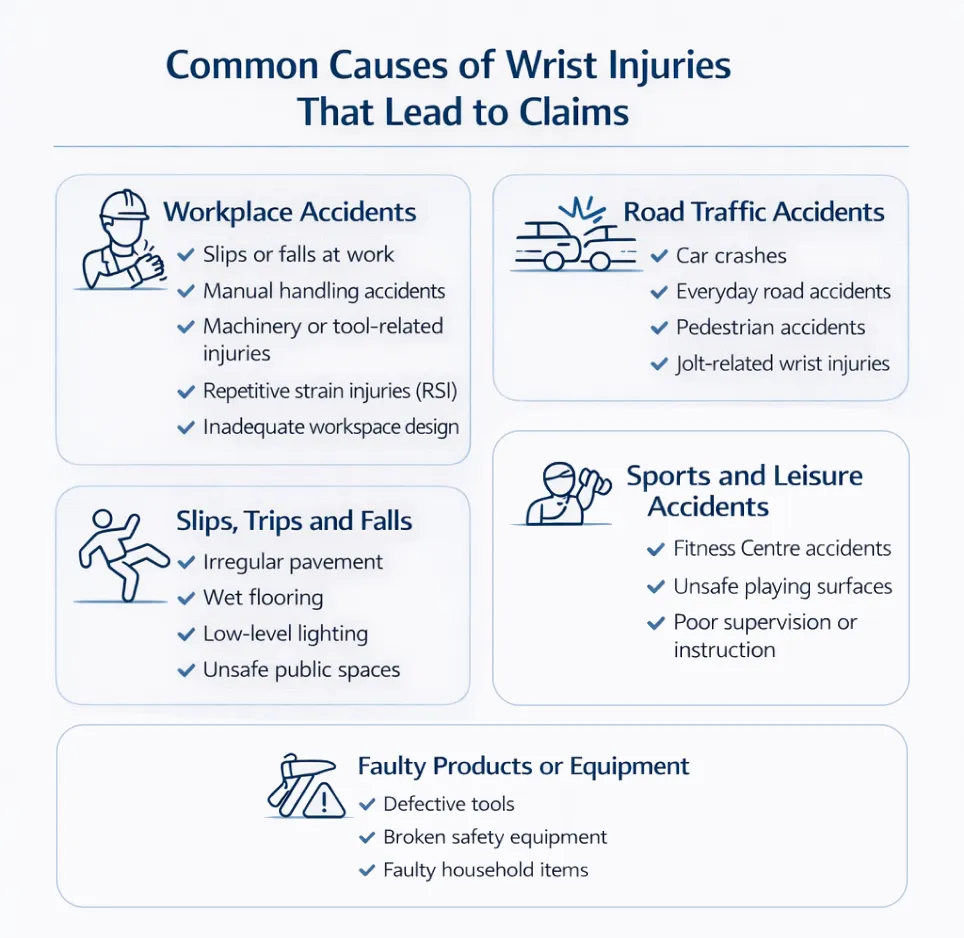
4. Sports and Leisure Accidents
- Fitness Centre accidents
- Unsafe playing surfaces
- Poor supervision or instruction
5. Faulty Products or Equipment
- Defective tools
- Broken safety equipment
- Faulty household items
If the other party failed to take proper care and caused your injury, you could be eligible to claim compensation.
Who Is Eligible to Make a Wrist Injury Compensation Claim?
You may be able to claim if certain conditions are met:
- Someone else’s fault caused the damage
- The accident occurred within the last three years
- A medical diagnosis supports the injury
- The injury caused pain, suffering, or financial loss
You do not need to have suffered a permanent disability to make a claim. You can read our guide on orthopaedic injury claims for more insight.
How Wrist Injury Compensation Is Calculated
Compensation covers both physical and emotional loss as well as the financial expenses that result from it. It can broadly be categorised into two:
General Damages Pain, Suffering and Loss of Amenity.
The general damages will cover your suffering, physical pain and loss of enjoyment of your day-to-day life due to the injury to your wrist.
The Judicial College Guidelines (JCG) are used by courts and solicitors and offer settlement brackets based on the severity of injury.
When assessing general damages, the following factors are considered:
- Extent of harm
- Time taken for recovery
- Whether symptoms are temporary or permanent
- Level of pain experienced
- Impact on grip strength and control
- Loss of mobility or stiffness
- Effect on hobbies and daily activities
- Psychological impact
Special Damages: Financial Losses and Expenses
Special damages compensate you for financial losses directly linked to the injury. This part of the claim can significantly increase the total settlement.
You may be able to claim for:
- Loss of earnings
- Reduced future earning capacity
- Over time, bonuses or commission losses
- Private medical treatment
- Rehabilitation and physiotherapy
- Prescription costs
- Travel to medical appointments
- Assistance and care (professional or family)
- Equipment such as bracelets or supportive aids
- Home adaptations
Evidence is indispensable. All documentary evidence and bank statements should support your claim.
Case Study: Clinical Negligence Claims
It is a real-life case, which is based on NHS data. It demonstrates the impact of unidentified fractures in the emergency department on patient recovery and payment.
Background
NHS Resolution reviewed 28 missed upper limb fractures. These are mostly wrist and hand injuries. These were often missed because X-rays were not taken properly or fractures were overlooked.
What Happened
One patient fell and hurt their wrist. The correct X-ray views were not ordered, so the fracture went undiagnosed at the initial visit.
How It Progressed
Without proper treatment, the wrist was not immobilised. The patient continued to report pain and restricted movement. Delayed follow-up made recovery longer.
Conclusion
Undetected wrist fractures may result in unnecessary pain and prolonged recovery. Proper imaging and timely diagnosis are important. Compensation can be based on such cases.
How Much Wrist Injury Compensation Can You Claim?
Below are typical UK compensation ranges for wrist injuries based on Judicial College Protocols. These figures are for general damages only!
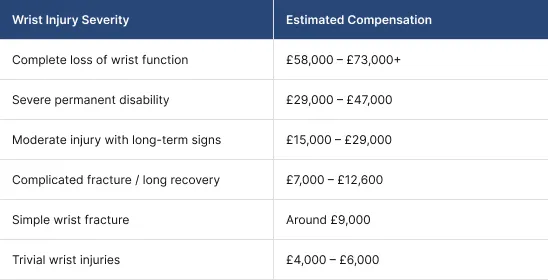
The overall wrist injury compensation may increase significantly with the addition of special damages.
What Factors Can Increase Wrist Injury Compensation?
The compensation amount depends on how much it affects your life. Wrist injury compensation amount may increase if:
- The injury is permanent
- Surgery was required
- Recovery took longer than expected
- You cannot return to your job
- Long-term treatment is needed for recovery
- The injury affects your dominant hand
- You experience an emotional low
- You need effective care or assistance
Compensation by Type of Wrist Injury
The following are the types of compensation based on the type of wrist injury:
1. Broken or Fractured Wrist
Simple fractures with full recovery chances attract lower compensation. More serious ones involving surgery, metal fixation, or long-term symptoms can result in higher payments.
2. Ligament and Tendon Injuries
Such injuries often cause pain, instability and weakness, especially when surgery is required.
3. Nerve Damage
Nerve injuries can cause numbness, tingling, loss of feeling, or pain. This condition increases the wrist injury compensation amount significantly.
4. Repetitive Strain Injuries (RSI)
RSI claims are common in office and manual roles. It can involve long-term loss of agility. The compensation amount depends on the seriousness of the injury and how much it affects everyday life.
Related reading: How much compensation can I get for RSI?
5. Compression Injuries
These injuries are usually critical and may involve permanent disability or a defect.
Can You Claim If the Accident Was Your Fault Also?
Yes. UK law allows claims under contributory negligence. If you were found partly liable, your compensation may be reduced by that percentage. For example:
- 20% fault → 20% reduction
- 30% fault → 30% reduction
You may still receive significant compensation even if you were also at fault.
Time Limits for Wrist Injury Compensation Claims
In most cases, you have three years from:
- The date on which the accident occurs, or
- The day you realise that the injury was caused by negligence
Failing to take action within this time limit usually means you lose the right to claim.
How Long Does a Wrist Injury Claim Take?
The time it takes to settle a wrist injury claim depends on how complex your case is. For example:
- Minor injuries: 3–6 months
- Moderate injuries: 6–12 months
- Complicated injuries: 12–24 months or more
Delays can occur if medical recovery is ongoing or liability is disputed.
No Win No Fee Wrist Injury Claims Explained
A lot of solicitors offer No Win No Fee agreements, meaning:
- No initial legal fees
- No fees if your claim fails
- Legally limited success fee only if you win
This allows you to pursue a claim without any sort of financial risk.
What Should You Do After a Wrist Injury?
Taking the right steps early on helps protect your health. It also provides a strong foundation for the claim. So, you should:
- Seek medical attention
- Report the accident
- Take photos and evidence
- Keep records of expenses
- Try to get legal advice as soon as you can
Final Thoughts
There is no fixed amount for wrist injury compensation. Every claim is of its own kind and depends on clinical findings, financial losses and the extent of its effect. However, UK law is structured as such to ensure that affected persons are fairly compensated when negligence is present.
This article gives general information and is not legal advice. Concise Medico understands that every claim has its own facts. We can help you get the full compensation you might be entitled to based on your case details. Contact us today to discuss your wrist injury claim.
FAQs
One moment. One accident. And suddenly, everyday life feels like a struggle.
A wrist injury can impair daily functioning. These tasks range from typing to driving to any manual work.
It may surprise you that 1.9 million people in the UK are living with a work-related illness. They include 511,000 people with musculoskeletal disorders.
The consequences of injury extend far beyond the pain. It may include stress, emotional imbalance and may affect finances. If it was caused by an accident that was not your fault, you may be allowed to claim compensation under UK personal injury law.
This guide explains:
- What is wrist injury compensation?
- How much wrist injury compensation can you claim?
- What factors increase compensation?
- How are claims valued?
- What should you do legally if you believe you have a sound claim?
What Is Wrist Injury Compensation?
Wrist injury compensation is a financial payoff. It is given to someone who has suffered a wrist injury due to another party’s neglect. It covers you for:
- Physical pain and suffering
- Quality of life
- Emotional suffering
- Financial loss caused by the injury
Wrist injury compensation does not only apply to severe or permanent injuries. If trivial injuries caused pain, trouble, or financial loss, the applicant will be qualified for compensation.
Common Causes of Wrist Injuries That Lead to Claims
Wrist injury compensation claims can arise in everyday situations when proper safety measures are not taken. These include:
1. Workplace Accidents
- Slips or falls at work
- Manual handling accidents
- Machinery or tool-related injuries
- Repetitive strain injuries (RSI)
- Inadequate workspace design
2. Road Traffic Accidents
- Car crashes
- Everyday road accidents
- Pedestrian accidents
- Jolt-related wrist injuries
3. Slips, Trips and Falls
- Irregular pavement
- Wet flooring
- Low-level lighting
- Unsafe public spaces
4. Sports and Leisure Accidents
- Fitness Centre accidents
- Unsafe playing surfaces
- Poor supervision or instruction
5. Faulty Products or Equipment
- Defective tools
- Broken safety equipment
- Faulty household items
If the other party failed to take proper care and caused your injury, you could be eligible to claim compensation.
Who Is Eligible to Make a Wrist Injury Compensation Claim?
You may be able to claim if certain conditions are met:
- Someone else’s fault caused the damage
- The accident occurred within the last three years
- A medical diagnosis supports the injury
- The injury caused pain, suffering, or financial loss
You do not need to have suffered a permanent disability to make a claim. You can read our guide on orthopaedic injury claims for more insight.
How Wrist Injury Compensation Is Calculated
Compensation covers both physical and emotional loss as well as the financial expenses that result from it. It can broadly be categorised into two:
General Damages Pain, Suffering and Loss of Amenity.
The general damages will cover your suffering, physical pain and loss of enjoyment of your day-to-day life due to the injury to your wrist.
The Judicial College Guidelines (JCG) are used by courts and solicitors and offer settlement brackets based on the severity of injury.
When assessing general damages, the following factors are considered:
- Extent of harm
- Time taken for recovery
- Whether symptoms are temporary or permanent
- Level of pain experienced
- Impact on grip strength and control
- Loss of mobility or stiffness
- Effect on hobbies and daily activities
- Psychological impact
Special Damages: Financial Losses and Expenses
Special damages compensate you for financial losses directly linked to the injury. This part of the claim can significantly increase the total settlement.
You may be able to claim for:
- Loss of earnings
- Reduced future earning capacity
- Over time, bonuses or commission losses
- Private medical treatment
- Rehabilitation and physiotherapy
- Prescription costs
- Travel to medical appointments
- Assistance and care (professional or family)
- Equipment such as bracelets or supportive aids
- Home adaptations
Evidence is indispensable. All documentary evidence and bank statements should support your claim.
Case Study: Clinical Negligence Claims
It is a real-life case, which is based on NHS data. It demonstrates the impact of unidentified fractures in the emergency department on patient recovery and payment.
Background
NHS Resolution reviewed 28 missed upper limb fractures. These are mostly wrist and hand injuries. These were often missed because X-rays were not taken properly or fractures were overlooked.
What Happened
One patient fell and hurt their wrist. The correct X-ray views were not ordered, so the fracture went undiagnosed at the initial visit.
How It Progressed
Without proper treatment, the wrist was not immobilised. The patient continued to report pain and restricted movement. Delayed follow-up made recovery longer.
Conclusion
Undetected wrist fractures may result in unnecessary pain and prolonged recovery. Proper imaging and timely diagnosis are important. Compensation can be based on such cases.
How Much Wrist Injury Compensation Can You Claim?
Below are typical UK compensation ranges for wrist injuries based on Judicial College Protocols. These figures are for general damages only!
The overall wrist injury compensation may increase significantly with the addition of special damages.
What Factors Can Increase Wrist Injury Compensation?
The compensation amount depends on how much it affects your life. Wrist injury compensation amount may increase if:
- The injury is permanent
- Surgery was required
- Recovery took longer than expected
- You cannot return to your job
- Long-term treatment is needed for recovery
- The injury affects your dominant hand
- You experience an emotional low
- You need effective care or assistance
Compensation by Type of Wrist Injury
The following are the types of compensation based on the type of wrist injury:
1. Broken or Fractured Wrist
Simple fractures with full recovery chances attract lower compensation. More serious ones involving surgery, metal fixation, or long-term symptoms can result in higher payments.
2. Ligament and Tendon Injuries
Such injuries often cause pain, instability and weakness, especially when surgery is required.
3. Nerve Damage
Nerve injuries can cause numbness, tingling, loss of feeling, or pain. This condition increases the wrist injury compensation amount significantly.
4. Repetitive Strain Injuries (RSI)
RSI claims are common in office and manual roles. It can involve long-term loss of agility. The compensation amount depends on the seriousness of the injury and how much it affects everyday life.
Related reading: How much compensation can I get for RSI?
5. Compression Injuries
These injuries are usually critical and may involve permanent disability or a defect.
Can You Claim If the Accident Was Your Fault Also?
Yes. UK law allows claims under contributory negligence. If you were found partly liable, your compensation may be reduced by that percentage. For example:
- 20% fault → 20% reduction
- 30% fault → 30% reduction
You may still receive significant compensation even if you were also at fault.
Time Limits for Wrist Injury Compensation Claims
In most cases, you have three years from:
- The date on which the accident occurs, or
- The day you realise that the injury was caused by negligence
Failing to take action within this time limit usually means you lose the right to claim.
How Long Does a Wrist Injury Claim Take?
The time it takes to settle a wrist injury claim depends on how complex your case is. For example:
- Minor injuries: 3–6 months
- Moderate injuries: 6–12 months
- Complicated injuries: 12–24 months or more
Delays can occur if medical recovery is ongoing or liability is disputed.
No Win No Fee Wrist Injury Claims Explained
A lot of solicitors offer No Win No Fee agreements, meaning:
- No initial legal fees
- No fees if your claim fails
- Legally limited success fee only if you win
This allows you to pursue a claim without any sort of financial risk.
What Should You Do After a Wrist Injury?
Taking the right steps early on helps protect your health. It also provides a strong foundation for the claim. So, you should:
- Seek medical attention
- Report the accident
- Take photos and evidence
- Keep records of expenses
- Try to get legal advice as soon as you can
Final Thoughts
There is no fixed amount for wrist injury compensation. Every claim is of its own kind and depends on clinical findings, financial losses and the extent of its effect. However, UK law is structured as such to ensure that affected persons are fairly compensated when negligence is present.
This article gives general information and is not legal advice. Concise Medico understands that every claim has its own facts. We can help you get the full compensation you might be entitled to based on your case details. Contact us today to discuss your wrist injury claim.