Understanding Perinatal Mental Health: A Comprehensive Guide

Published On: May 8th, 2026|Total Views: 1|Daily Views: 1|11.6 min read|2314 words|

Have you ever noticed new parents getting upset about stress? One of the best times in life is being a parent for the first time. However, pregnancy and the initial months after delivery come with low mood, anxiety and mental stress for most women.

When these changes happen, a woman goes through major emotional, hormonal, physical and social shifts.

Perinatal mental health relates to a woman’s mental well-being during pregnancy and up to two years after birth. It also includes two years after the birth of the baby. In this phase, a woman may suffer from several conditions such as bipolar disorder, anxiety and depression. Besides this, obsessive-compulsive disorder (OCD), post-traumatic stress disorder (PTSD) and at times psychosis can occur.

According to a study, these mental wellness issues are common but most of the conditions are not diagnosed or treated promptly. Therefore, many women are dealing with this without any proper care.

Latest NHS records suggest that roughly 63,000 to 66,000 women access perinatal mental health services. This is the annual data from the UK for such cases. However, many females are unable to get proper treatment and timely help is not offered to them.

Key Takeaways

  • Perinatal mental health affects women during pregnancy and up to two years after birth, so early support and regular check-ups are key to protecting both mother and baby
  • Mental health can change quickly in this stage, so speak to a GP, midwife, or health visitor if you feel low, anxious, or stressed
  • Common perinatal mental health disorders include depression, anxiety, PTSD, and OCD, so knowing the signs helps you seek help early.
  • A perinatal mental health team provides expert care, support plans, and treatment for women with moderate to severe needs.
  • What is perinatal mental health? It is the care and support of a woman’s mental well-being before and after birth to ensure safe outcomes for the whole family.

What Is Perinatal Mental Health?

Perinatal mental health refers to a woman’s mental and emotional well-being during her pregnancy. It also covers the initial year after giving birth. In this condition, illnesses like depression, anxiety and other emotional or behavioural health issues arise.

At times, this situation happens in females who were facing emotional health issues before pregnancy.

This shows that after birth, mood swing is not the only condition at play. Perinatal mental health covers a wide range of emotional issues. These illnesses may develop for the first time or become worse at this period of life.

Birth related mental medical conditions affect around 20-25% of females. Different studies report different rates of birth associated psychological conditions.

It is therefore one of the most common side effects of pregnancy.

Related: Details to claim compensation for childbirth injury

Good care in the perinatal period can change the path of a whole family. When we support a mother’s mind, we also support a child’s future.

Dr Sarah Collins, Consultant Perinatal Psychiatrist, UK

What Are Common Perinatal Mental Health Conditions?

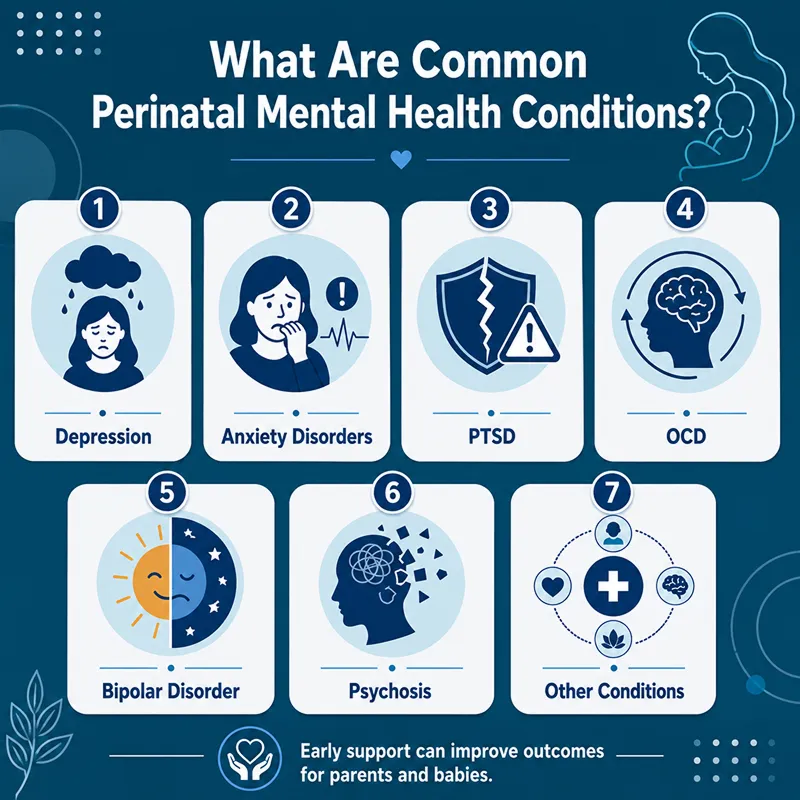
Perinatal mental health is a group of different disorders. Thus, it is not seen as a single condition. The most common cases include:

1. Depression

At the time of pregnancy or after the birth of a baby, most women struggle with depression. In some cases, it is defined by feelings of despair, fatigue, low mood and loss of interest.

2. Anxiety Disorders

During the perinatal period, anxiety may be common or it can be more common than depression. It covers social anxiety and overall anxiety disorders.

3. PTSD

After a tough pregnancy or childbirth scenario, another situation called PTSD can occur. Research shows that more people have been reported with these conditions in recent years.

4. OCD

This condition usually occurs after the birth of a child. It is fairly common during the prenatal period.

5. Bipolar Disorder

If a woman has suffered bipolar disorder before pregnancy or postpartum in life, she is at high risk of relapse.

6. Psychosis

This condition is not so common but it is a serious case. It can develop in no time and needs quick medical care.

7. Other Conditions

In addition to all of the above conditions, some include the following:

  • Personality disorders
  • Fear of childbirth (tokophobia)
  • Drug use disorders
  • Eating disorders
  • ADHD

You have learnt numerous conditions and now it is proved that you cannot reduce them to a single diagnosis. It suggests that prenatal emotional health is a complex case.

Why Perinatal Mental Health Happens?

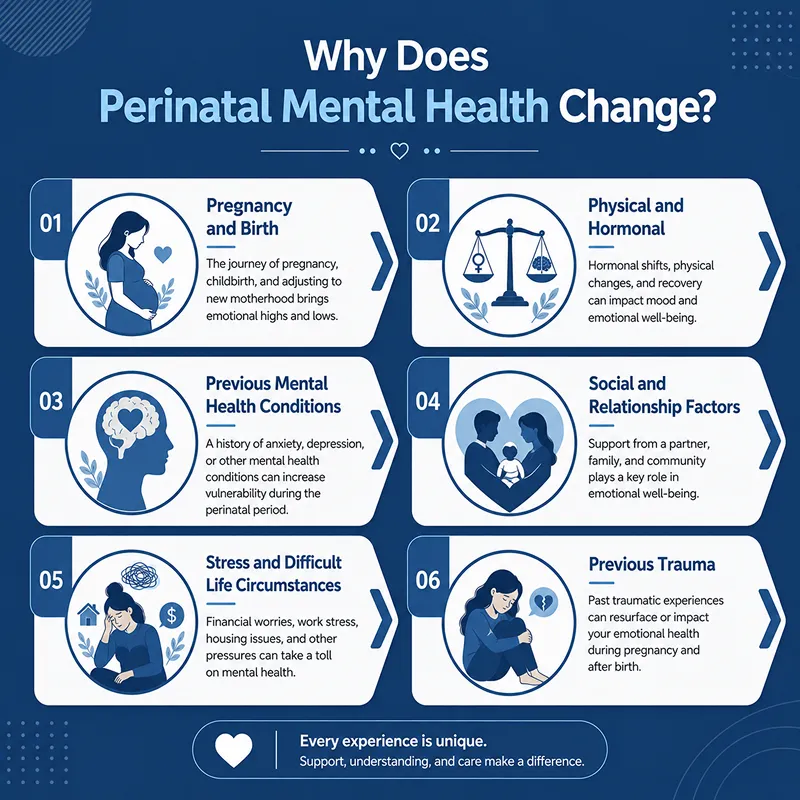
Multiple factors raise the risk of getting ill from cognitive health related issues during and after pregnancy. These include:

Psychological and Personal Factors

The most precise measure of maternal cognitive health is the prior mental state record. Trauma or tough life scenarios also point to this issue. In addition, if there is anxiety or fear about childbirth, this case can also become a reason.

Social Factors

Social factors, such as a lack of social connections or emotional support, can also affect the mental well-being of mothers. If a woman is alone in pregnancy or postpartum, this will also lead to such an issue. Also, some domestic violence, toxic relationships and money-related stress result in this condition.

Pregnancy and Birth-Related Factors

If pregnancy occurs without planning or against the will of the woman, birth related cognitive health issues can arise. A painful birth experience can also become its reason. Besides this, a woman may face problems during pregnancy or after birth. These can include medical complications, stress or illness, which may lead to mental well-being issues

Biological Factors

In pregnancy and after delivery, some hormonal changes occur. Due to this change, some women experience mental issues. Before the birth of the child, emotional changes impact mood control.

Some of these risk factors can overlap, putting certain women at a higher risk than others.

Related: List of mental disorders

What Is the Impact of Perinatal Mental Health on Mothers, Babies and Families?

You cannot limit common perinatal mental health disorders to emotional discomfort. This condition has a lasting impact on both the child and the mother. Its impact on mother, child and families is described below:

Impact on Mothers

Mothers who suffer from this illness have a much lower quality of life. She may struggle to bond with her baby. In severe cases, there is a high chance of relapse.

In extreme incidents, there is a risk of suicide, which is a major cause of mothers’ deaths in some areas.

Impact on Babies

Some research indicates that there is a strong link between undetected mental wellness conditions and low birth weight. This is also linked to early birth and delays in brain growth.

As a result of such a condition, some children face behavioural and emotional difficulties for the rest of their lives.

These results are thought to be affected by prenatal stress hormones like cortisol levels.

Impact on Families

This condition affects the entire family. It can cause marital tension and place a significant emotional burden on partners. Besides this, the family may face more conflict, reduced support and ongoing challenges in caring for the child.

These details also indicate that maternal emotional health is not an individual side issue. When a mother faces an issue, the whole family is affected.

Why It Matters

Untreated perinatal mental health issues can affect both mother and baby in the long run, including bonding, child development, and family well-being.

What Happens When a Treatment Gap Occurs in Perinatal Mental Health?

Most women do not receive suitable care, no matter how common these situations are. When doctors detect the disorders, roughly 15% of such cases receive proper treatment. Besides this, less than 5% achieve full recovery.

This shows that most of the females’ issues are either ignored or unclear.

This gap occurs due to many reasons, such as stigma and shame. Lack of awareness, poor access to services and lack of trained experts are also the biggest causes of this gap.

In addition, mental well-being issues may happen due to broken medical systems.

This gap is one of the most serious issues affecting maternal emotional health today.

Why Early Detection Matters in Perinatal Mental Health?

In fact, the perinatal period presents a special chance for early care. At the time of pregnancy and after childbirth, women often contact medical experts, such as

  • Obstetricians
  • Health visitors
  • General practitioners (GPs)
  • Midwives

This offers many ways to detect mental wellness issues promptly. However, to identify the issue on time, you must go for a routine checkup. The health experts must be properly trained and there should be clear guidance systems. Early detection also depends on integrated care methods.

When experts detect behaviour related health issues on time, this can be good for both the child and the mother.

Quick Tip

If you notice low mood, worry, or stress during or after pregnancy, speak to a GP or a perinatal mental health team early for support.

How to Spread Awareness of the Perinatal Mental Health Issues?

In many countries, including the UK, common perinatal mental health disorders are now considered a major health issue. Roughly 4% of females are facing mild to severe mood swings.

Nearly 7% of women suffer from OCD. Besides this, 4-5% of females struggle with anxiety disorders and 4% are affected by PTSD.

Also, with time, the rates of detection increase, especially in cases such as PTSD and depression.

You can consider some surveys to clarify this further. Between 2008 and 2020, maternal mental disorder cases rose. In the same period, in some groups of people, the PTSD tests were tripled.

From this increase, you can conclude that better education and improved screening can help reduce the rising cognitive health issues.

What Are Healthcare Upgrades in Perinatal Mental Health?

To address the needs of common perinatal mental health disorders, medical systems have started to react more firmly. Some major trends are given below:

Growth of Specialist Services

In perinatal mental health teams, there has been a major rise in experts in local services. In recent years, more than 66,000 women have been offered medical care. Across the UK medical systems, higher access to services has been attained.

Extra Care Period

Now, support is provided to the patients up to 12 months after birth. It is offered up to 2 years in some systems.

Integrated Healthcare Models

The updated methods of treatment pay attention to merging maternity care and emotional health services. Besides this, local support systems and primary care are also covered in it.

This confirms that women receive ongoing and planned treatment.

What Are Proven Treatment Options for Perinatal Mental Health?

For pregnant women’s mental well-being, there is exciting news that safe and effective therapies exist and are getting better.

Some common evidence based tactics are given below:

  • Bonding support programme for both mother and baby
  • Specialist mental care for complex conditions
  • Medications for depression, when needed
  • Psychological therapies like counselling and CBT

The main thing is that all treatments aim to manage two main risks:

  • Untreated mental illness
  • Side effects from medication

Studies have shown that when females are given proper care, the emotional health of both child and mother improves greatly.

Case Study: Rachel’s Journey with Postnatal Depression

Rachel, a UK resident, was a new mother and encountered multiple issues after her baby’s birth. The birth was traumatic. It required emergency surgery and both the baby and mother suffered from sepsis.

All this resulted in a stressful hospital stay. When the lockdown occurred due to COVID-19, she had limited support from her partner. Therefore, her sense of isolation increased so much.

When Rachel came home from the hospital, she felt stressed out and was mentally distressed. She was also cut off from her baby. When the time passed, she felt like she had failed as a mother and spent most of her time crying. Over time, these feelings got worse and ultimately resulted in suicidal thoughts. At the start, she avoided requesting help due to fear of criticism, regardless of her struggles.

Rachel was assigned to a qualified perinatal mental health team when she reached a crisis. Her condition recovered soon with specialised care and support. In a short time, she realised that she had a strong connection with her baby. She started to enjoy her motherhood soon.

The story of Rachel shows that early treatment is so important. It also highlights that exposure to specialist services and open discussions around maternity mental wellness is also crucial.

Final Thoughts

For the well-being of mothers and families, perinatal mental health is an important part. Most women are affected by this issue and many do not receive the proper treatment.

Many such cases can be resolved with the proper support and care. Hence, immediate treatment, simple guidance and kind support can make a big difference for both baby and mother.

Care is not just about treating symptoms. It includes supporting family bonds and creating trust. Proper care also involves helping new mothers feel confident and strong in their new position. When they receive treatment at the right time, it ensures lasting health and improves the environment of their families.

At Concise Medico, we know that this time can be so emotional and challenging. With our personalised support and clear guidance, you will feel safe and supported every step of the way.

If you or someone around you is suffering, do not wait for things to get worse. Contact us today and take the first step to receive better cognitive health.

Feeling low, anxious, or not like yourself during or after pregnancy?

We provide clear guidance and personalised support to help you feel stable and in control again.
We have helped many mothers manage perinatal mental health with care you can trust.
Contact us today.

Feeling low, anxious, or not like yourself during or after pregnancy?

We provide clear guidance and personalised support to help you feel stable and in control again.
We have helped many mothers manage perinatal mental health with care you can trust.
Contact us today.

FAQs

What is perinatal mental health?2026-05-08T12:01:12+00:00

Perinatal mental health refers to a woman’s mental well-being during pregnancy and up to two years after birth, including conditions like anxiety, depression, and other disorders.

What does a perinatal mental health team do?2026-05-08T12:01:36+00:00

A perinatal mental health team provides specialist care, support, and treatment for mothers facing mental health issues during and after pregnancy.

How common are perinatal mental health issues?2026-05-08T12:02:10+00:00

Perinatal mental health issues are quite common and affect many women. Studies suggest that around 1 in 5 women face some form of mental health problem. Many cases still go undiagnosed or untreated

What are the early signs of perinatal mental health problems?2026-05-08T12:03:16+00:00

Common signs include low mood, anxiety, poor sleep, and feeling overwhelmed.
Some women may feel detached from their baby or lose interest in daily life. Early signs should not be ignored and need timely support.

Share This Article!

Have you ever noticed new parents getting upset about stress? One of the best times in life is being a parent for the first time. However, pregnancy and the initial months after delivery come with low mood, anxiety and mental stress for most women.

When these changes happen, a woman goes through major emotional, hormonal, physical and social shifts.

Perinatal mental health relates to a woman’s mental well-being during pregnancy and up to two years after birth. It also includes two years after the birth of the baby. In this phase, a woman may suffer from several conditions such as bipolar disorder, anxiety and depression. Besides this, obsessive-compulsive disorder (OCD), post-traumatic stress disorder (PTSD) and at times psychosis can occur.

According to a study, these mental wellness issues are common but most of the conditions are not diagnosed or treated promptly. Therefore, many women are dealing with this without any proper care.

Latest NHS records suggest that roughly 63,000 to 66,000 women access perinatal mental health services. This is the annual data from the UK for such cases. However, many females are unable to get proper treatment and timely help is not offered to them.

Key Takeaways

  • Perinatal mental health affects women during pregnancy and up to two years after birth, so early support and regular check-ups are key to protecting both mother and baby
  • Mental health can change quickly in this stage, so speak to a GP, midwife, or health visitor if you feel low, anxious, or stressed
  • Common perinatal mental health disorders include depression, anxiety, PTSD, and OCD, so knowing the signs helps you seek help early.
  • A perinatal mental health team provides expert care, support plans, and treatment for women with moderate to severe needs.
  • What is perinatal mental health? It is the care and support of a woman’s mental well-being before and after birth to ensure safe outcomes for the whole family.

What Is Perinatal Mental Health?

Perinatal mental health refers to a woman’s mental and emotional well-being during her pregnancy. It also covers the initial year after giving birth. In this condition, illnesses like depression, anxiety and other emotional or behavioural health issues arise.

At times, this situation happens in females who were facing emotional health issues before pregnancy.

This shows that after birth, mood swing is not the only condition at play. Perinatal mental health covers a wide range of emotional issues. These illnesses may develop for the first time or become worse at this period of life.

Birth related mental medical conditions affect around 20-25% of females. Different studies report different rates of birth associated psychological conditions.

It is therefore one of the most common side effects of pregnancy.

Related: Details to claim compensation for childbirth injury

Good care in the perinatal period can change the path of a whole family. When we support a mother’s mind, we also support a child’s future.

Dr Sarah Collins, Consultant Perinatal Psychiatrist, UK

What Are Common Perinatal Mental Health Conditions?

Perinatal mental health is a group of different disorders. Thus, it is not seen as a single condition. The most common cases include:

1. Depression

At the time of pregnancy or after the birth of a baby, most women struggle with depression. In some cases, it is defined by feelings of despair, fatigue, low mood and loss of interest.

2. Anxiety Disorders

During the perinatal period, anxiety may be common or it can be more common than depression. It covers social anxiety and overall anxiety disorders.

3. PTSD

After a tough pregnancy or childbirth scenario, another situation called PTSD can occur. Research shows that more people have been reported with these conditions in recent years.

4. OCD

This condition usually occurs after the birth of a child. It is fairly common during the prenatal period.

5. Bipolar Disorder

If a woman has suffered bipolar disorder before pregnancy or postpartum in life, she is at high risk of relapse.

6. Psychosis

This condition is not so common but it is a serious case. It can develop in no time and needs quick medical care.

7. Other Conditions

In addition to all of the above conditions, some include the following:

  • Personality disorders
  • Fear of childbirth (tokophobia)
  • Drug use disorders
  • Eating disorders
  • ADHD

You have learnt numerous conditions and now it is proved that you cannot reduce them to a single diagnosis. It suggests that prenatal emotional health is a complex case.

Why Perinatal Mental Health Happens?

Multiple factors raise the risk of getting ill from cognitive health related issues during and after pregnancy. These include:

Psychological and Personal Factors

The most precise measure of maternal cognitive health is the prior mental state record. Trauma or tough life scenarios also point to this issue. In addition, if there is anxiety or fear about childbirth, this case can also become a reason.

Social Factors

Social factors, such as a lack of social connections or emotional support, can also affect the mental well-being of mothers. If a woman is alone in pregnancy or postpartum, this will also lead to such an issue. Also, some domestic violence, toxic relationships and money-related stress result in this condition.

Pregnancy and Birth-Related Factors

If pregnancy occurs without planning or against the will of the woman, birth related cognitive health issues can arise. A painful birth experience can also become its reason. Besides this, a woman may face problems during pregnancy or after birth. These can include medical complications, stress or illness, which may lead to mental well-being issues

Biological Factors

In pregnancy and after delivery, some hormonal changes occur. Due to this change, some women experience mental issues. Before the birth of the child, emotional changes impact mood control.

Some of these risk factors can overlap, putting certain women at a higher risk than others.

Related: List of mental disorders

What Is the Impact of Perinatal Mental Health on Mothers, Babies and Families?

You cannot limit common perinatal mental health disorders to emotional discomfort. This condition has a lasting impact on both the child and the mother. Its impact on mother, child and families is described below:

Impact on Mothers

Mothers who suffer from this illness have a much lower quality of life. She may struggle to bond with her baby. In severe cases, there is a high chance of relapse.

In extreme incidents, there is a risk of suicide, which is a major cause of mothers’ deaths in some areas.

Impact on Babies

Some research indicates that there is a strong link between undetected mental wellness conditions and low birth weight. This is also linked to early birth and delays in brain growth.

As a result of such a condition, some children face behavioural and emotional difficulties for the rest of their lives.

These results are thought to be affected by prenatal stress hormones like cortisol levels.

Impact on Families

This condition affects the entire family. It can cause marital tension and place a significant emotional burden on partners. Besides this, the family may face more conflict, reduced support and ongoing challenges in caring for the child.

These details also indicate that maternal emotional health is not an individual side issue. When a mother faces an issue, the whole family is affected.

Why It Matters

Untreated perinatal mental health issues can affect both mother and baby in the long run, including bonding, child development, and family well-being.

What Happens When a Treatment Gap Occurs in Perinatal Mental Health?

Most women do not receive suitable care, no matter how common these situations are. When doctors detect the disorders, roughly 15% of such cases receive proper treatment. Besides this, less than 5% achieve full recovery.

This shows that most of the females’ issues are either ignored or unclear.

This gap occurs due to many reasons, such as stigma and shame. Lack of awareness, poor access to services and lack of trained experts are also the biggest causes of this gap.

In addition, mental well-being issues may happen due to broken medical systems.

This gap is one of the most serious issues affecting maternal emotional health today.

Why Early Detection Matters in Perinatal Mental Health?

In fact, the perinatal period presents a special chance for early care. At the time of pregnancy and after childbirth, women often contact medical experts, such as

  • Obstetricians
  • Health visitors
  • General practitioners (GPs)
  • Midwives

This offers many ways to detect mental wellness issues promptly. However, to identify the issue on time, you must go for a routine checkup. The health experts must be properly trained and there should be clear guidance systems. Early detection also depends on integrated care methods.

When experts detect behaviour related health issues on time, this can be good for both the child and the mother.

Quick Tip

If you notice low mood, worry, or stress during or after pregnancy, speak to a GP or a perinatal mental health team early for support.

How to Spread Awareness of the Perinatal Mental Health Issues?

In many countries, including the UK, common perinatal mental health disorders are now considered a major health issue. Roughly 4% of females are facing mild to severe mood swings.

Nearly 7% of women suffer from OCD. Besides this, 4-5% of females struggle with anxiety disorders and 4% are affected by PTSD.

Also, with time, the rates of detection increase, especially in cases such as PTSD and depression.

You can consider some surveys to clarify this further. Between 2008 and 2020, maternal mental disorder cases rose. In the same period, in some groups of people, the PTSD tests were tripled.

From this increase, you can conclude that better education and improved screening can help reduce the rising cognitive health issues.

What Are Healthcare Upgrades in Perinatal Mental Health?

To address the needs of common perinatal mental health disorders, medical systems have started to react more firmly. Some major trends are given below:

Growth of Specialist Services

In perinatal mental health teams, there has been a major rise in experts in local services. In recent years, more than 66,000 women have been offered medical care. Across the UK medical systems, higher access to services has been attained.

Extra Care Period

Now, support is provided to the patients up to 12 months after birth. It is offered up to 2 years in some systems.

Integrated Healthcare Models

The updated methods of treatment pay attention to merging maternity care and emotional health services. Besides this, local support systems and primary care are also covered in it.

This confirms that women receive ongoing and planned treatment.

What Are Proven Treatment Options for Perinatal Mental Health?

For pregnant women’s mental well-being, there is exciting news that safe and effective therapies exist and are getting better.

Some common evidence based tactics are given below:

  • Bonding support programme for both mother and baby
  • Specialist mental care for complex conditions
  • Medications for depression, when needed
  • Psychological therapies like counselling and CBT

The main thing is that all treatments aim to manage two main risks:

  • Untreated mental illness
  • Side effects from medication

Studies have shown that when females are given proper care, the emotional health of both child and mother improves greatly.

Case Study: Rachel’s Journey with Postnatal Depression

Rachel, a UK resident, was a new mother and encountered multiple issues after her baby’s birth. The birth was traumatic. It required emergency surgery and both the baby and mother suffered from sepsis.

All this resulted in a stressful hospital stay. When the lockdown occurred due to COVID-19, she had limited support from her partner. Therefore, her sense of isolation increased so much.

When Rachel came home from the hospital, she felt stressed out and was mentally distressed. She was also cut off from her baby. When the time passed, she felt like she had failed as a mother and spent most of her time crying. Over time, these feelings got worse and ultimately resulted in suicidal thoughts. At the start, she avoided requesting help due to fear of criticism, regardless of her struggles.

Rachel was assigned to a qualified perinatal mental health team when she reached a crisis. Her condition recovered soon with specialised care and support. In a short time, she realised that she had a strong connection with her baby. She started to enjoy her motherhood soon.

The story of Rachel shows that early treatment is so important. It also highlights that exposure to specialist services and open discussions around maternity mental wellness is also crucial.

Final Thoughts

For the well-being of mothers and families, perinatal mental health is an important part. Most women are affected by this issue and many do not receive the proper treatment.

Many such cases can be resolved with the proper support and care. Hence, immediate treatment, simple guidance and kind support can make a big difference for both baby and mother.

Care is not just about treating symptoms. It includes supporting family bonds and creating trust. Proper care also involves helping new mothers feel confident and strong in their new position. When they receive treatment at the right time, it ensures lasting health and improves the environment of their families.

At Concise Medico, we know that this time can be so emotional and challenging. With our personalised support and clear guidance, you will feel safe and supported every step of the way.

If you or someone around you is suffering, do not wait for things to get worse. Contact us today and take the first step to receive better cognitive health.

Feeling low, anxious, or not like yourself during or after pregnancy?

We provide clear guidance and personalised support to help you feel stable and in control again.
We have helped many mothers manage perinatal mental health with care you can trust.
Contact us today.

Feeling low, anxious, or not like yourself during or after pregnancy?

We provide clear guidance and personalised support to help you feel stable and in control again.
We have helped many mothers manage perinatal mental health with care you can trust.
Contact us today.

FAQs

What is perinatal mental health?2026-05-08T12:01:12+00:00

Perinatal mental health refers to a woman’s mental well-being during pregnancy and up to two years after birth, including conditions like anxiety, depression, and other disorders.

What does a perinatal mental health team do?2026-05-08T12:01:36+00:00

A perinatal mental health team provides specialist care, support, and treatment for mothers facing mental health issues during and after pregnancy.

How common are perinatal mental health issues?2026-05-08T12:02:10+00:00

Perinatal mental health issues are quite common and affect many women. Studies suggest that around 1 in 5 women face some form of mental health problem. Many cases still go undiagnosed or untreated

What are the early signs of perinatal mental health problems?2026-05-08T12:03:16+00:00

Common signs include low mood, anxiety, poor sleep, and feeling overwhelmed.
Some women may feel detached from their baby or lose interest in daily life. Early signs should not be ignored and need timely support.

Go to Top