TABLE OF CONTENT
Psychologist vs. Psychiatrist Expert Witness in Legal Cases
Mental health evidence plays a vital role in legal cases. It is helpful in cases that involve trauma, mental illness, personal injury or a crime. The court relies on an expert witness for an independent and professional opinion.
Almost 550,000 people aged over 14 years had some form of severe mental health condition in the UK. This shows the growth of mental health concerns in the country. However, many claimants and solicitors are unsure about the expert they need. They either need a psychologist expert witness or a psychiatrist expert witness. Both specialise in mental health conditions. They differ in experience, responsibilities and areas of expertise in legal cases.
The wrong expert can lead to high costs, delays or errors in legal disputes. While the right expert witness can help the court with the most apt and reliable expert opinion.
In this guide, you will learn about psychologist vs psychiatrist expert witnesses. You will also learn when to instruct each of them and how their reports differ. Finally, you will know how to choose the right expert for your case.
What Is a Psychologist Expert Witness?
A psychologist expert witness gives independent advice and opinion on legal cases. Their primary role is to help the court. They help explain a person’s emotions, behaviour, cognitive abilities and psychological function.
Psychologist expert witnesses specialise in mental processes, emotional wellbeing and psychological disorders. They form their opinions through assessments, observations and evidence-based testing.
A psychologist expert witness may be asked to assess:
- Psychological trauma
- Anxiety disorders
- Depression
- Post-Traumatic Stress Disorder (PTSD)
- Cognitive functioning
- Brain injury-related impairments
- Memory and concentration difficulties
- Behavioural and emotional problems
Their work often involves detailed interviews, psychometric testing and behavioural assessment. They prepare an independent report to explain their findings. This forms the basis for their opinion in legal issues and cases.
What Is a Psychiatrist Expert Witness?
A psychiatrist expert witness is a qualified medical doctor. They specialise in the diagnosis, treatment and management of mental health disorders. They provide expert opinion about psychiatric conditions in legal cases. These opinions explain the impact on a person’s function, behaviour and decision-making.
A psychiatrist expert witness is instructed to assess:
- Major depressive disorder
- Bipolar disorder
- Schizophrenia
- Psychosis
- Personality and anxiety disorders
- Substance misuse disorders
- Complex psychiatric conditions
They form their expert opinion through a series of practices. These include psychiatric interview, medication history, prior treatment and mental state examination.
What Is the Key Difference Between a Psychologist and Psychiatrist Expert Witness?
Psychologist vs psychiatrist expert witnesses give expert opinions about mental health. The key difference lies in their education and areas of expertise. They are qualified to provide different types of assessments. A psychologist expert witness focuses on psychological function and behaviour. A psychiatrist expert witness is a medical doctor who specialises in mental illnesses. Their roles can overlap, but the questions they can answer best are different.
Here, psychologist vs psychiatrist expert witnesses are explained in depth.
1. Primary Focus
The focus of psychologist vs psychiatrist expert witnesses is different. A psychologist expert witness examines the effect of an event on a person’s emotions, behaviour and daily life. A psychiatrist expert witness focuses on psychiatric health and mental illness to form their opinion. They assess the impact of mental disorders, medication and treatments on a person in a case.
2. Assessment Methods
Psychologist vs psychiatrist expert witnesses adapt their methods to the legal issue. A psychologist uses clinical interviews, behavioural observations and psychometric tests to form an opinion. This helps them profile a person’s cognitive health, emotional wellbeing and psychological state.
A psychiatrist conducts psychiatric interviews and examinations to profile a person’s mental health. They also review medical records, prior diagnoses, medications and treatment history. This helps them form a risk assessment and diagnosis for the court. The table below shows the difference in assessment methods of psychologist vs psychiatrist expert witnesses.
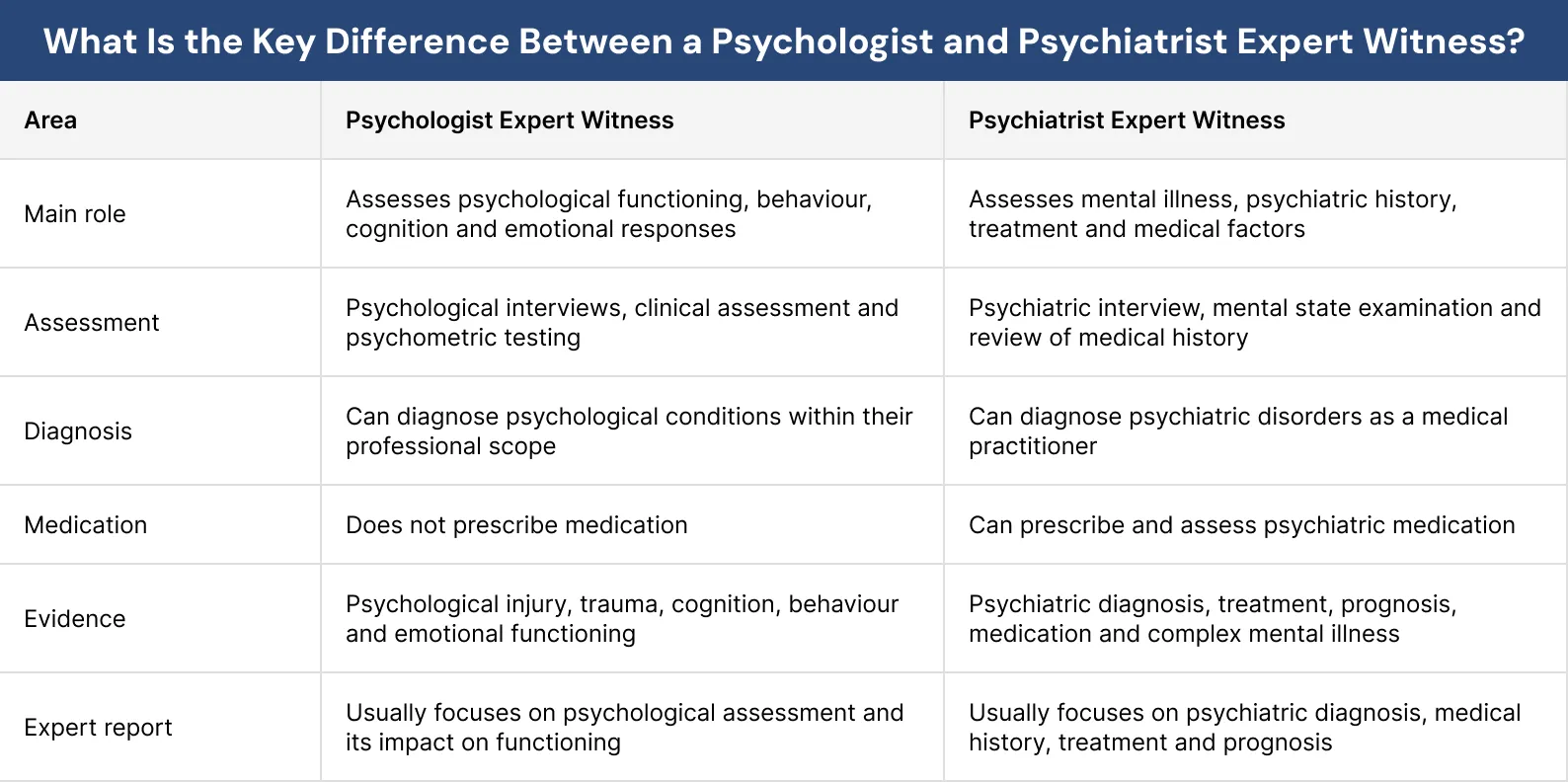
3. Medication and Treatment
In psychologist vs psychiatrist expert witnesses, medication and psychiatric treatment form a key part of legal cases. Psychologist form their opinion based on cognitive and emotional behaviours. However, they are not qualified in medicine to form an opinion on substance use. Psychiatrists are medically trained and can prescribe medication. They assess the effect of medication and treatment to understand a person’s mental state.
4. Evidence Provided
In psychologist vs psychiatrist expert witness cases, their distinct role shapes their advice. A psychologist expert witness provides evidence about:
- Psychological injury
- Trauma and its effect
- Cognitive function
- Emotional problems
- Behavioural changes
- Personality and psychological functions.
While a psychiatrist expert witness provides evidence about:
- Psychiatric diagnosis
- Mental health history
- Psychiatric treatment
- Medication and its effect
- Prognosis
- Severe or complex mental disorders
- Relation between physical and mental health
This helps establish the expertise of psychologist vs psychiatrist expert witness.
5. Expert Witness Reports
A psychologist vs psychiatrist expert witness report does not always follow similar approaches. The two experts examine different aspects of a person’s condition and its effect on the case.
A psychologist’s report explains the psychological assessment performed, the results and symptoms. The report also explains the effect of an injury or event on a person’s actions, thoughts and daily life. A psychiatrist’s report places greater emphasis on psychiatric diagnosis. It reviews medical and psychiatric history, prior treatment, prognosis and mental disorders.
Both reports cover different evidence, assessments, reasoning and fact-based opinions. In psychologist vs psychiatrist expert witness, their reports remains relevant to the court without any bias.
When Is a Psychologist Expert Witness Instructed?
A psychologist expert witness is called in cases to understand a person’s psychological function, behaviour, cognition or emotional wellbeing. Their role is to review the evidence and form an expert opinion on the issue. The exact assessment will depend on the nature of the case and the answer needed.
Psychologist expert witnesses are often needed for the following cases and concerns:
1. Psychological Functioning and Behaviour
The expert is called to assess the impact of an injury or accident on a person’s emotions, behaviour and life. They consider changes in mood, confidence, relationships and daily life. Their review helps the court know if the evidence aligns with the reported psychological difficulties.
2. Trauma and Psychological Injury
They assess the link between traumatic events and psychological injuries. These include anxiety, depression, PTSD and emotional difficulties. The expert reviews the symptoms, their severity and their impact on a person’s daily life. They also explain how and whether the stated factors are linked to the problem in question.
3. Cognitive and Neuropsychological Assessment
Some cases involve questions about memory, concentration, attention or other cognitive abilities. An expert witness uses recognised tests to assess these areas. This helps them form an opinion about the case and its impact on a person’s cognitive functions. This is relevant in brain injury cases. It helps assess a person’s ability to think, remember and process information.
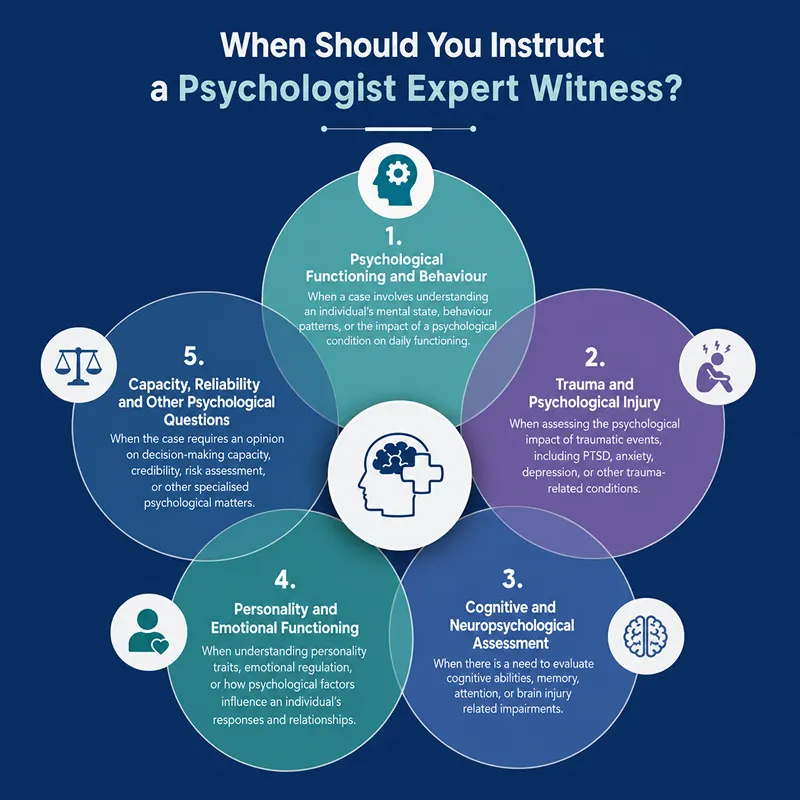
4. Personality and Emotional Functioning
A psychologist expert witness assesses emotional stability, personality traits and behavioural changes of a person in a legal case. This helps them establish how a person responds to stress, injury or traumatic events. This is highly relevant to cases about emotional ability and personality traits.
5. Capacity, Reliability and Other Psychological Questions
A psychologist expert witness may assess specific psychological questions for a case. These include a person’s ability to grasp information, make decisions or cope with events. Some cases even explore the consistency and reliability of reported symptoms. This helps the court understand the effect of each situation and the symptoms aligned to it.
When Is a Psychiatrist Expert Witness Instructed?
In psychologist vs psychiatrist expert witness, the latter is called when a case requires their expertise. These include mental illness, diagnosis, treatment or medical factors that affect mental health.
A psychiatrist can assess both mental and physical health factors for a case. They review psychiatric history, medication and prior treatment to form their opinion. The tests they conduct and the information they review depend on the needs of the case.
1. Mental Health Diagnosis
A psychiatrist assesses symptoms of a psychiatric disorder in a person. They form an independent opinion based on their diagnosis. They review medical records, prior assessments and psychiatric history. They review the timeline of the condition and its effect on the person’s life. This is effective in cases related to injuries and the workplace environment.
2. Psychiatric History and Treatment
Experts know the importance of mental health history in legal claims and cases. A psychiatrist reviews prior diagnoses, hospital admissions, therapy, medication and other treatments. This is vital in legal cases that rely on the timeline of mental conditions. This also helps establish the relationship between symptoms and a person’s medical history.
3. Medication and Its Effects
A psychiatrist expert witness assesses the role and effect of prescribed medication on a person. This helps them establish its impact on a person’s mental and physical health. This assessment is vital in legal cases that require opinions on the role and effect of medication on a person.
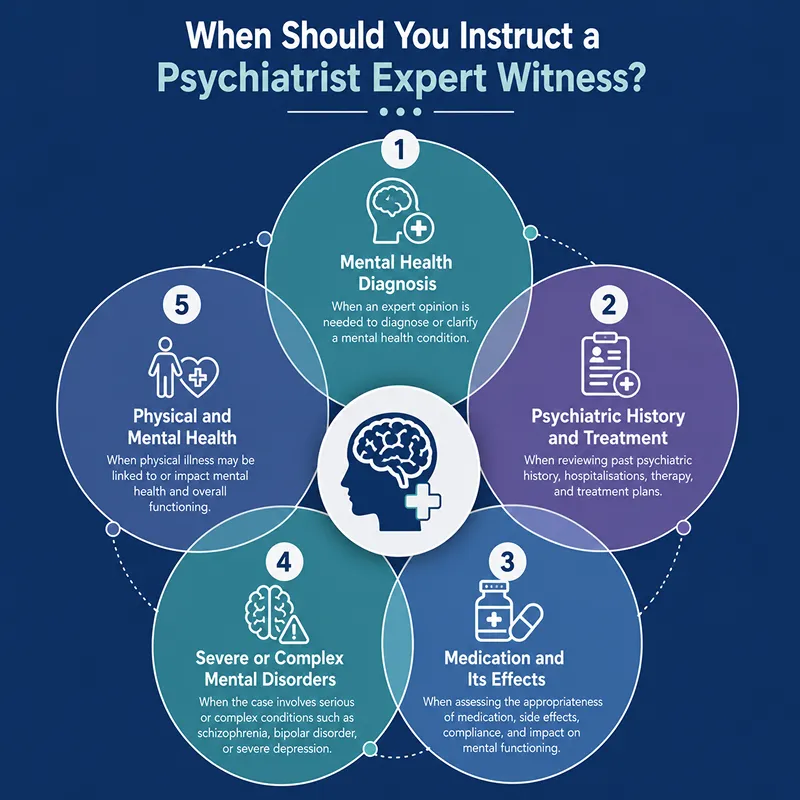
4. Severe or Complex Mental Disorders
In psychologist vs psychiatrist expert witness cases, the latter helps explain mental disorders to the court. This includes conditions like severe depression, bipolar disorder, psychosis and other mental disorders. The expert assesses the condition, its development, history and likely prognosis. This helps them explain the details to the court and their relation to the case.
5. Physical and Mental Health
A psychiatrist considers the relationship between mental and physical health for a case. They may consider the effect of a physical injury on a psychiatric condition. They also assess the effects of prior mental health conditions on a physical injury. This helps the court know the relationship between physical and psychiatric symptoms.
A psychiatrist is most effective in legal cases that need expertise about mental health conditions.
How Do You Choose the Right Expert Witness?
In psychologist vs psychiatrist expert witness cases, the right expert depends on what helps the court. A psychologist is suitable when the case focuses on psychological functions and injuries. While a psychiatrist is helpful when the case involves psychiatric treatment and diagnosis.
Before you instruct an expert, consider the following:
- Nature of the case: Know the main mental health issues involved.
- Questions for the expert: Be clear about what you need the expert to review and explain.
- Professional expertise: Check the relevant qualifications and experience of the expert.
- Experience in legal work: Review the expert’s history to know they understand their duty.
- Assessment requirements: Know if the case needs psychological testing, psychiatric assessment or both.
- Quality of reports: Reports should be clear, reasoned and supported by evidence.
Some cases may only require one of the two experts. However, a complex case may require the expertise of both experts. This is when you decide between psychologist vs psychiatrist expert witnesses.
“The right expert depends on the legal question, not the job title. Psychiatry is usually best where medical diagnosis and medication are central; psychology is best where psychometric testing and cognition need to be measured.”
Forensic Defence
Case Study: Psychologist and Psychiatrist Expert Witness Team Up for a Legal Case
In Heyward v Plymouth Hospital NHS Trust, the claimant raised a work-related claim. He relied on evidence from both a consultant psychiatrist and an occupational psychologist. The case established how both experts can be used to address different issues in a dispute.
The psychiatrist’s expertise helped prove the claimant’s psychiatric injury and causation. While the occupational psychologist proposed evidence focused on a different issue. That included the employer’s duty to reduce the risk of psychological harm.
The case shows how a psychologist and psychiatrist do not perform the same role. Although their expertise can overlap, they provide evidence and support on different questions. This shows how psychologist vs psychiatrist expert witnesses can address the same case differently.
Conclusion
A psychologist vs psychiatrist expert witness can both bring valuable evidence in a legal case. However, their roles are not the same. A psychologist focuses on psychological functions, behaviour, cognition and emotional wellbeing. A psychiatrist brings expertise to issues like psychiatric diagnosis, treatment, medication and prognosis.
The right expert depends on what will help your case and claim in court. Some cases may need a psychologist, while others may need a psychiatrist. More complex cases can benefit from the expertise of both. The right choice in psychologist vs psychiatrist expert witnesses depends entirely on your case.
The key is to opt for an expert with relevant clinical and legal experience. Their evidence should be clear, independent and based on evidence.